Every great ruler seems to come with a story about the day they were born. Shivaji’s is a little different, because it begins not with triumph but with grief.
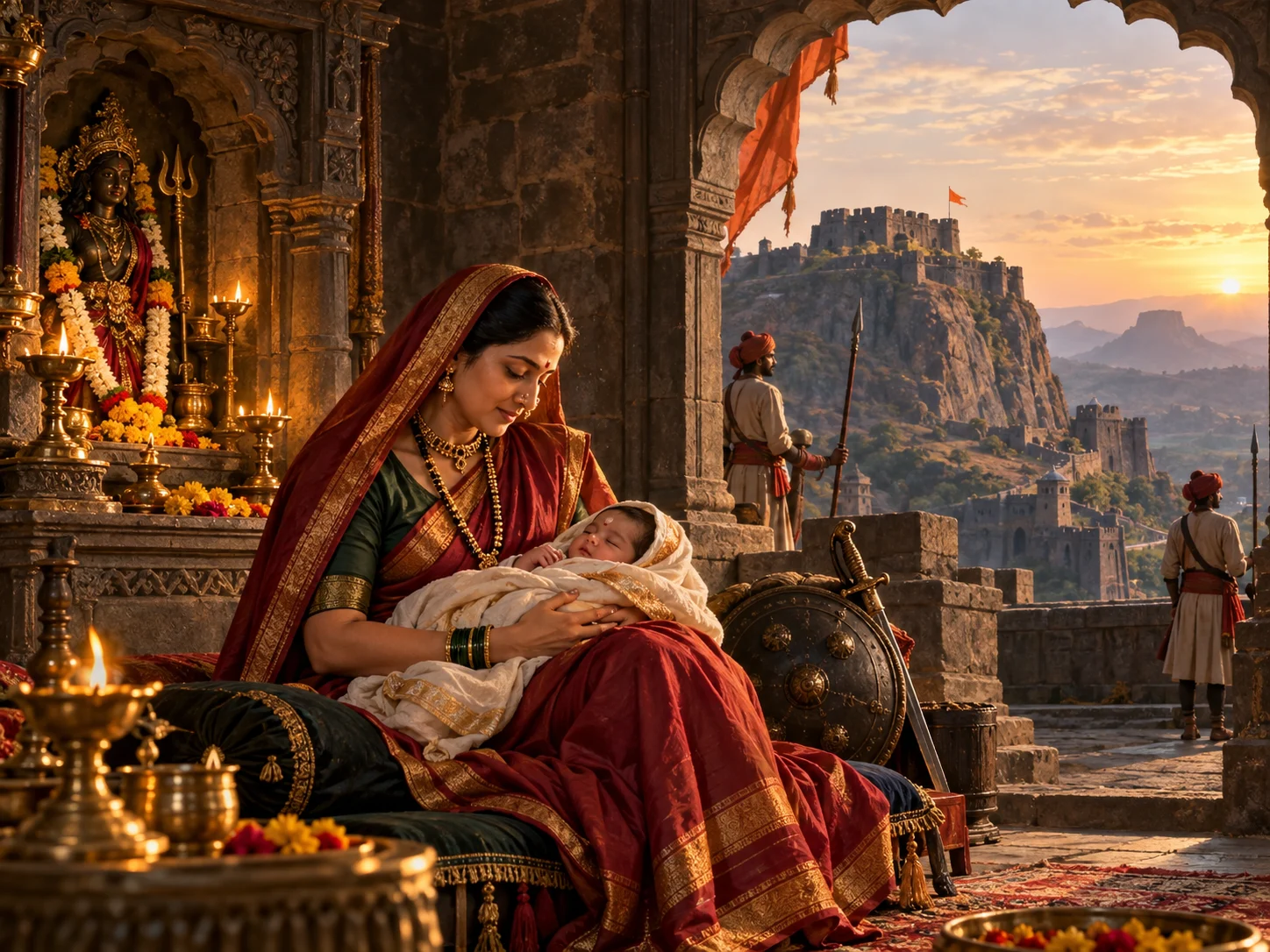
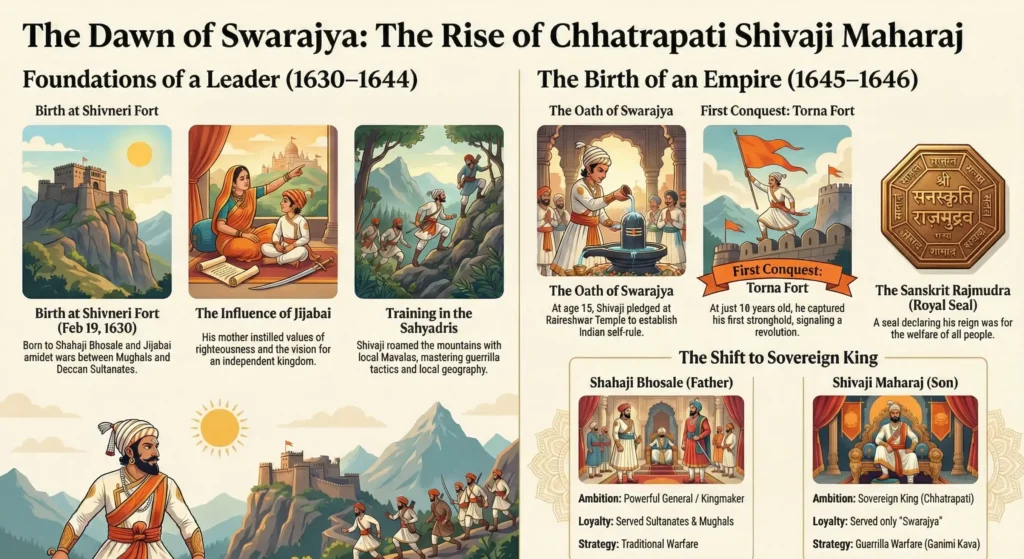
His mother, Jijabai, had already buried child after child in infancy. So while she was carrying him, inside a hill fort ringed by cliffs, she prayed to the goddess of that fort, a local deity named Shivai, and begged for a son who would live. When the boy arrived, on the official date of 19 February 1630, she named him after the goddess she had prayed to. She called him Shivaji.
A historical or traditional portrait of Chhatrapati Shivaji Maharaj. Source: Wikimedia Commons · Sailko · CC BY 3.0
That baby would grow up to found a kingdom and to hand a whole people a new idea about themselves. And the remarkable thing is where his greatness came from. Not from a palace, and not from wealth, but from a determined mother and a childhood spent barefoot in the mountains.
This is the story of how a king was made.
A land at war
Shivaji was born into chaos.
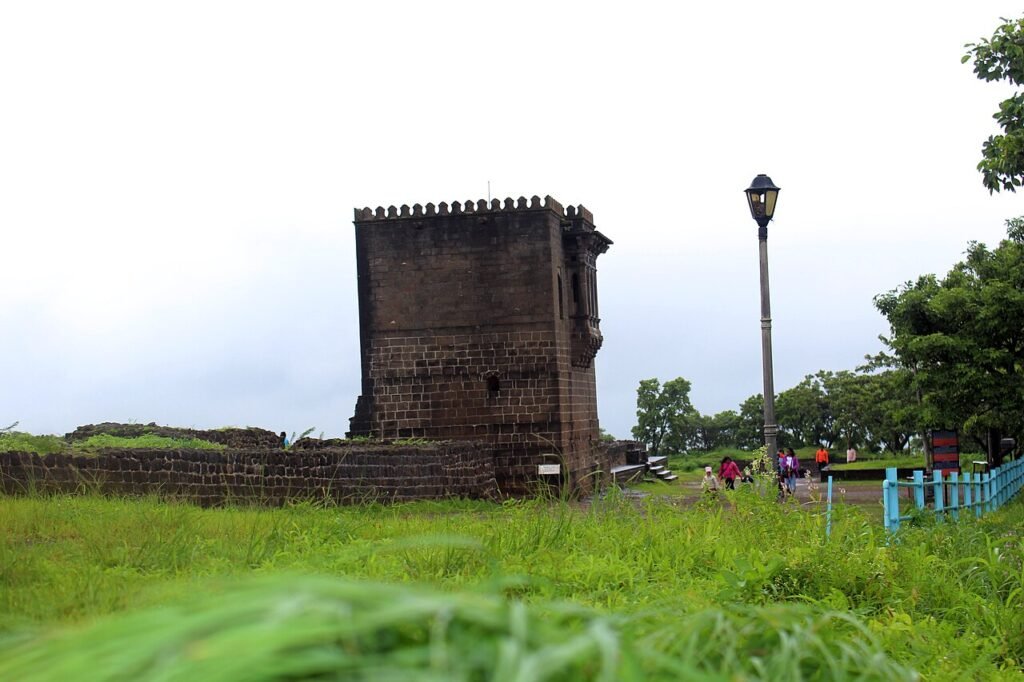
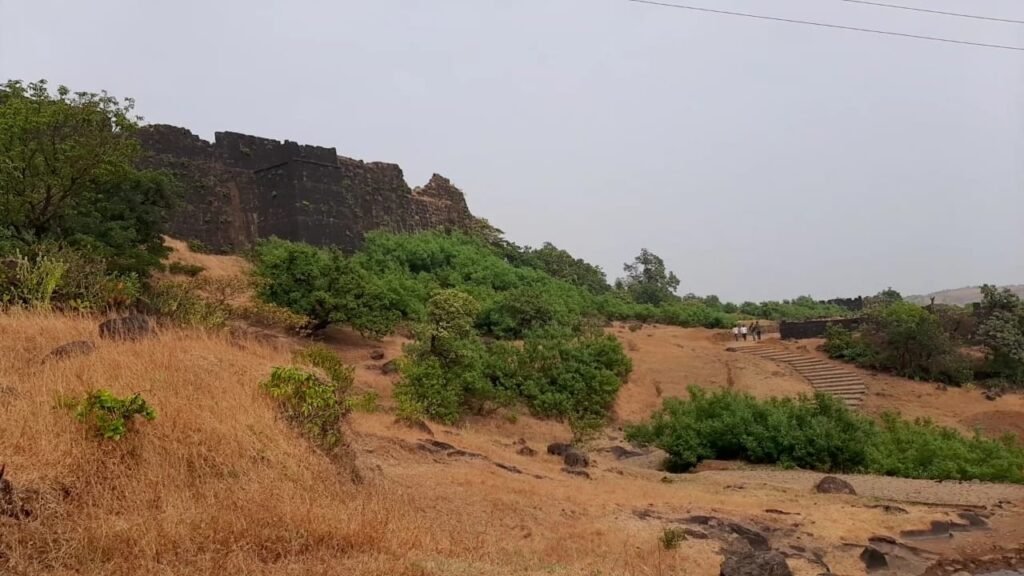
Shivneri Fort, traditionally recognized as Shivaji’s birthplace. Source: Wikimedia Commons · Nandini Jaybhaye · CC BY-SA 4.0
The Deccan, the great plateau of central India, was being pulled apart. From the north, the mighty Mughal Empire under Shah Jahan was pressing south, trying to swallow the local kingdoms of Ahmednagar and Bijapur. Those kingdoms fought back, and everyone caught in between was dragged into the churn.
His father, Shahaji Bhosale, was one of the most important men in this struggle. He was a gifted Maratha general, a kind of kingmaker who served one Deccan sultan and then another, switching sides to survive and to protect his lands. He was almost always away, and often being hunted.
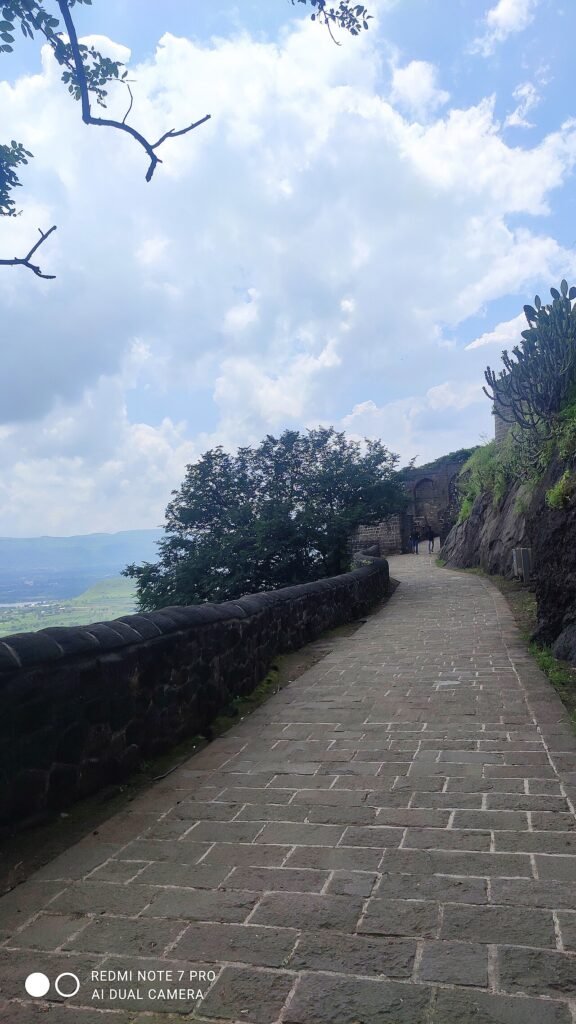
It was because of this danger that his pregnant wife, Jijabai, had been sent for safety to the steep hill fort of Shivneri. And it was there, behind its cliffs, that her son was born.
The birthplace site inside Shivneri Fort associated with Shivaji Maharaj. Source: Wikimedia Commons · DATTATRAY GAVHANE · CC BY-SA 4.0
For most of his childhood, Shivaji’s father was a distant figure, busy with wars and politics far away in the south, where he kept a separate court. The boy was raised in Pune, and the person who raised him was his mother.
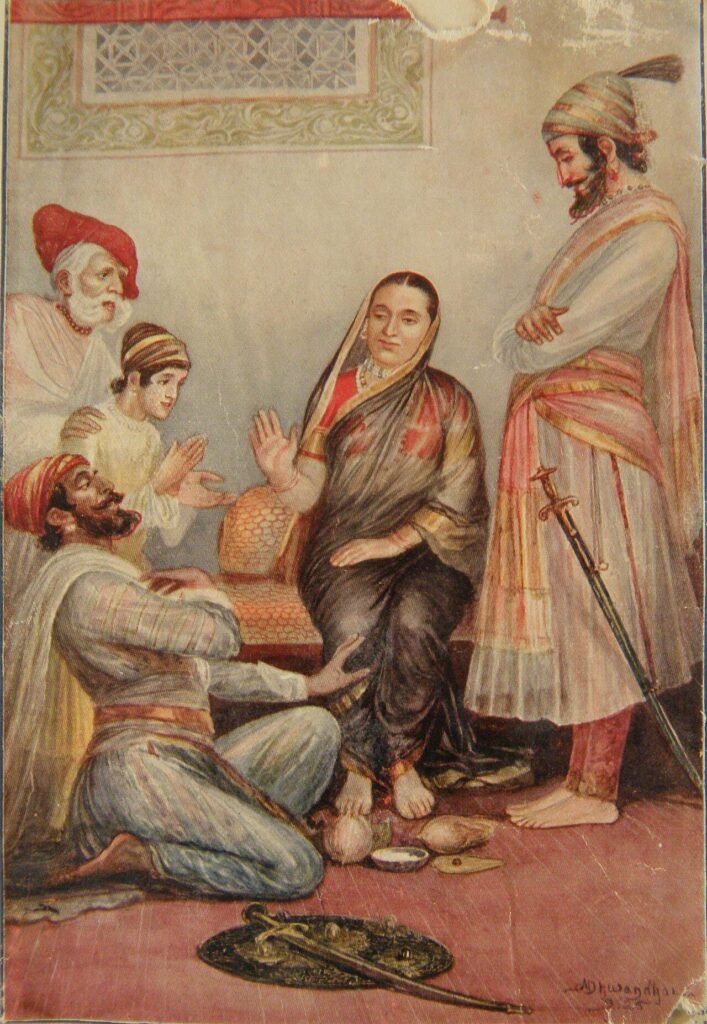
A traditional representation of Jijabai, Shivaji’s mother and a central figure in his early life. Source: Wikimedia Commons · M. V. Dhurandhar · Public domain
That single fact shaped everything. Jijabai was devout, strong-willed and fiercely proud, and she poured all of it into her son.
She did not fill his head with fairy tales. She told him the old epics, the Ramayana and the Mahabharata, and taught him to see his own life as one of those stories: a duty to stand against wrong and to fight for what was right.
Tradition holds that she told him plainly he was not born to serve foreign sultans, as his father did. He was born, she said, to win self-rule for his own people.
Raigad Fort, later the capital and coronation site of Shivaji’s Maratha kingdom. Source: Wikimedia Commons · Ayushi Kombe · CC BY-SA 4.0
Whether or not she used those exact words, the idea took root deep in the boy. It would become the cause of his whole life.
Raised by the mountains
Around Shivaji stood a second great teacher: the land itself.
His guardian in Pune, a capable administrator named Dadoji Konddeo, helped rebuild the town, which had been left in ruins by years of raids. But the boy’s real schoolroom was outdoors. He did not grow up cushioned in a palace, the way princes of that age usually did.
Instead he roamed the Sahyadri mountains, the rugged Western Ghats, alongside the Mavalas, the tough local hill boys. He climbed the passes, learned the hidden valleys and caves, and came to know that broken country better than any map ever could.
While other princes of the age grew up in silk and comfort, this one grew up barefoot in the hills, among the sons of farmers.
Those hill boys were not just playmates. Some of them, men like Tanaji Malusare, would become his most trusted commanders. And that deep knowledge of the mountains would one day become his greatest weapon, letting small bands strike and vanish in a style of hit-and-run war that the great armies of the plains could never master.
By the time he was a teenager, the idea his mother had planted had hardened into a purpose.
At around the age of fifteen, the story goes, Shivaji gathered a band of his closest friends at a small temple called Raireshwar, high in the hills. There, before a stone image of Shiva, he made a vow.
He is said to have cut his finger and offered his own blood, swearing to build Hindavi Swarajya, a land that would rule itself.
It was an astonishing thing for a boy of fifteen to promise, in a country carved up between sultans and emperors. But he meant it. Not long after, at sixteen, he captured his first hill fort, a place called Torna. It was the first small stone in what would grow into the mighty Maratha kingdom.
The birth of an idea
Look closely and you can see that Shivaji’s birth was really the birth of a new thought in India.
Before him, Maratha warriors had mostly been soldiers for hire, brave men who fought and died for other people’s kings, exactly as his own father had. Shivaji gave them something they had never had: a reason to fight for themselves. That word, Swaraj, self-rule, is what he handed his people, and it would outlast him by centuries.
He never had a golden spoon. What he had was a mother who believed her son was born for something greater than servitude, and a hard, beautiful stretch of mountains that turned a boy into a leader. Out of a grieving woman’s prayer at a lonely fort came a king, and out of that king came an idea of freedom that India has never quite let go of since.
If you think you have remembered everything about this topic take this QUIZ
Results
QUIZ START
#1. What is the name of the hill fort where Chhatrapati Shivaji Maharaj was born on February 19, 1630?
Previous
Next
#2. Shivaji was named after which local deity to whom his mother, Jijabai, had fervently prayed for a healthy heir?
Previous
Next
#3. Who was Shivaji’s guardian and mentor that helped administer the rebuilding of Pune and instilled in him the values of Swaraj?
Previous
Next
#4. What symbolic act was performed in the fields of Pune to represent the restoration of order after it was devastated by raids?
Previous
Next
#5. At the age of 15, Shivaji and his friends took a solemn oath to establish Hindavi Swarajya at which temple?
Previous
Next
#6. According to the comparison table, what type of warfare strategy was Shivaji famous for utilizing, which contrasted with his father’s traditional methods?
Previous
Next
#7. What was the name of the very first fort Shivaji captured at the young age of 16, marking the beginning of the Maratha Empire?
Previous
Next
#8. Unlike the Persian seals used by his father and other rulers of the time, in what language was Shivaji’s royal seal (Rajmudra) inscribed?