How a College Dropout From a Literary Dynasty Redefined Cool and Became a Force for Change
Farhan Akhtar is a man of paradoxes. He is the son of legendary screenwriters, born into a world where stories are currency and cinema is a birthright, yet he had to fight his own family to prove that his vision mattered. He was kicked out of college for lack of attendance, yet became one of the most respected directors of his generation. He was trained as a director, yet surprised the world by becoming an actor of unusual intensity and versatility. He has worn more masks than most people wear in a lifetime—director, actor, producer, singer, social activist—and in each role he has refused to be anything less than extraordinary. His journey is not the story of someone who found one thing and did it brilliantly. It is the story of someone who refused to be confined to any single identity.

The Rebel Born Into Legacy
Farhan Akhtar was born on January 9, 1974, in Mumbai, into a household where the art of storytelling was not a hobby but a way of life. His father, Javed Akhtar, was one of India’s greatest screenwriters, the man who had written films that defined generations. His mother, Honey Irani, was also a writer, also talented, also part of the literary ecosystem that shaped Indian cinema. Growing up in such a household, Farhan was surrounded by conversations about narrative, character, dialogue, the craft of making stories work. It should have been natural for him to follow in their footsteps. Instead, he became something else: a person who had to prove his own worth to the people who had taught him what worth meant.
His childhood was complicated. His parents’ divorce when he was young could have been a tragedy, but it became instead a lesson in how even in breaking, people retain dignity. He was raised in a liberal, creative environment alongside his sister, Zoya Akhtar, who would herself become an acclaimed director. But being born into literary greatness did not mean that being literary was automatic. He had to find his own voice. And his first attempt to find it nearly cost him everything: he was dismissed from HR College due to lack of attendance. He was not studying. He was watching films, reading about cinema, thinking about what cinema could become. To his parents, this was not an education. To him, it was the only education that mattered.
The Student Who Refused to Study
Before his big break, Farhan worked various jobs, each one a stepping stone toward a goal he had not yet articulated. He worked at an advertisement production house. He served as an assistant director on films like Lamhe, watching how cinema was made from behind the scenes, learning the grammar of visual storytelling. These years were not wasted time. They were apprenticeship. He was teaching himself what film school could never teach—how cinema actually worked, how ideas moved from imagination to image, how a director had to think not just about a moment but about how every moment connected to every other moment.
His mother, watching her dropout son work these odd jobs, did something that would become part of his mythology: she threatened to throw him out of the house if he did not do something productive. It was a moment of tough love that forced a reckoning. Farhan sat down and wrote. He wrote Dil Chahta Hai. He was not yet 27 years old. He had no track record. He had only an idea about what Indian cinema could become if someone dared to make it real.
Dil Chahta Hai and the Moment Cinema Shifted
6 Unfoldings in the Subrahmanyan Chandrasekhar Biography
Related to article: Beyond Boundaries: The Complete Biography of Farhan Akhtar · Source: Wikimedia Commons · Satdeep Gill · CC BY-SA 4.0
Dil Chahta Hai arrived in 2001 like a whisper that became a shout. It was a film about friendship. It was about three men navigating modern life, modern relationships, the confusion of being young in an urban world. It was shot in colors that had never appeared in Hindi cinema before. It moved with a sensibility that was neither Bollywood spectacle nor art-house pretension. It was something new: a film that understood that modern India existed and that this modern India deserved cinema that reflected its reality.
The film won the National Film Award for Best Feature Film in Hindi. More importantly, it changed the conversation about what Hindi cinema could be. Before Dil Chahta Hai, there was a rigid binary: either you made commercial films or you made art films. Farhan showed that you could make a film that was both—that was commercially successful and artistically significant, that could appeal to urban audiences and win prestigious awards. He had not just made a film. He had created a new vocabulary for Indian cinema.
He followed this with Lakshya, a war drama that proved he could work across genres. Then came Don, a slick action thriller that was a remake of an Amitabh Bachchan classic. Farhan took a beloved film and made something that was both a tribute to the original and entirely his own. He was showing the industry that a great director was not someone who copied what had come before. A great director was someone who understood what had come before and was brave enough to reimagine it.
The Director Becomes the Actor
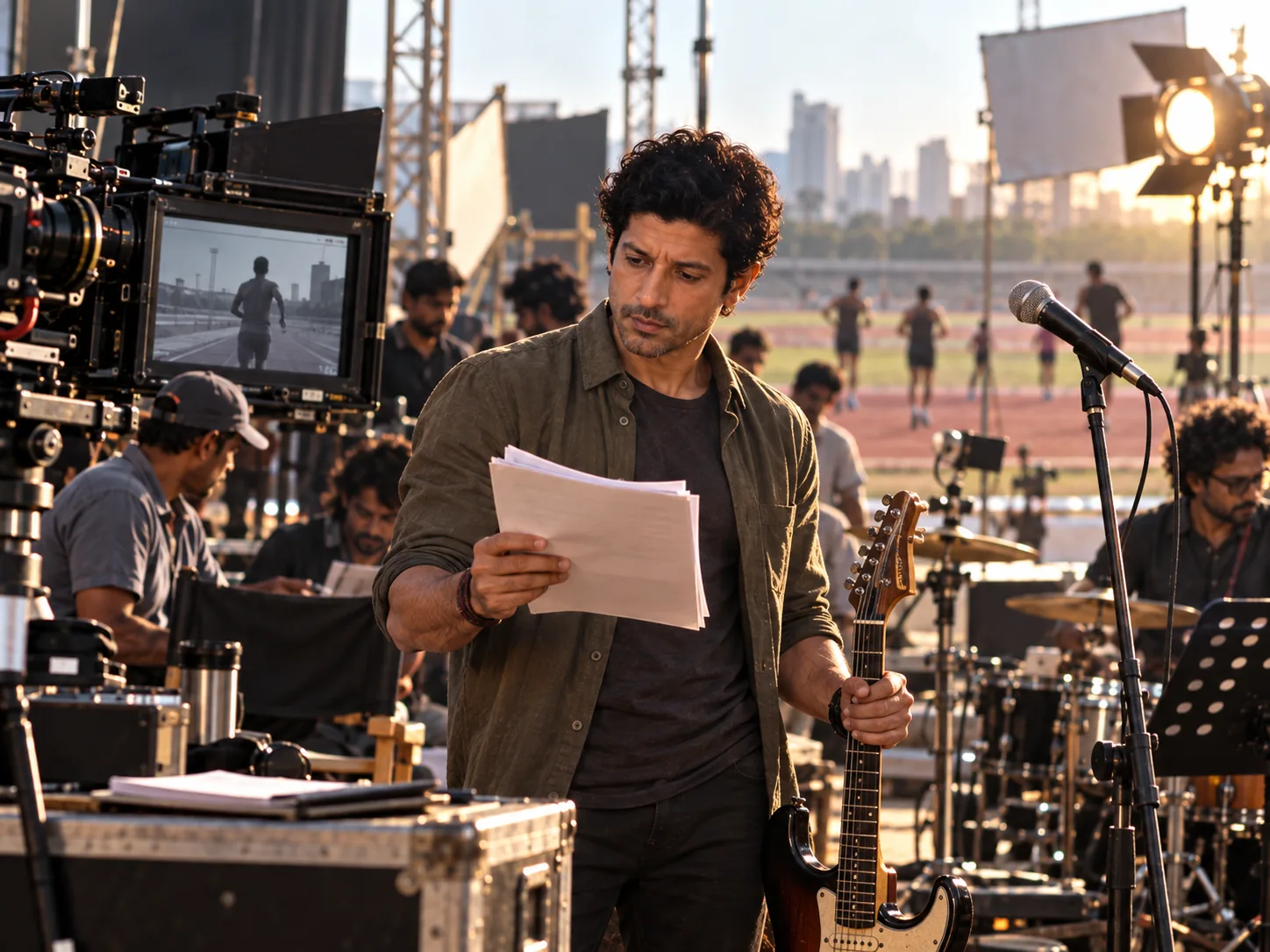
In 2008, Farhan did something that shocked the industry. He announced that he would act in a film. At the time, the assumption was that this was a vanity project—that a successful director wanted to be a star. But the film he had written and the role he chose revealed something deeper. Rock On!! was a musical drama about a washed-up rock band trying to find its magic again. Farhan played Aditya Shroff, the brooding lead singer, and his performance was not about charisma or heroism. It was about vulnerability, about a man falling apart and trying to find the pieces of himself. He won the Filmfare Award for Best Male Debut, but more significantly, he proved that he understood acting in the same way he understood directing: not as entertainment but as a craft of revealing truth.
What followed was a series of diverse roles. In Zindagi Na Milegi Dobara, he played a man learning that life was about more than just ambition. In Dil Dhadakne Do, he was a modern man wrestling with family expectations. In The Sky Is Pink, he was a father watching his daughter’s fragility and his own inadequacy. With each role, he was proving that he was not an actor playing a version of himself. He was an actor willing to disappear into characters that were nothing like the public image of Farhan Akhtar.
Bhaag Milkha Bhaag: The Transformation
10 Remarkable Facts About Meghnad Saha Life and Achievements
But the role that changed everything came in 2013 with Bhaag Milkha Bhaag. Farhan took on the role of Milkha Singh, the legendary Indian athlete known as the Flying Sikh. To play this role, he transformed himself physically. He trained like an athlete. He lost weight. He gained muscle. He studied the man’s movements, his walk, his posture, the way he carried himself. He became not an actor playing an athlete but an athlete who was also an actor.
The performance was extraordinary. It swept all the major awards that year. But what made it significant was that it proved something that many doubted: that method acting could work in Hindi cinema, that an actor could commit so completely to a character that the boundary between performer and role dissolved. Farhan was no longer a director dabbling in acting. He was a serious actor, capable of carrying a film on the strength of his performance alone.
Beyond Cinema: The Activist Who Speaks
In 2008, Farhan made a surprising and successful transition to acting with the musical drama Rock On!!. His portrayal of the brooding lead singer Aditya Shroff won him the Filmfare Award for Best Male Debut. However, his magnum opus as an actor came with Bhaag Milkha Bhaag (2013). His physical transformation and intense portrayal of the legendary athlete Milkha Singh swept all major awards that year, establishing him as a serious method actor. He has since starred in diverse roles in films like Zindagi Na Milegi Dobara, Dil Dhadakne Do, and The Sky Is Pink.
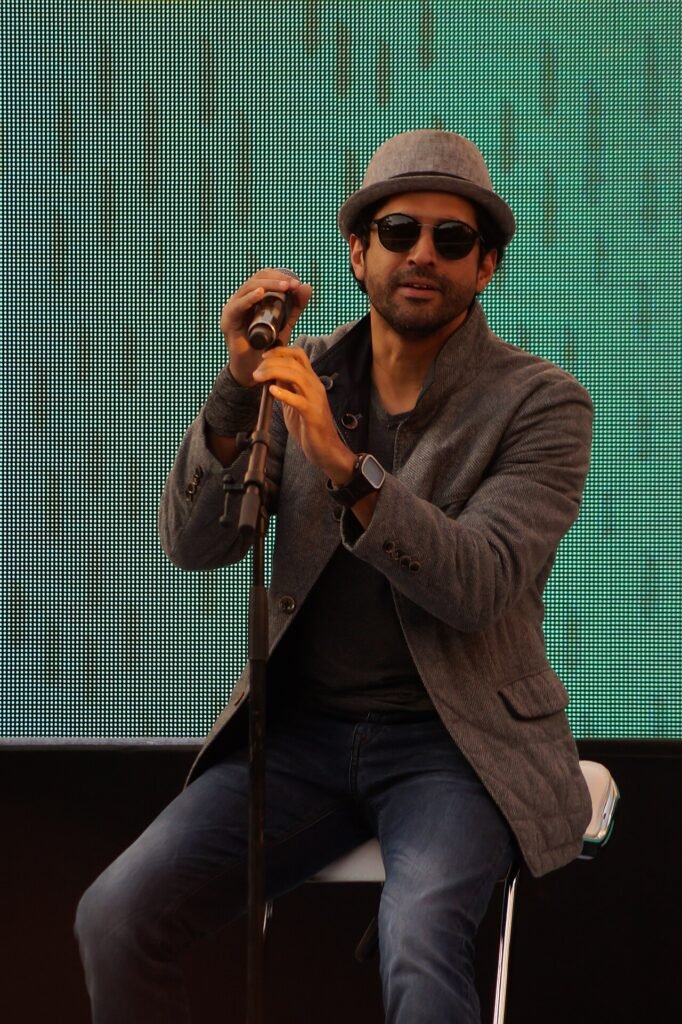
Related to article: Beyond Boundaries: The Complete Biography of Farhan Akhtar · Source: Wikimedia Commons · Satdeep Gill · CC BY-SA 4.0
In 2013, something happened that shifted Farhan’s trajectory in a way that even he could not have predicted. An employee of his was assaulted. The incident forced him to confront something that cinema had not forced him to confront: that the world outside the studio was broken in ways that cinema alone could not fix. He launched MARD—Men Against Rape and Discrimination—a social campaign aimed at rethinking masculinity, at creating spaces where men could discuss gender equality not as a political position but as a human responsibility.
The campaign was born from a simple idea: that men needed to be part of the conversation about gender violence, not as perpetrators to be condemned but as allies to be enlisted. Farhan used his platform, his voice, his visibility to push this message. In 2016, he was appointed the first male Goodwill Ambassador for UN Women in South Asia. This was significant because it recognized that his work as an activist was not separate from his work as an artist. They were the same impulse: the need to tell stories that matter, to create change in the real world.
The Many Identities of One Man
Farhan Akhtar today is difficult to categorize because he has refused every attempt at categorization. He is a director who is also an actor. He is an artist who is also an activist. He is a man born into privilege who has used that privilege to speak about people without privilege. He has produced films and web series that refuse to accept the formulas of Indian entertainment. His company, Excel Entertainment, which he co-founded with Ritesh Sidhwani, is known for backing scripts that are unique, that are different, that take risks that mainstream cinema would never take.
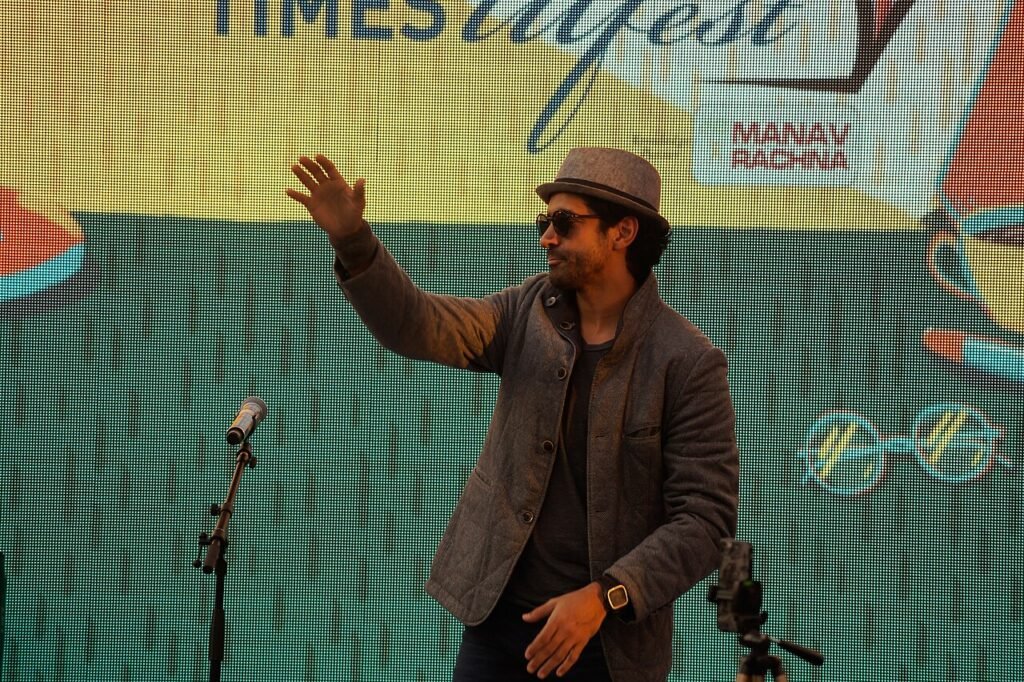
He performs live with his band, Farhan Live, using concerts as platforms for social conversation. He has written lyrics for Hollywood films. He has acted in web series that demanded a different kind of vulnerability from actors than traditional cinema required. He is the brother of Zoya Akhtar, the director of Gully Boy, and together they represent a new generation of filmmakers who understand that cinema is not separate from society but embedded in it, capable of changing it, responsible for changing it.
The Dropout’s Unfinished Revolution
Farhan Akhtar’s journey from a college dropout to a figure of influence in Indian cinema and global activism is not the story of someone who overcame adversity to achieve success. It is the story of someone who understood that the adversity itself was the education. Being kicked out of college taught him that formal systems could not contain his ambition. His parents’ skepticism taught him that he had to earn their respect. The tragedy of assault taught him that art without purpose was mere decoration.
Today, as he continues to direct, act, produce, and advocate, Farhan remains fundamentally a rebel—but a rebel with a clear purpose. He has not settled into any single identity. He has become instead a living example of what happens when you refuse to be confined, when you insist on bringing your whole self to every work you undertake, when you use the platforms you have built to speak for people who do not have those platforms. The dropout from HR College became the man who changed cinema. And in changing cinema, he changed what cinema could say.
7 Incredible Facts in the Satyendra Nath Bose Biography
If you think you have remembered everything about this topic take this QUIZ
Results


#1. Farhan Akhtar made his directorial debut with which cult classic film in 2001?
#2. Which social initiative was founded by Farhan Akhtar to campaign against gender violence?
#3. For which biopic did Farhan Akhtar undergo a massive physical transformation to play the lead athlete?
#4. Farhan Akhtar is the son of which legendary screenwriters?
#5. Farhan Akhtar made his acting debut in which musical drama film?
#6. Farhan Akhtar was appointed as the first male Goodwill Ambassador for which UN organization in South Asia?
#7. Which famous production house was co-founded by Farhan Akhtar and Ritesh Sidhwani?
#8. Farhan Akhtar reportedly wrote the script for Dil Chahta Hai after getting an ultimatum from whom?

Related to article: Beyond Boundaries: The Complete Biography of Farhan Akhtar · Source: Wikimedia Commons · Lavnish34 · CC BY-SA 4.0
8 Remarkable Secrets in the Jagadish Chandra Bose Biography
What was Farhan Akhtar’s first movie as a director?
His directorial debut was the cult classic Dil Chahta Hai, released in 2001.
Is Farhan Akhtar a trained singer?
While he is a playback singer, he does not have extensive formal training. He debuted as a singer in the movie Rock On!!.
What is the MARD initiative?
MARD stands for “Men Against Rape and Discrimination,” a social campaign launched by Farhan to raise awareness about gender equality and women’s safety.
How is Farhan Akhtar related to Zoya Akhtar?
Zoya Akhtar, the acclaimed director of Gully Boy and Zindagi Na Milegi Dobara, is Farhan’s elder sister.
Who is Farhan Akhtar’s current wife?
He is married to Shibani Dandekar.
Sources & References
Farhan Akhtar as a pioneering director and screenwriter whose debut film Dil Chahta Hai revolutionized urban storytelling in Hindi cinema — Farhan Akhtar, born in 1974 to screenwriters Javed Akhtar and Honey Irani, made his directorial debut with Dil Chahta Hai (2001) at age 27, creating a modern, realistic sensibility that departed from traditional Bollywood conventions and won the National Film Award for Best Feature Film in Hindi, fundamentally changing the landscape of Hindi cinema.
Farhan Akhtar’s acclaimed directorial works including Lakshya and Don and his role in establishing Excel Entertainment as a production house for innovative content — Farhan Akhtar continued to demonstrate directorial range with the war drama Lakshya (2004) and the action thriller Don (2006), establishing himself as a director capable of working across genres while co-founding Excel Entertainment with Ritesh Sidhwani, a production company known for backing unique scripts and high-quality content.
Farhan Akhtar’s transition to acting with Rock On!! and his career-defining performance in Bhaag Milkha Bhaag as the legendary athlete Milkha Singh — Farhan Akhtar debuted as an actor in Rock On!! (2008), winning the Filmfare Award for Best Male Debut, and delivered his career-defining performance in Bhaag Milkha Bhaag (2013) as the legendary athlete Milkha Singh, demonstrating commitment to method acting and winning major awards for his physically transformative portrayal.
Farhan Akhtar’s founding of MARD (Men Against Rape and Discrimination) and his appointment as UN Women Goodwill Ambassador in South Asia — In 2013, following an incident involving assault on an employee, Farhan Akhtar founded MARD (Men Against Rape and Discrimination), a social campaign dedicated to rethinking masculinity and ending gender violence, leading to his appointment in 2016 as the first male Goodwill Ambassador for UN Women in South Asia.
Farhan Akhtar’s diverse roles in films including Zindagi Na Milegi Dobara, Dil Dhadakne Do, and The Sky Is Pink, demonstrating versatility as an actor — Farhan Akhtar has appeared in diverse roles across multiple films including Zindagi Na Mileki Dobara, Dil Dhadakne Do, and The Sky Is Pink, establishing himself as a versatile actor willing to take on vulnerable and complex characters that showcase his range beyond his public persona.