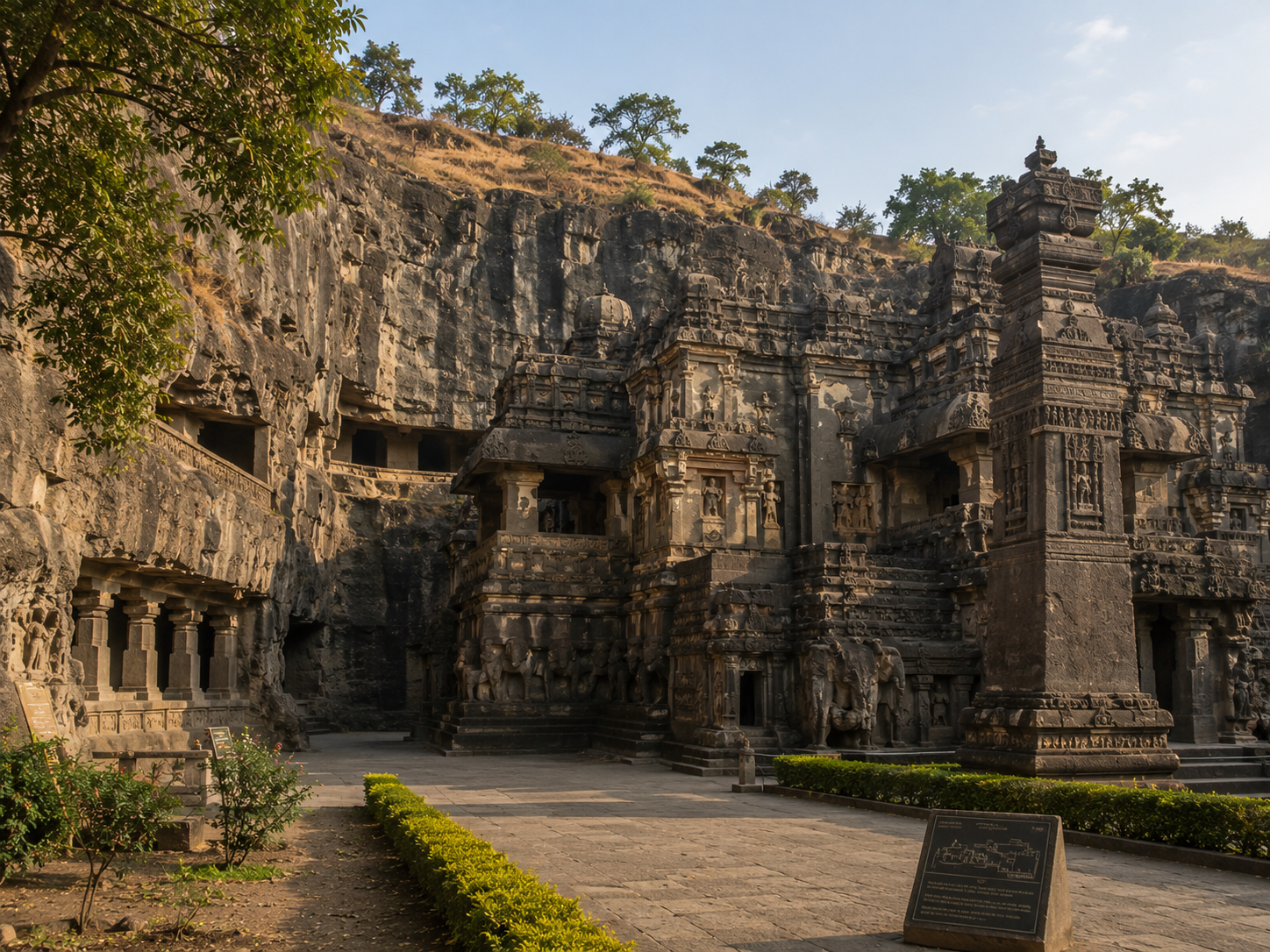
Inside Ajanta, Ellora and Elephanta, the temples carved from whole mountains
Almost every building in the world is made the same way. You start at the ground and stack things up: brick on brick, stone on stone, floor above floor.
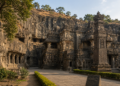
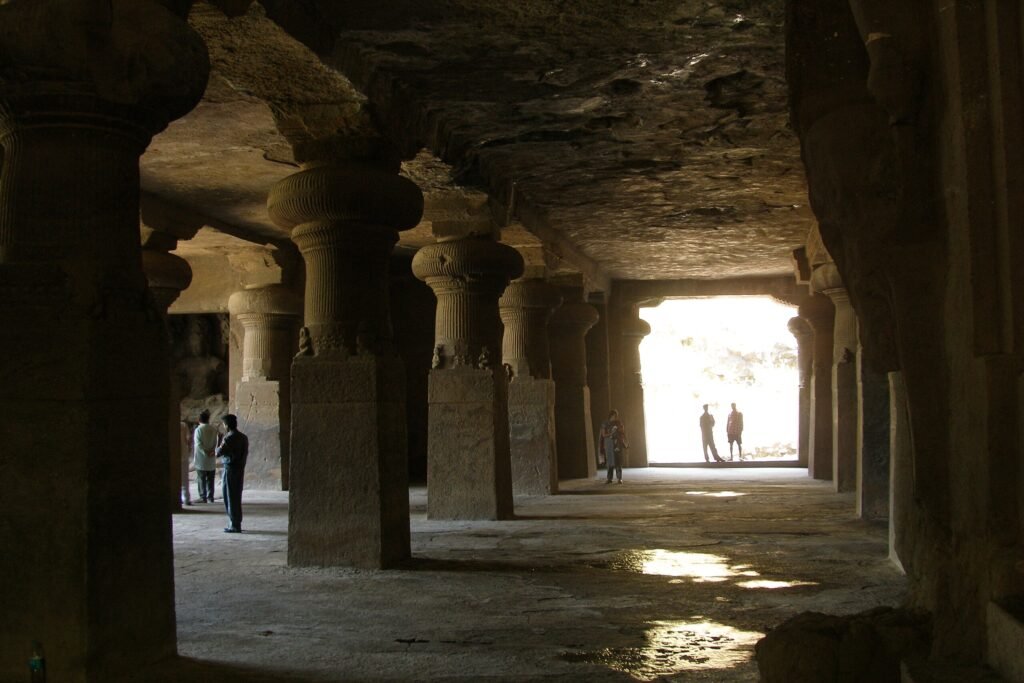
Some of India’s greatest monuments were made the opposite way. Their builders did not stack anything at all. They took a whole mountain of solid rock and carved everything away that was not the temple, cutting downward and inward until a shrine stood where the stone had been. Nothing was ever added. Everything was only taken away.
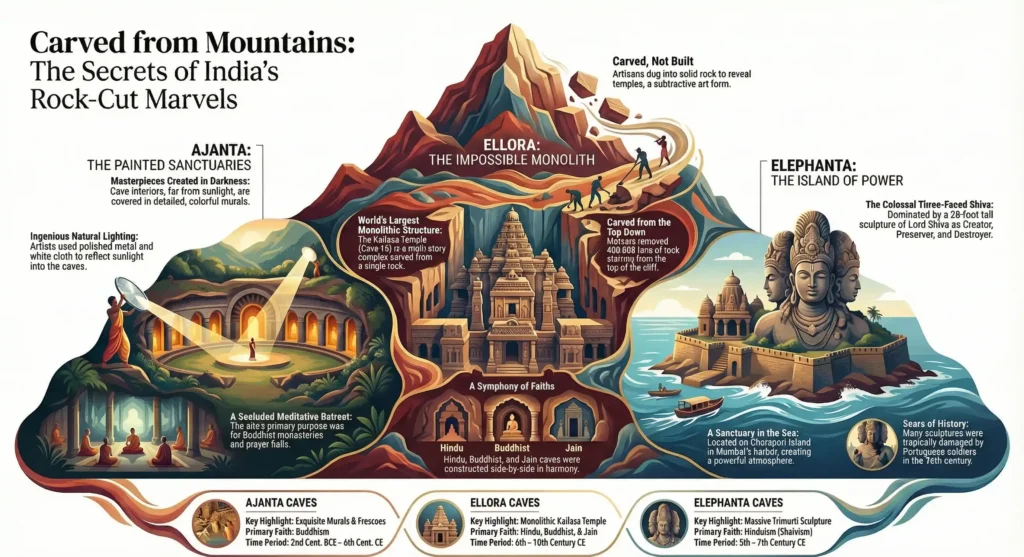
That is the strange, patient art called Indian rock-cut architecture. And its three greatest sites, Ajanta, Ellora and Elephanta, still keep a few of their secrets.
Carving instead of Building
To picture how hard this is, think of the difference between a builder and a sculptor. A builder can pull out a bad brick and lay a new one. A sculptor cannot glue a chip back on.
These artists worked like sculptors, but on the scale of a cathedral. One wrong strike of the chisel could ruin a pillar or a god’s face forever, and there was no way to fix it. They carved into the hard black basalt of the Deccan Plateau, a volcanic rock tough enough to last for ages yet just soft enough to shape. The tradition flourished for over a thousand years, from about the 2nd century BCE to the 10th century CE.
The Caves a Hunter found by Accident
The most famous of these places was lost for almost a thousand years, and then found by pure chance.
In 1819, a British officer named John Smith was hunting in the Sahyadri hills. Following the chase, he looked across a horseshoe-shaped gorge above a river and noticed the top of a doorway in the cliff, half-buried in jungle. He had stumbled on the Ajanta caves. The Buddhist monks who once lived and prayed there had left centuries earlier, and the forest had quietly swallowed the entrances.
Ajanta had sat hidden in plain sight for roughly a thousand years, until a hunting party rediscovered it in 1819.
Painting in the Dark
Inside Ajanta waits a real puzzle. The caves are cut deep into the cliff, where sunlight barely reaches. Yet their walls are covered in glowing, detailed paintings of the Jataka tales, down to the jewellery on a princess and the pattern on her robe.
So how do you paint, in fine detail, in the dark?
The likely answer is beautifully simple. Historians believe the artists used sheets of white cloth and polished metal to bounce sunlight from the cave mouth into the deep inner halls, filling them with a soft, steady glow. For colour they ground up the earth around them, red and yellow ochre and lamp-black, and for the richest blues they used lapis lazuli, a precious stone carried all the way from Afghanistan. These paintings were done on dry plaster, which makes them murals rather than true frescoes. That some of those colours have survived nearly 2,000 years in a damp gorge is astonishing on its own.
The Mountain that Became a Temple
If Ajanta is about painting, Ellora is about sheer nerve. At its heart stands the Kailasa Temple, and it may be the boldest thing ever carved from stone.
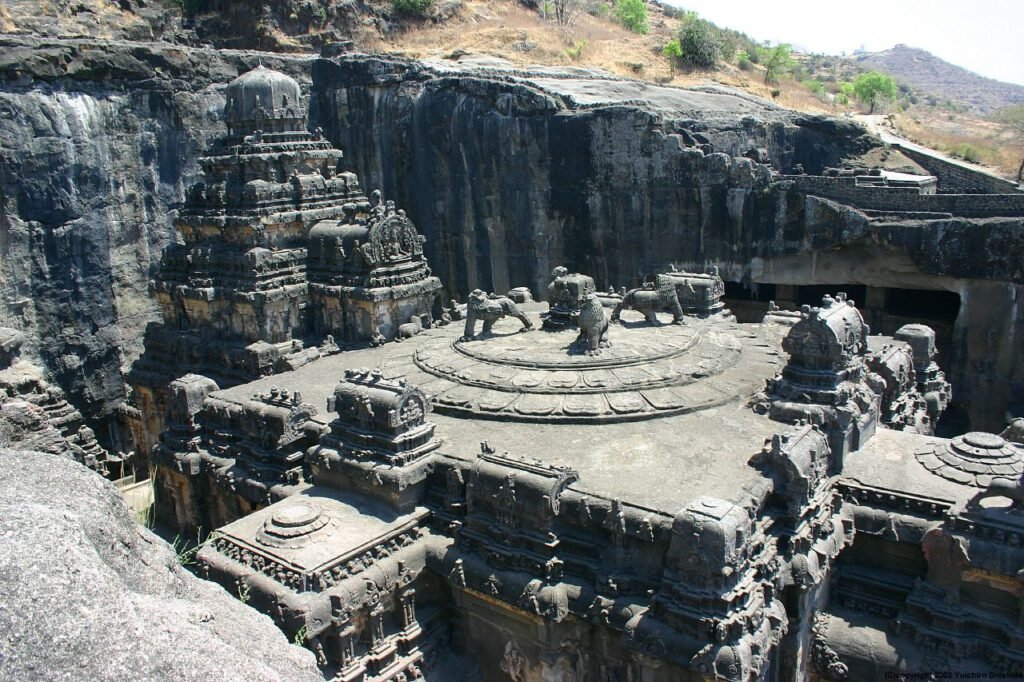
Around the 8th century, the Rashtrakuta king Krishna I decided to carve a full, multi-storey temple out of a single basalt cliff. But he did not start at the bottom, as a normal builder would. His workers started at the very top of the mountain and cut downward, releasing the temple from the rock as they descended.
Think about what that means. There could be no scaffolding to hold up a ceiling, because the ceiling was simply the ground the workers were standing on before they dug below it. Every pillar, staircase, elephant and shrine had to be imagined, finished, inside the mountain before a single stone was struck. And a mistake could not be undone.
The Kailasa Temple was carved from one rock, from the top down. Workers removed an estimated 200,000 tonnes of stone, and by some counts far more, to free a temple larger in area than the Parthenon.
It was built to stand for Mount Kailash, the Himalayan home of Shiva. The builders did not raise a mountain to the god. They turned a mountain into one.
Ashoka the Great: The Emperor Who Conquered Through Compassion
Three faiths on One Cliff
There is a gentler wonder at Ellora, and it is easy to miss among all the stone.
Across its 34 caves, carved over roughly five centuries, three religions sit side by side: Buddhist halls, Hindu temples, and Jain shrines, all cut into the same long ridge. And there is no sign that the groups fought or smashed each other’s work. Instead they seem to have shared the same skilled craftsmen and the same techniques. A carver who shaped a Hindu shrine one year might cut a Buddhist hall the next.
In a world that so often splits along the lines of faith, a single cliff where three religions were carved in peace is worth stopping for.
Diwali: Celebrating the Triumph of Light Over Darkness
The Island of the Three-faced God
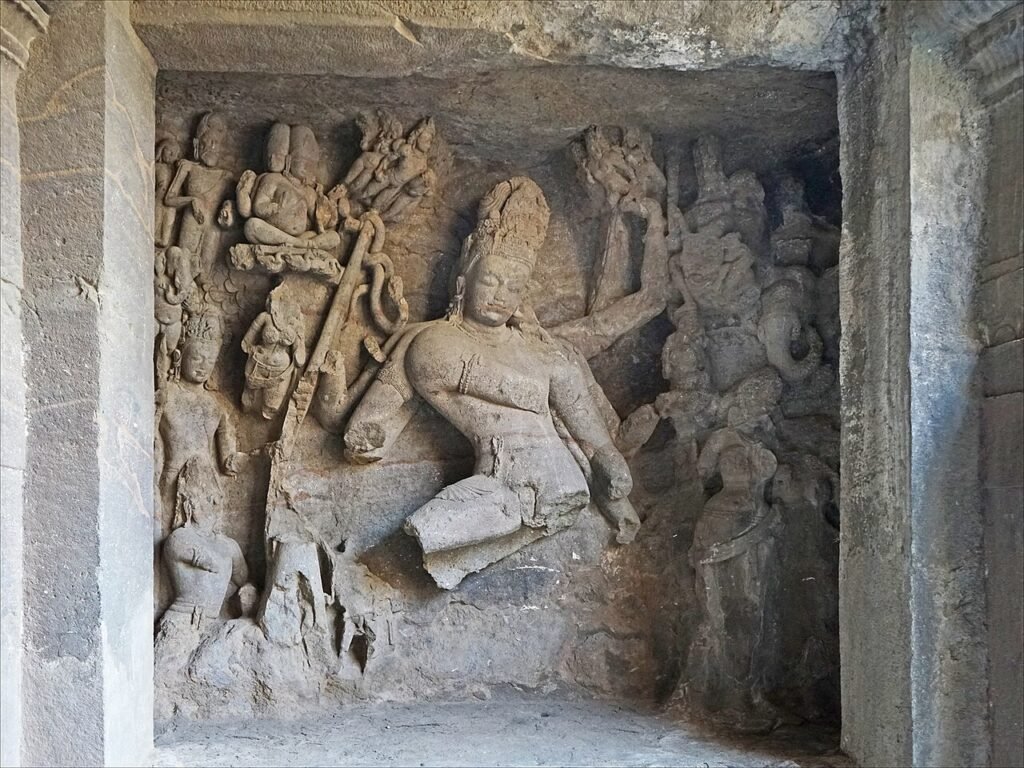
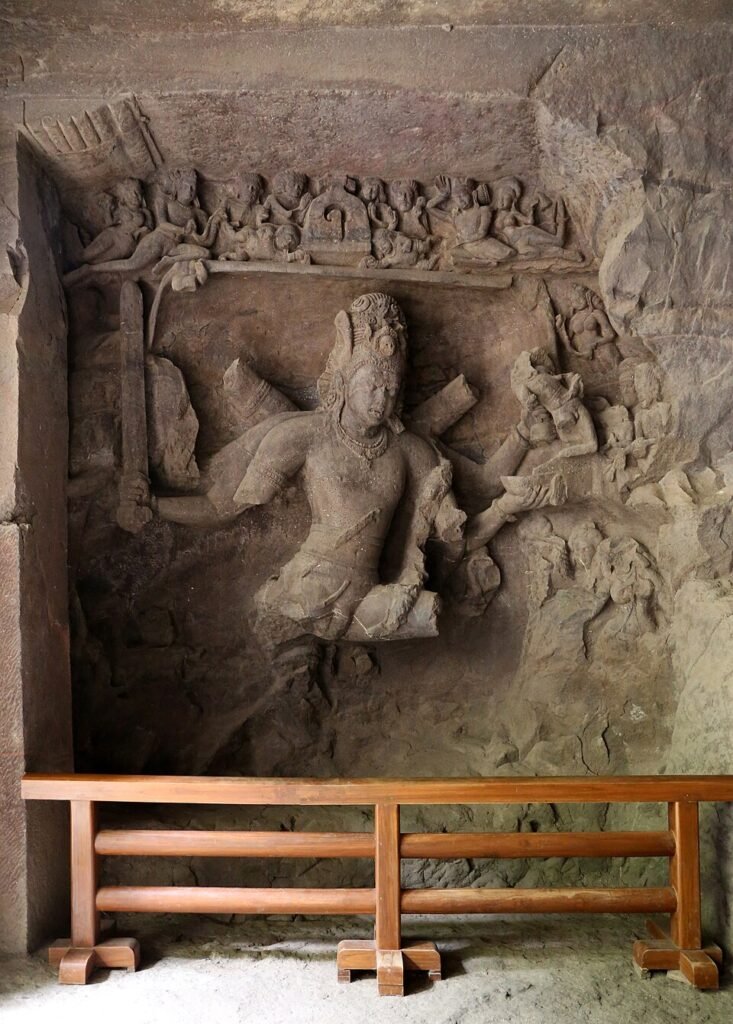
The third great site sits out in the sea. A short ferry ride from Mumbai lies the island of Gharapuri, better known as Elephanta.
Its caves are ruled by one overwhelming image: the Trimurti, a calm, three-faced bust of Shiva about twenty feet tall, carved straight from the rock. Its three faces show the god as creator, preserver and destroyer, with a deep stillness at the centre holding the three together. It has watched over the island since around the 5th to 7th century.
But Elephanta also carries a wound. When the Portuguese arrived in the 16th century, they named the island after a large stone elephant they found on the shore. It is said that their soldiers used the beautiful carvings inside the caves for target practice, and musket fire scarred many of the panels. Somehow the great Trimurti survived, perhaps saved by the sheer awe of standing before it.
5 Timeless Secrets of Rajasthani Miniature Painting and Courtly Life
Why the Chisels fell Silent
After the 10th century, this astonishing art slowly came to an end. Builders went back to the older way of stacking stone up from the ground, and the great cliffs were left in peace.
Now and then people find these places so hard to believe that they whisper about aliens or lost machines. But archaeologists are clear: this was human work, done with hammers, chisels, and years of patience. One cave at Ajanta was even left unfinished, and it acts like a frozen photograph, showing exactly how the workers cut the rock away, layer by layer, from the top down.
What the Mountains Remember
There is a quiet idea hiding inside all of this. These temples were not really built. In a way, they were uncovered. The shrine, the god, the pillar were imagined as already waiting inside the rock, and the artists simply removed everything that was not them.
With little more than iron tools, steady hands and deep faith, people turned cliffs into cathedrals and mountains into gods, working where a single slip could not be mended. That is the true marvel of these caves. Not that they look impossible, but that human beings, long ago, quietly went ahead and did it anyway.
| Feature | Details |
| Locations | Aurangabad (Ajanta & Ellora) & Mumbai (Elephanta), Maharashtra |
| UNESCO Status | World Heritage Sites (1983, 1987) |
| Primary Eras | 2nd Century BCE – 10th Century CE |
| Key Faiths | Buddhism, Hinduism, Jainism |
| Architectural Marvel | Top-down monolithic excavation (Kailasa Temple) |
7 Secrets of Dravidian Temple Architecture and the Shadowless Vimana
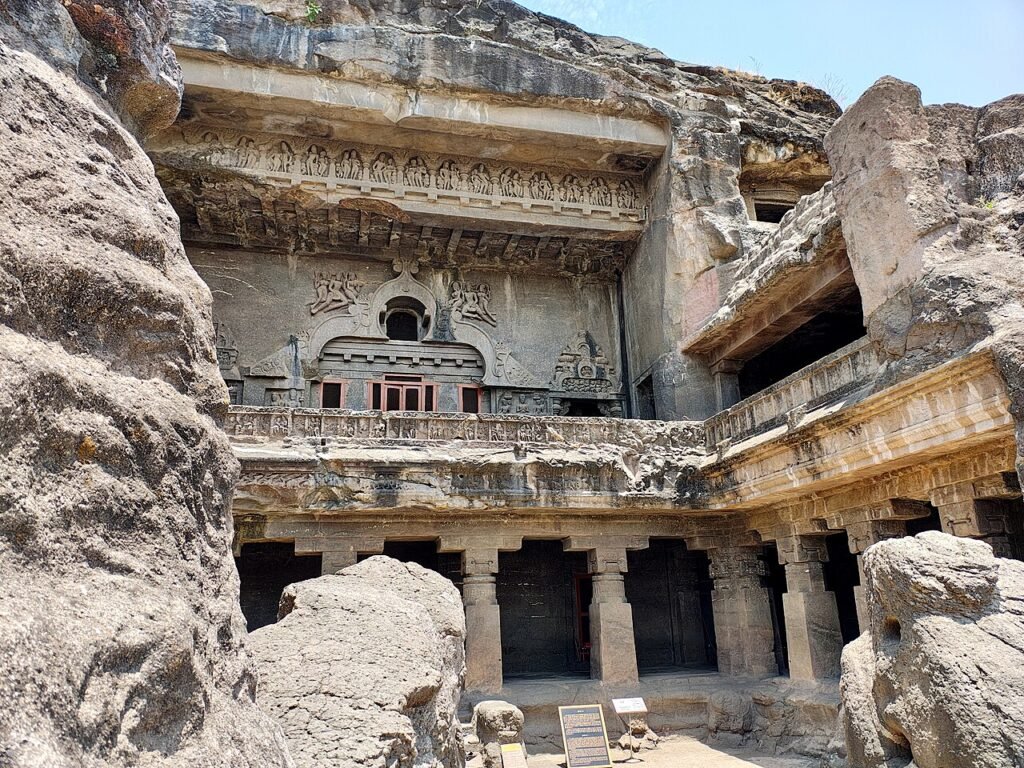


2. Shadows and Light: The Secrets of Ajanta’s Murals

Asha Bhosle: (September 1933- Present)
If you think you have rememberd everything about this topic take this QUIZ
Results


#1. What is the fundamental difference between the Indian rock-cut architectural style and traditional masonry construction?
#2. What unique and challenging construction method was used to create the Kailasa Temple (Cave 16) at Ellora?
#3. According to the source, how did artisans in the dimly lit Ajanta caves achieve the necessary illumination to paint their detailed murals?
#4. What is the primary artistic and religious highlight of the Elephanta Caves?
#5. The paintings at Ajanta are technically classified as murals in the “tempera” style. What does this mean?
#6. What does the side-by-side construction of Hindu, Buddhist, and Jain caves at Ellora strongly suggest?
#7. What geological feature made the Maharashtra region an ideal location for extensive rock-cut architecture?
#8. The Elephanta Caves suffered significant damage in the 16th century. Who does the source material suggest was responsible for this?
What is the best time to visit Ajanta and Ellora?
The best time to explore these marvels of Indian rock-cut architecture is from November to February when the weather is cooler. The monsoon (June to September) renders the waterfalls at Ajanta spectacular, but travel can be difficult.
How was the Kailasa Temple built?
It was built using the “top-down” excavation method. Artisans started at the top of the rock face and carved downward, removing debris as they went, a unique technique in the history of Indian rock-cut architecture.
Are the paintings at Ajanta frescoes?
Technically, no. They are murals painted in the “tempera” style. The artists applied paint to a dry plaster surface rather than wet plaster (which is true fresco).
Can I visit all three sites in one trip?
Yes, but it requires planning. Ajanta and Ellora are near Aurangabad, while Elephanta is near Mumbai. You can take a train or flight between Mumbai and Aurangabad to see the full spectrum of Indian rock-cut architecture.
Why are there so many rock-cut caves in Maharashtra?
The region is covered by the Deccan Traps, a massive formation of basalt rock. This volcanic rock is hard enough to be durable but soft enough to be carved, making it the perfect medium for Indian rock-cut architecture.
Sources and references
Encyclopaedia Britannica and UNESCO World Heritage listings (Ajanta, Ellora, Elephanta) — the subtractive rock-cut method, the basalt of the Deccan, the span from roughly the 2nd century BCE to the 10th century CE, and the World Heritage status of all three sites.
Google Arts & Culture (Archaeological Survey of India, “Vignettes of Ajanta & Ellora”) — Ellora’s caves shaped top-down from monolithic rock, the volcanic basalt formation, and the fact that Ellora, unlike Ajanta, was never lost to memory.
Reporting and histories of Ajanta (mystic/heritage accounts) — the 1819 rediscovery by British officer John Smith while hunting in the Sahyadri hills, the horseshoe gorge above the Waghora river, the two building phases, and the Vakataka patronage.
My Modern Met, India Legacy and Kailasa Temple studies — the Kailasa Temple attributed to Rashtrakuta king Krishna I in the 8th century, the top-down excavation, the estimate of 200,000 to 400,000 tonnes of rock removed, and its size compared with the Parthenon.
Original Curious Indian article (“Ancient Secrets of Indian Rock-Cut Architecture”) — the Ajanta murals painted using reflected light, the pigments including lapis lazuli from Afghanistan, the tempera-on-dry-plaster technique, the Elephanta Trimurti and its damage by Portuguese soldiers, and the side-by-side faiths at Ellora.
General studies of Indian art and architecture — the Jataka-tale subjects of the Ajanta paintings, the decline of rock-cut work after the 10th century in favour of structural temples, and the unfinished Ajanta cave that reveals the excavation method.
Author


Exploring the Soul of Bharat through History, Science, Culture, and its Diversity
Our Mission
Curious Indian is a definitive knowledge portal dedicated to chronicling the events, personalities, and cultural shifts that defined the Indian subcontinent. From the ancient Vedic Period to the complexities of 21st-century politics, our goal is to provide deep-dive analysis that inspires.
Editorial Standards & E-E-A-T
Every article published under our brand undergoes a rigorous fact-checking process. We prioritize primary historical records, academic citations, and credible archives to ensure our readers receive accurate, high-authority information.
Historical Integrity Directly sourcing from ASI archives and academic journals.Topical Authority Comprehensive clustering of Indian Science, Biographies, and Wars.Managed by Paripurna Datta and TEAM | Dedicated to the Knowledge of India.