Inside the Bundi and Kota schools, where nature carried every feeling
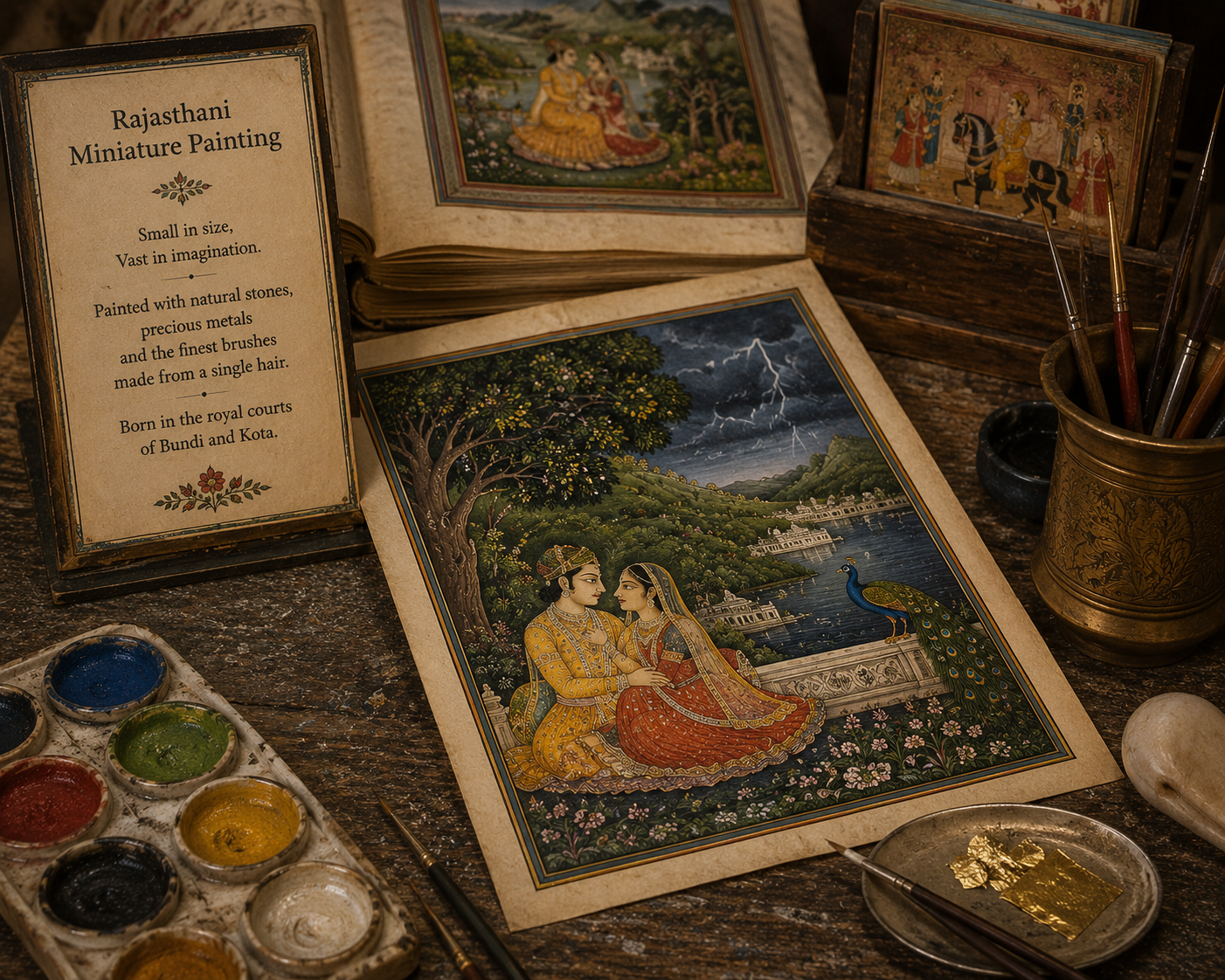
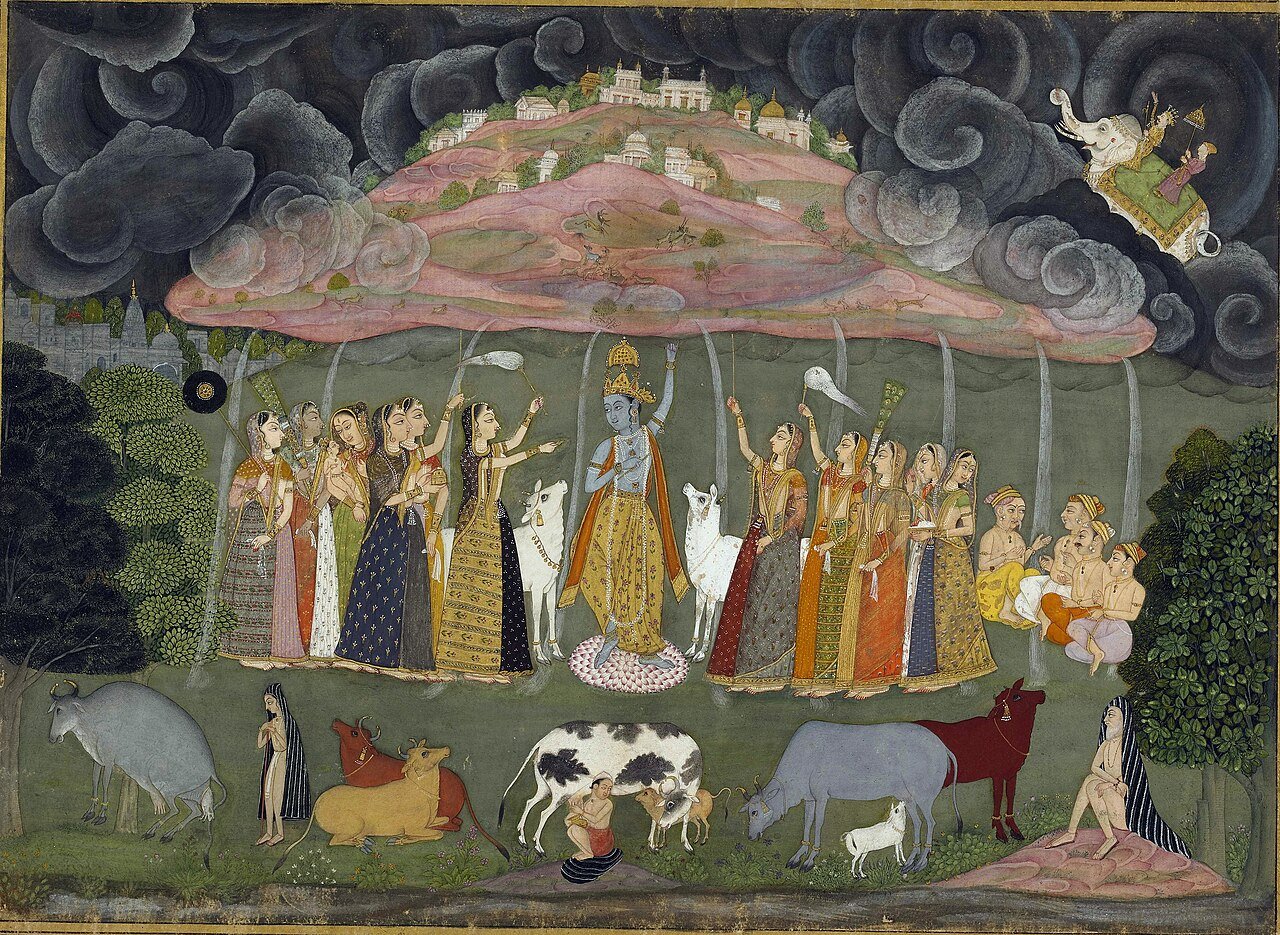
A Rajasthani miniature painting is often smaller than a sheet of notebook paper. Yet inside one small frame you can find a thunderstorm, a whole forest, a love story, and, strangest of all, the sound of music.
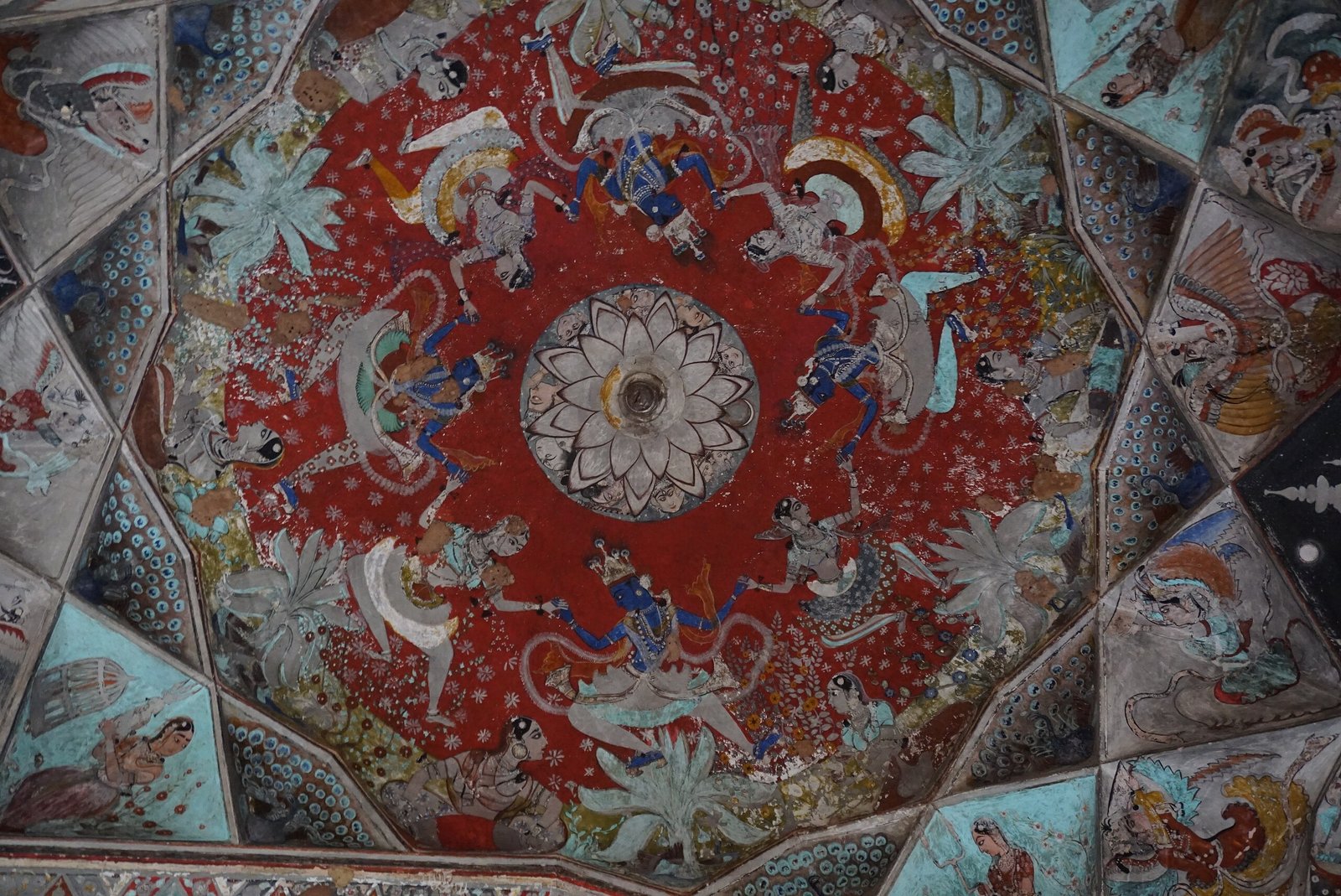
These little paintings came from the royal courts of Rajasthan, and they were never meant to hang on a great big wall. They were made to be held in the hands, passed carefully from person to person, and studied up close. Into that tiny space, the artists managed to pack an astonishing amount of feeling.
Where the land became the mood
Many of the finest of these paintings came from the Hadoti region, home to the kingdoms of Bundi and Kota. This was not empty desert but a green land of thick forests, shining lakes and low hills, and that landscape soaked deep into the art.
In these paintings, nature is never just a backdrop sitting quietly behind the people. It carries the feeling of the whole scene. When two lovers are kept apart, the sky above them fills with heavy, rain-dark clouds. When the mood is one of longing, the trees seem to lean toward one another. The land does the crying and the sighing that the calm painted faces cannot.
Life of Mahavira: From Prince Vardhamana to Great Conqueror
Bundi: the school that painted music
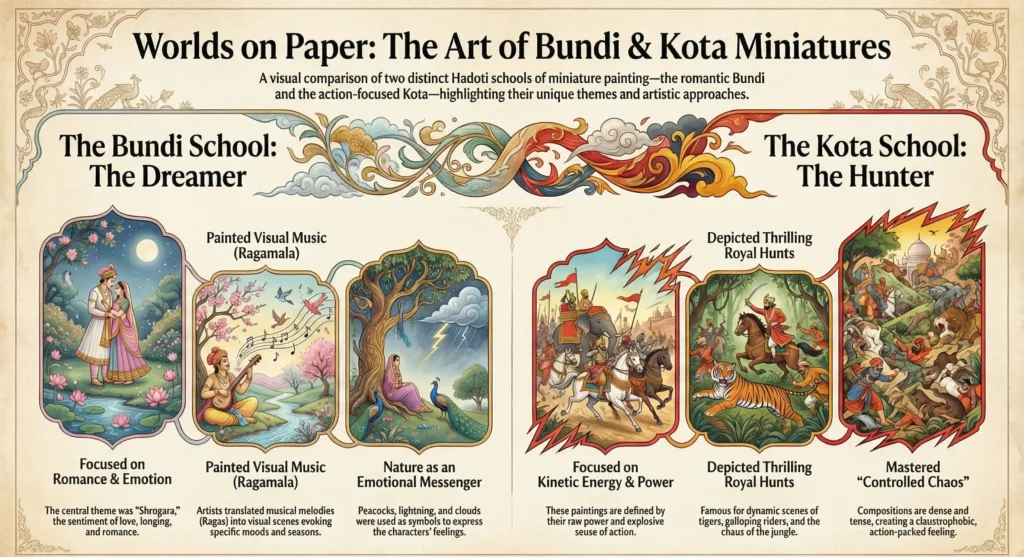
The Bundi school, which took shape in the late 1500s, was the dreamer of the two. It mixed the fine, careful lines of the Mughal courts with a bold, warm palette of its own, and it loved above all the mood of romance.
And it did something that sounds impossible. It painted music.
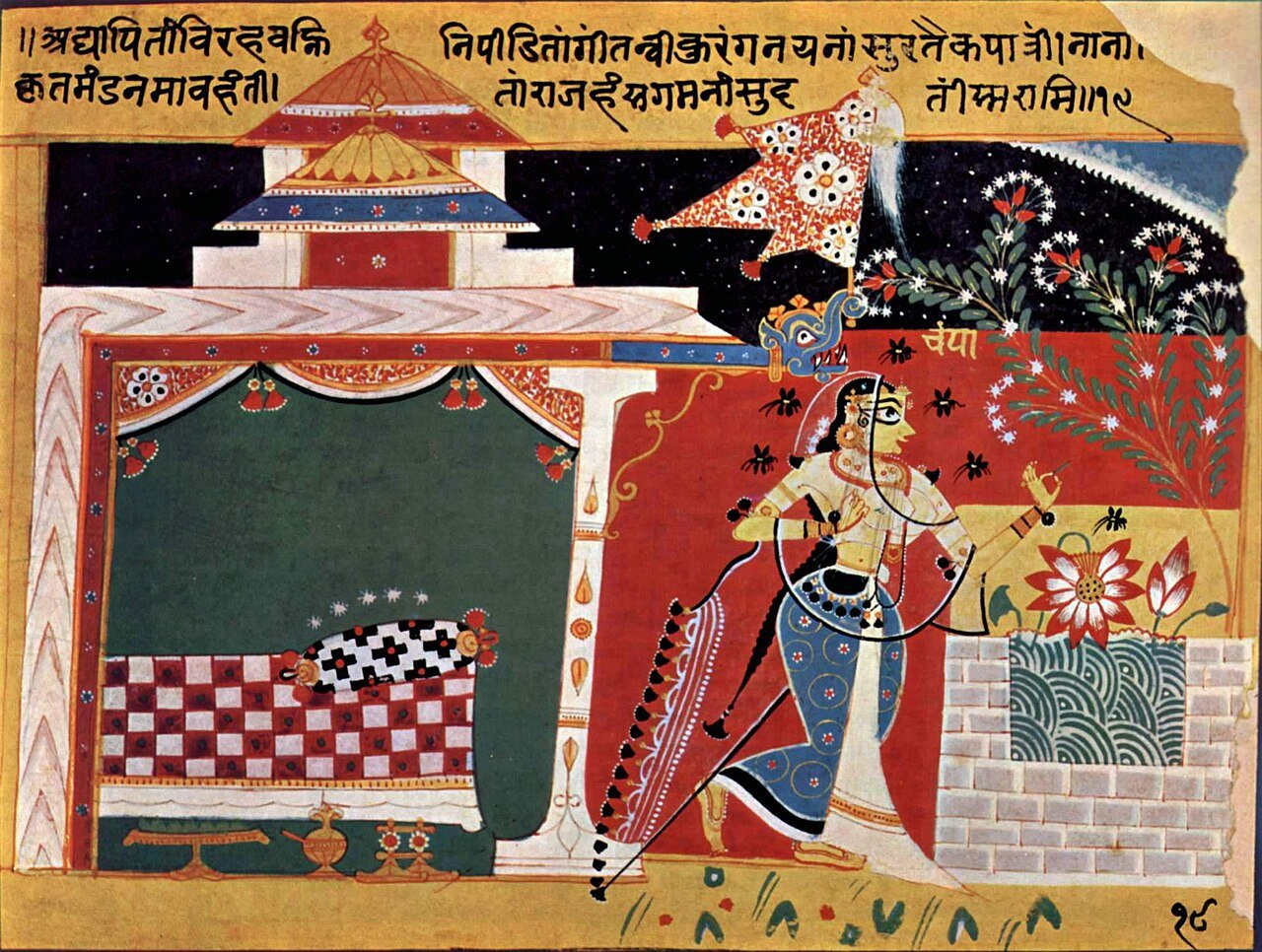
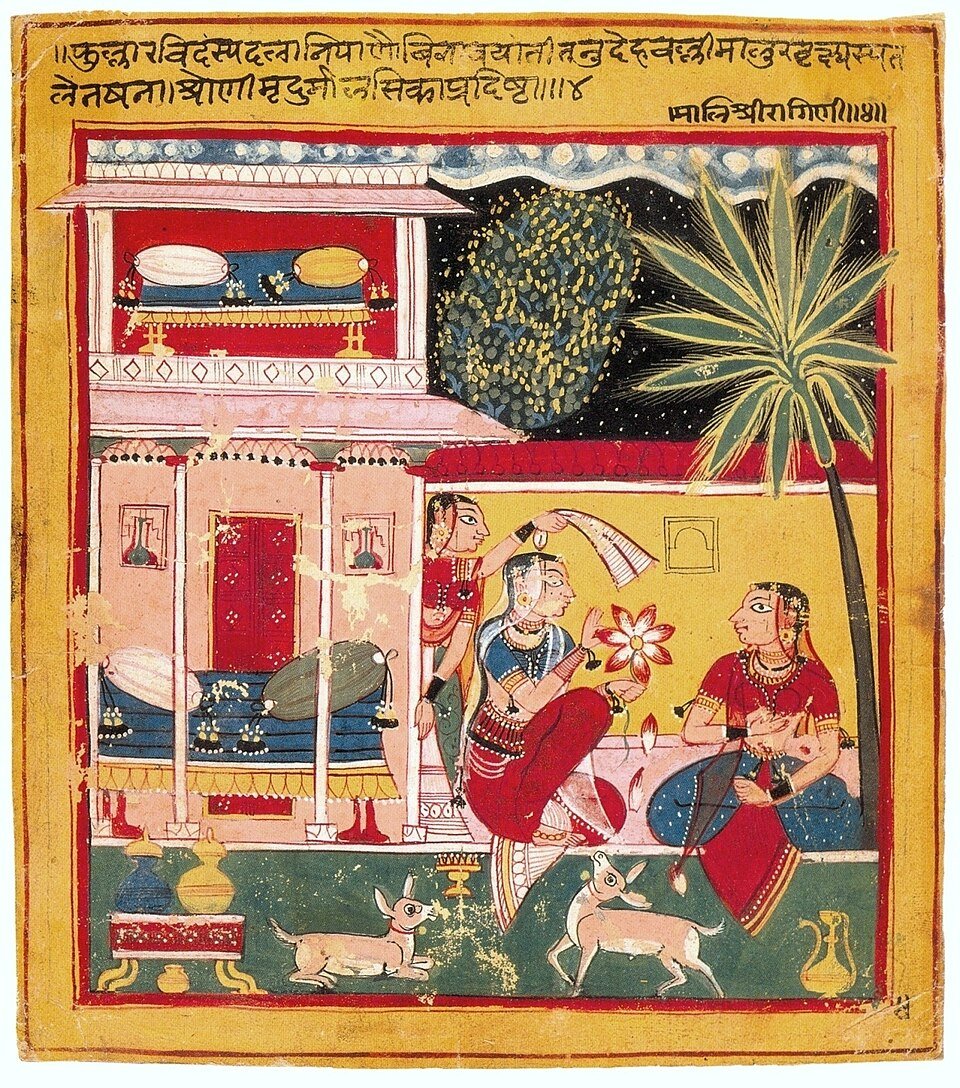
In a form called Ragamala, artists tried to do the unthinkable: to paint a piece of music so that you could see its mood.
In Indian classical music, each raga is a melody tied to a certain feeling, a season, or a time of day. The Bundi artists set out to turn those sounds into pictures. To paint a tender morning melody, an artist might show a lonely woman playing a veena in a quiet grove, her music so sweet that wild deer creep close to listen. You are meant to look at the picture and almost hear the tune drifting out of it.
Nature also worked as a secret code. A peacock sitting on a rooftop was not just a bird; it meant someone was waiting for their beloved. A flash of lightning in the sky stood for the sudden spark of love. A viewer who knew the code could read an entire love story from a few small signs.
Fatehpur Sikri(1571): The Ghost City of the Mughal Empire
Kota: the school that painted the hunt
If Bundi was the dreamer, its neighbour Kota was the hunter. Kota began as part of Bundi and then broke away to become its own kingdom, and its painters found a completely different voice. Not soft romance, but wild action.
Under kings like Umed Singh in the 1700s and 1800s, Kota grew famous for its hunting scenes. These are not stiff portraits of a king posing with a dead animal. They explode with movement. A dense jungle fills the frame, and suddenly a tiger bursts out of the trees. Horses gallop, guns flash with smoke, and the whole painting seems to erupt at once.
The Kota artists were masters of what you might call controlled chaos. They crammed their scenes with scrub, rocks and twisted branches until the frame felt wild and crowded, then left one calm patch of silver water or pale sky so the eye could rest for a moment. The scenes showed off the courage of the king, but they also caught something harder to capture: the raw, untamed life of the forest itself.
The secrets in the paint
Part of the wonder of these paintings is how they were physically made, with a patience that is hard to imagine today.
To paint a single eyelash, or the fine whiskers of a tiger, an artist needed a brush finer than anything sold in a shop. So they made their own, sometimes from the hair of a squirrel or a kitten, and for the very finest lines a brush might hold just one single hair.
The paper was special too. Called wasli, it was made by gluing several sheets together and then rubbing the surface with a smooth stone or a shell until it shone like glass, so the colours could glide across it. The colours themselves came from the earth: crushed stones and minerals, plants, even gold and silver beaten into paint. The deepest blue was ground from lapis lazuli, a precious stone.
And one glowing yellow had a strange and rather sad origin.
A famous “Indian Yellow” was said to come from the urine of cows fed only on mango leaves, which stained it a brilliant gold.
That diet left the animals weak and unwell, and over time the practice was seen as cruel and died out in the early 1900s. For a hundred years people argued over whether the story was even true, until modern tests finally showed there was real truth in it.
3 Ancient Secrets of Indian Rock-Cut Architecture: A Journey Through Stone
The artists nobody named
We remember the kings who paid for these paintings, but what about the people who actually made them?
A workshop was a busy team, not a single genius alone in a room. One artist designed the scene, others ground the stones and gold into colour, and a scribe added lines of poetry. And here is the quiet unfairness of it: the kings were remembered by name, while the painters usually were not.
But some of them found a way to leave a mark. Now and then, tucked into the corner of a crowded procession, a painter would hide a tiny picture of himself among the crowd. It was a secret signature, hidden in plain sight, one artist’s quiet way of saying, across the centuries, that he had been there.
Why the little worlds still matter
We now live in a flood of pictures, swiping past a hundred images in a minute without really seeing one. A Rajasthani miniature asks for the exact opposite. It asks you to come close and slow right down.
Lean in, and you find a whole storm gathered in one corner, a love story told through a bird on a roof, a piece of music you can somehow see with your eyes. These small paintings were made by patient, mostly nameless hands to hold the very biggest things a person can feel, love and longing, courage and wonder, all inside the space of an open palm. And they are still holding them today, waiting quietly for anyone willing to look closely enough.
Ashoka the Great: The Emperor Who Conquered Through Compassion
Mauryan Empire: How Chandragupta and Ashoka United a Subcontinent
If you think you have rememberd everything about this topic take this QUIZ
Results


#1. What is the primary function of nature and the landscape in the paintings of the Hadoti region?
#2. The Bundi school of painting is particularly known for its focus on ‘Shrngara’, which refers to the sentiment of:
#3. What unique challenge did Bundi artists undertake when creating Ragamala paintings?
#4. Which characteristic best defines the artistic identity of the Kota school, especially in contrast to the Bundi school?
#5. In the symbolic language of Hadoti miniature painting, what might a peacock perched on a roof signify?
#6. How did Kota artists create a feeling of ‘controlled chaos’ in their famous hunting scenes?
#7. What was a significant non-artistic purpose of the Kota school’s hunting scenes?
#8. According to the text, the use of intense primary colors like reds and yellows in these paintings was intended to:
What is the main characteristic of Rajasthani miniature painting?
The most distinct characteristics are the use of vibrant, natural colors (derived from minerals and vegetables), intricate brushwork, and the depiction of large, expressive eyes. The paintings often feature themes from Hindu mythology, courtly life, and nature.
How are the Bundi and Kota schools different?
While both belong to the Hadoti region, the Bundi school of painting is famous for its lyrical, romantic depictions and Ragamala sets. In contrast, the Kota school of painting is renowned for its dynamic hunting scenes and dense, realistic portrayals of jungles.
What materials were used in these paintings?
Artists used paper (wasli), cloth, or ivory as a base. Pigments were created from precious and semi-precious stones like lapis lazuli, gold, silver, and plant sources. Brushes were incredibly fine, often made from a few strands of squirrel or kitten hair.
Why are Ragamala paintings important?
Ragamala paintings are unique because they are a visual crossover of art and music. They personify musical modes (Ragas) into specific scenes, characters, and moods, effectively allowing the viewer to “see” the music.
Are these paintings still created today?
Yes, many contemporary artists in Rajasthan continue to practice this traditional art form, preserving the techniques passed down through generations while sometimes introducing modern themes.
Sources and references
- Britannica (“Rajasthani painting”) and the Metropolitan Museum of Art — the flourishing of Rajput painting from about the 16th to the 19th century, the Bundi and Kota schools of the Hadoti region, the role of nature in setting mood, and the Ragamala tradition of painting musical modes.
- Victoria and Albert Museum and Cleveland Museum of Art — the fine single-hair brushwork, the mineral and plant-based pigments including lapis lazuli and gold, and the burnished wasli paper used as a base.
- ScienceDirect studies and Wikipedia (“Indian yellow”) — the long-debated origin of Indian Yellow from the urine of cows fed only mango leaves, the harm to the animals, the decline of the practice in the early 20th century, and modern chemical analysis supporting the traditional account.
- Met Museum essays on Rajput and Pahari painting — the symbolic “language” of the paintings, such as the peacock as a waiting lover and lightning as passion, and the lotus-shaped eyes used to convey emotion.
- Original Curious Indian article (“Rajasthani Miniature Painting”) — the contrast between the lyrical Bundi school and the action-filled Kota hunting scenes under rulers like Umed Singh, the collaborative workshops of designers, colourists and scribes, and the hidden self-portraits left by anonymous artists.
Author


Exploring the Soul of Bharat through History, Science, Culture, and its Diversity
Our Mission
Curious Indian is a definitive knowledge portal dedicated to chronicling the events, personalities, and cultural shifts that defined the Indian subcontinent. From the ancient Vedic Period to the complexities of 21st-century politics, our goal is to provide deep-dive analysis that inspires.
Editorial Standards & E-E-A-T
Every article published under our brand undergoes a rigorous fact-checking process. We prioritize primary historical records, academic citations, and credible archives to ensure our readers receive accurate, high-authority information.
Historical Integrity Directly sourcing from ASI archives and academic journals.Topical Authority Comprehensive clustering of Indian Science, Biographies, and Wars.Managed by Paripurna Datta and TEAM | Dedicated to the Knowledge of India.