Twenty-five men, one day
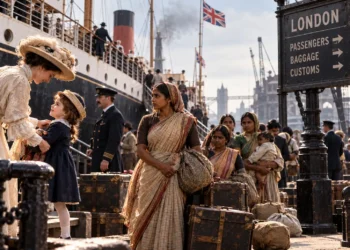
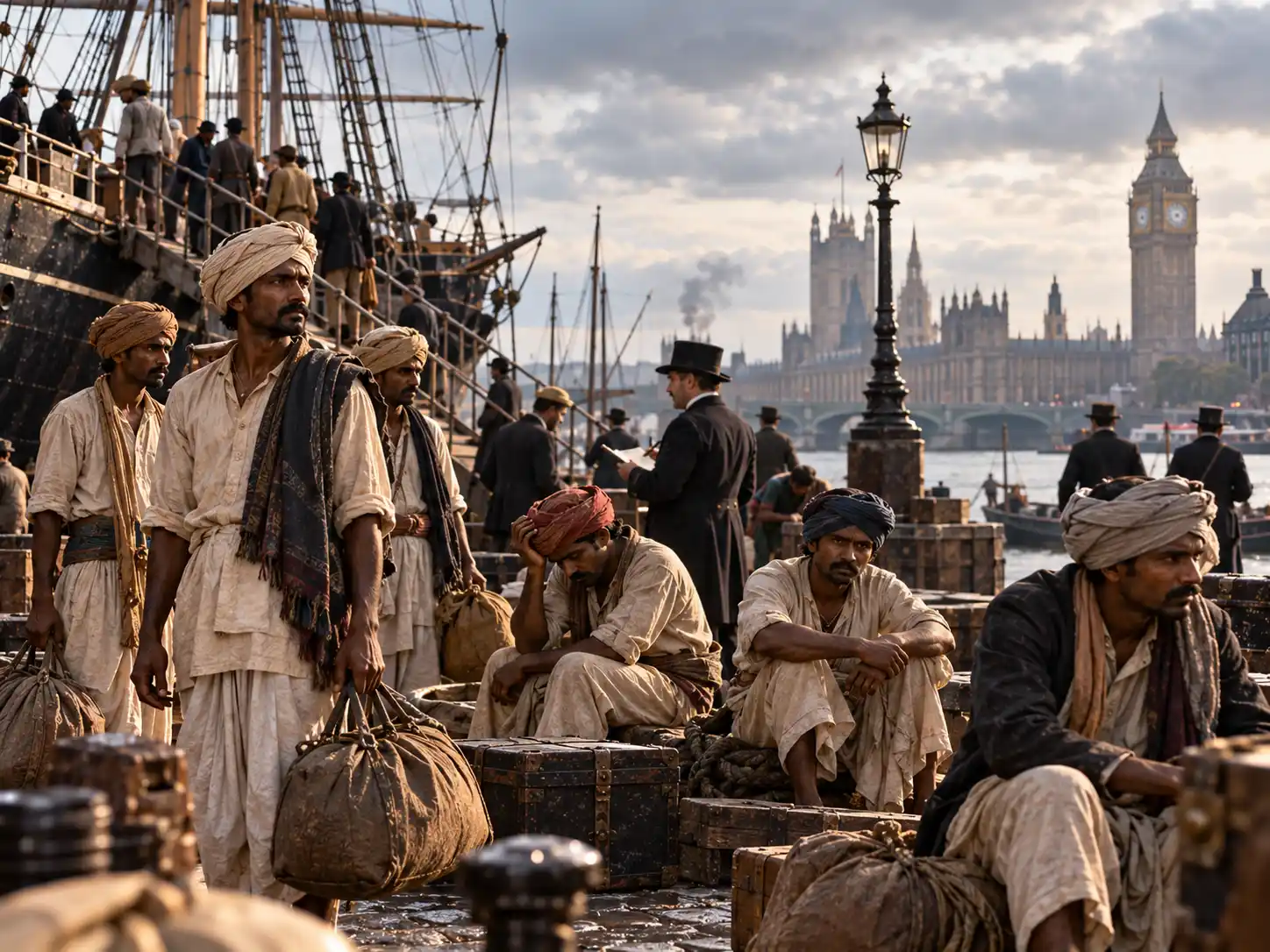
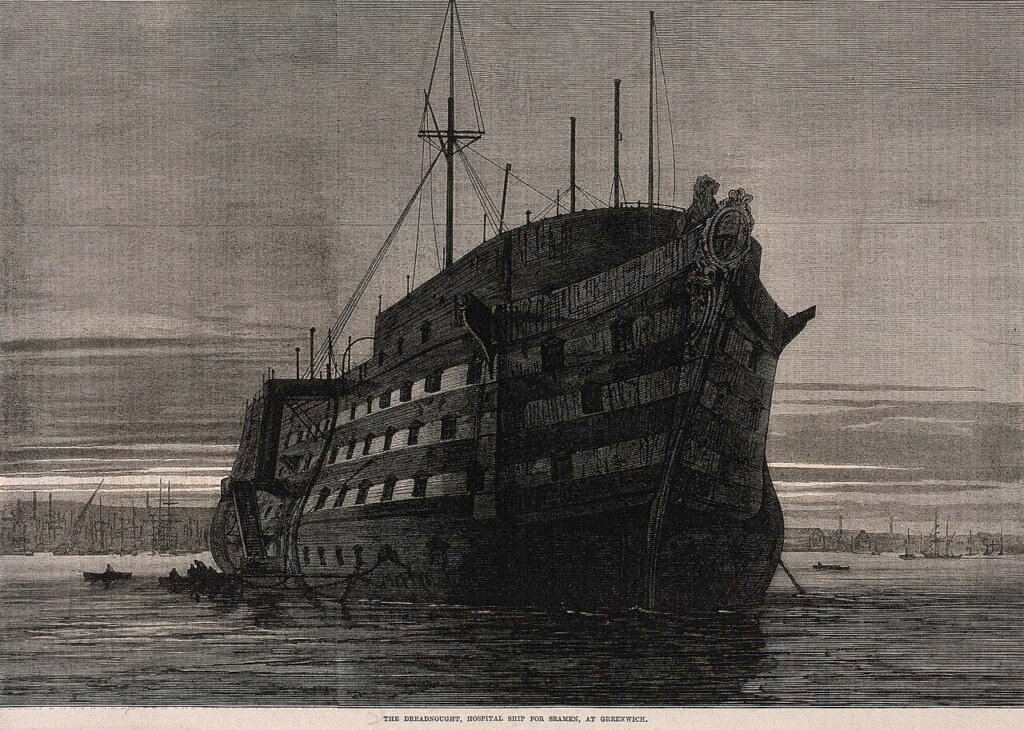
In early October 1840 a sailing ship called the Repulse came up the Thames at the end of a voyage from Calcutta. On 5 October, twenty-five of her crew were admitted to the Dreadnought, a hospital ship at Greenwich run by a charity for sick seamen. Many of them had scurvy.
We know this because the hospital kept a register, and the register survives at Royal Museums Greenwich. A clerk wrote down each man’s name, his ship, the date and what was wrong with him. Volunteers have been transcribing the pages since 2021. Almost the whole crew of the Repulse is there, on consecutive lines.
The register does not say much else. It does not record what the men thought of London, or how they got back to Bengal, or whether all of them did. Some sailors in these books can
hardly be traced at all. The museum’s archivist, Graham Thompson, points to three men entered under the single name "Buksu".
Who the lascars were
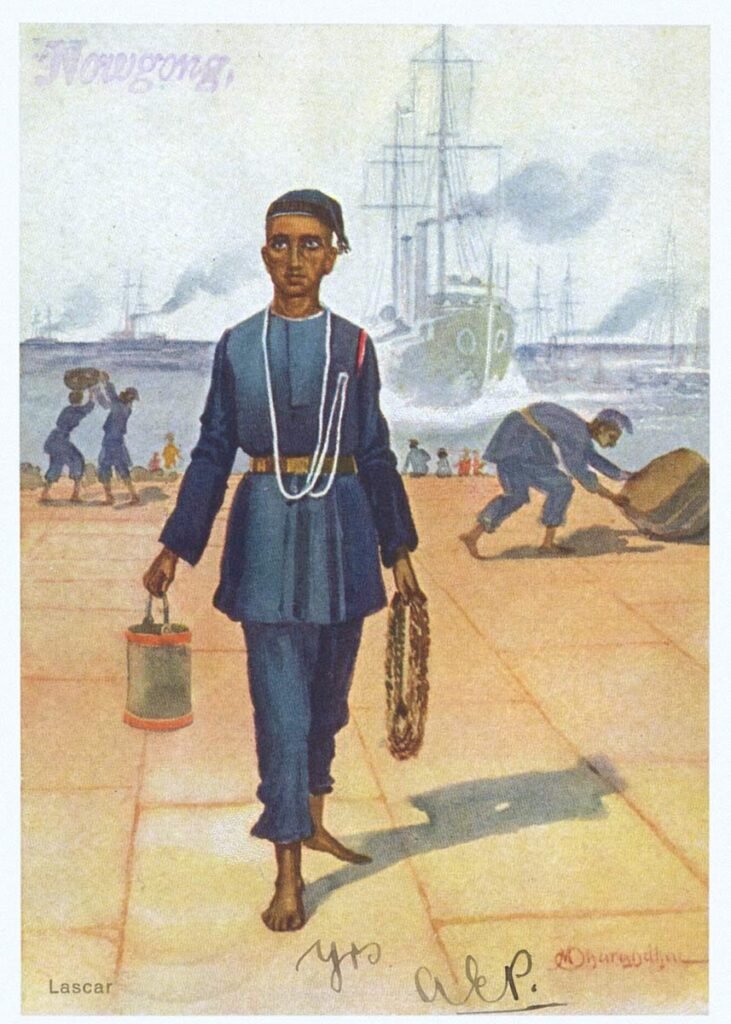
The men of the Repulse were lascars. The word came into European use through the Portuguese in the early 1500s and was applied to seamen hired in Asia. Most lascars on British ships came from the Indian subcontinent, from Bengal, the west coast and later the Punjab. But the label was loose, and sailors from the Malay peninsula and China were sometimes entered under it too. The historian Michael H. Fisher describes it as a condition of employment more than an ethnicity. A lascar crew might mix religions, languages and regions.
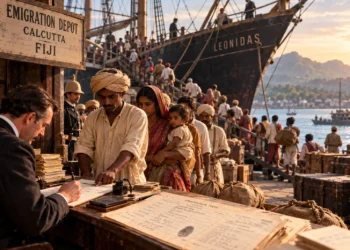
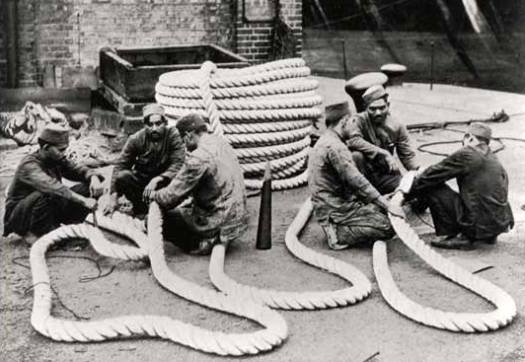
They were hired in gangs. At Calcutta a broker called the ghat sarhang, or ghat serang, supplied a ship with men under a headman, the serang. The broker housed and fed sailors between voyages and lent them money against their next wages. By Fisher’s calculation he kept about a fifth of a man’s pay, and the accountant took a further cut.
British ships needed them. European sailors died or deserted in Asian ports in large numbers, and a captain had to fill the gaps to get his cargo home. Lascars also cost less. A report to the House of Commons in 1848 gave a lascar’s wage as 10 rupees a month and a British able seaman’s as the equivalent of 90.
The voyage only went one way
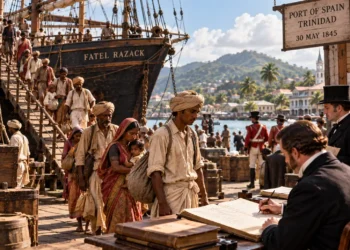
The difficulty was built into the law. Under the Navigation Acts, in force from 1660, a ship leaving Britain had to be crewed mostly by British seamen. Asians could make up no more than a quarter of the crew. So a lascar who had worked a ship into London usually could not work one out again. He went back as a passenger, unpaid, when someone found him a berth.
The East India Company accepted this as a cost of business. The crew agreement for one of its ships, the Tryal, in 1746 promised the lascars a fixed monthly wage for the voyage to London, a bounty on arrival, and their keep until a passage home could be arranged. In the years 1804 to 1813, Fisher found, the Company spent an average of 37 pounds on each lascar for maintenance and the return voyage. More than 1,300 arrived in 1813 alone.
In practice the keep was poor. The Company paid contractors by the head to lodge the men in barracks in the East End of London. A parliamentary committee that looked into the barracks in 1814-15 found them severely overcrowded. Royal Museums Greenwich puts it bluntly: the Company abandoned lascars once they reached London. An Act of 1823 made it legally responsible for their upkeep in England.
Indians would run up against British shipping rules for a long time. A century later the industrialist Walchand Hirachand fought colonial policy for the right to run Indian-owned ships at all.
Nobody’s responsibility
By 1840 even that arrangement had gone. The Company lost its monopoly on the India trade in 1814 and stopped trading altogether in 1834. The ships that now came up the Thames belonged to private owners. Lascars waiting for a passage were put up in private lodging houses in Poplar and Limehouse, and Fisher notes that Parliament did not make the Company answerable for them again until 1854.
The Repulse arrived in the middle of that gap. Newspapers of the period described lascars in the port as destitute and in rags. Scurvy comes from months without fresh food, and twenty-five cases reported from one ship on one day says something about what the crew had been eating since Calcutta.
The Dreadnought was one of the few places that would take them. Its charity, the Seamen’s Hospital Society, treated sailors of any nation. An early report counted only 12 "East Indian" patients among its first 4,679 admissions. As the years went on, more appear. On 3 October 1853, nineteen lascars from a ship called the Marlborough were admitted with scurvy, frostbite and other complaints. Their ship was said to be the first with a lascar crew to have rounded Cape Horn.
A home in Limehouse
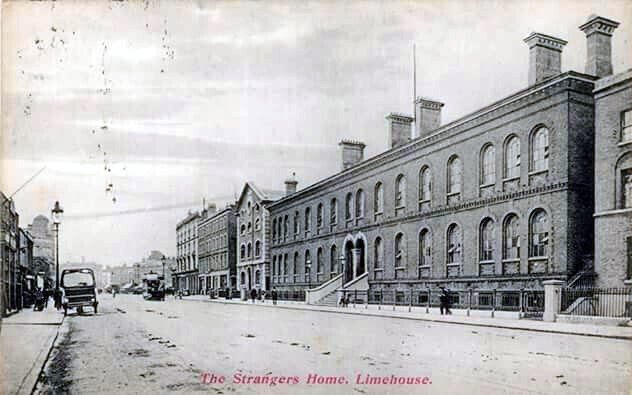
Reports of sailors dying in the streets of the East End eventually moved missionary societies to act. Prince Albert laid the foundation stone of the Strangers’ Home for Asiatics, Africans and South Sea Islanders in Limehouse on 31 May 1856. The first donation, 500 pounds, came from the exiled Maharaja Duleep Singh. It opened in 1857.
The home had dormitories for 220 men. It kept a shipping office where captains could sign on a crew for the voyage east, which made it a way out of London as well as a bed. It held sailors’ valuables and sent their wages to India. It also had a resident missionary and a library of Christian books in Asian languages. By its own count, it took in 5,709 people in its first twenty years, 1,605 of them destitute.
The hospital and the home turn up together in the register. On 2 July 1894 a man named Toban Olla, a greaser on the steamer Port Chalmers, was admitted to the Dreadnought destitute. The entry notes that he was sent on to the Strangers’ Home.
Not every lascar was stranded. Most finished a voyage, waited a few weeks and shipped out again, and many did this for a working lifetime. The trouble fell on the man who was sick, or discharged, or whose ship had sailed without him.
Still essential, still foreign
Steam made lascars more important. They worked the engine rooms and stokeholds of the big liners. Board of Trade figures show they were 10 per cent of the British merchant workforce in 1891 and 20.5 per cent by 1920.
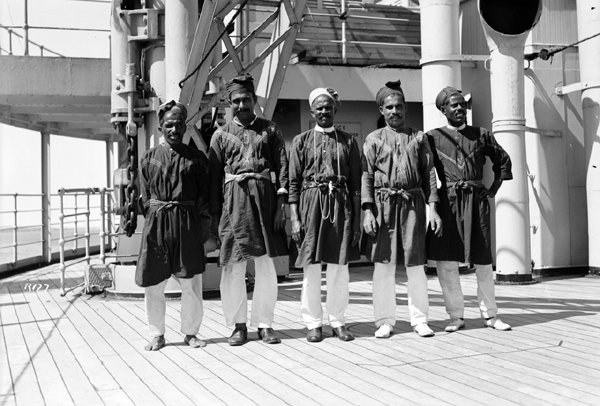
Their footing on shore did not improve in step. A set of India Office files in the British Library, covering 1925 to 1941, deals with lascars’ diets, desertions, shore leave and compensation claims. One file concerns the Home Office’s treatment of lascars as aliens, with registration and special restriction orders, though they were subjects of the same Crown. Their position was different from that of the Komagata Maru passengers of 1914, who were migrants trying to settle in Canada. The lascars were crew, wanted on the ship and unwelcome once ashore.
Another file, from 1935, is titled "Closure of Asiatic and Overseas Home: arrangements for housing of destitute Indian Seamen". That was the Strangers’ Home under a later name. It was losing 2,000 pounds a year, and it shut in 1937. Syed Fazal Shah, secretary of a Muslim association in the East End, wrote to object to the loss of "a place of refuge for the people of Asia in London".
The Dreadnought registers run from 1826 to 1930. The transcription is still going on, and each finished page adds a few more names of men who brought a ship to London.
Test your knowledge
Answer 5 questions about the story.
What was a lascar?
A lascar was a seaman hired in Asia to work on a European ship. Most on British ships were from the Indian subcontinent, though the term was also applied to Malay, Chinese and other Asian sailors.
Why did British ships employ Indian sailors?
European crews were depleted by death and desertion in Asian ports, and lascars were available through local brokers at far lower wages and victualling costs.
Why was it hard for lascars to get home from Britain?
The Navigation Acts limited Asian seamen to a quarter of the crew on ships leaving Britain, so most lascars could not work the return voyage and had to wait for a passage arranged by a shipowner or the East India Company.
What was the Dreadnought hospital ship?
It was a floating hospital at Greenwich run by the Seamen’s Hospital Society for sick and injured sailors of all nations. Its admission registers survive from 1826 to 1930.
What was the Strangers’ Home?
The Strangers’ Home for Asiatics, Africans and South Sea Islanders opened in Limehouse, London, in 1857 to lodge foreign seamen and find them ships home. It closed in 1937.
Sources and further reading
Graham Thompson, "Lascars in the port of London", Royal Museums Greenwich, 3 July 2023.
Royal Museums Greenwich, "Lascars and the East India Company".
Michael H. Fisher, "Working across the Seas: Indian Maritime Labourers in India, Britain, and in Between, 1600-1857", International Review of Social History 51 (2006).
The Open University, Making Britain database, "Strangers’ Home for Asiatics, Africans and South Sea Islanders".
British Library, India Office Records, IOR/L/E/9/953-977, "Collection 141 Seamen", 1925-1941.
Rozina Visram, Asians in Britain: 400 Years of History (Pluto Press, 2002).