Register A, page one
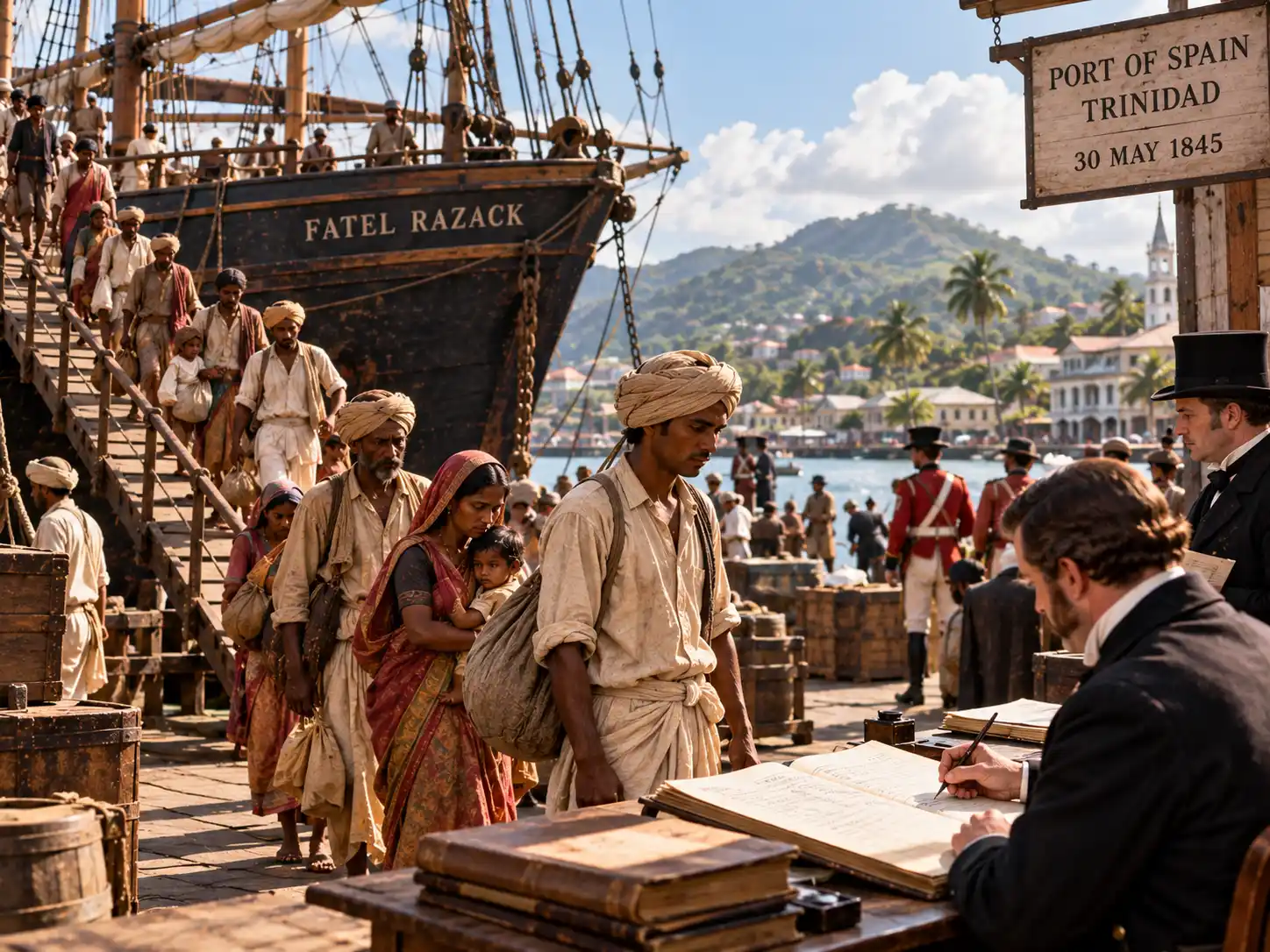
The National Archives of Trinidad and Tobago keeps seventeen large bound ledgers known as the General Registers of Indian Indentured Labourers. They are lettered A to R. The first entry in Register A is for a ship whose name the clerk wrote as Futtle Rozack. The date of arrival is 30 May 1845. Under it are ruled columns: a registration number, a name, a father’s name, age, sex, and the estate the person was sent to. The numbers on those first pages run from 1 to 225.
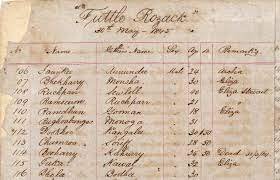
The ship is better known today as the Fatel Razack. Its manifest is said to have spelled it Futtle Razak, and one Trinidad newspaper prints Fatel Rozack. All are an English ear’s attempt at an Arabic name, Fath al-Razzaq, usually translated as "victory of God the Provider".
Why Trinidad sent to Calcutta
Slavery ended in Trinidad in 1838. The island’s planters had more cane land than hands to work it, and many of the people they had enslaved wanted nothing more to do with the
estates. Mauritius had been importing workers from India under five-year contracts since 1834. In 1844 the British government allowed the same traffic to Trinidad, Jamaica and British Guiana.
The voyage was far longer than the one to Mauritius. A ship from Calcutta had to cross the Indian Ocean, round the southern tip of Africa and then sail the length of the Atlantic. According to the historian Kusha Haracksingh, the Fatel Razack was a teak-built vessel of 415 tons. She is said to have belonged to an Indian Muslim merchant of Bombay, and to have been taken up for the work because established British shipowners were not keen on it.
103 days
Most accounts say she left Calcutta on 16 February 1845. She reached the Gulf of Paria, off Port of Spain, on 30 May. Count the days between and the answer is 103, which is the figure the National Archives uses. The Port of Spain Gazette, reporting the arrival at the time, gave the passage as 90 days. It also said that 225 "coolies" were aboard and that five people had died on the way.
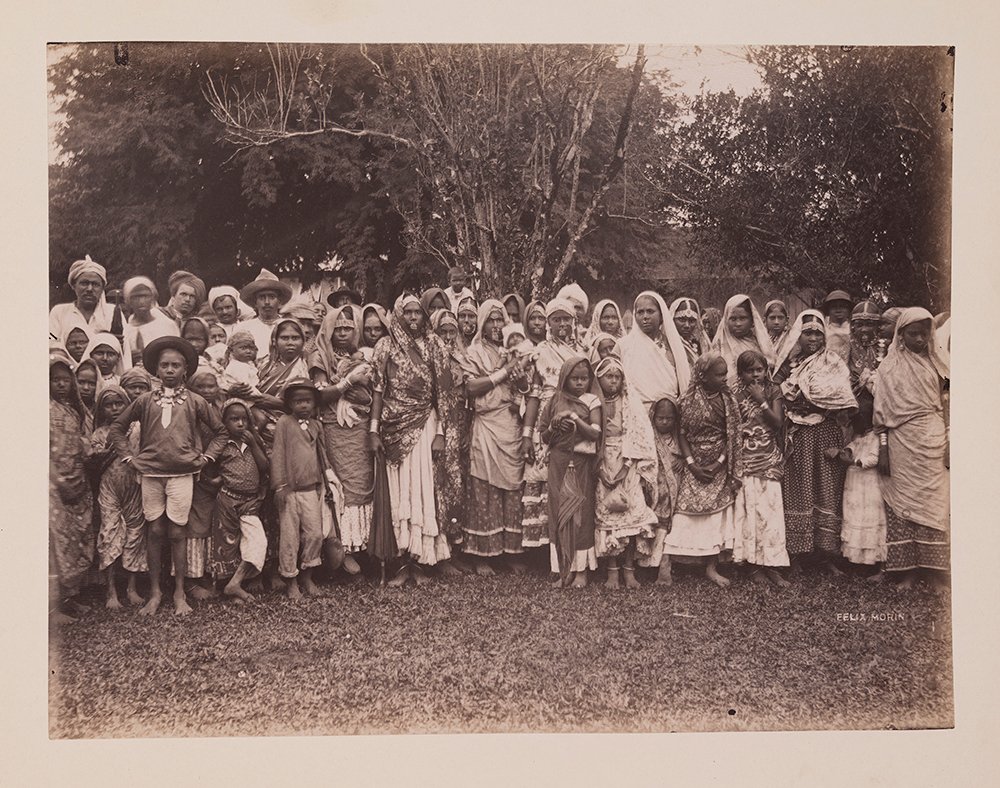
The two numbers the sources agree on are the date and the 225. Beyond that, the paper trail for this first voyage is thin. The Archives describes the 225 as adult passengers. A later newspaper account says the ship carried men, women, children and infants. No reliable breakdown has turned up, so none is given here.
What the register adds is where they went. Each line ends with the name of an estate. The workers were not left to look for employers. They were assigned.
The contract
In its exhibition on the system, the National Archives of Trinidad and Tobago sets out the process as it later settled. An emigrant was issued a pass in India. On arrival the contract was read out in Hindi and Urdu, and its terms were printed on the back in English, Hindi and Urdu. It bound the worker to an estate for five years, on sugar, cocoa or coconut. At the end of the term came a paper called a Certificate of Industrial Residence, and after a longer stay the right to a passage home.
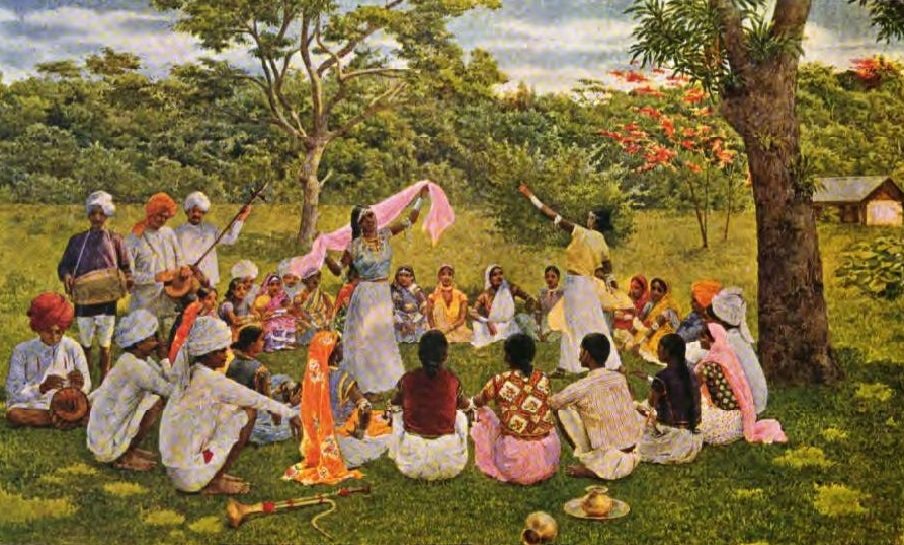
Hearing a contract read is different from being free to refuse it. By the time it was read out in Trinidad, the listener had crossed two oceans and had no way back except through the five years. The Archives’ own description of the registers, written for UNESCO, calls indenture a movement "initiated and managed by the machinery of colonialism".
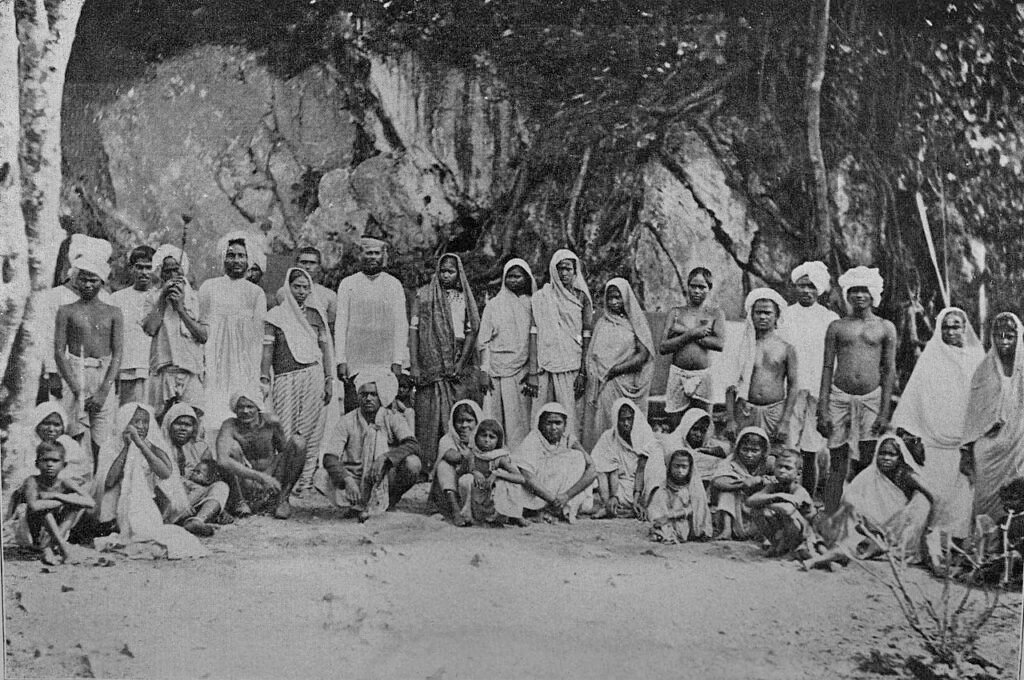
For the first twenty years ships landed their passengers at Port of Spain. From 1866 they were taken to Nelson Island, a five-acre rock in the gulf. There they were examined by a doctor, addressed by the Protector of Immigrants through interpreters, and after about ten days sent to the estates. The first ship processed there, the Humber, landed 329 men, 84 women, 32 boys and 14 girls.
The remarks column
The registers went on being written for seventy-two years. They cover 298 ships. Most sailed from Calcutta, and one volume, Register C, is given over to arrivals from Madras. The later volumes ask for more: caste, height, bodily marks and "native place", the village in India. A map from an emigration report of 1891 shows where most recruits came from, in the country between Oudh, Bihar and Bengal.
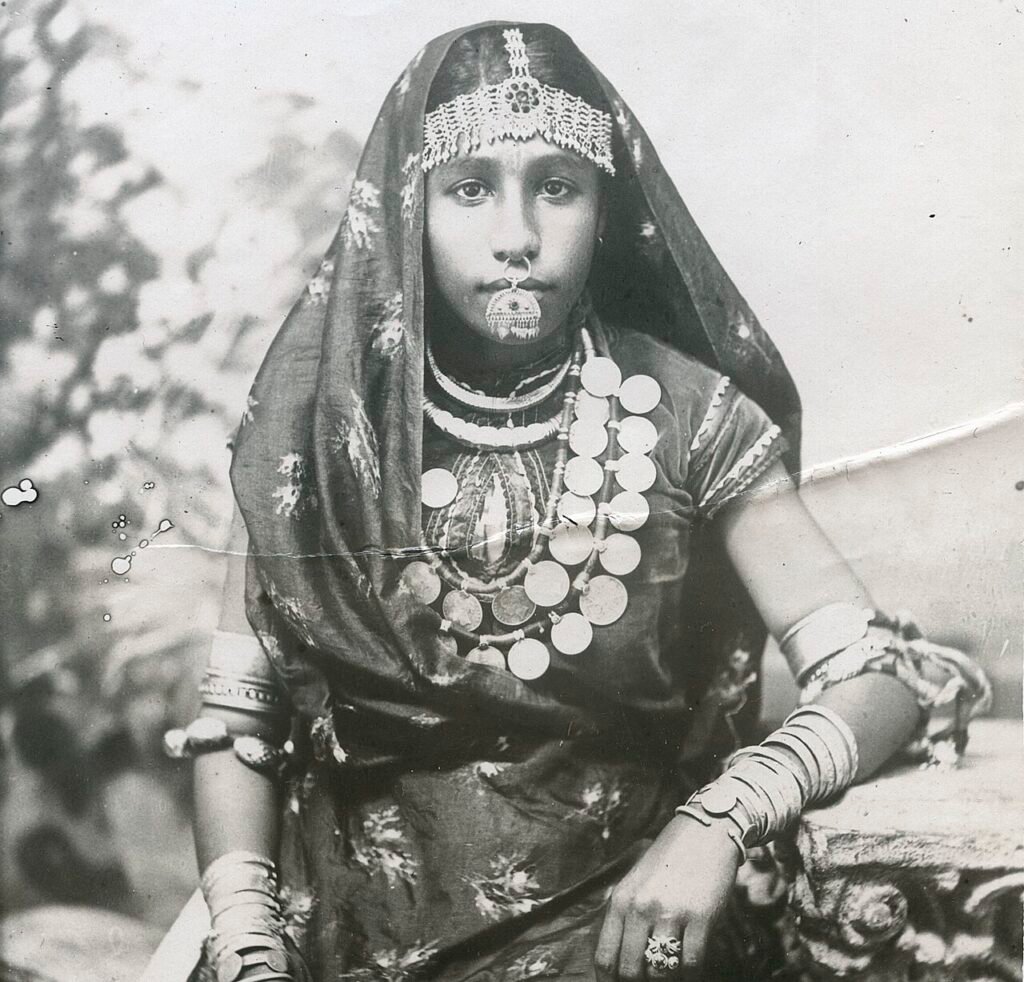
The last column on each page is headed Remarks. This is where a life in Trinidad was noted against the line that began it. A clerk might enter a birth, an illness or a death there. He might enter a return to India. Or he might record that the person had received land.
That last entry mattered. A worker who had served out the contract and stayed on could give up the passage home in exchange for a plot. The Archives estimates that at least three-quarters of those who came remained. They settled the cane districts of central and southern Trinidad, built temples and mosques, and grew rice and vegetables on their own ground. One of the island’s governors in those years, Arthur Gordon, later carried the indenture system to Fiji.
Those who chose to leave gathered on Nelson Island until there were 300 or 400 of them, enough to fill a ship. Return sailings went on until 1939.
How it ended
Recruitment in India was suspended on 12 March 1917, under wartime regulations, and it was never resumed. The last ship, the Ganges, reached Trinidad on 22 April 1917, and her passengers fill the final pages of Register R. Indenture itself was abolished on 1 January 1920, when the remaining contracts were cancelled. By the Archives’ count, about 147,500 people had come.
The registers are incomplete. The volume for 1906 to 1909 has not survived. In Registers B and C the numbering breaks and ships are entered out of order. Names were written as a clerk heard them, as the ship’s own name shows.
They are still the best record there is. In 2011 UNESCO added them to its Memory of the World register, together with the indenture records of Guyana, Suriname and Fiji. A family in Trinidad that knows an ancestor’s ship and year can find the line: a name, a father’s name, an estate. For the later volumes there is a village as well.
The passengers of the Komagata Maru, who sailed for Canada in 1914, were refused at the dock and sent back. The people on the Fatel Razack were sent for, and given numbers on arrival.
The centenary of the landing was marked at Skinner Park in San Fernando on 30 May 1945. The custom lapsed and was revived in the late 1970s. In 1995, the 150th anniversary, the day became a public holiday, and since 1996 it has been called Indian Arrival Day. Their descendants are one of the country’s two largest communities.
Test your knowledge
Answer 5 questions about the story.
What was the Fatel Razack?
It was the sailing ship that brought the first Indian indentured labourers to Trinidad, arriving from Calcutta on 30 May 1845. Trinidad’s register spells the name Futtle Rozack.
How many people arrived on the Fatel Razack?
The Trinidad register numbers its passengers 1 to 225, and a newspaper of the time also reported 225, with five deaths during the voyage.
How many Indians came to Trinidad under indenture?
The National Archives of Trinidad and Tobago puts the total at about 147,500 between 1845 and 1917, on 298 ships.
When did Indian indenture in Trinidad end?
Recruitment stopped in March 1917 and the last ship, the Ganges, arrived that April. The system was formally abolished on 1 January 1920.
What is Indian Arrival Day?
It is a public holiday in Trinidad and Tobago on 30 May, the anniversary of the Fatel Razack’s arrival. It became a holiday in 1995 and has carried its present name since 1996.
Sources and further reading
National Archives of Trinidad and Tobago, "Trinidad General Registers of Indian Indentureship (1845-1917)" and "General Registers of Indian Indentured Labourers" (illustrated guide).
National Archives of Trinidad and Tobago, "Nelson Island and Indian Indentureship in Trinidad" (exhibition).
UNESCO Memory of the World, "Records of the Indian Indentured Labourers", inscribed 2011.
Kusha Haracksingh, "90 Days of Horror: The voyage of the Fatel Razack to Trinidad in 1845", Indo-Caribbean Heritage (2006).
"Gateway to our heritage", Trinidad Express, 20 April 2013.