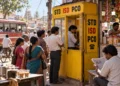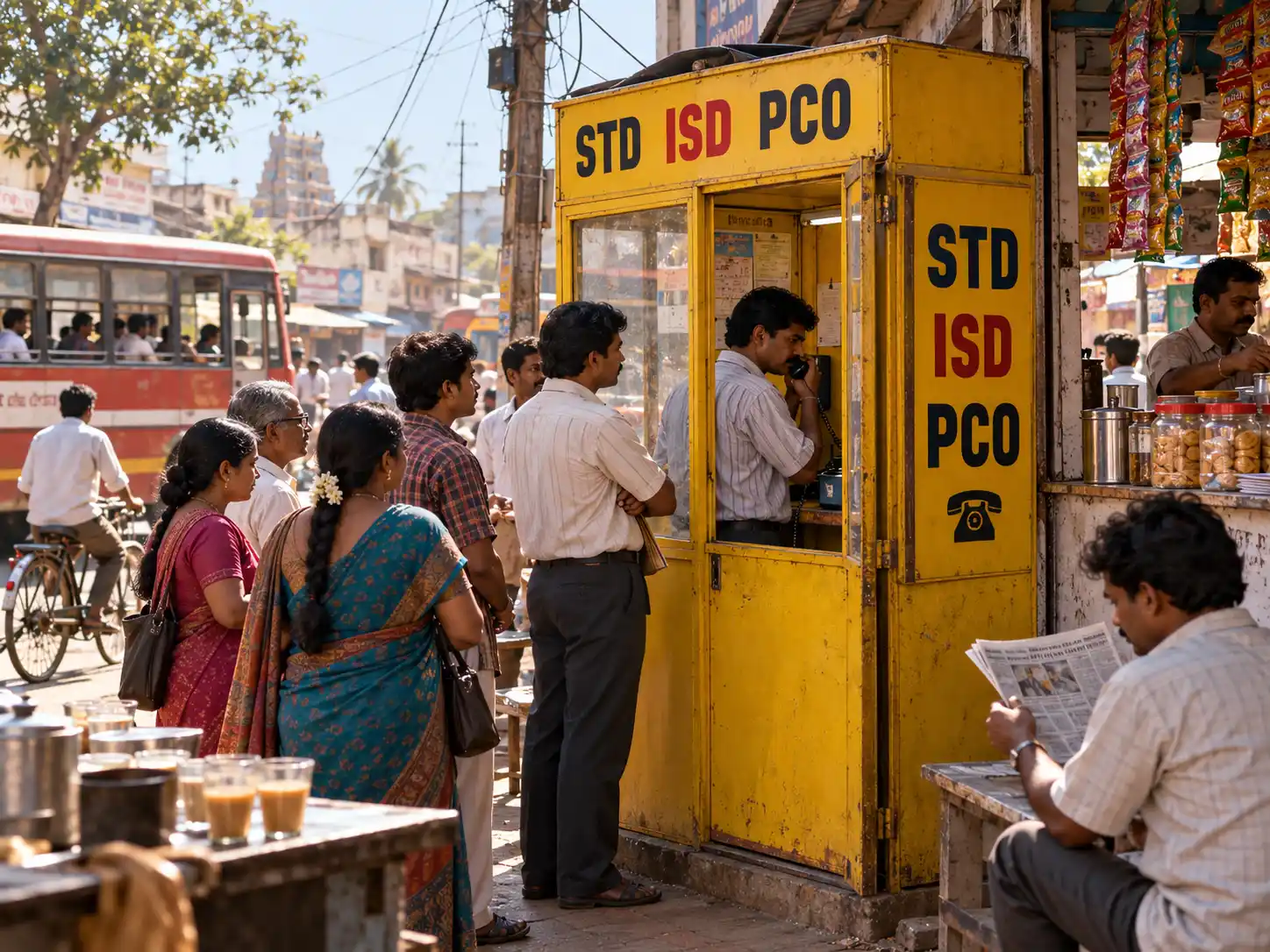
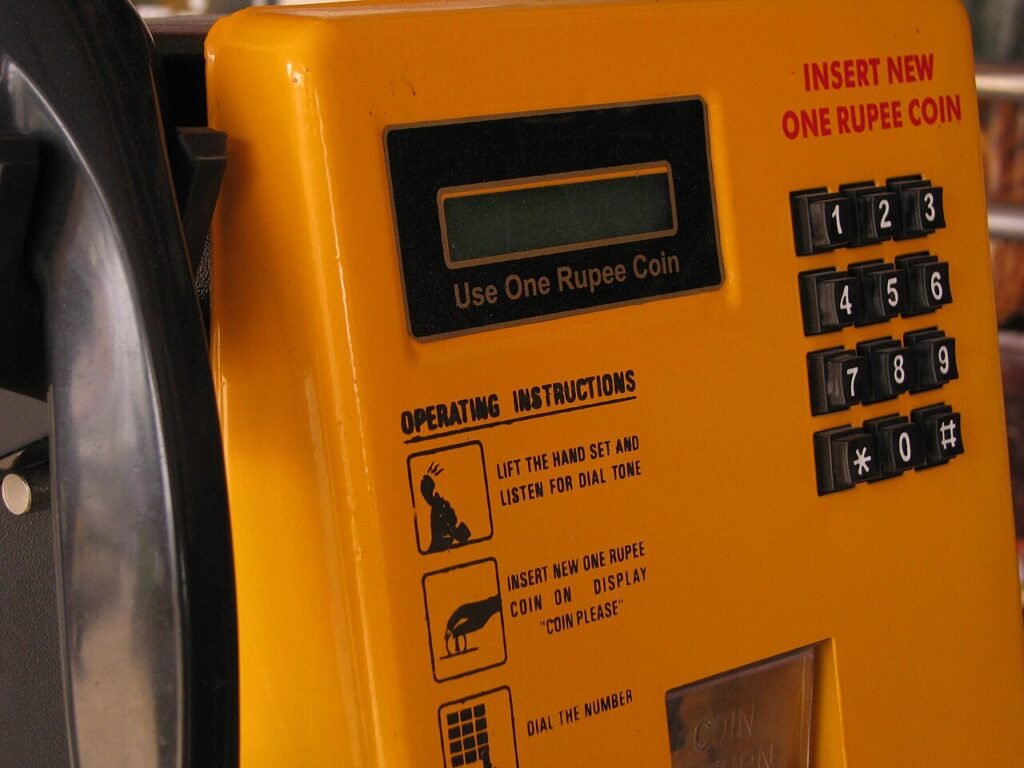
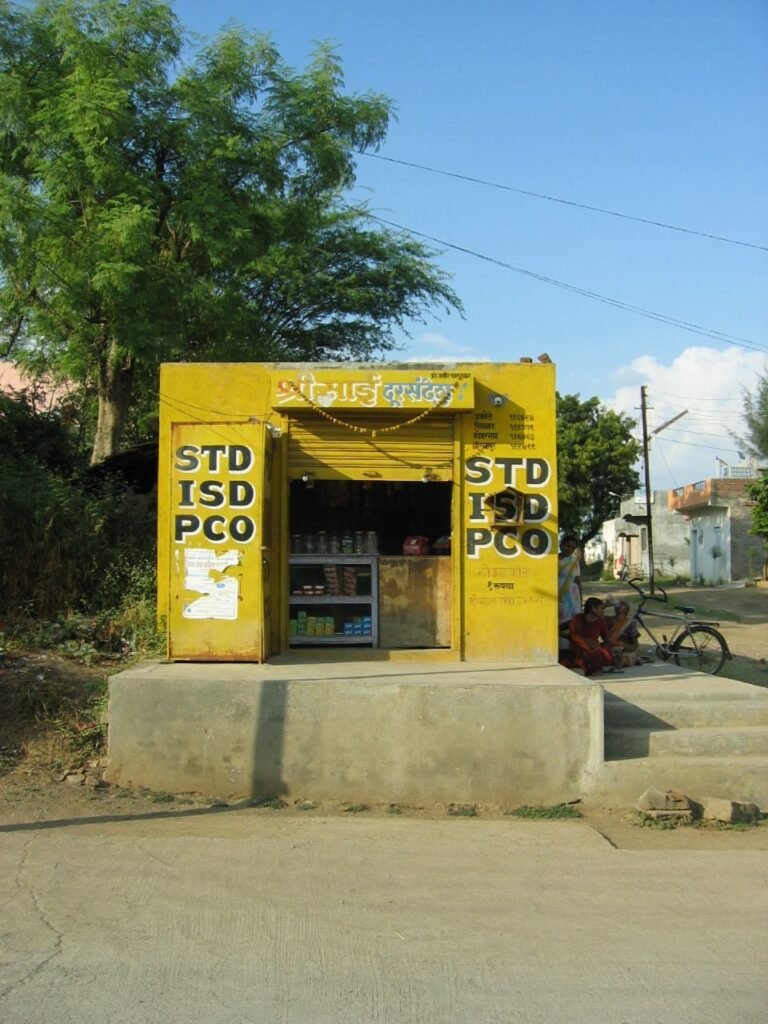
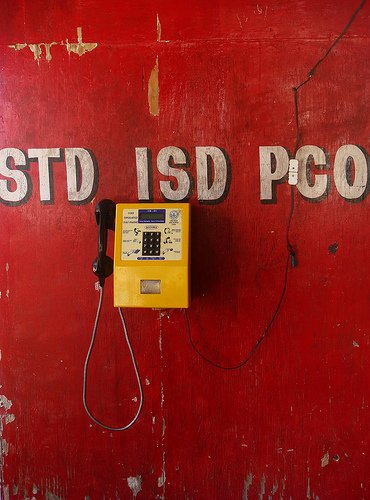
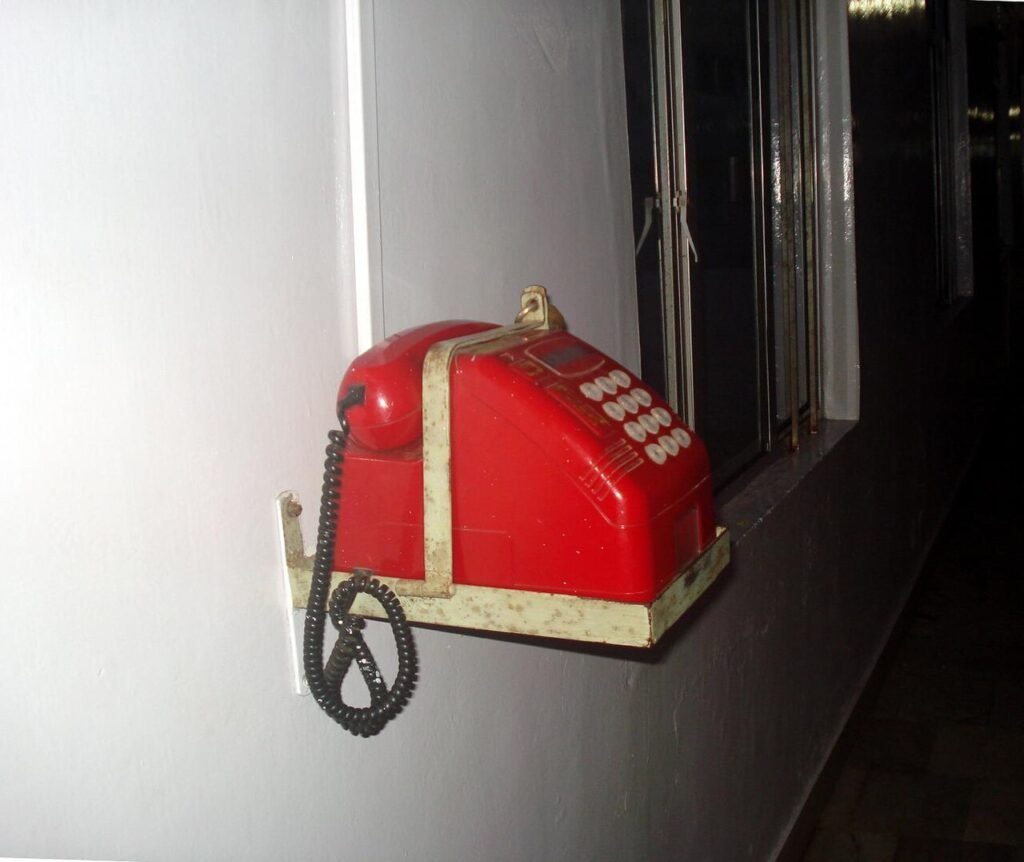
In the summer of 1996 Naseeb Khan was a boy spending his holidays at his grandmother’s house in Beleghata, Calcutta. His father was in another city. The family had no telephone, so when his father wanted to talk, the call came to the PCO down the lane, and the family went there and waited for it. The owner would pass on a message about what time the next call was coming. He charged ten rupees for that. Khan told the story to Anupa Kujur of The Federal in 2019. Anyone who was in India in the 1990s has a version of it. A shop with a yellow board. The letters STD, ISD and PCO painted in black or red. A glass cabin with a door that did not quite shut, and above the phone a small box with red digits that climbed while you talked.
The phone nobody had
STD means subscriber trunk dialling: a long-distance call you dial yourself, with no operator to book it through. India’s first STD route opened between Kanpur and Lucknow in 1960. PCO means public call office. For decades the letters meant little to most people, because most people had no phone to dial from. A connection was something you applied for and then waited years to get. Curious Indian’s piece on the 1991 reforms puts the usual wait at five years. The telephone in stories from that India tends to sit on an important man’s desk, as it does in the Nagarwala case of 1971. Even those who had a phone were wary of the long-distance part. Madhu Mehta, an engineer who built metering equipment in those years, wrote later that about a quarter of subscribers paid a special charge to have STD and ISD barred on their own lines. They were afraid of the bill. It arrived weeks later, it gave a total and no details, and there was no way to argue with it.
A meter and a slip of paper
Two people who had once worked in the same laboratory in Chicago went at this problem from different ends. Sam Pitroda came back to India in the 1980s and in 1984 set up the Centre for Development of Telematics, C-DOT, to design telephone exchanges that could survive Indian heat and dust. He also wanted phones where people could reach them. "The idea was not just to make phones accessible but also to employ a large number of people," he wrote in his memoir, Dreaming Big. Mehta had been his colleague at GTE Labs in the early 1970s. In 1986 he founded a company called Anjaleem, and the thing it made was a call meter. If a shopkeeper was going to sell STD calls to strangers, he had to know what each call cost at the moment the receiver went down. The exchange was supposed to send metering pulses down the line, but on Indian lines they often did not arrive cleanly. So Mehta’s machine worked it out for itself. It stored the rate to every city on a memory chip, timed the call, and printed a slip showing the date, the time, the number dialled, the duration, the units and the amount. The machine, called Intellitrac, was shown at a telecom fair in Ahmedabad in May 1987. That year it went into government-run STD counters in Baroda, Ahmedabad and Bombay. In October 1988 Anjaleem’s call charge indicator got its official approval, and by Mehta’s account the STD PCO policy was framed around the same time. From then on a private citizen could get a line, put up a board and sell calls on commission. The policy gave preference to ex-servicemen and people with disabilities. The boards were bright yellow.
Ten o’clock
In 1985 about 300 places in India could be reached by STD. By 1990 it was more than 850 cities. The booths followed the lines. What they sold was time, and time had a price that changed with the clock. Mehta records a quarter rate from ten at night to six in the morning. A family in Chennai remembered it to The Federal as half rate after ten. Either way the result was the same on every street. The booth was quiet at eight and had a queue at five past ten.
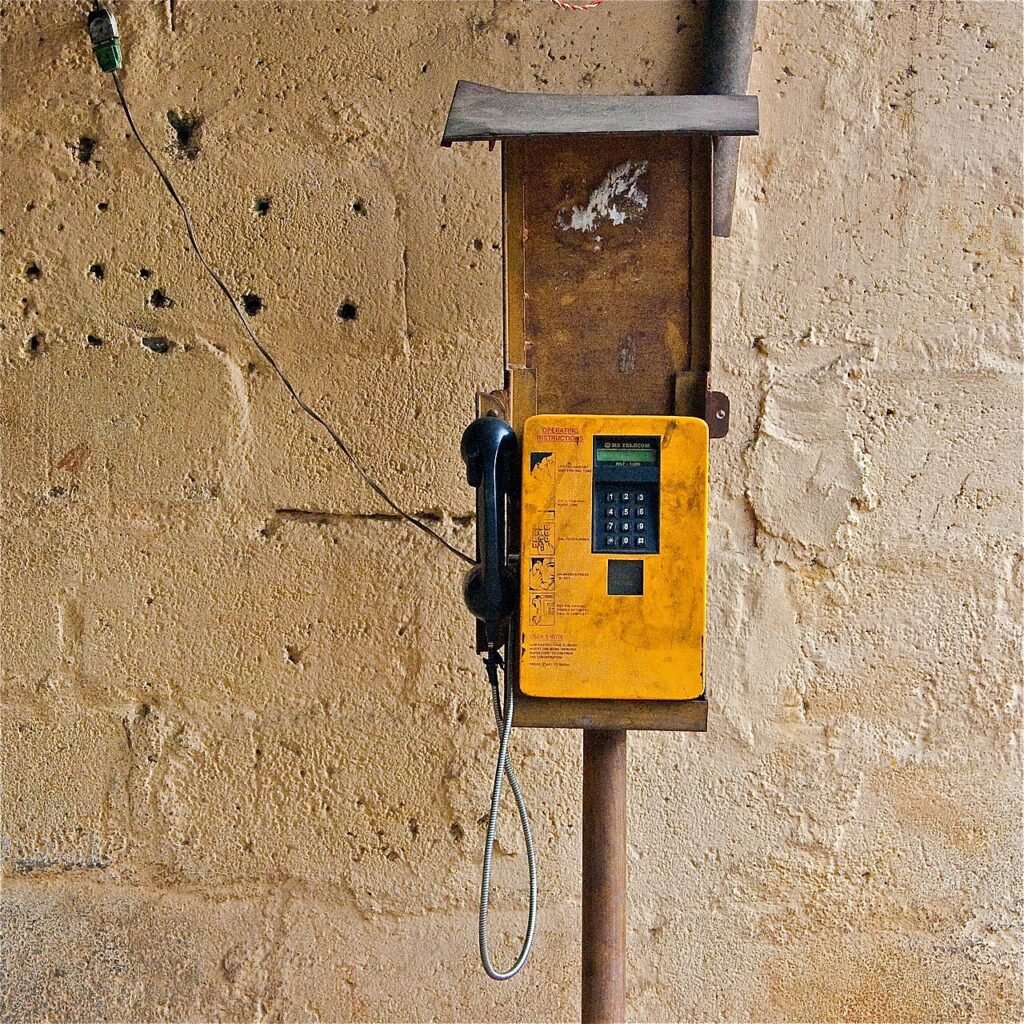
People wrote down what they meant to say before they went in. "Our parents used to keep track of time when speaking to people as calls were an expensive affair," Suresh Padmanabhan, a railway employee in Chennai, told Kujur. You watched the red digits. You said the important thing first. An international call, by Mehta’s figures, cost sixty rupees a minute. The government counted about 1.97 lakh PCOs in 1994. By September 2001 the state company BSNL alone had 7.89 lakh. The trade magazine Voice&Data went to look at them in January 2002 and found that a booth in a decent spot handled 50 to 75 calls a day and took in about five hundred rupees. The owner kept 20 per cent in a town and 25 per cent in a village. The meter and phone cost him twelve to fifteen thousand rupees. BSNL said that 30 per cent of its long-distance revenue came through these counters. The magazine visited Katwaria Sarai, an urban village in south Delhi full of students from Bihar, Bengal and Orissa. It covered less than three quarters of a square kilometre and had about fifty PCOs. "There is a long queue," the reporter wrote, "almost always."
Rs 16.80 a minute
India’s first mobile phone call was made on 31 July 1995, between Jyoti Basu, the chief minister of West Bengal, and Sukh Ram, the Union communications minister. For years it made no difference to the booths. A mobile call cost Rs 8.40 a minute and twice that at peak hours, and you paid to receive calls as well. So the booths kept multiplying while mobiles got cheaper. The count of PCOs kept by the telecom regulator, TRAI, reached 59.8 lakh in 2008. That was the top. A year later it was 55.2 lakh, the first fall on record. By March 2011 it was 33.3 lakh. In August 2015 the communications minister, Ravi Shankar Prasad, told Parliament that 5.6 lakh were left. The owners did what they could. From 2013 they were allowed to sell SIM cards, recharge coupons and handsets from the same counter, which meant selling the thing that had put them out of business. In Pune in 2018 a reporter for The Bridge Chronicle found Ujjwala Joshi, who ran a shop in Sadashiv Peth. Ten years earlier there had been seven PCOs near her. Now she had the only coin phone in the area. It used to get more than eighty callers a day and was getting about fifteen. Mohan Sundararam was still running his STD booth in Adyar, Chennai, when The Federal came by in 2019. "Nowadays people come here only when their phone switches off," he said, "or when they don’t have balance."
Test your knowledge
Answer 5 questions about the story.
What do STD and PCO stand for?
STD is subscriber trunk dialling, a long-distance call dialled directly without an operator. PCO is public call office. ISD, often on the same board, is international subscriber dialling.
When did STD/PCO booths start in India?
Metered STD counters run by the telecom department were operating in Baroda, Ahmedabad and Bombay in 1987. The policy that let private franchisees run STD PCOs was framed around October 1988.
Why were STD booths crowded late at night?
Long-distance tariffs dropped sharply at night. One account from the industry records a quarter rate from 10 pm to 6 am, so people waited until ten to call.
How many PCOs did India have at the peak?
The telecom regulator TRAI counted 59.8 lakh, close to six million, in 2008. The number fell to 55.2 lakh in 2009 and to 5.6 lakh by August 2015.
Who was given preference in running PCOs?
The policy gave preference to ex-servicemen and people with disabilities. Sam Pitroda wrote that creating jobs was one of the two aims of the scheme.
Sources and further reading
- Madhu Mehta, "STD PCO and Indian Telecom: Taking Telecom to the masses", 15 September 2009: https://nipun.servicespace.org/docs/stdpco.html
- Anupa Kujur, "How the humble PCO booth saved many a job and heartbreak", The Federal, 2 August 2019: https://thefederal.com/the-eighth-column/how-the-humble-pco-booth-saved-many-a-job -and-heartbreak
- "PCOs: Tried and Tested", Voice&Data, 11 January 2002: https://www.voicendata.com/pcos-tried-tested
- Shashank Kelkar, "The Spectacular Rise and Fall of PCO Booths Over the Years", The Bridge Chronicle, 30 December 2018: https://www.thebridgechronicle.com/pune/spectacular-rise-and-fall-pco-booths-over-years-29672
- Sam Pitroda with David Chanoff, Dreaming Big: My Journey to Connect India (Penguin, 2015)
- Saptarishi Dutta, "Chart Of The Day: Marketshare Of Public Call Offices In India", MediaNama, 20 September 2011: https://www.medianama.com/2011/09/223-chart-of-the-day-marketshare-public-call-offices-in-india/