How a Stolen Plant and a Huge Ad Campaign became India’s Chai
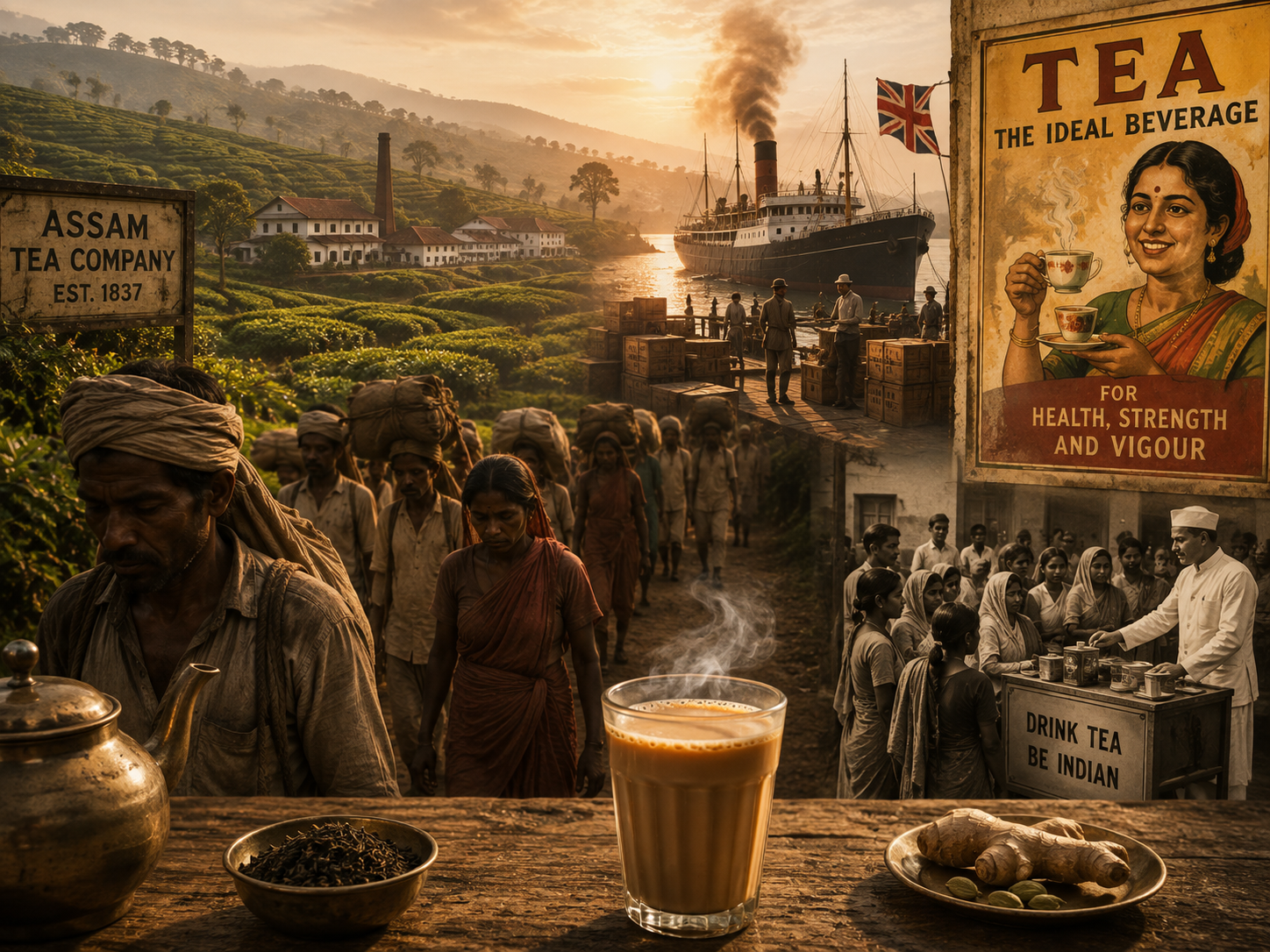
Somewhere in India right now, a kettle is boiling. Milk, sugar, a fistful of tea leaves, maybe a crushed piece of ginger. That glass of hot chai feels old. It feels like it has always been here, passed down forever, as Indian as anything can be.
It has not always been here. A hundred years ago, most Indians did not drink tea at all.
The story of how tea got into your cup is not a sweet one. It runs through a plant the British took, a kind of slavery in the hills of Assam, and one of the biggest advertising campaigns the country had ever seen. And then, at the very end, it turns into something surprising and warm.
Ancient Agricultural Myths That Shape the Magh Bihu Harvest Festival
A wild plant that was never really a secret
Tea did not come to India from outside. It was already growing wild in the forests of Assam, along the upper Brahmaputra valley.
The people of Assam knew it long before any Englishman arrived. Tribes like the Singpho and the Khamyang had been growing and drinking the leaf for hundreds of years. They just drank it their own way, without milk or sugar.
So the British did not really “discover” Indian tea. They were shown it by people who had known about it all along. The British simply saw a plant and thought of money.
Why the British wanted it so badly
To understand the hunger for tea, you have to look at Britain. The British were mad for tea, and all of it came from China. That meant paying China huge amounts of silver, year after year.
They hated this. So they did two ugly things at once. They forced opium on China to get their silver back, which led to war. And they went looking for a place to grow their own tea, so they would never have to depend on China again.
That place was Assam. If Indian gardens could grow enough tea, Britain could break China’s hold for good.
Gardens carved out of their jungle
The first British tea garden was set up at Chabua, in upper Assam, in 1837. The Assam Company began growing tea for sale around 1839. That same year, the first eight chests of Assam tea were shipped off and sold in London.
The plan worked, and fast. By 1888, India had passed China to become the biggest supplier of tea to Britain. Up in the cool hills, seeds from China were planted at Darjeeling in the 1840s, and that gave the world its famous Darjeeling brew.
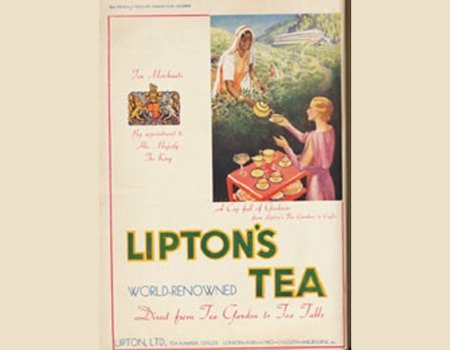
But here is the strange part. Almost every bit of this tea was loaded onto ships and sent away. It was grown in India, but it was not for Indians. It was for the British.
How Verghese Kurien Turned a Small Village Struggle Into Amul Revolution
The people who paid for your tea
This is the part that is hard to read, and the part that matters most.
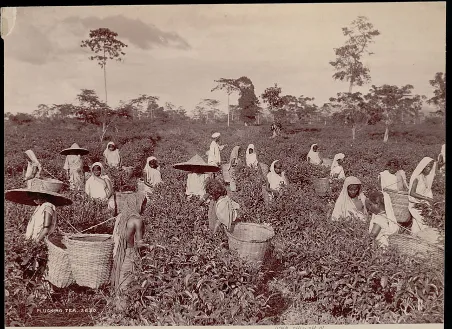
Growing tea needs huge numbers of workers. But the farmers of Assam already had their own land, and they would not work on the plantations. So the planters brought workers in from far away.
They went to the tribal lands of Chota Nagpur, in what is now Jharkhand and the edges of Bihar, Bengal and Odisha. Men called “coolie catchers” tricked poor tribal families with false promises of good work. The workers were made to sign papers hundreds of miles from home, in a language they often could not read.
Between 1870 and 1900, around 700,000 to 750,000 workers were carried into the Assam tea gardens. About 250,000 of them came from the Chota Nagpur region alone.
The journey itself was deadly. Packed into filthy boats going up the river, thousands died of disease before they ever reached a garden. And once they arrived, they were trapped.
A law from 1859 made it a crime for these workers to leave before their contract ended. Break it, and you could be flogged. People who tried to run were hunted down.
Thousands died on the road to Assam. Some of those who tried to escape were caught and killed by the British authorities as a warning to the rest.
Their great-grandchildren still live in Assam today, in the tea-garden community. Many remain among the poorest people in the state. The next time tea is called a proud Indian industry, their story is the one underneath it.
The Green Revolution: How India Defeated Famine with Science
A drink nobody at home wanted
For a long time, all this tea flowed out and none flowed back. Indians simply did not drink the stuff. The best full leaves were shipped to Britain, and only the broken, lower-grade bits were left behind.
The British planters looked at this and saw a problem. Millions of people lived right next to their gardens, and not one of them was buying tea.
The biggest sales push the country had seen
Then came the 1930s and the Great Depression. Money grew tight in Britain, people there bought less tea, and it began to pile up unsold.
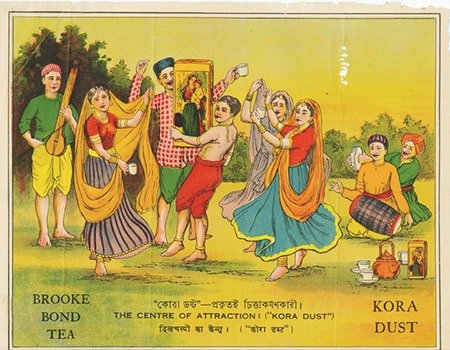
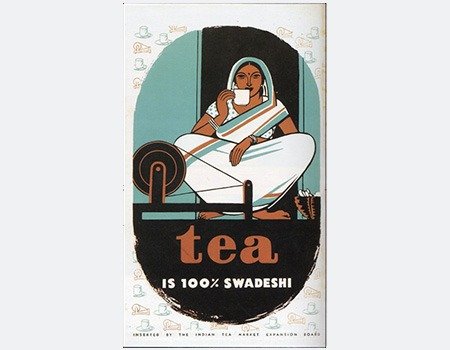
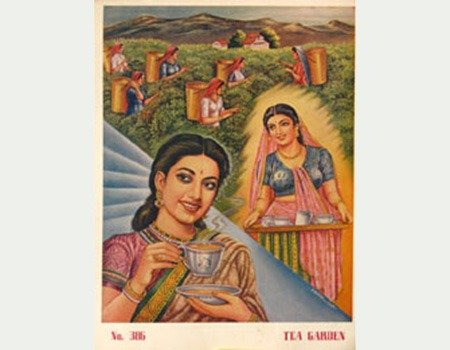
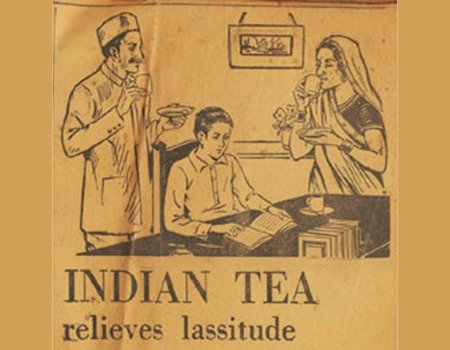
The planters needed a new set of buyers, and they turned to the very people they had been ignoring. In 1936 they set up the Indian Tea Market Expansion Board, gave it a big budget, and sent out an army of “tea propagandists.”
These men drove vans into towns and villages. They handed out free cups of tea and tiny cheap packets at railway stations, in markets, at fairs and festivals. Posters showed everyone the “correct” way to drink it, which meant the English way, with milk and sugar. All-female teams were sent into homes where women stayed in purdah. Factories were even told to give workers a “tea break,” so they would drink more.
They were not simply selling a drink. They were teaching a whole country a new habit, cup by free cup.
How Indians stole it back
And here the story finally turns.
The English recipe was fussy, weak, and used a lot of costly tea. The roadside tea sellers of India took one look at it and threw the rulebook away.
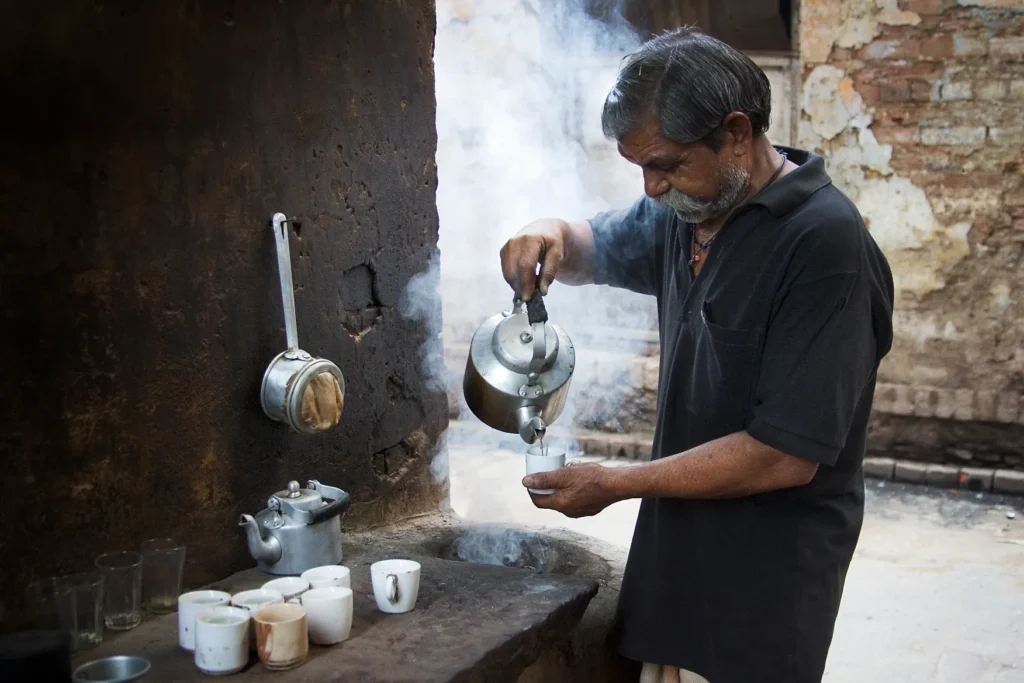
They boiled the leaves hard in water and plenty of milk. They poured in sugar. They dropped in ginger, cardamom and other spices already sitting in the Indian kitchen. What came out was cheap, strong, sweet and spiced. It was masala chai, and it belonged to nobody but India.
A new kind of tea leaf from the 1930s, made to brew fast and strong, made this even easier. The habit the British had planted for their own profit had grown into something completely Indian.
One scholar who studies chai, Philip Lutgendorf, says it is a very recent thing in India’s long history. When he tells people this, they often stop and ask, “What did we drink before?” Chai did not push any old drink aside. It made a brand new place for itself: a cheap, warm cup that anyone could share with anyone.
Nil Darpan: The Mirror of Indigo that Shook the British Empire
The cup in your hand
Today India grows and drinks tea by the billions of cups. Chai is sold on every corner, in tiny glasses and clay cups, and it feels like the most natural Indian thing in the world.
But hold that warm glass a moment longer now. Inside it is a plant the British took from Assam’s tribes, the sweat and the deaths of workers dragged from their homes, and an advertising campaign built to hook a whole nation. And inside it too is the quiet cleverness of the roadside chai-wallah, who took a foreign habit and turned it into something warm and truly our own.
The most ordinary cup can hold the heaviest story.
If you think you have remembered everything about this topic take this QUIZ
Who first discovered tea in India?
The British did not discover tea in India; it was already growing wild in the forests of Assam. Indigenous tribes like the Singpho and Khamyang had known about it and were brewing the leaves long before the British arrived.
Why did the British start growing tea in Assam?
The British were obsessed with tea but had to buy all of it from China using vast amounts of silver. To break China’s monopoly and stop draining their wealth, they established tea gardens in Assam to grow their own supply.
Who worked on the early Assam tea plantations?
Because local Assamese farmers refused to work on the plantations, the British used “coolie catchers” to trick tribal people from the Chota Nagpur region into indentured servitude. Hundreds of thousands of these workers were transported in deadly conditions and trapped on the plantations by cruel labour laws.
Did Indians always drink tea with milk and sugar?
No. A century ago, most Indians did not drink tea at all. It wasn’t until the 1930s, when unsold tea piled up during the Great Depression, that the British launched a massive advertising campaign to teach Indians to drink tea the English way—with milk and sugar.
How was masala chai invented in India?
Indian roadside tea sellers rejected the weak and costly English method of brewing tea. Instead, they boiled cheap, fast-brewing tea leaves vigorously with plenty of milk, sugar, and native spices like ginger and cardamom, creating the uniquely Indian drink we know today as masala chai.
Sources and references
- Tableau, University of Chicago (“The Triumph of Tea,” on Philip Lutgendorf’s work) — that chai is a recent development in Indian history, the surprise Indians feel about what they drank before, the 1830s start of Assam cultivation with indentured labour, India overtaking China as Britain’s main supplier by 1888, and the 1936 Indian Tea Market Expansion Board campaign with free samples and “correct” English brewing.
- GOYA (“How British Tea Became Indian Chai”) — the “tea propagandists,” the vans and free “pice packets,” teams entering purdah homes, encouraged workplace tea breaks, and Indians being given lower-grade broken leaf while whole leaf went abroad.
- History of Ceylon Tea & Far East Tea Company — the first garden at Chabua in 1837, the Assam Company founded in 1839, the first Assam chests sold in London, and tea being grown at first only for foreign buyers.
- WION (“Who introduced tea to India?”) — the wild Assam tea plant, the Singpho and Khamyang tribes drinking it without milk or sugar, the Darjeeling planting in the 1840s, and the early-1900s surplus that pushed the marketing drive.
- Wikipedia (“Tea-garden community”) & Jayeeta Sharma’s research — recruitment of tribal indentured labour from Chota Nagpur, deaths on the journey, the 1859 Workmen’s Breach of Contract Act with flogging, runaways being killed, and the descendants forming today’s tea-garden community.
- Academic studies (“‘Lazy’ Natives, Coolie Labour, and the Assam Tea Industry”; “Tea and money versus human life”) — the figure of roughly 700,000 to 750,000 workers recruited between 1870 and 1900, about 250,000 from Chota Nagpur, and the role of labour contractors and “coolie catchers.”
- IJCRT paper on Assam tea & general histories — the British aim of breaking China’s tea monopoly, and the link between tea, silver, and the opium trade with China.