How the Death of the Child bride Phulmoni Dasi shook Colonial India
Some laws are born in quiet rooms, out of long and careful debate. A few are born from a single death so terrible that a whole country cannot look away.
This is the story of one such law. And it begins not with a leader or a lawyer, but with a little girl whose death shook colonial India into changing its rules. Her name was Phulmoni Dasi.
A child called a wife
Phulmoni Dasi lived in Bengal, and in 1889 she was about ten years old.
Like far too many girls in her time, she had already been married. Her husband was a grown man more than three times her age. This was not a secret crime. Child marriage was common then, and it was fully legal. A ten-year-old could be handed over as a wife, and the law saw nothing wrong with it.
So Phulmoni was a small child who was called a wife. Hold that picture in your mind, because everything that follows grows from it.
How Pandita Ramabai Pioneered a Fearless Crusade for Women’s Education
The night everything broke
One night, her much older husband forced himself upon her. Her small body could not survive the harm that was done. She was gravely injured, and she died. She was still a child.
Her mother found her. And in the middle of her grief, that mother did something quietly brave. She went to the police and then to court, and she stood up to speak against the man, to seek some justice for her dead daughter.
The law that protected the wrong person
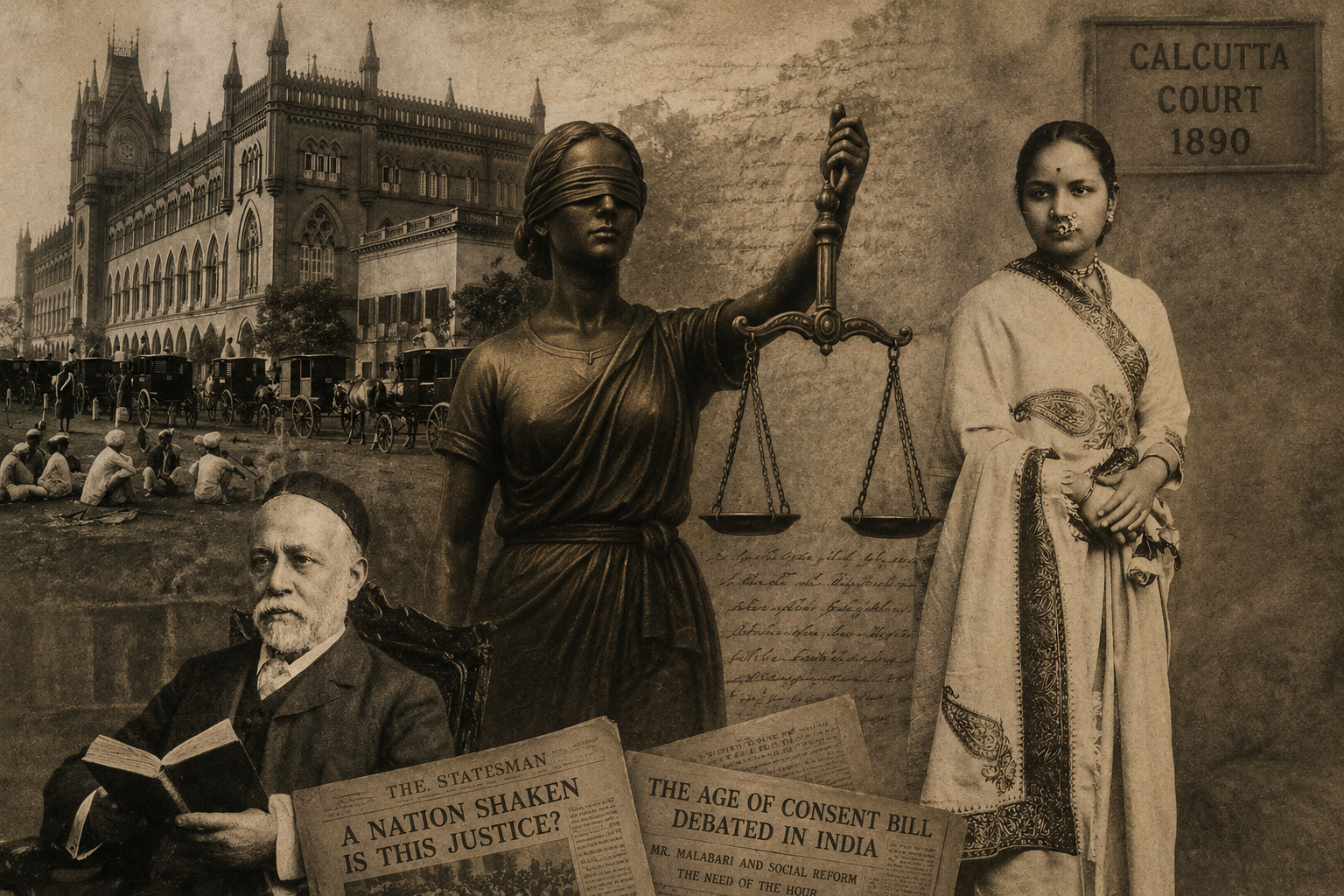
The case came before a court in Calcutta in 1890. What happened there is the part that made the whole country stop and stare.
The law of that time said a girl could be treated as a wife from the age of ten. Because Phulmoni was just past that age, her husband could not be charged with rape at all. The law simply did not allow it, no matter that a child was dead. He was found guilty only of a lesser offence, of causing harm, and he was sentenced to a mere twelve months of hard labour.
A child was dead. Under the law of the day, the man responsible could be given only one year. That was the value the law placed on her life.
People across India, and in Britain too, were horrified. A rule that could let this happen, and then call it almost nothing, suddenly looked monstrous to everyone who read about it.

The reformer who had been shouting for years
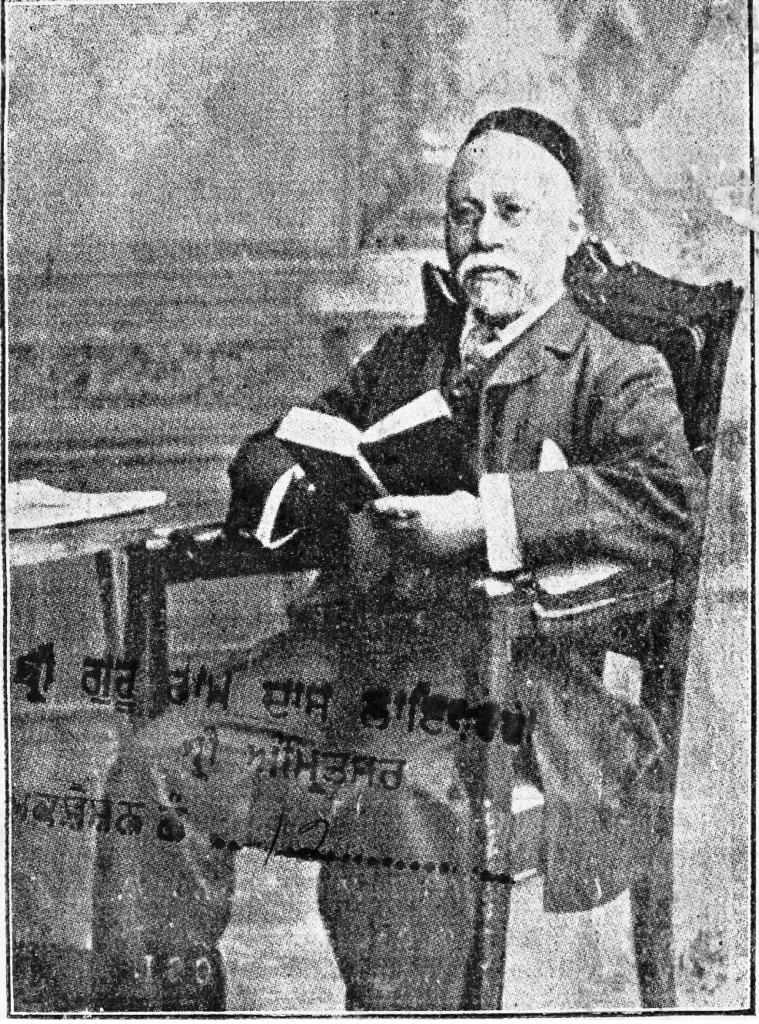
One man was not surprised, only heartbroken and angry. His name was Behramji Malabari, a Parsi reformer and journalist.
For years, since 1884, Malabari had been warning anyone who would listen that little girls were being harmed and even killed by being married and treated as wives far too young. Most people had waved him away. Now, after Phulmoni, the country was finally ready to hear him.
He was not alone. A few years earlier, a young woman named Rukhmabai, married as a child, had fought a long court battle rather than live with the husband she had been given to. Her courage had already started people arguing about these marriages. Phulmoni’s death turned that argument into a fire.
How Jyotiba Phule’s Satyashodhak Samaj Challenged Caste in Maharashtra
A small change with a big meaning
In 1891, the government of the Viceroy, Lord Lansdowne, passed the Age of Consent Act.
The change sounds tiny. It raised the age of consent from ten years to twelve, for all girls, whether married or not. It did not ban child marriage. It simply said that a girl under twelve could not lawfully be treated as a wife in that way, and that to do so was now a crime.
The Age of Consent Act of 1891 moved the line from ten to twelve. Just two years, on paper. But it was the first time the state drew any line at all to protect a child bride.
The fight it started
You might think everyone would welcome a law to protect children. Instead, the Act split the country, and the split was not a simple one.
On one side stood the reformers. Malabari and others argued that no custom and no religion could ever be worth the life of a child. Anandi Gopal Joshi, who became India’s first woman doctor, backed the idea of the government stepping in to protect girls.
On the other side stood powerful nationalists, and here it is important to be fair. The best-known opponent was Bal Gangadhar Tilak. Tilak himself was against child marriage. What he could not accept was a foreign, British government reaching into Hindu homes and religion to change Indian customs by force. He believed such reform had to come from within Indian society, led by Indians, not handed down by rulers who did not understand or respect their traditions. To him it was a matter of self-respect and self-rule. Some Muslim leaders objected on religious grounds of their own.
So two groups of people, many of whom actually agreed that child marriage was wrong, ended up shouting at each other. Underneath the law sat a harder question that had little to do with children: who has the right to change a people’s customs, outsiders or the people themselves?
Thakkar Bapa’s Tribal Upliftment Work in Remote India
What the law did, and what it did not
An honest look at the years that followed is humbling. The law was barely enforced. Child marriages went on across India for decades, often as if nothing had changed. In the short term, the Act saved few girls.
But it did break something open. It was the first time the Indian state said out loud that a child’s safety could count for more than an old custom. That crack in the wall made the next steps possible. The marriage age was raised again in 1929, and again after independence, climbing over the years until it reached eighteen.
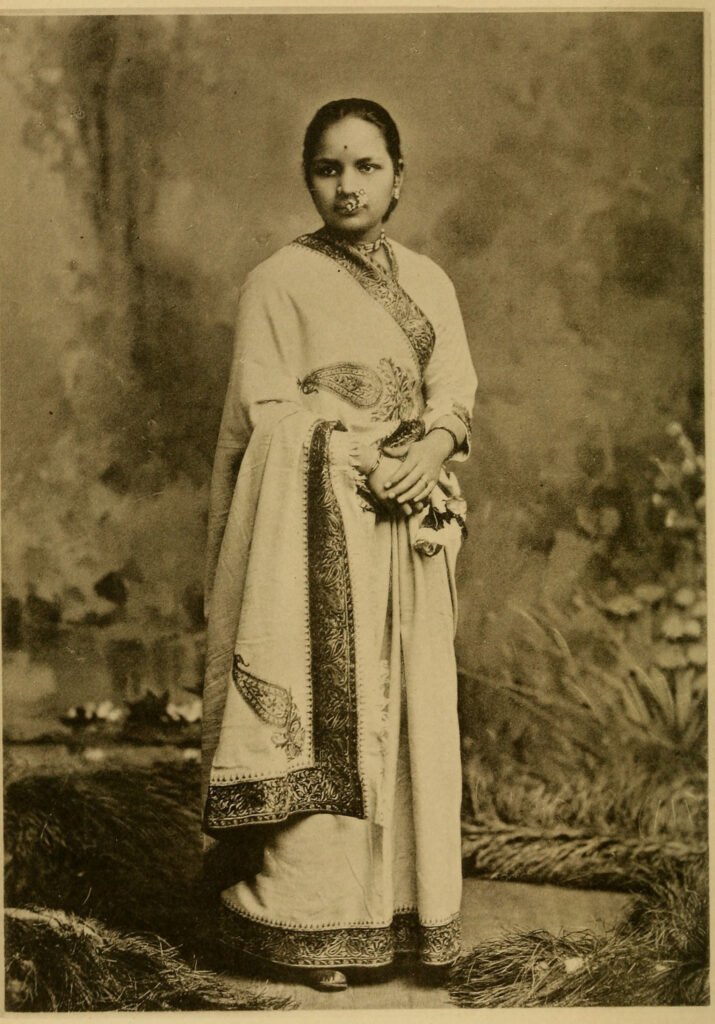
The girl who changed the law
Phulmoni Dasi never knew she had changed anything. She was a child who surely wanted only what any child wants, to play, to grow, to live. She was not allowed to.
Yet her short life and her terrible death forced a mighty empire and a bitterly divided society to look, for the very first time, at what was being done to girls like her, and to write a line of protection into law. It was a small line, weakly kept, and it came far too late for her. But it was a beginning, and it began with her.
Most history books do not carry her name. This one does. She was about ten years old.
How Syed Ahmad Khan Changed Muslim Education in India
If you think you have remembered everything about this topic take this QUIZ
Results


#1. Who was the little girl whose death sparked the Age of Consent Act of 1891?
#2. How old was Phulmoni Dasi when she died?
#3. What was her husband’s sentence in the 1890 trial?
#4. Why wasn’t Phulmoni’s husband charged with rape?
#5. Which Parsi reformer had been warning about the dangers of child marriage since 1884?
#6. What did the Age of Consent Act of 1891 legally change?
#7. Which Viceroy’s government passed the Age of Consent Act of 1891?
#8. Why did Bal Gangadhar Tilak oppose the Act?
What was the Age of Consent Act 1891?
The Age of Consent Act 1891 was a law passed in colonial India that raised the legal age of consent for all girls, married or unmarried, from ten to twelve years. It made it a criminal offence to treat a girl under twelve as a wife, marking the first time the state stepped in to protect child brides.
Who was Phulmoni Dasi?
Phulmoni Dasi was a ten-year-old child bride from Bengal who died in 1889 from severe injuries caused by her much older husband. Her tragic death, and the subsequent trial that gave her husband only a twelve-month sentence, outraged the public and became the catalyst for the Age of Consent Act 1891.
Why did Bal Gangadhar Tilak oppose the Age of Consent Act?
Bal Gangadhar Tilak did not support child marriage itself, but he strongly opposed the Act because he believed a foreign British government had no right to interfere with Hindu customs and religion by force. He argued that any social reform should come voluntarily from within Indian society.
Did the Age of Consent Act 1891 ban child marriage?
No, the Act did not ban child marriage entirely; it only raised the age of consent to twelve. The law was barely enforced in the decades that followed, but it set a crucial precedent that a child’s safety could override traditional custom, paving the way for later reforms.
Who was Behramji Malabari?
Behramji Malabari was a Parsi reformer and journalist who had been campaigning against the dangers of child marriage since 1884. Following the public outrage over Phulmoni Dasi’s death, his advocacy finally gained the national attention needed to pressure the colonial government into passing the Age of Consent Act 1891.
Sources and references
- Wikipedia (“Phulmoni Dasi rape case” and “Age of Consent Act, 1891”) — Phulmoni Dasi’s age of about ten, her death in 1889 from injuries caused by her much older husband, the 1890 trial (Empress v. Hari Mohan Maiti) at the Calcutta Sessions Court, her mother’s testimony, the conviction only for causing hurt because marital rape of a wife over ten was not then a crime, and the passage of the Act in 1891.
- Law & History Review and Tanika Sarkar (“Intimate Violence in Colonial Bengal”) — the details of the case and trial, the medical findings, and the way the case circulated through the press and the Viceroy’s Council to build pressure for reform.
- Sanskriti IAS and Model Diplomat glossary — Phulmoni as the catalyst, Behramji Malabari’s advocacy and his 1884 “Notes on Infant Marriage and Enforced Widowhood,” Viceroy Lord Lansdowne’s government enacting the law, and the raising of the age of consent from ten to twelve.
- Testbook and Prepp (history notes) — Malabari’s role as a leading supporter, the opposition led by Bal Gangadhar Tilak, and the framing of the Act as a clash between social reform and resistance to colonial interference in custom.
- ResearchCultureSociety paper (“The age of consent bill: Clash between reformists and realists”) and India encyclopaedia entries — Tilak’s personal opposition to child marriage alongside his objection to state interference, his proposal for voluntary reform, the support of reformers like Ranade, Gokhale and Agarkar, and Anandi Gopal Joshi’s backing of intervention.
- South Asian History and Culture (“Phulmoni’s body”) and Grokipedia — the medical and legal record of the case, the weak enforcement of the Act, and its place as a first step leading to later laws such as the Sarda Act of 1929.
Author


Exploring the Soul of Bharat through History, Science, Culture, and its Diversity
Our Mission
Curious Indian is a definitive knowledge portal dedicated to chronicling the events, personalities, and cultural shifts that defined the Indian subcontinent. From the ancient Vedic Period to the complexities of 21st-century politics, our goal is to provide deep-dive analysis that inspires.
Editorial Standards & E-E-A-T
Every article published under our brand undergoes a rigorous fact-checking process. We prioritize primary historical records, academic citations, and credible archives to ensure our readers receive accurate, high-authority information.
Historical Integrity Directly sourcing from ASI archives and academic journals.Topical Authority Comprehensive clustering of Indian Science, Biographies, and Wars.Managed by Paripurna Datta and TEAM | Dedicated to the Knowledge of India.