How Thakkar Bapa Built Institutions to Serve India’s Most Forgotten Communities
Thakkar Bapa gave up a comfortable career as a civil engineer in his forties to walk into the forests and hills of tribal India, not as a missionary with a doctrine to deliver or an administrator with a program to implement, but as a man who had decided that the people living in the most neglected corners of the country deserved the same attention that the independence movement was giving to the urban educated classes. He spent the last four decades of his life among the Bhil, Gond, Santhali, and dozens of other Adivasi communities, building schools where there were none, establishing medical facilities where disease went untreated, and fighting with the quiet, relentless effectiveness of someone who had no interest in recognition but an absolute commitment to results. Mahatma Gandhi called him the servant of servants, which was perhaps the most accurate description anyone ever gave of a man whose entire life was the argument that the most marginalized people in India were also the most deserving of its attention.
The Rationalist Awakening Sparked by Gopal Hari Deshmukh in Maharashtra
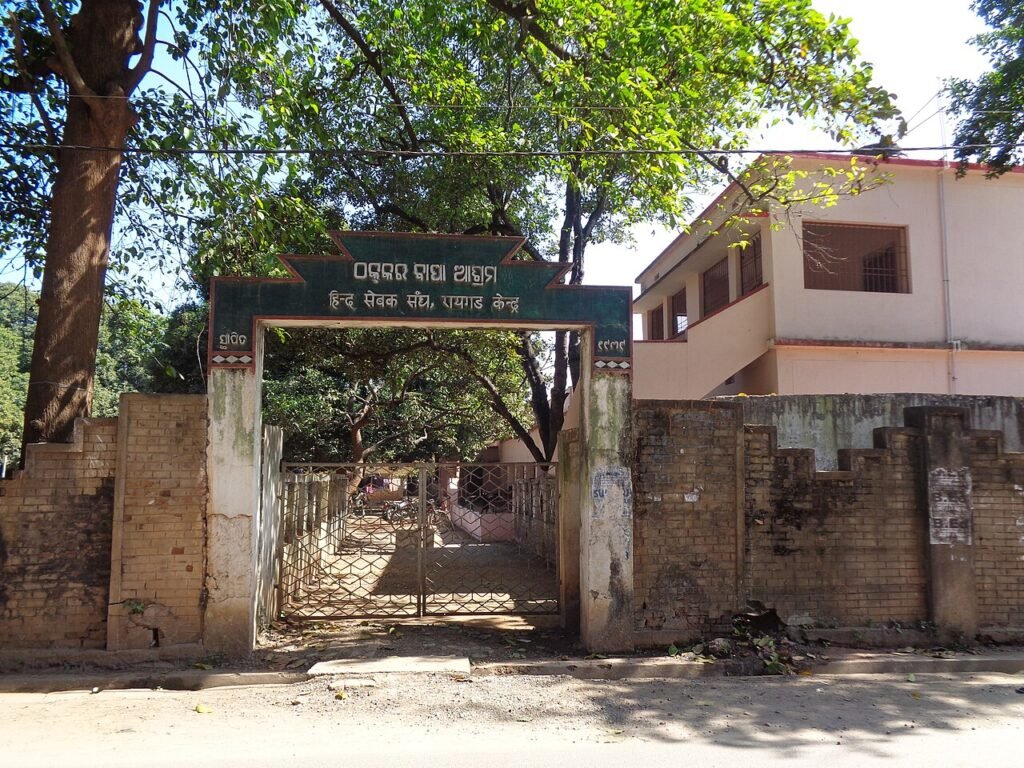
Related to article: The Engineer Who Walked Into the Forest · Source: Wikimedia Commons · Hpsatapathy · CC BY-SA 3.0
The Choice to Serve
How Syed Ahmad Khan Changed Muslim Education in India
There is a particular kind of life that makes no sense by the standards of rational self-interest and perfect sense by every other standard. Amritlal Vithaldas Thakkar was forty-five years old in 1914, working as a civil engineer with the government of Bombay, a man who had built a career of respectability and material sufficiency that most men of his background in early twentieth-century India would have considered the full measure of a life well lived.
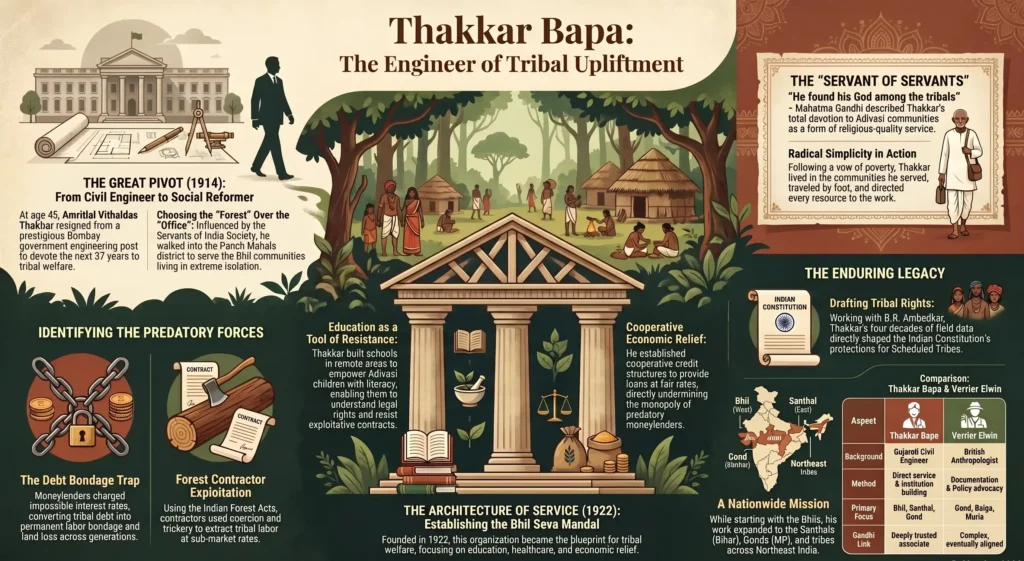
He resigned. He walked into the forests of the Panch Mahals district in Gujarat, where the Bhil tribal communities lived in conditions of poverty, exploitation, and social isolation that the colonial administration had documented, worried about periodically, and largely left unchanged for generations. He went not with a large budget or an institutional mandate but with the kind of personal commitment that does not require either, and he began the work that would occupy the remaining thirty-seven years of his life.
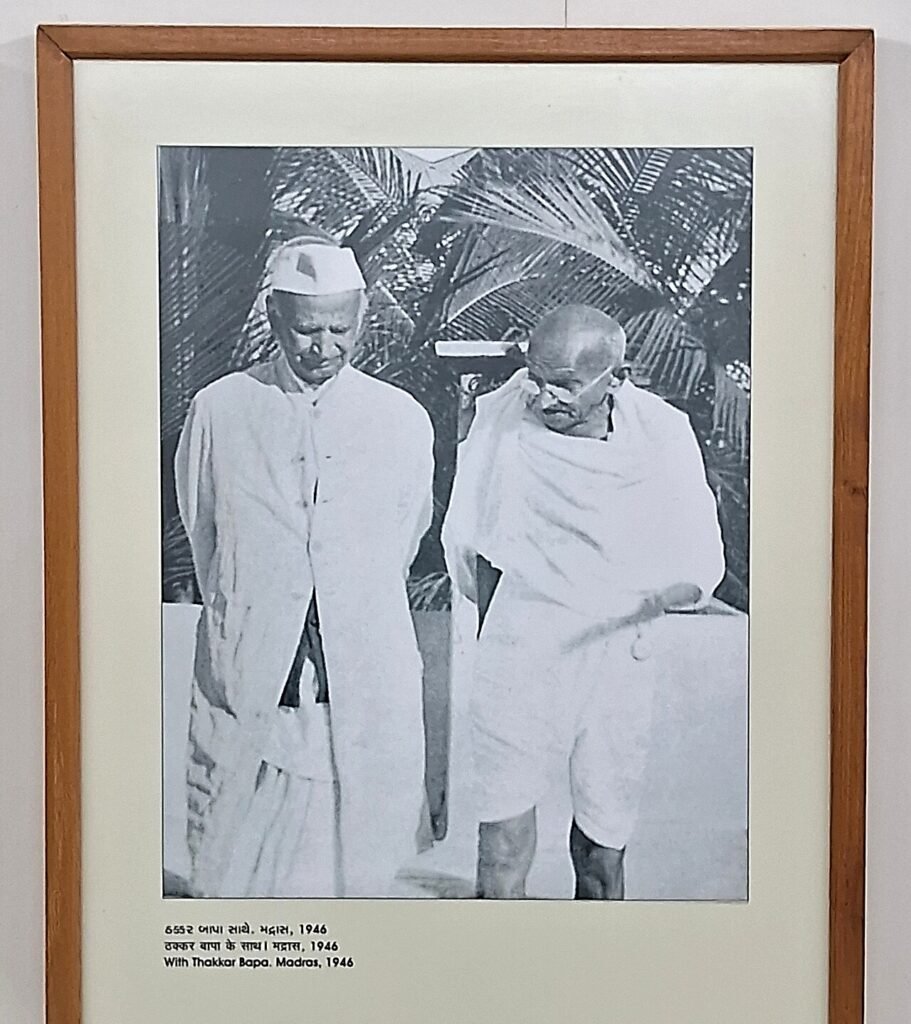
Related to article: The Engineer Who Walked Into the Forest · Source: Wikimedia Commons · VasuVR · CC BY 4.0
The decision to resign a government engineering position at forty-five and walk into a forest to work among the most marginalized communities in India was not impulsive. It was the outcome of a gradual moral reckoning that had been building in Thakkar for years, shaped by his exposure to the Servants of India Society founded by Gopal Krishna Gokhale in 1905, by his growing awareness of the conditions in which Adivasi communities lived, and by a temperamental inclination toward direct, personal service that the administrative life of a colonial-era engineer could not adequately accommodate.
Mahatma Gandhi, who knew and deeply respected Thakkar Bapa, described this quality of his commitment with characteristic precision. He said that Thakkar had found his god among the tribals, meaning not that he had undergone a religious conversion but that the devotion he brought to the work of serving Adivasi communities was of the same quality, the same totality, as the devotion that drives a genuinely religious life. Thakkar would not have disagreed.
The Bhils and the World They Lived In
How Pandita Ramabai Pioneered a Fearless Crusade for Women’s Education
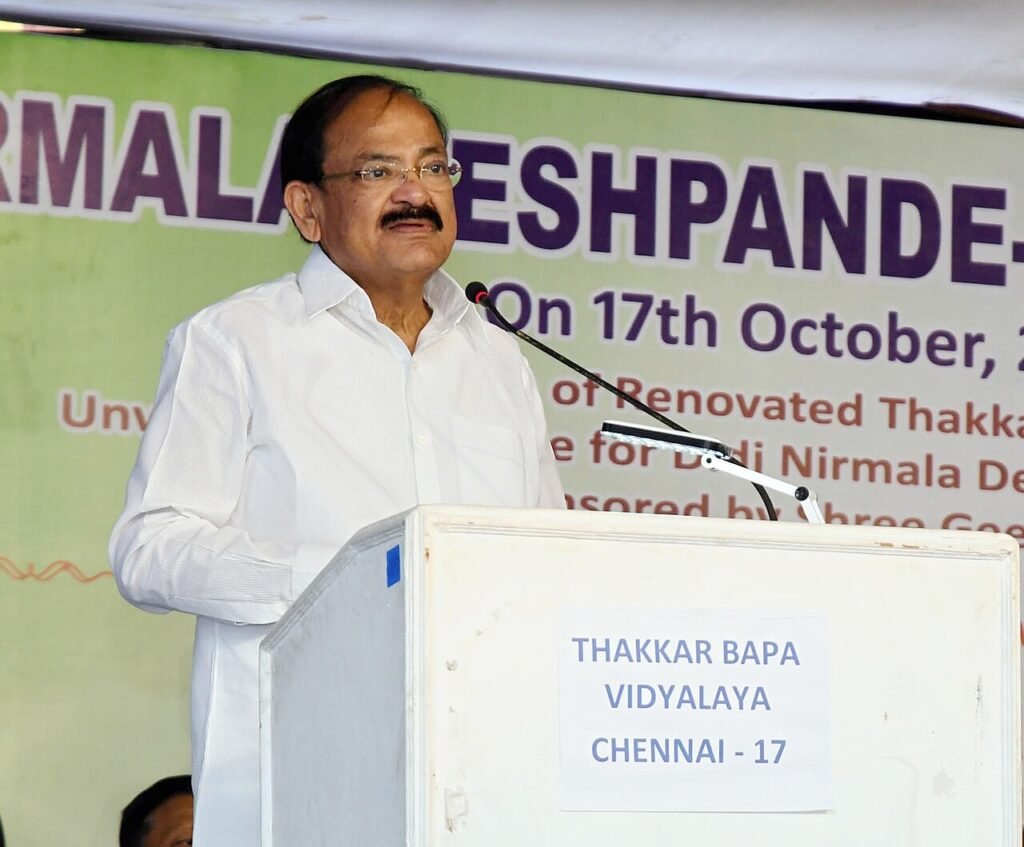
Related to article: The Engineer Who Walked Into the Forest · Source: Wikimedia Commons · Vice President’s Secretariat · GODL-India
To understand what Thakkar Bapa walked into, it is necessary to understand something about the condition of India’s tribal communities in the early twentieth century. The Bhils of Gujarat and Rajasthan, among whom he did his earliest and most sustained work, were one of the largest tribal communities in India, living in the forests and hills of the Aravalli range and the Vindhya foothills in conditions that combined the structural poverty of geographic isolation with the additional burden of active exploitation by the non-tribal economic interests that surrounded them.
The moneylender was perhaps the single most destructive force in the economic life of Bhil communities. Tribal families who needed cash for a wedding, a funeral, a medical emergency, or simply to survive a bad harvest year, turned to moneylenders who charged interest rates that made repayment mathematically impossible and who accepted land and labor as security in ways that converted debt into a form of permanent bondage. Entire families found themselves working the land they had once owned as effectively indentured laborers, generation following generation into the same inescapable structure.
The forest contractor was the second great predatory force. The forests that Adivasi communities had inhabited and managed for generations were being claimed by the colonial state as government property under the Indian Forest Acts, and the contractors who held licenses for timber extraction regularly used a combination of coercion, trickery, and straightforward violence to extract labor from tribal communities at rates far below any reasonable compensation.
Related to article: The Engineer Who Walked Into the Forest · Source: Wikimedia Commons · Vice President’s Secretariat · GODL-India
The colonial administration was aware of these conditions. Its response was a combination of limited regulatory intervention, which the moneylenders and contractors found ways to circumvent or ignore, and a general assumption that the tribal communities were primitive people in a state of natural backwardness that time and civilization would eventually address. The idea that the communities themselves had rights, that their land was theirs, that their labor had a market value, and that the institutional structures exploiting them were criminal rather than natural, was an idea that required someone to insist on it in person, repeatedly, with the specificity that only comes from actually being in the community rather than administering it from a district office.
Thakkar Bapa was that someone.
The Bhil Seva Mandal and the Architecture of Service
How Jyotiba Phule’s Satyashodhak Samaj Challenged Caste in Maharashtra
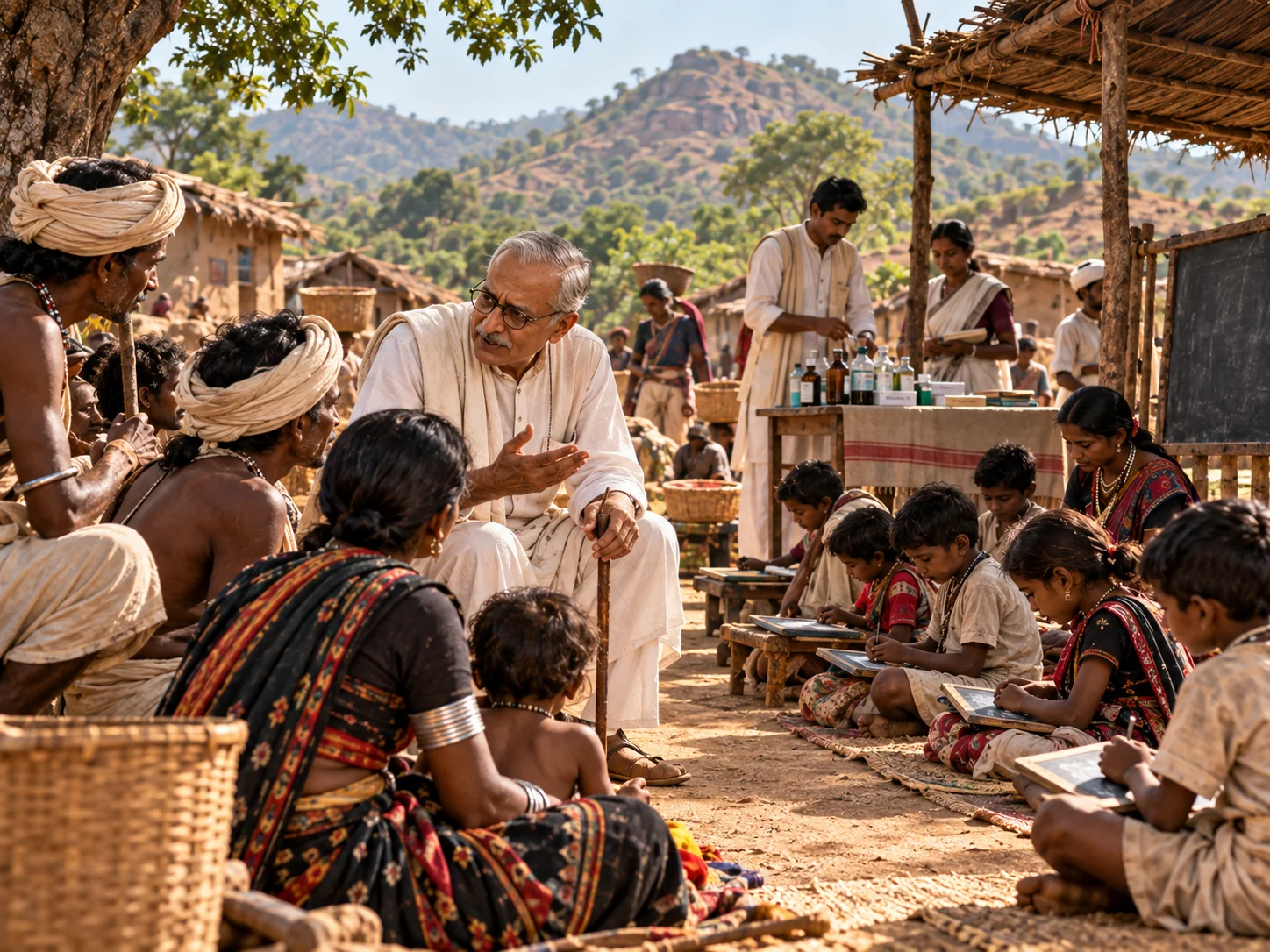
In 1922, Thakkar Bapa established the Bhil Seva Mandal, an organization dedicated to the welfare of Bhil communities in Gujarat and Rajasthan that became one of the most effective tribal welfare organizations in pre-independence India. The Mandal’s work was comprehensive in a way that reflected Thakkar’s understanding that the problems facing Adivasi communities were not single-issue problems amenable to single-issue solutions.
Education was the first priority. Thakkar understood that without literacy and basic education, Adivasi communities had no tools with which to resist the exploitation they were subject to, no capacity to understand the contracts they were being asked to sign, no access to the legal and administrative processes that were supposed to protect them, and no ability to participate in the larger economic and political life of the country on anything like equal terms. He established schools in areas where no educational institution had previously existed, dealing with the logistical challenges of reaching remote communities, training teachers willing to work in difficult conditions, and persuading families whose children’s labor was economically necessary to allow those children to attend school instead.
The persuasion required was not simply of the families. It required confronting the economic interests that benefited from Adivasi illiteracy, which had no enthusiasm for the prospect of an educated tribal community capable of understanding its own legal rights and economic position. Thakkar navigated this opposition with the same steady persistence he brought to every other dimension of his work, not through dramatic confrontation but through the slow accumulation of results that made the argument for education in the most practical possible terms.
Healthcare was the second critical area. Adivasi communities in the forest regions had minimal access to modern medical care and were devastated by diseases including malaria, tuberculosis, and cholera that killed at rates far above those in urban or even rural non-tribal India. Thakkar organized medical camps and facilities, working to bring basic healthcare to communities that had never had access to it, and addressing with equal attention the related problems of clean water, sanitation, and the nutritional deficiencies that made communities more vulnerable to every illness they encountered.
The economic intervention focused primarily on the moneylender problem. Thakkar worked to establish cooperative credit structures that gave Adivasi families access to loans at reasonable rates, directly undermining the economic foundation of the debt bondage system. He also worked to document and publicize the specific practices of exploitation that were occurring in the communities he worked with, using the political relationships he had developed through his association with Gandhi and the Congress to apply pressure on the colonial administration to enforce regulations that existed on paper but were routinely ignored in practice.
Gandhi, Thakkar, and the Meaning of Service
The relationship between Thakkar Bapa and Mahatma Gandhi was one of the most significant personal and philosophical partnerships in the history of the Indian independence movement, though it has received far less historical attention than it deserves. Gandhi had a deep and consistent concern for India’s Adivasi communities, rooted in his understanding that a genuinely free India would have to be a just India, and that justice for Adivasi communities required more than political independence from Britain.
Thakkar was the person Gandhi trusted most completely to translate this concern into practical action. Gandhi directed significant resources, organizational attention, and personal advocacy toward Thakkar’s work, and he used his own political platform to bring the condition of tribal India to the attention of the national leadership of the independence movement in ways that might otherwise have remained marginal to a movement primarily focused on urban political mobilization.
Thakkar in turn represented Gandhi’s vision of constructive work, the Gandhian understanding that social transformation required the patient, direct, personal service of individuals committed to the communities they were working with, rather than the administrative implementation of programs designed from a distance. He was, in this sense, one of the most complete embodiments of the Gandhian ideal of the social worker as the person who goes to where the need is and stays there.
The Servants of India Society, which Thakkar had joined before beginning his tribal work, operated on the principle that its members would take a vow of poverty and devote themselves completely to public service without the expectation of material reward. Thakkar lived this principle with a completeness that impressed even Gandhi, who knew a great deal about the different ways people managed the distance between principle and practice.
His personal life during the four decades of his tribal work was one of radical simplicity. He lived in the communities he served, ate what they ate, traveled by foot and by the most basic available transport, and directed every available resource toward the work rather than toward his own comfort. This was not performance. It was the expression of a consistent understanding that the work itself was the point, and that anything that distracted from the work, including the cultivation of personal comfort or public recognition, was a form of betrayal of the people he was serving.
The Santhals, the Gonds, and the Breadth of the Mission
While the Bhil communities of Gujarat and Rajasthan were the starting point and the primary focus of Thakkar Bapa’s work, his concern extended across the full breadth of India’s Adivasi population. He worked with Santhal communities in Bihar and Bengal, with Gond communities in Madhya Pradesh and Maharashtra, with tribal communities across the hill regions of what are now Jharkhand, Chhattisgarh, and Odisha, and with Adivasi groups across the northeastern states whose geographic isolation made them among the most completely neglected communities in the country.
This breadth was not simply geographical. It reflected Thakkar’s understanding that the structural conditions facing India’s tribal communities, the displacement from traditional land, the exploitation by moneylenders and contractors, the exclusion from education and healthcare, the political invisibility within both the colonial administration and the independence movement, were conditions that applied across communities despite the enormous diversity of their cultures, languages, and traditions.
He documented these conditions with the systematic thoroughness of the engineer he had trained as, producing reports and studies that provided the most comprehensive accounts available of the actual conditions of tribal life in different regions of India. This documentation served both an immediate advocacy function, providing evidence for the specific interventions he was pressing the administration to make, and a longer-term historical function, creating a record of conditions that would otherwise have remained invisible to the historical memory of the country.
The Constitutional Legacy and the Unfinished Work
Thakkar Bapa died on January 20, 1951, less than two years after India’s constitution came into force. The constitution’s provisions for the protection of scheduled tribes, including the reservation of seats in legislative bodies, the prohibition on the alienation of tribal land, and the establishment of special administrative structures for tribal areas, reflected decades of advocacy by people like Thakkar and the growing political recognition that independent India had a specific, historically rooted obligation to the communities that colonial administration had most systematically neglected.
Thakkar had worked closely with B.R. Ambedkar and other architects of the constitutional settlement on questions of tribal rights, and his decades of direct experience in tribal communities gave his contributions to these discussions a grounding in actual conditions that purely legal or political frameworks could not have provided.
The constitutional provisions were significant. Their implementation has been incomplete, contested, and in many regions actively subverted by the same economic interests that Thakkar had spent his life fighting. The moneylender has been replaced by the microfinance institution. The forest contractor has been replaced by the mining company. The mechanisms of exploitation have modernized. The structural conditions they produce have not changed as fundamentally as the constitutional architecture that was supposed to change them would have required.
This is the unfinished dimension of Thakkar Bapa’s legacy, the dimension that makes his work not simply historical but urgently contemporary. The communities he walked into the forest to serve are still waiting, in many cases, for the full realization of the rights that his work helped to inscribe in India’s foundational legal document.
The Servant of Servants
Gandhi’s description of Thakkar Bapa as the servant of servants was precise in a way that repays attention. To be a servant of the servants is to occupy the furthest position from power that is available within a system of social organization. It is to place oneself in the service of those who are themselves without power, without recognition, without the institutional backing that turns individual effort into systemic change.
Thakkar Bapa occupied this position not reluctantly, not as a moral sacrifice, but as the expression of a genuine understanding of where the most important work needed to be done. He had looked at India, in all its complexity and its inequality, and he had identified the Adivasi communities of the remote forests and hills as the people whose need was greatest and whose claim on the attention of anyone serious about justice was therefore most urgent.
He then went to them. He stayed. He worked. He asked for nothing for himself and gave everything he had to the work. In a country that has produced no shortage of people who talked about service, he was one of the people who actually performed it, in the specific, demanding, unglamorous, and transformative sense that the word deserves.
The forests he walked into are still there. The communities he served are still there. The work he began is still unfinished. That is both the measure of how much he did and how much remains to be done.
The Rebuke of His Life
Thakkar Bapa’s life is a rebuke to every comfortable explanation of why the most difficult and necessary work cannot be done. He was not young when he started. He was not wealthy. He had no institutional power base, no political office, no army of supporters. He had a resignation letter and a pair of feet willing to walk into the forest, and he walked.
What he built over four decades in the most remote and neglected communities in India was not spectacular in the way that the history books tend to prefer. It was a school here, a medical facility there, a cooperative credit structure that prevented one more family from falling into permanent debt bondage, a document that put on record the specific exploitation being practiced against a specific community so that the people responsible could no longer claim it was not happening.
These individual acts accumulated into something that changed the terms on which tribal India related to the rest of the country. Not completely. Not irreversibly. The work is not finished, as the conditions in many Adivasi communities today make painfully clear. But the constitutional framework that protects tribal rights, the institutional tradition of tribal welfare work in India, and the political recognition that Adivasi communities have claims on the Indian state that must be taken seriously, all of these owe a debt to the man who resigned his engineering job and walked into the forest.
He asked for nothing in return. He did not receive recognition in his lifetime commensurate with the scale of what he did, and he has not received it in the decades since his death. That is its own kind of comment on the society he spent his life trying to improve. The forests are still there. The communities are still waiting. The work is still calling.
How Kamaladevi Chattopadhyay Saved India’s Artisan Heritage
If you think you have remembered everything about this topic take this QUIZ
Results


#1. What successful professional career did Amritlal Vithaldas Thakkar resign from at the age of forty-five to pursue full-time social work?
#2. Which influential organization founded by Gopal Krishna Gokhale in 1905 shaped Thakkar Bapa’s gradual moral reckoning and commitment to public service?
#3. In which year did Thakkar Bapa establish the Bhil Seva Mandal to provide education, healthcare, and economic relief to tribal communities?
#4. What exact phrase did Mahatma Gandhi use to describe Thakkar Bapa, placing him at the apex of his ideal of dedicated social workers?
#5. Which predatory force in the economic life of the Bhil communities routinely charged impossible interest rates, converting debt into permanent bondage?
#6. Under which specific piece of legislation did forest contractors claim traditional Adivasi land as government property and exploit tribal labor?
#7. With which major constitutional architect did Thakkar Bapa work closely to help shape the protective provisions and rights for scheduled tribes in the 1950 Constitution?
#8. Which of the following sets of Adivasi communities represents groups that Thakkar Bapa directly served across different geographical regions of India?
Who was Thakkar Bapa and why does he matter?
Thakkar Bapa was a twentieth-century Indian social reformer born in 1869 in Bhavnagar, Gujarat, who resigned a government engineering career at forty-five to devote himself to the welfare of India’s tribal communities. He matters because he spent four decades building schools, medical facilities, and cooperative structures in the most neglected corners of the country, documented conditions that would otherwise have remained invisible, and contributed directly to the constitutional provisions protecting tribal rights in independent India. Despite the scale of his contribution, he remains one of the least recognized major figures of the Indian reform tradition.
What was the Bhil Seva Mandal and what did it achieve?
The Bhil Seva Mandal, established by Thakkar Bapa in 1922, was a welfare organization dedicated to Bhil communities in Gujarat and Rajasthan. It built schools in areas with no prior educational institutions, established medical facilities, organized cooperative credit structures to counter predatory moneylending, and documented exploitation by landlords and forest contractors. It became one of the most effective tribal welfare organizations in pre-independence India and provided the organizational model for similar work Thakkar conducted with other communities across the country.
How did Thakkar Bapa’s relationship with Gandhi shape his work?
Gandhi trusted Thakkar Bapa completely as his representative on tribal welfare and directed organizational resources and political advocacy toward his work. Calling him the servant of servants, Gandhi saw in Thakkar the fullest embodiment of constructive service, the Gandhian ideal of going to where the need is and staying there. This relationship gave Thakkar’s work political visibility within the independence movement and access to networks that amplified the impact of his direct community-level work.
What was the main form of exploitation Thakkar Bapa fought against in tribal communities?
The primary form of exploitation was debt bondage through predatory moneylending, which trapped tribal families in cycles of debt at impossible interest rates, converting borrowed money into permanent loss of land and labor. Forest contractors exploiting tribal labor under Forest Act provisions were the second major threat. Thakkar fought both by establishing cooperative credit structures, documenting specific exploitative practices, and using his political connections to press for enforcement of regulations that existed on paper but were routinely ignored.
Why does Thakkar Bapa remain relatively unknown despite his contributions?
Thakkar Bapa’s relative obscurity reflects multiple overlapping factors. He worked in remote areas far from the centres of political and cultural visibility. He sought no personal recognition and left behind no autobiography or public record of his own making. The communities he served remained politically marginal in the historiography of Indian nationalism. And the dominant nationalist narrative of the independence period tended to centre urban, upper-caste figures whose contributions were more legible to the historians who built that narrative. His recovery as a historical figure of significance has been slow and remains incomplete.
Sources & References
Thakkar Bapa’s life and the choice to serve — Born November 29, 1869 in Bhavnagar, Gujarat; died January 20, 1951 in Mumbai. Resigned government engineering career at age 45 in 1914 to devote himself entirely to tribal upliftment work with Bhil, Gond, Santhal, and other Adivasi communities across Gujarat, Rajasthan, Madhya Pradesh, Bihar, and the northeastern states.
The Bhil Seva Mandal and institutional approach — Founded 1922, became one of the most effective pre-independence tribal welfare organizations in India. Built schools in areas with no prior educational institutions, established medical facilities, organized cooperative credit structures to counter predatory moneylending, and documented specific practices of exploitation by landlords and forest contractors.
Economic exploitation and the moneylender problem — Tribal communities faced debt bondage through moneylenders charging impossible interest rates and forest contractors exploiting labor under colonial Forest Acts. Thakkar fought both through cooperative credit structures, systematic documentation of exploitation, and political advocacy using his connections with Gandhi and the Congress leadership.
Gandhi’s trust and Gandhian constructive work — Gandhi called Thakkar the “servant of servants” and trusted him most completely as his representative on tribal welfare. Thakkar embodied the Gandhian ideal of constructive service through patient, direct, personal commitment to communities, living in radical simplicity among those he served and directing all resources to the work rather than personal comfort.
Constitutional legacy and ongoing unfinished work — Worked closely with B.R. Ambedkar and constitutional architects on tribal rights provisions for the Indian constitution of 1950. The constitutional provisions for scheduled tribes, land protection, and special administrative structures reflect his advocacy, but implementation has been incomplete and contested as modern economic interests continue exploitation through updated mechanisms like microfinance institutions and mining companies.