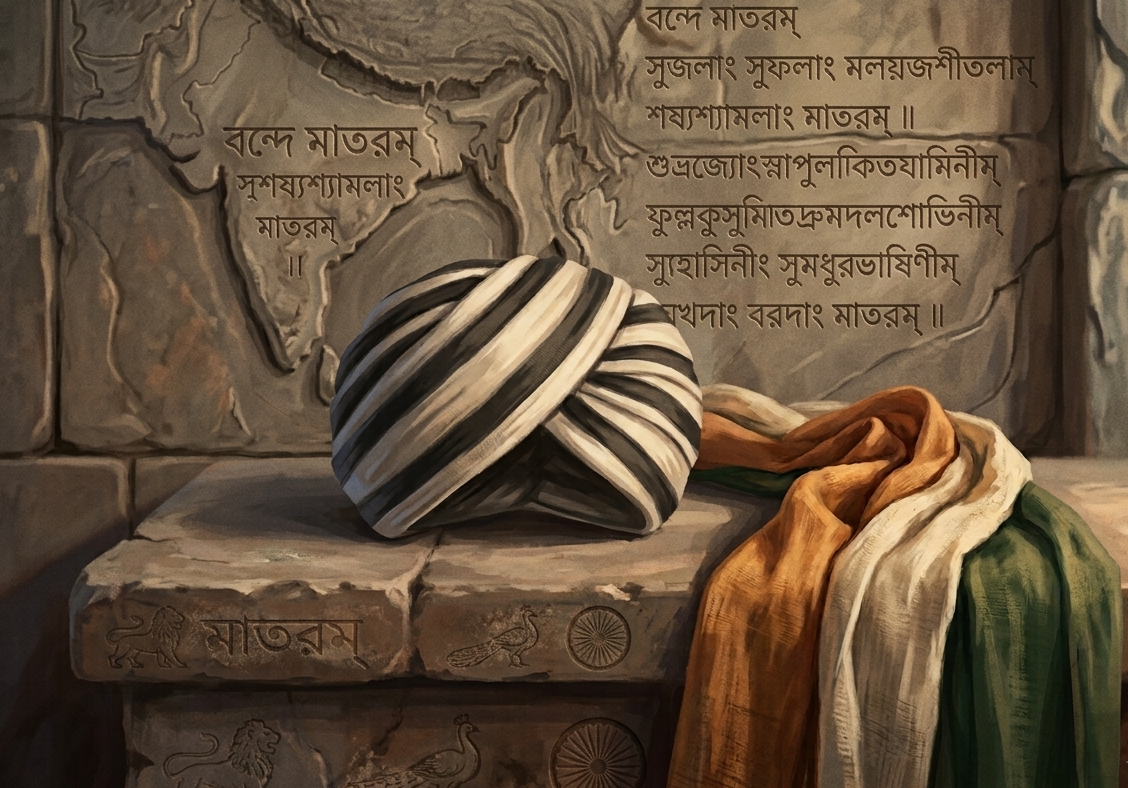
From Bankim’s Novel to Today’s Parliament, the Story of a Hymn and a battleground
At a rally, in a school assembly, at the end of a cricket match, in an old black-and-white film, you have heard those two words. Vande Mataram. They can lift a tired crowd to its feet in a second. They feel as if they have always belonged to every Indian.
But few songs in India have been loved so fiercely and fought over so bitterly at the same time. For 150 years, Vande Mataram has been both a hymn that fills people with pride and a question that sets them arguing.
This is the story of both the love and the fight.
Nil Darpan: The Mirror of Indigo that Shook the British Empire
The poem before the song
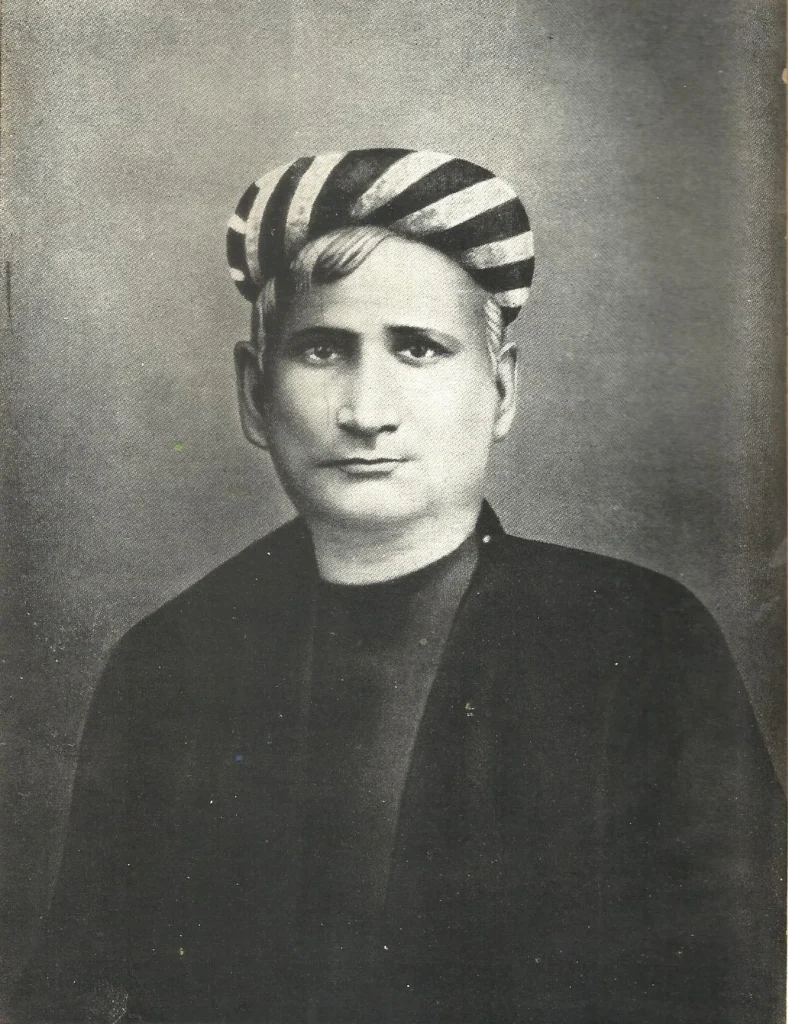
The words were written by a Bengali writer named Bankim Chandra Chatterjee, on 7 November 1875. He wrote them in Sanskrit, in a grand and musical style.
“Vande Mataram” means, roughly, “I bow to you, Mother.” The Mother in the poem is the motherland herself. The opening lines praise her as a land of rivers and orchards, cool winds and green fields heavy with harvest. It is a gentle, beautiful picture of home.
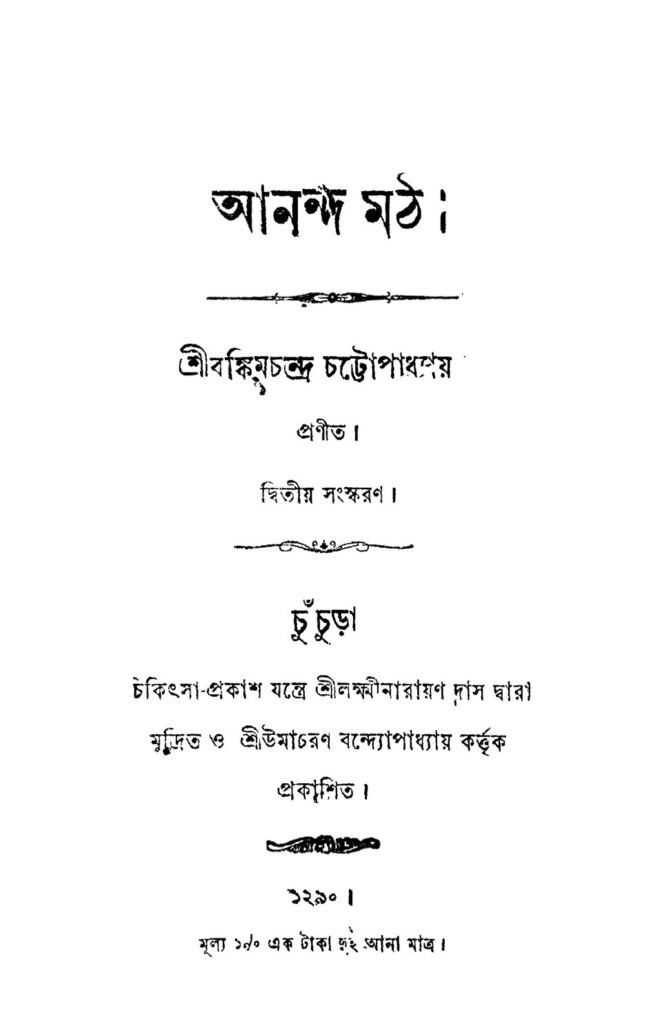
In 1882, Bankim placed the poem inside a novel he wrote called Anandamath. That is where most of India first met it. And that novel, as we will see, is the root of both the song’s power and its trouble.
How it became the sound of a movement
The song stepped out of the novel and into history in 1896. That year, the poet Rabindranath Tagore sang it at the Calcutta session of the Congress. Sung aloud, it was electric.
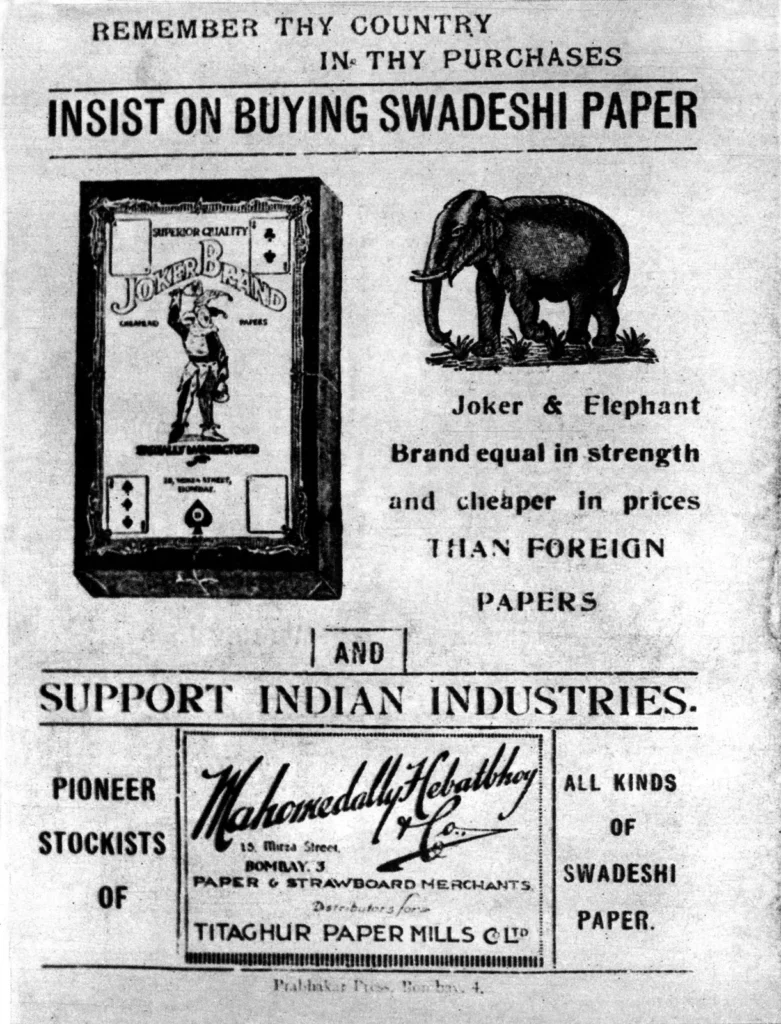
When the British split Bengal in 1905, the anger boiled over into the swadeshi movement, and Vande Mataram became its battle cry. Marchers chanted it. Revolutionaries went to the gallows with it on their lips. Aurobindo Ghosh translated it into English, opening with the line, “Mother, I bow to thee.”
For decades, Vande Mataram was the single most powerful sound of the freedom struggle. Two words could fill a street and frighten a government.
Why it also became a battleground
Now the hard part, told plainly and fairly.
The novel Anandamath is set during an 18th-century rebellion of Hindu holy men. Inside the story, Vande Mataram is not a quiet hymn. It is a war song, sung by fighters, in a tale where the enemy is often shown as Muslim rulers.
There is another layer too. The later verses of the poem, beyond the first two, picture the motherland as Hindu goddesses. She becomes Durga with her ten arms and weapons, and also Lakshmi and Saraswati. For many Hindus, this imagery felt natural and moving.
But for many Muslims, it raised a real difficulty. Bowing to the land as a goddess sits uneasily with Islam’s belief in one God and its rule against idols. And the story the song came from, in parts, cast their ancestors as the enemy. So a song that thrilled one part of India left another part unable to join in. The same words meant devotion to some and discomfort to others.
The two-stanza compromise of 1937
By the 1930s, this had become a serious political problem. The Muslim League objected to the song, and Congress had to face the question head-on.
So Congress turned to its greatest minds. Tagore wrote to Jawaharlal Nehru that the first two stanzas, the ones that only praise the land, were completely fine for him, but that he set the rest aside. He added that he could understand why the later verses might hurt Muslim feelings.
On the advice of Gandhi and Tagore, Congress made a careful choice.
On 29 October 1937, Congress decided that only the first two stanzas of Vande Mataram, the ones describing the land, would be treated as the national song. The goddess verses were left out on purpose, so that every Indian could sing it.
It was a compromise built to hold the country together: keep the beloved opening, quietly set aside the parts that divided.
Bharat Mata: How Abanindranath Tagore Painted the Soul of a Nation
Equal, but not the anthem
When India became free, it had to choose its official songs. Tagore’s Jana Gana Mana was picked as the National Anthem, the one played on state occasions.
Vande Mataram was not forgotten. On 24 January 1950, the head of the Constituent Assembly, Dr Rajendra Prasad, declared that it would be the National Song and would be honoured equally with Jana Gana Mana. Two songs would now stand side by side, one the anthem, one the national song.
The argument that never ended
The 1937 compromise calmed the storm, but it never fully ended it. Again and again over the years, the same fight has flared up. Should school children be made to sing it? Should everyone be required to stand? Courts have been asked to rule, and religious leaders have given opinions on both sides.
Two honest views sit across the table from each other, and it helps to state both without sneering at either.
One view holds that Vande Mataram is the sacred sound of the freedom struggle, sung by martyrs, and that refusing it is an insult to the nation itself. The other view holds that no one should be forced to bow to the land as a goddess against their own faith, and that the song’s origins still carry a sting. Both sides, it is worth remembering, love the country. They simply disagree about this song.
India Independence and Partition 1947: The Price of Freedom
The fight today
The old argument is very much alive right now.
The year 2025 marked 150 years since Bankim wrote the poem, and the government held large celebrations. On 8 December 2025, Parliament held a special discussion on the anniversary. There, the government recited the full six-stanza version, including the goddess verses, and described the 1937 decision to drop those verses as a divisive choice that should be undone.
In early 2026, the Home Ministry issued new rules. The official version would now include the stanzas that had been left out for their religious meaning, it would be played before Jana Gana Mana at government events, and people would be required to stand. And in July 2026, the government moved a bill to make insulting Vande Mataram a criminal offence.
Supporters say all this simply restores the poem to Bankim’s full vision. Critics and the opposition say it reopens a settled compromise and pulls a uniting song back toward the very verses that once divided the country. A century and a half later, the same question is being asked again.
The two words in the air
So the next time those two words rise from a crowd or a school assembly, listen closely. You are hearing more than a tune.
You are hearing a 150-year-old love and a 150-year-old argument at the very same time. Vande Mataram is a hymn to the motherland that some Indians sing with their whole heart, and that others cannot sing without a knot inside. And both are Indians who love this land.
That double truth, held honestly, is the real song. Perhaps understanding why it is loved, and why it is argued over, is a more Indian act than simply picking a side.
The Powerful Feminist Anthems Hidden in the Songs of Lalon Fakir
If you think you have remembered everything about this topic take this QUIZ
Results


#1. Who wrote the original words to Vande Mataram?
#2. In which 1882 novel did Vande Mataram first appear to the wider public?
#3. Who famously sang Vande Mataram at the 1896 Calcutta session of the Congress?
#4. Which historical event turned Vande Mataram into a mass battle cry?
#5. Why did the Muslim League object to the song in the 1930s?
#6. What was the 1937 compromise regarding Vande Mataram?
#7. Who declared on 24 January 1950 that Vande Mataram would be honoured equally with Jana Gana Mana?
#8. What new protocol did the Home Ministry introduce regarding the song in early 2026?
What is the difference between Vande Mataram and Jana Gana Mana?
Jana Gana Mana is India’s official National Anthem, chosen for state occasions when the country
became free. Vande Mataram is the National Song, declared in 1950 to hold equal honour because
it was the sacred sound of the freedom struggle.
Why is Vande Mataram controversial?
While the first two stanzas describe the natural beauty of the land, later verses depict the
motherland as Hindu goddesses like Durga and Lakshmi. This imagery conflicts with Islamic
beliefs against idol worship, leaving some Muslims uncomfortable with singing the full version.
Who wrote Vande Mataram and when?
The poem was written by Bengali author Bankim Chandra Chatterjee in Sanskrit and Bengali on 7
November 1875. He later included it in his 1882 novel, Anandamath, where most of India first
discovered it.
Which stanzas of Vande Mataram are officially sung?
In 1937, Congress established a compromise to sing only the first two stanzas to respect Muslim
sentiments and unite the country. However, early 2026 government protocols issued by the Home
Ministry moved to reinstate the full six-stanza version for official events.
Is it a crime to insult Vande Mataram?
In July 2026, the Indian government moved a bill in Parliament to make insulting Vande Mataram a
criminal offence. This was part of a broader push to restore the poem to Bankim’s full original
vision, a move that critics argue reopens a settled historical compromise.
Sources and references
- Encyclopaedia Britannica (“Vande Mataram”) — Bankim Chandra Chatterjee as author, the poem becoming popular after publication in Anandamath (1882), the opening stanza’s praise of the land, Tagore reciting it at the 1896 Congress session, its adoption as national song in 1950, and the January 2026 Home Ministry protocols on the official version, order of play and standing.
- Wikipedia (“Vande Mataram”) — the poem written in the 1870s in Sanskrit and Sanskritised Bengali, the references to Hindu deities becoming a point of contention in 1937, Congress adopting the first two stanzas on the suggestion of Gandhi and Tagore, the 24 January 1950 adoption, and the May 2026 endorsement of the full six-stanza version for official events.
- ThePrint (excerpt of T.M. Krishna’s book) — Tagore’s 1937 letter to Nehru accepting the first two stanzas while disassociating from the rest, his acknowledgement of Muslim sensibilities, Nehru’s 1937 letter to Ali Sardar Jafri, and the argument that the song functioned as a battle song within Anandamath.
- Tribune India & News on AIR (150th anniversary coverage) — Bankim writing the poem on 7 November 1875, the 29 October 1937 Congress Working Committee resolution adopting only the first two stanzas and dropping the Durga verses, and Rajendra Prasad’s 1950 statement that Vande Mataram be honoured equally with Jana Gana Mana.
- Hindus for Human Rights & The Hindu (2025–2026 reporting) — the 8 December 2025 Lok Sabha special discussion on the 150th anniversary, the political dispute over the song’s history, and the July 2026 move to make insult to Vande Mataram a criminal offence. These recent, contested developments are presented with both the government’s and the critics’ positions.