Passes 1 to 463
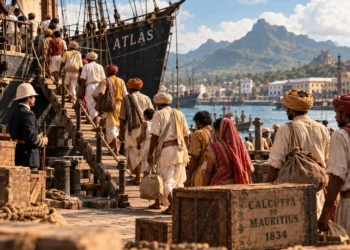
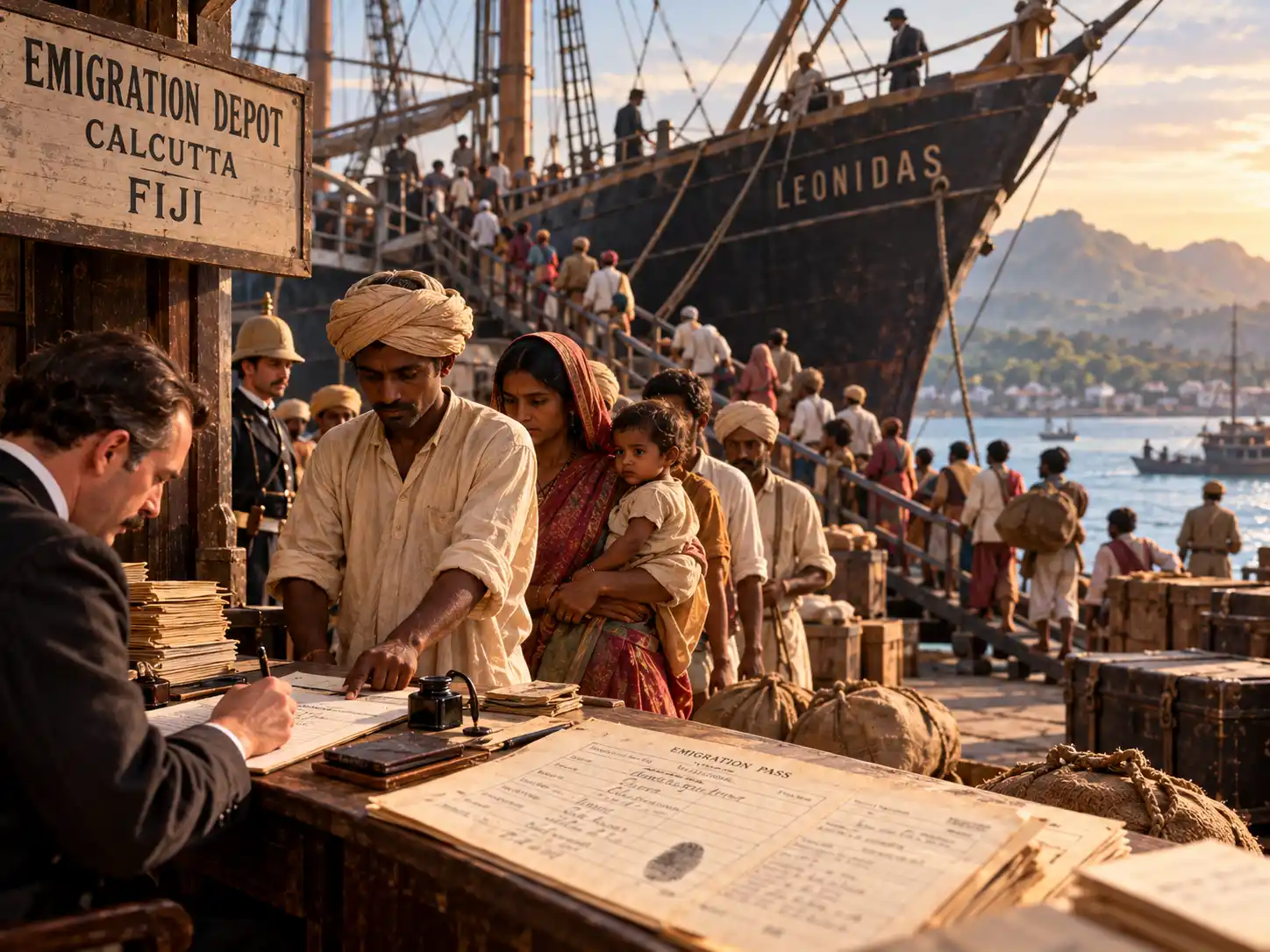
In the catalogue of the National Library of Australia there is a reel of microfilm, call number mfm G 7502, that begins with a ship called the Leonidas. The entry is one line long. It gives a date of arrival in Fiji, 15 May 1879, and a range of numbers: emigration passes 1 to 463.
Each pass is a printed form filled in by hand at a depot in Calcutta. One form was made out for every person who sailed, including infants. The clerk wrote a name and a father’s name. Then age, caste, occupation, and the village, thana and district the person said they came from. There was a line for next of kin and one for bodily marks. Later passes carry a fingerprint.
The first surviving pass is number 1 and the last for this ship is number 463. But 498 people had boarded the Leonidas: 273 men, 146 women, 42 boys, 20 girls and 17 infants.
What a girmit was
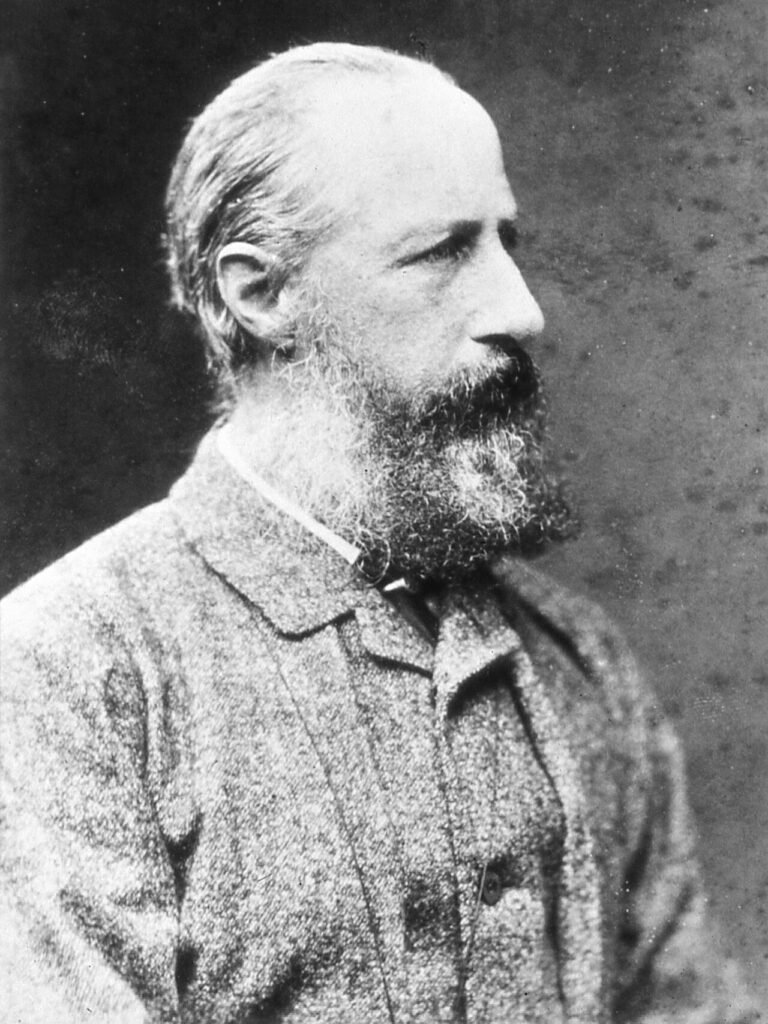
Britain had annexed Fiji in 1874. Its first governor, Sir Arthur Gordon, had served in Trinidad and in Mauritius, and in both places he had seen sugar grown by Indian workers under contract. He wanted the same for Fiji.
The contract was called an agreement. The people who put their thumbs to it said the word as girmit, and came to call themselves girmitiyas. The terms, as set out in a history published by the Fiji Museum in 1979, were five years of work, nine hours a day on weekdays and five on Saturday, at one shilling for a full day’s work for a man and ninepence for a woman. After ten years in the colony a worker could claim a free passage home.
The same history describes how people were recruited. Agents known as arkatis worked the country districts and promised easy work and quick money. Recruits were then gathered at a depot in Calcutta to wait for a ship. A thumbprint on a form shows that a person was there and was registered. It does not show what they had been told, or whether they knew where Fiji was.
The voyage
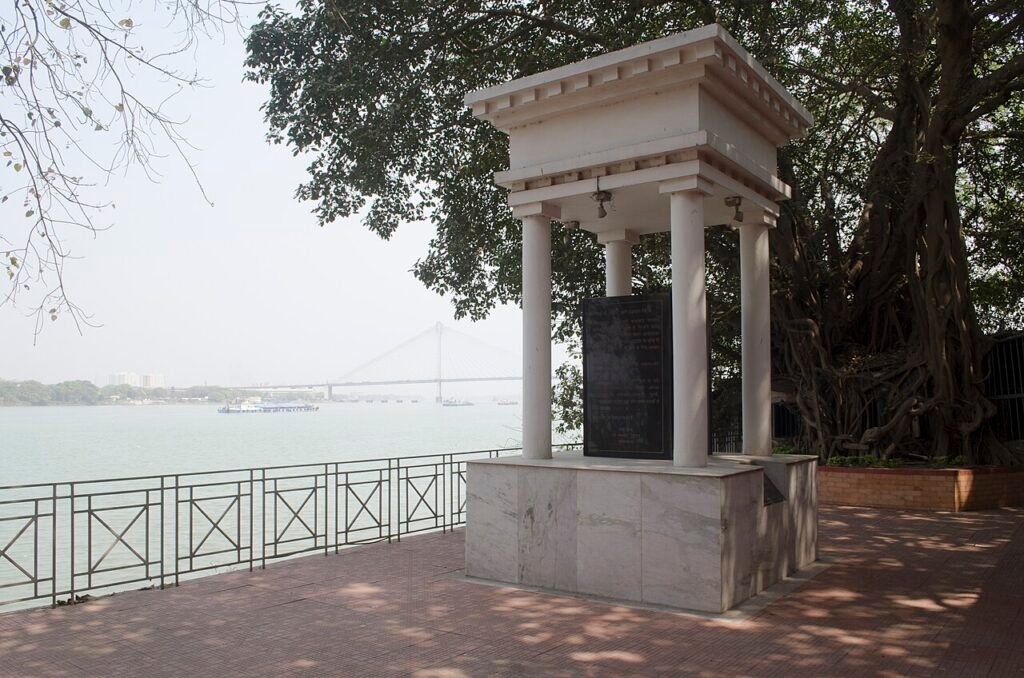
The Leonidas was a 1,600-ton sailing ship owned by James Nourse, which had already carried indentured workers to the West Indies. Her master was a Captain McLachlan and her surgeon was Dr Welsh. Most accounts say she left Calcutta on 3 March 1879. The historian Brij V. Lal, whose book Chalo Jahaji has a chapter on the voyage, gives 28 January.
About three days out from the Hooghly river, cholera appeared on board, and then smallpox. According to Lal, the first case was a European sailor. Dr Welsh isolated the sick, shut the smallpox cases in the sail locker, fumigated the decks and cut the rations. Seventeen passengers died at sea by most counts, nineteen by Lal’s.
There is a small mystery about the date of arrival. The Fiji government marks 14 May. The library’s catalogue says 15 May. Lal’s account explains how both can be right. The ship came up to Levuka, then the capital, on the evening of 14 May. The captain did not know the harbour and would not take her through the reef in the dark. He anchored outside. She was brought in the next morning, and on the way she ran onto the reef and sat there for about two hours until the tide lifted her off.
Fiji’s first quarantine
By then the colonial secretary, J.B. Thurston, had gone out to the ship and learned what was on it. Fiji had lost a large part of its population to measles only four years earlier. Nobody was allowed ashore.
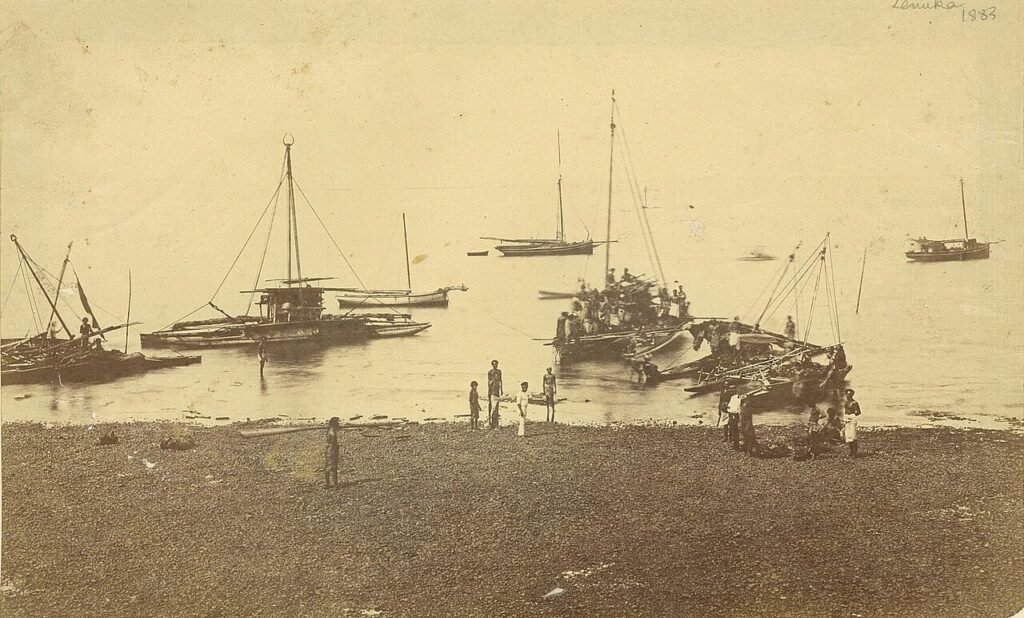
An armed schooner was anchored between the Leonidas and the town, and boats patrolled around her with orders to fire, after a warning, on anyone who tried to cross. A guard found asleep was flogged. The colony’s chief medical officer, Dr William MacGregor, had a platform built on the outer reef. Stores were left on it at low tide, and the ship’s boat collected them once the shore party had gone. Letters were fumigated with carbolic acid before they were delivered.
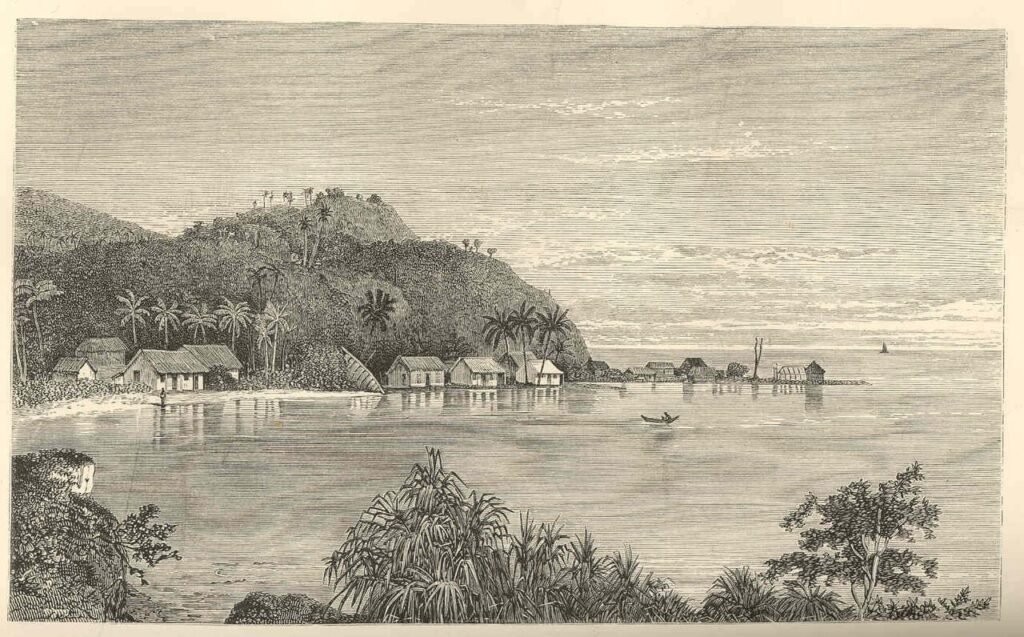
There was no quarantine station, so one was made. Yanuca Lailai is a small island about ten miles from Levuka, with houses for some 350 people. Fijian men from Ovalau and Moturiki put up twenty more in about three days. Twelve days after the ship arrived, the passengers began to be ferried across, one boat trip a day for three days. The Leonidas sailed for San Francisco at the end of May.
The passengers stayed on the island into August. Fifteen more died there, mostly of dysentery, diarrhoea and typhoid.
Nobody wanted them
When the survivors were brought back to Levuka, most planters would not take them. Lal records that only one, J. Hill of Rabi island, engaged a group: 52 men, 25 women and 29 children. The government put most of the rest, 189 men and 97 women, to work on roads and buildings.
A few names from the ship turn up in later files. A man called Sohun bought his way out of his contract early and put 40 pounds in a bank. Another, Molladeen, saved 35 pounds from his wages. A sardar, or foreman, named Abdulla was accused of forcing men under him into a gambling hut and taking 70 pounds from them. The overseer spoke up for him, and there was no inquiry.
The planters changed their minds soon enough. The Colonial Sugar Refining Company of Australia arrived in 1880 and built its mills on Indian labour. The second ship, the Berar, came in 1882. By the time the last one, the Sutlej, landed its passengers in November 1916, 87 voyages had carried about 60,000 people. On the estates the girmitiyas had a word for the life: narak, hell. All remaining indentures were cancelled on 1 January 1920. Most of the workers stayed.
What the passes leave out
The numbers for the Leonidas have never quite added up. Take 498, subtract the 17 or 19 who died at sea and the 15 who died on the island, and the answer is 466 or 464. The passes stop at 463. The quarantine ended on 9 August in some accounts and 15 August in others.
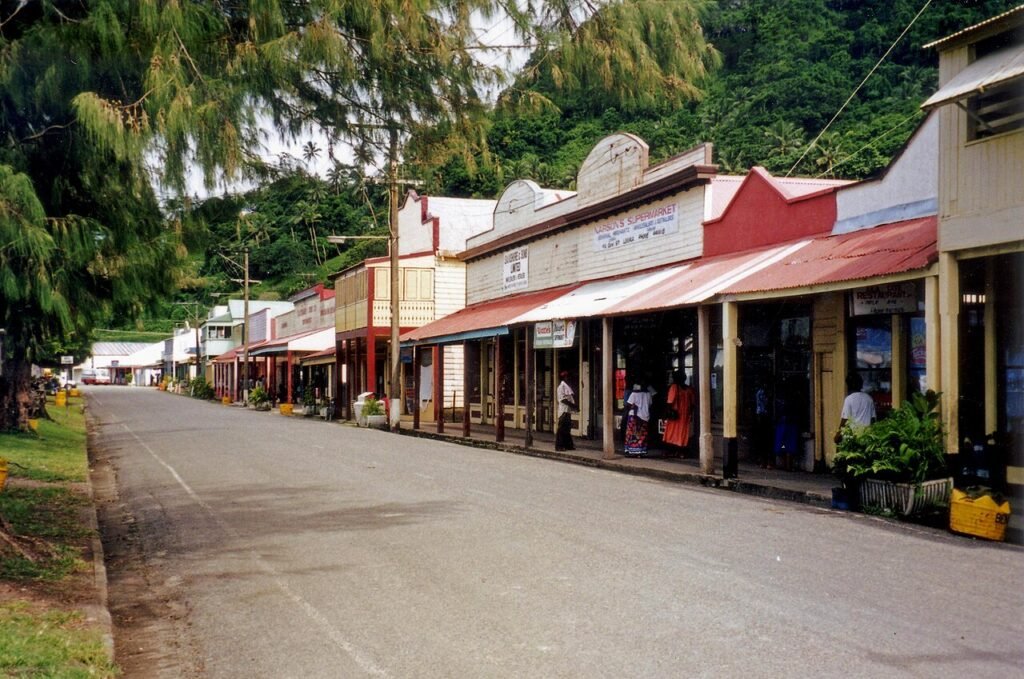
The forms themselves have gaps. The National Library of Australia, which digitised more than 60,000 of them from 344 volumes in the National Archives of Fiji, warns that names were written down by depot staff in India and that the same name can be spelled several ways on one ship. A pass gives a caste and a village. It does not say why the person left. Some passes have no number at all. Those were made out for people who were registered in Calcutta and never landed, and the reason given is usually death on the voyage. For some families that sheet is the only trace of a child.
In 2011 the records of Indian indentured labourers held in Fiji, Guyana, Suriname and Trinidad and Tobago were added to UNESCO’s Memory of the World register. The listing calls them the only source of genealogy for the labourers’ descendants.
Thirty-five years after the Leonidas, another ship of Indians crossed the Pacific. The passengers of the Komagata Maru had paid their own fares, and Canada would not let them land. The girmitiyas’ fares were paid for them, and Fiji kept them for five years.
Descendants in Fiji, Australia, New Zealand and Canada now work backwards through the passes. A Fijian marriage or birth certificate may carry a pass number. The number leads to a ship, and the ship to a form with a father’s name and a village in India.
Test your knowledge
Answer 5 questions about the story.
What does girmit mean?
Girmit is how Indian indentured workers in Fiji pronounced the English word “agreement”, the labour contract they were bound by. Those who served under it are called girmitiyas.
When did the Leonidas arrive in Fiji?
The ship anchored off Levuka on the evening of 14 May 1879 and was brought into harbour on 15 May. Fiji’s commemorations use the first date and the archive catalogue the second.
How many people were on the Leonidas?
498 people embarked at Calcutta. After deaths at sea and in quarantine, the surviving emigration passes are numbered 1 to 463.
Where were the Leonidas passengers quarantined?
On Yanuca Lailai, a small island near Ovalau, which became Fiji’s first quarantine station. They were held there until August 1879.
Where can descendants find Fiji emigration passes?
The National Library of Australia has digitised more than 60,000 passes from the National Archives of Fiji and made them free to view online. They can be browsed by ship, arrival date or pass number.
Sources and further reading
National Library of Australia, "Indian emigration passes to Fiji 1879-1916", family history research guide.
Brij V. Lal, "The Voyage of the Leonidas", in Chalo Jahaji: On a Journey Through Indenture in Fiji (ANU Press).
Ahmed Ali (introduction), "Girmit: The Indenture Experience in Fiji", Bulletin of the Fiji Museum, No. 5, 1979.
UNESCO Memory of the World, "Records of the Indian Indentured Labourers", inscribed 2011.
"The Leonidas Fijians" and "Leonidas and Fiji’s first quarantine station", The Fiji Times.