Rishi Kapoor was more than just a superstar; he was the heartbeat of Indian romantic cinema for decades. Born into the first family of Bollywood, the Kapoor clan, he carved a unique niche that transitioned from youthful exuberance in Bobby to gritty, realistic performances in his later years. This article explores his personal triumphs, his candid nature, and the indelible mark he left on the world of entertainment, ensuring that his name remains synonymous with the "evergreen" spirit of Bollywood.| Attribute | Details |
| Full Name | Rishi Raj Kapoor |
| Born | September 4, 1952 (Chembur, Mumbai) |
| Died | April 30, 2020 (Mumbai) |
| Debut Film | Mera Naam Joker (1970) as a child artist |
| Breakout Role | Bobby (1973) |
| Spouse | Neetu Singh (m. 1980) |
| Famous Moniker | Chintu, The Chocolate Boy |
The Story of a Legend: Embracing the Rishi Kapoor Legacy
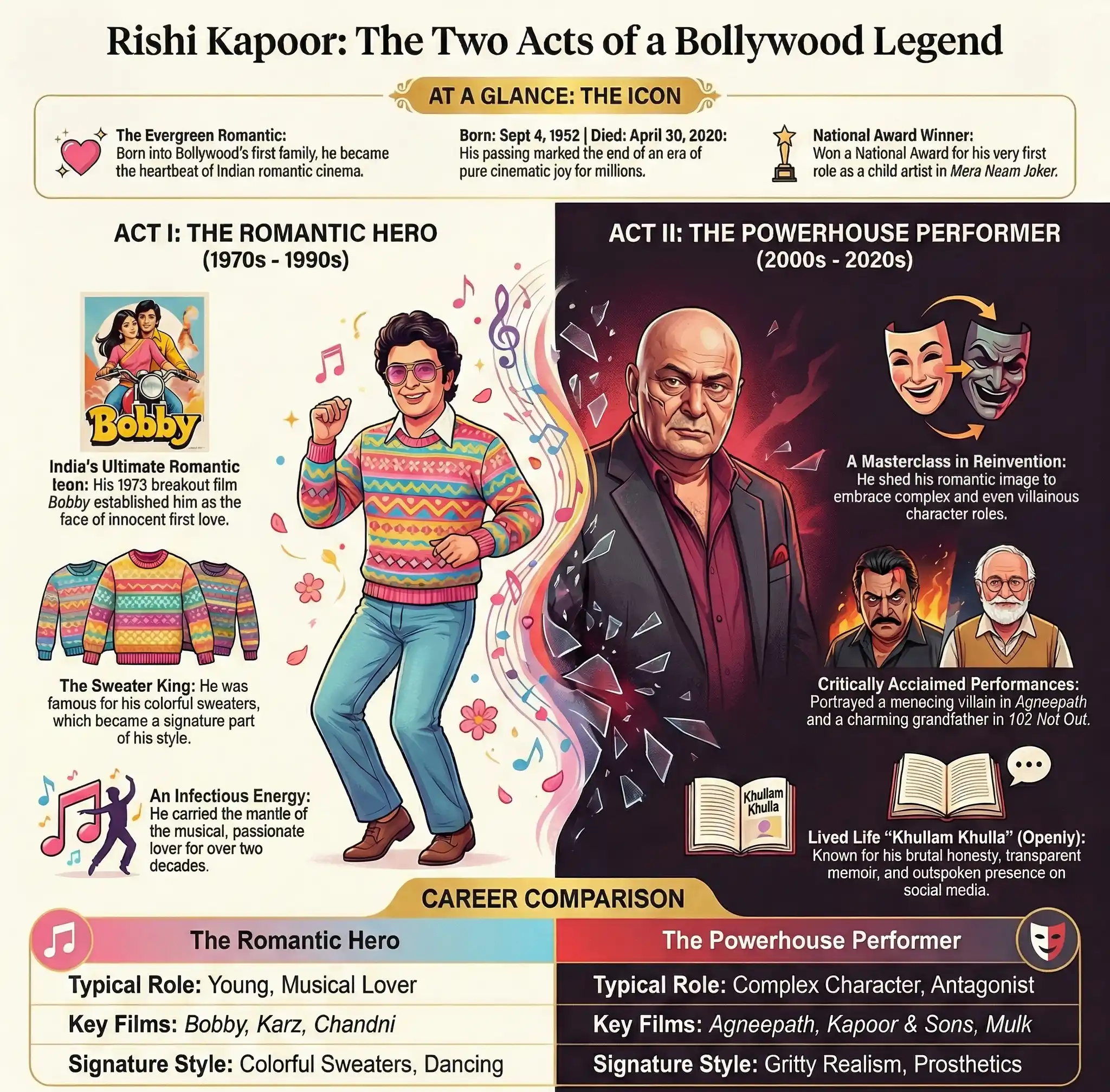
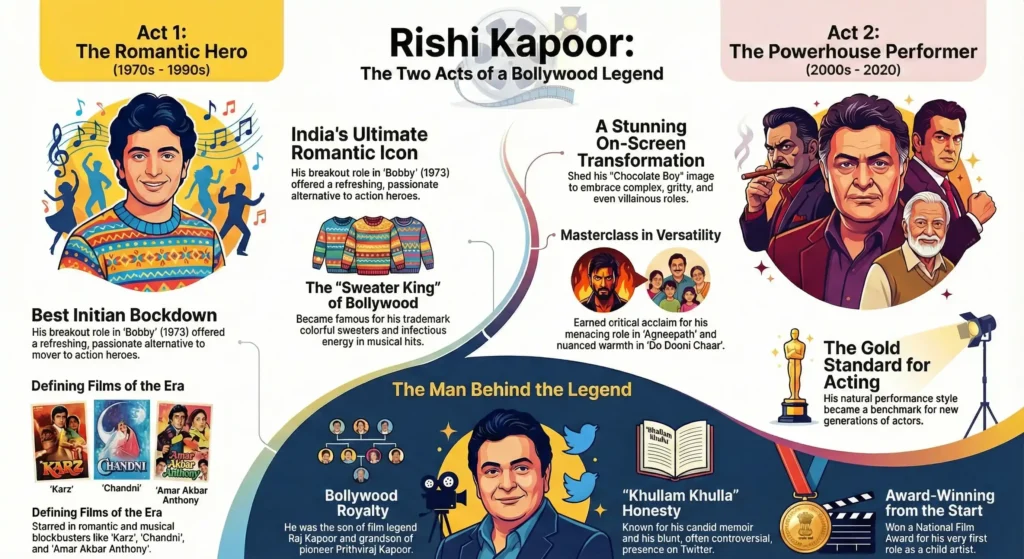
The Rishi Kapoor legacy began long before he ever donned the iconic colorful sweaters that became his trademark. It started in the hallowed halls of “Raj Kapoor’s” creative sanctuary, where a young boy named Chintu watched the magic of celluloid being woven. Unlike many star kids who merely inherit fame, Rishi earned his stripes with a raw, vulnerable performance in Mera Naam Joker, winning a National Award as a teenager. He didn’t just walk into the spotlight; he illuminated it with a charm that seemed both ethereal and incredibly relatable to the Indian middle class.
8 Fascinating Facts in the Homi Jehangir Bhabha Biography
The Golden Era of Romance
When Bobby hit the screens in 1973, India found its ultimate romantic icon. At a time when the “Angry Young Man” trope was beginning to dominate via Amitabh Bachchan, Rishi Kapoor offered a refreshing alternative—the soft, musical, and deeply passionate lover. He became the face of a generation that believed in the innocence of first love. His chemistry with Neetu Singh wasn’t just movie magic; it was a real-life fairytale that the public followed with bated breath.
For over two decades, he carried the mantle of the romantic lead. Whether he was playing a qawwali singer in Amar Akbar Anthony or a reincarnated lover in Karz, his energy was infectious. However, the true strength of his legacy lies in his ability to reinvent himself when the industry tried to pigeonhole him. Many actors of his era faded away when their “hero” days ended, but Rishi was just getting started.
The Second Act: A Masterclass in Acting
As the 2000s approached, Rishi Kapoor underwent a transformation that stunned critics and fans alike. He shed the “Chocolate Boy” image and embraced complex, sometimes even villainous, roles. His portrayal of Rauf Lala in Agneepath showed a dark, menacing side that no one knew existed. He brought a nuanced warmth to Do Dooni Chaar and a hilarious, geriatric charm to 102 Not Out. This period solidified the Rishi Kapoor legacy as one of pure talent rather than just good looks. He proved that an actor’s relevance is tied to their willingness to evolve and take risks.
Off-camera, Rishi was known for his brutal honesty. His memoir, Khullam Khulla, is a testament to his transparent nature. He spoke openly about his struggles, his relationship with his father, and his insecurities. This human vulnerability made him even more endearing to his fans. He wasn’t a distant, plastic superstar; he was a man who enjoyed his food, loved his drink, and spoke his mind on Twitter, often sparking conversations that ranged from hilarious to controversial.
7 Incredible Facts in the Satyendra Nath Bose Biography
A Brave Fight and a Lasting Impact
The final years of his life were a testament to his incredible spirit. Even while battling leukemia in New York, his focus remained on returning to the film sets he loved so much. His social media updates from the streets of NYC, often accompanied by famous friends, showed a man who refused to let illness dim his inner light. When he finally returned to India, the joy in the industry was palpable, though sadly short-lived.
His passing in 2020 felt like a personal loss to millions. It marked the end of an era of pure, unadulterated cinematic joy. Yet, through his children, Ranbir and Riddhima, and the hundreds of hours of film he left behind, the Rishi Kapoor legacy continues to thrive. New generations of actors often cite him as the gold standard for natural performance—an actor who never looked like he was “acting.”
For more on the history of Indian cinema’s first family, you can explore the Kapoor family archives to understand the roots of this greatness. His contribution to the National Film Awards also stands as a historical record of his early brilliance.
Quick Comparison: The Two Phases of a Career
| Feature | The Romantic Hero (1970s-90s) | The Powerhouse Performer (2000s-2020) |
| Typical Role | Young Lover, Musical Lead | Character Actor, Antagonist, Father |
| Key Films | Karz, Chandni, Bobby | Agneepath, Kapoor & Sons, Mulk |
| Style | Colorful Sweaters, Dancing | Prosthetics, Gritty Realism |
| Impact | Defined 70s/80s Pop Culture | Won Critical Acclaim & New Awards |
Curious Indian: Fast Facts
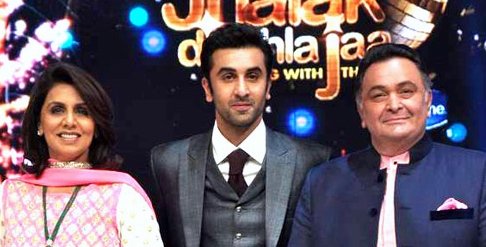
- A Family Affair: Rishi was the second son of film legend Raj Kapoor and the grandson of Prithviraj Kapoor.
- The Sweater King: He was famous for his extensive collection of sweaters, which he rarely repeated in movies.
- Twitter Star: In his later years, he became one of India’s most followed and “blunt” celebrities on social media.
- The Neetu Connection: He starred in 12 films with his wife, Neetu Singh, before they got married.
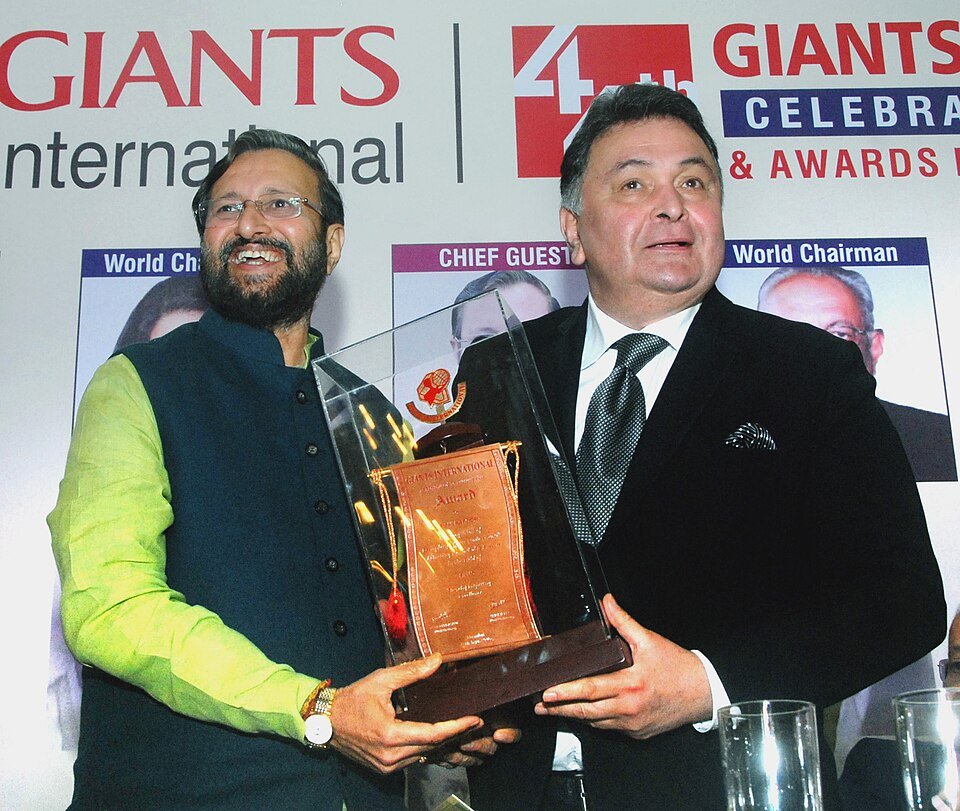
- Global Recognition: He received a lifetime achievement award in Russia, where the Kapoor family has a massive following.
Conclusion
The Rishi Kapoor legacy is not just about the movies he made, but the emotions he stirred in the hearts of his audience. He taught us that it is okay to be vulnerable, that romance is timeless, and that it is never too late to reinvent oneself. As we look back at his illustrious career, we see a man who lived life “Khullam Khulla”—with an open heart and a spirited soul. He will forever remain the “Evergreen Romantic” in the grand story of Indian cinema.
8 Remarkable Secrets in the Jagadish Chandra Bose Biography
If you think you have remembered everything about this topic take this QUIZ
Results


#1. In which film did Rishi Kapoor make his debut as a child artist, winning a National Award for his performance?
#2. Which specific fashion item became a famous trademark of Rishi Kapoor’s romantic hero image during the 70s and 80s?
#3. What was the name of Rishi Kapoor’s brutally honest memoir released in 2017?
#4. In his later career, which character did he play to showcase a menacing, dark side that contrasted with his earlier romantic image?
#5. How many films did Rishi Kapoor star in with his wife, Neetu Singh, before they got married in 1980?
#6. According to the ‘Quick Comparison’ table, what defined his ‘Impact’ during the first phase of his career (1970s-90s)?
#7. In addition to India, in which country did the Kapoor family have a massive following, leading to Rishi receiving a lifetime achievement award there?
#8. Rishi Kapoor was famously known by which pet name among family and fans?
What was Rishi Kapoor’s first movie?
His first appearance was as a child artist in the song “Pyar Hua Ikrar Hua” in Shree 420, but his full acting debut was in Mera Naam Joker.
What is the focus of the Rishi Kapoor legacy?
It focuses on his transition from a romantic musical star to one of India’s most versatile character actors, alongside his candid and honest personality.
Did Rishi Kapoor win a National Award?
Yes, he won the National Film Award for Best Child Artist for his role in Mera Naam Joker.
Who are Rishi Kapoor’s children?
He has two children: the famous actor Ranbir Kapoor and fashion designer Riddhima Kapoor Sahni.
10 Remarkable Facts About Meghnad Saha Life and Achievements
Read More: https://curiousindian.in/rajinikanth-december-1950-present/