Saturday, April 18, 2026
19 °c
Columbus
Curious Indian
  • Arts & Culture
  • Festivals of India
  • Indian History
  • Indian Politics
  • Biography
    • Entertainment Personalities
    • Science Personalities
  • Unsolved India
No Result
View All Result
  • Arts & Culture
  • Festivals of India
  • Indian History
  • Indian Politics
  • Biography
    • Entertainment Personalities
    • Science Personalities
  • Unsolved India
No Result
View All Result
Curious Indian
No Result
View All Result
Home Arts & Culture

Experiencing Bhaona Traditional Theatrical Arts

paripurnadatta by paripurnadatta
in Arts & Culture, Dance & Music, North East India, Regional Culture
Reading Time: 10 mins read
0 0
A A
Bhaona traditional theatrical arts

Bhaona traditional theatrical arts

Share on FacebookShare on Twitter

Table of Contents

Toggle
  • The Vision of a Great Saint
    • A Beautiful Bridge Language
  • The Entrance of the Musicians
  • The Magnificent Masks of Majuli
    • Preserving the Sacred Craft
  • A Global Cultural Treasure
  • The Future of the Stage
  • Quick Comparison Table
  • Curious Indian Fast Facts
  • Conclusion
  • If you think you have remembered everything about this topic take this QUIZ
  • Results
    • #1. Who was the 15th-century saint and social reformer who created Bhaona?
    • #2. What is the name of the traditional village community hall where these plays are performed?
    • #3. Which special poetic language, a mix of Assamese and Maithili, was invented for these plays?
    • #4. What is the name of the magnificent musical introduction that begins a performance?
    • #5. Which two traditional instruments act as the “rhythmic heartbeat” of the performance?
    • #6. Which river island in Assam is world-famous for its master craftsmen who make Bhaona masks?
    • #7. What materials are traditionally used to make the vibrant masks for the performers?
    • #8. According to the text, what was the primary purpose of creating Bhaona?
    • What exactly is the main language spoken during these plays?
    • Where do these traditional performances take place?
    • Are the bright colorful masks heavy to wear?
    • Who originally created this unique style of theater?
    • Do I have to buy a ticket to watch a village performance?
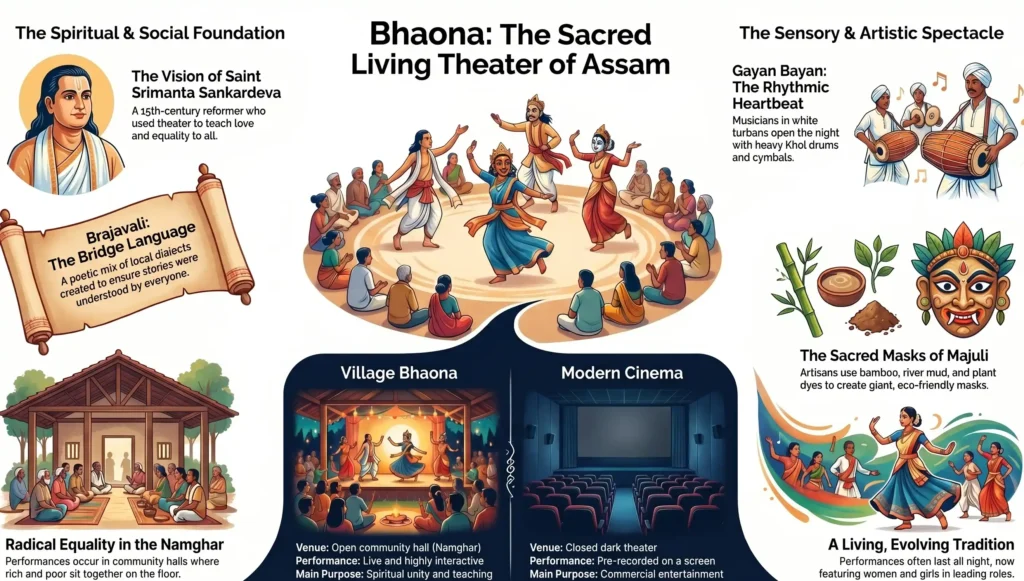
The performing arts of Assam hold a wonderful secret that brings entire villages together. It is a beautiful performance style known as Bhaona. Created over five hundred years ago by a brilliant saint, this living theater uses loud drums, colorful natural masks and graceful dances to tell stories of ancient heroes and gods. Instead of performing in expensive city theaters the villagers perform inside their local community halls where everyone sits together on the floor as equals. This highly emotional and rhythmic performance is a pure celebration of human unity, deep spirituality and incredible artistic talent.
FeatureDetails
Origin StateAssam India
Great CreatorSaint Srimanta Sankardeva
Core VenueNamghar community hall
Main LanguageBrajavali
Key InstrumentsKhol drum and Taal cymbals

Long ago in the lush green valleys of Assam a wise saint wanted to teach the village people about love peace and equality. He knew that reading heavy thick books was not possible for everyone because many poor farmers did not know how to read. So he decided to use the magic of music drama and colorful costumes to share his message. This brilliant idea gave birth to the Bhaona traditional theatrical arts. It is a spectacular living theater that has survived for over five hundred years completely transforming the way stories are told in the eastern part of our country.

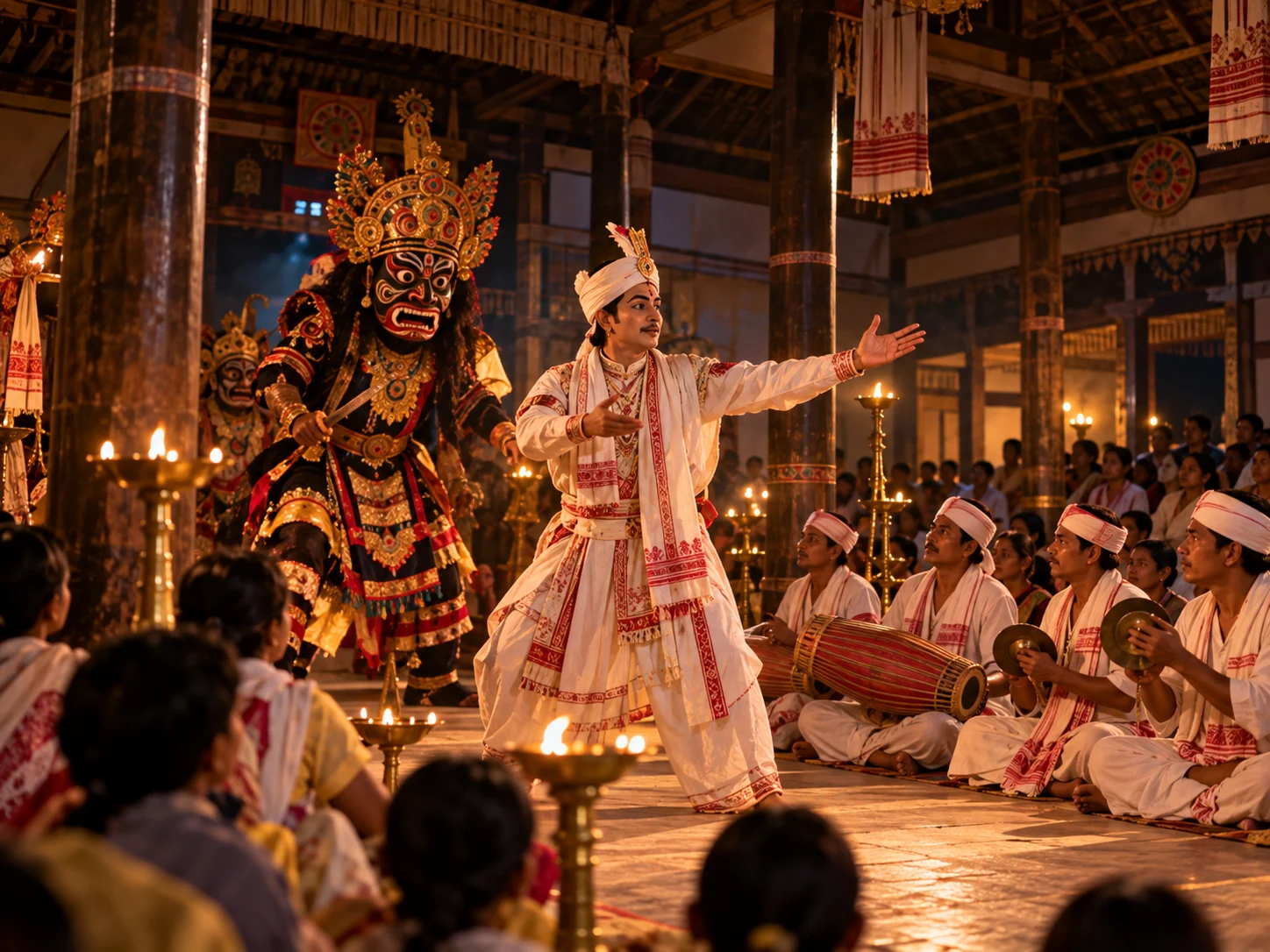
When you walk into a village in Assam as the sun goes down you might hear the deep powerful sound of traditional drums echoing through the banana trees. This is the call of the community hall known as the Namghar. Every single person in the village from tiny children to wise grandparents gathers there. They do not buy tickets and there are no reserved luxury seats. A rich landlord and a humble farmer sit right next to each other on the bare floor to watch the grand performance. This beautiful sense of total equality is the true heart of this ancient art form.

READ MORE:  Rajput Kingdoms: Guardians of the North and Builders of Forts
Bhaona traditional theatrical arts

The Vision of a Great Saint

The story of this incredible performance art begins in the fifteenth century with a great saint named Srimanta Sankardeva. He was a brilliant poet, scholar and social reformer. During his time society was divided by strict rules and many people felt completely left out. Sankardeva wanted to break down these invisible walls holding society back. He believed that art was the absolute greatest tool to bring human hearts together.

He wrote beautiful plays based on ancient Indian epics. But he did not just write the words on paper. He composed the musical tunes, designed the colorful clothing and even directed the actors on how to move their hands and feet. He created a completely immersive experience that captured the imagination of the simple village folks. His vision was so powerful and filled with pure love that it continues to light up the night skies of Assam even today.

A Beautiful Bridge Language

One of the most fascinating parts of this theater is the special language they use to tell the stories. Sankardeva did not want to use a tough language that only rich scholars could understand. He invented a completely new poetic language called Brajavali. It was a beautiful mix of local Assamese Maithili and other regional words.

When the actors spoke in this sweet musical language everyone in the audience could instantly feel the deep emotion of the story. It did not matter where you were from you could perfectly understand the pain and the joy of the characters. It was a brilliant historical way to unite people from entirely different backgrounds under one single roof sharing one beautiful dream.

The Entrance of the Musicians

A performance does not begin with the actors stepping onto the stage. It begins with a magnificent musical introduction known as the Gayan Bayan. This is arguably the most exciting part of the entire night. The musicians sit right near the stage and act as the rhythmic heartbeat of the entire performance. They play a special large wooden drum called the Khol and clash big brass cymbals called Taals.

The rhythm starts very slow and gentle like a quiet river. But slowly the drumming becomes so incredibly fast and loud that you can feel the vibration deep inside your chest. The musicians dress entirely in pure white clothes and wrap special turbans around their heads. They move their bodies in perfect harmony dancing gracefully while playing the heavy instruments. It takes many years of strict daily practice to master these heavy drums. Experts from the Centre for Cultural Resources and Training frequently study this unique musical style because it represents one of the most complex and beautiful rhythmic traditions in the entire country.

READ MORE:  Asha Bhosle Biography : Beyond the Melody

The Magnificent Masks of Majuli

A major highlight of the Bhaona traditional theatrical arts is the use of giant vibrant masks. To see the true master craftsmen of these giant faces you must travel to Majuli which is a massive river island sitting right in the middle of the mighty Brahmaputra river. In the peaceful monasteries of this beautiful island artists spend months making giant heads of gods noble kings and scary demons.

They never use cheap plastic or toxic paints. Everything is completely natural and safe for the earth. They build a light strong frame using local bamboo and cover it with a special sticky mud taken right from the riverbank. Then they paint the dry masks using bright colors made from tree bark, crushed flowers and natural colored stones. When an actor wears one of these giant masks and steps into the flickering golden light of the oil lamps it feels like a powerful ancient spirit has just entered the room.

Preserving the Sacred Craft

Making these beautiful masks takes incredible patience and total dedication. Thankfully big national organizations are heavily noticing this hard work. Groups like the Sangeet Natak Akademi often reward these brilliant island artisans for keeping the pure craft completely alive. Furthermore the Ministry of Culture Government of India provides special financial support to ensure that these natural mask making skills are passed down to the younger generation without losing their original historical charm.

A Global Cultural Treasure

Today this magnificent village theater is no longer just a local secret hidden in the green hills. Scholars and art lovers from all over the entire world travel to the eastern states just to witness this magical performance. Researchers connected with the United Nations Educational Scientific and Cultural Organization often praise this living tradition for its amazing ability to promote peace and social unity among rural communities.

The plays teach very simple but profound human lessons. They show the children that good will always eventually win against evil and that pure love is much stronger than dark hatred. By keeping these ancient stories alive the humble villagers are doing a massive service to global heritage. The Indira Gandhi National Centre for the Arts actively documents these nighttime performances so that future generations can watch and learn from this brilliant storytelling method.

The Future of the Stage

The absolute most beautiful thing about this tradition is how much it involves the small children of the village. Young boys and girls start learning the graceful dance steps and the complex drum beats when they are barely five years old. They look up to the senior actors with pure wonder in their bright eyes and dream of wearing the beautiful shiny costumes one day.

READ MORE:  The Garo Tribe: Their Ancient History, Culture and Legacy

As long as these children continue to gather in the wooden community halls to hear the ancient stories of the past the art will never ever die. The tradition will keep shining brightly proving to the modern world that true magic happens when a community decides to sing dance and tell stories completely together.

Quick Comparison Table

FeatureVillage BhaonaModern Cinema
VenueOpen village community hallClosed dark theater
PerformanceLive and highly interactivePre recorded on a screen
Main PurposeSpiritual unity and teachingCommercial entertainment
LanguageClassical poetic BrajavaliEveryday modern language

Curious Indian Fast Facts

  • The actors usually paint their entire faces with natural colors if they are not wearing a giant wooden mask.
  • The huge cymbals used by the musicians can weigh several kilograms making the dances incredibly difficult to perform.
  • Traditional plays often run continuously for an entire night finishing exactly when the morning sun begins to rise.
  • The community hall where the plays happen has no idols inside focusing entirely on the chanting of prayers and stories.
  • Women and young girls are now taking up leading acting roles in many villages breaking hundreds of years of strict tradition.

Conclusion

The grand theatrical arts of this green valley represent much more than just a simple evening of entertainment. They are a powerful living bridge that connects the modern generation directly back to the wisdom of a great saint. When the white dressed musicians strike their drums and the masked actors jump into the warm light of the fire they are reminding us of our shared human values.

They remind us that we are all completely equal and that goodness will always triumph over greed. Taking the time to sit on the floor of a village hall and watch this incredible performance is a deeply humbling experience. It strips away all the noise of the fast city life and replaces it with pure rhythmic joy. By continuing to support and celebrate these brilliant village artists we ensure that the sweet sounds of the drums and the poetic words of the past will forever echo across the beautiful rivers of Assam.

If you think you have remembered everything about this topic take this QUIZ


Results

Share your score!
Tweet your score!
Tweet your score!
Share to other
QUIZ START

#1. Who was the 15th-century saint and social reformer who created Bhaona?

Previous
Next

#2. What is the name of the traditional village community hall where these plays are performed?

Previous
Next

#3. Which special poetic language, a mix of Assamese and Maithili, was invented for these plays?

Previous
Next

#4. What is the name of the magnificent musical introduction that begins a performance?

Previous
Next

#5. Which two traditional instruments act as the “rhythmic heartbeat” of the performance?

Previous
Next

#6. Which river island in Assam is world-famous for its master craftsmen who make Bhaona masks?

Previous
Next

#7. What materials are traditionally used to make the vibrant masks for the performers?

Previous
Next

#8. According to the text, what was the primary purpose of creating Bhaona?

Previous
Finish

What exactly is the main language spoken during these plays?

The actors speak a beautiful artificial literary language called Brajavali which was specifically invented to help people from different backgrounds understand the story easily.

Where do these traditional performances take place?

They take place inside a Namghar which is a traditional Assamese community prayer hall found in almost every single village across the state.

Are the bright colorful masks heavy to wear?

Surprisingly they are very light because the skilled artists make them using hollow bamboo frames and a very thin layer of river mud.

Who originally created this unique style of theater?

It was created in the fifteenth century by Srimanta Sankardeva a highly respected saint and social reformer who wanted to spread messages of equality and love.

Do I have to buy a ticket to watch a village performance?

No, these performances are completely free and open to everyone as they are funded collectively by the village residents to celebrate community unity.

Tags: AssamCultureIndian HistoryTheatreTraditional Art
ShareTweetPin
paripurnadatta

paripurnadatta

Related Posts

Loktak Lake
North East India

Life On The Loktak Lake Floating Phumdis

April 18, 2026
Namdapha National Park
North East India

Exploring The Deep Namdapha National Park Rainforest

April 18, 2026
Deendayal Upadhyaya
Cultural Insights

The Heritage Of Northeast India Local Brews Unveiled

April 16, 2026
No Result
View All Result

Stay Updated

  • Trending
  • Latest
Life of Mahavira: From Prince Vardhamana to Great Conqueror

Life of Mahavira: From Prince Vardhamana to Great Conqueror

April 11, 2026
Life of Buddha: The Journey to Enlightenment

Life of Buddha: The Journey to Enlightenment

April 11, 2026
Christmas in India

Christmas in India: A Festive Blend of Faith, Flavors, and Tradition

April 11, 2026
From Shimla to Stardom: The Complete Biography of Anupam Kher

From Shimla to Stardom: The Complete Biography of Anupam Kher

April 11, 2026
Bhaona traditional theatrical arts

Experiencing Bhaona Traditional Theatrical Arts

April 18, 2026
Loktak Lake

Life On The Loktak Lake Floating Phumdis

April 18, 2026
Namdapha National Park

Exploring The Deep Namdapha National Park Rainforest

April 18, 2026
Deendayal Upadhyaya

The Heritage Of Northeast India Local Brews Unveiled

April 16, 2026

Widget Title

Facebook Twitter Youtube RSS
Curious Indian Logo

Explore the soul of Bharat with Curious Indian. A definitive guide to Indian history, arts, culture, biographies, and the events that defined our future.

Follow us on social media:

Recent News

  • Experiencing Bhaona Traditional Theatrical Arts
  • Life On The Loktak Lake Floating Phumdis
  • Exploring The Deep Namdapha National Park Rainforest

Category

  • Ancient Civilizations & The Vedic Age
  • Architecture
  • Artists & Cultural Icons
  • Arts & Culture
  • Battles of India
  • Biography
  • Business & Industrialists
  • Colonial India
  • Cultural Insights
  • Dance & Music
  • Entertainment Personalities
  • Festivals of India
  • Freedom Fighters
  • Freedom Movement
  • Historical Events & Turning Points
  • Indian History
  • Indian Politics
  • Major Festivals
  • Medieval India
  • North East India
  • Paintings & Visual Arts
  • Political Leaders
  • Post-Independence India
  • Regional Culture
  • Religious & Spiritual Figures
  • Science Personalities
  • Scientific Discoveries
  • Sculpture
  • Social Issues
  • SOCIETY & MYSTERIES
  • Strange & Unknown Stories
  • Textiles & Handicrafts
  • Uncategorized
  • Unsolved India
  • Unsung Heroes

© 2026 Curious Indian- Everything about India

Welcome Back!

Login to your account below

Forgotten Password?

Retrieve your password

Please enter your username or email address to reset your password.

Log In

Add New Playlist

No Result
View All Result
  • Arts & Culture
  • Festivals of India
  • Indian History
  • Indian Politics
  • Biography
    • Entertainment Personalities
    • Science Personalities

© 2026 Curious Indian- Everything about India

This website uses cookies. By continuing to use this website you are giving consent to cookies being used. Visit our Privacy and Cookie Policy.
Are you sure want to unlock this post?
Unlock left : 0
Are you sure want to cancel subscription?
×