Kusumapura, 499 CE: in the last years of the Gupta age, a twenty-three-year-old astronomer wrote that the stars stand still and the Earth turns. Almost everyone after him disagreed, and they kept his book anyway
Imagine a man in a boat, moving downstream. He looks at the bank. The trees and houses on the shore seem to slide backwards past him, though they are not moving at all. It is his boat that moves.
In 499 CE, a young astronomer used that picture to say something very few people in the world then believed. Just so, he wrote, the stars that seem to move westward across the night sky are standing still. What moves is the Earth, turning beneath the people who watch them.
His name was Aryabhata. He was twenty-three.
The trees on the bank seem to move backwards. It is the boat that moves.
Kusumapura
Aryabhata tells us his own age in his book. When 3,600 years of the Kali age had passed, he says, he was twenty-three, which works out to 499 CE. He worked at Kusumapura, identified with Pataliputra, near modern Patna, the old imperial city at the heart of the Gupta world.
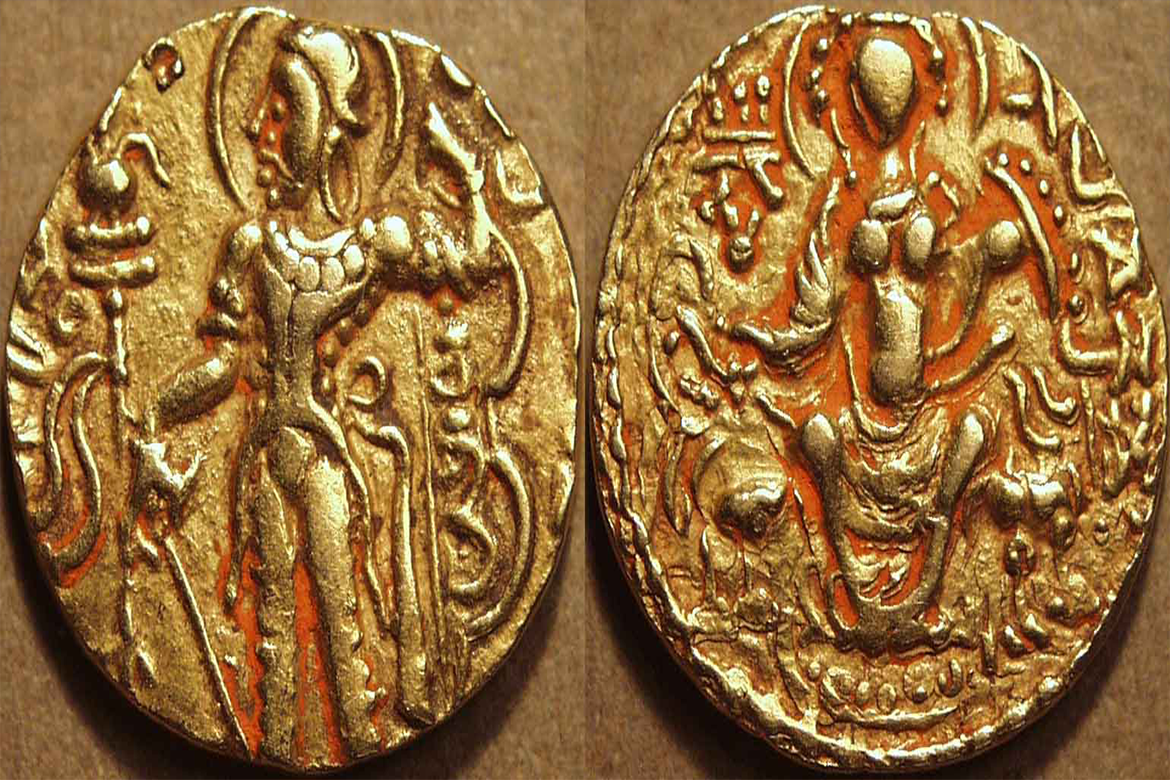
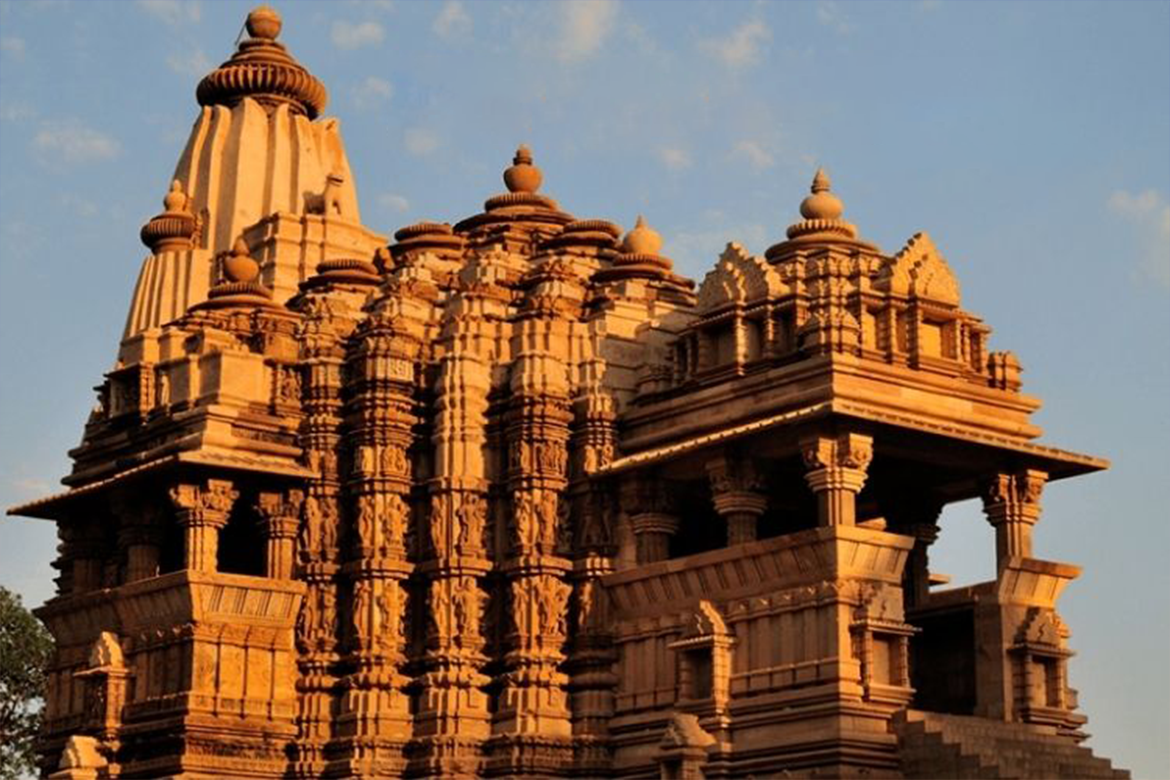
This was the end of a remarkable age. Under the Gupta kings, from the fourth century onwards, northern India had grown rich and settled. Sanskrit poetry and drama reached heights they would rarely touch again. Sculptors carved the serene Buddhas of Sarnath and Mathura. Metalworkers made pillars of iron that still stand. Scholars could spend their lives on grammar, medicine, logic and the stars, and be honoured for it.
Aryabhata’s book, the Aryabhatiya, is tiny: 121 verses in all, packed so tight that it needed commentaries to be understood. In those verses are a table of sines, methods for solving equations that would not appear in Europe for centuries, and a value for pi of 3.1416, which he took care to call an approximation.
The stars stand still
The boat verse is in the last section of the book, on the heavens. To see how bold it was, it helps to know what it contradicted.
Indian astronomers already knew the Earth was a sphere. But they held that it hung fixed in space, and that the whole frame of the stars was driven westward each day by a great cosmic wind, the pravaha, set in motion by the creator. It was a respectable view, backed by scriptural authority and by common sense. The ground does not feel as if it is moving.
Aryabhata simply said it was the other way round. He did not claim revelation. He gave an argument, and an image anyone who had been on a river could check against their own experience.
He did not claim revelation. He gave an argument, and an image anyone could test.
Reign of Chandragupta II Vikramaditya: The Golden Age of India
Reign of Harshavardhana: The Empire of Benevolence
The shadow
He did the same with eclipses. In popular belief, an eclipse happened when the demon Rahu swallowed the Sun or Moon. Aryabhata explained them as shadows: a lunar eclipse is the Moon passing into the Earth’s shadow, and a solar eclipse is the Moon’s shadow falling on the Earth. He also said the Moon does not shine by its own light, but by the Sun’s.
He closed his book with a claim about what he had done. Roughly, he says that from the ocean of true and false knowledge he had brought up the sunken jewel of true knowledge, using the boat of his own intellect. The boat again.
The argument
What happened next is the other half of the story, and it is just as telling.
Almost nobody accepted the spinning Earth. In Aryabhata’s own century, Varahamihira dismissed the idea. In the seventh, the great Brahmagupta rejected it; if the Earth spun, he argued, things would fly off it. In the eighth century Lalla asked how birds could fly back to their nests, when the trees would have rushed away beneath them, and why arrows shot straight up did not fall to the west. Some later commentators hedged or explained the verse away.
These were not foolish objections. They were the physics of their time, and it would take more than a thousand years, and Galileo’s own thought experiments about ships, to answer them properly.
But notice what did not happen. As far as the record shows, nobody burned the Aryabhatiya. Nobody put Aryabhata on trial. His successors argued with him by name, point by point, in their own books. His text was copied and commented on for more than a thousand years, most of all in Kerala, where a whole school of astronomers built on his work.
Nobody burned his book. They argued with it, by name, for a thousand years.
Reign of Samudragupta 335-375 CE: The Napoleon of India
The temper
That is what makes the Gupta age feel so unusual. It was not that every scholar reached the right answer. Most of them, on the Earth’s rotation, did not. It was that a young man could set reason against scripture and popular belief, write it down plainly, and be answered with counter-arguments instead of punishment. The disagreement itself was treated as part of the work.
The Aryabhatiya still describes the Sun and planets as circling the Earth, so it would be wrong to make Aryabhata into Copernicus. But on one point, in one verse, he saw further than almost everyone around him. He looked at the sky the way a man in a boat looks at the shore, and asked which of them was really moving.
120 Brave Hearts: The Battle of Rezang La 1962
Reign of Chandragupta I: The Founder of the Imperial Guptas
If you think you have remembered everything about this topic take this QUIZ
Results


#1. Which specific title did Chandragupta I adopt to signify his status as the first truly independent sovereign of the Gupta dynasty?
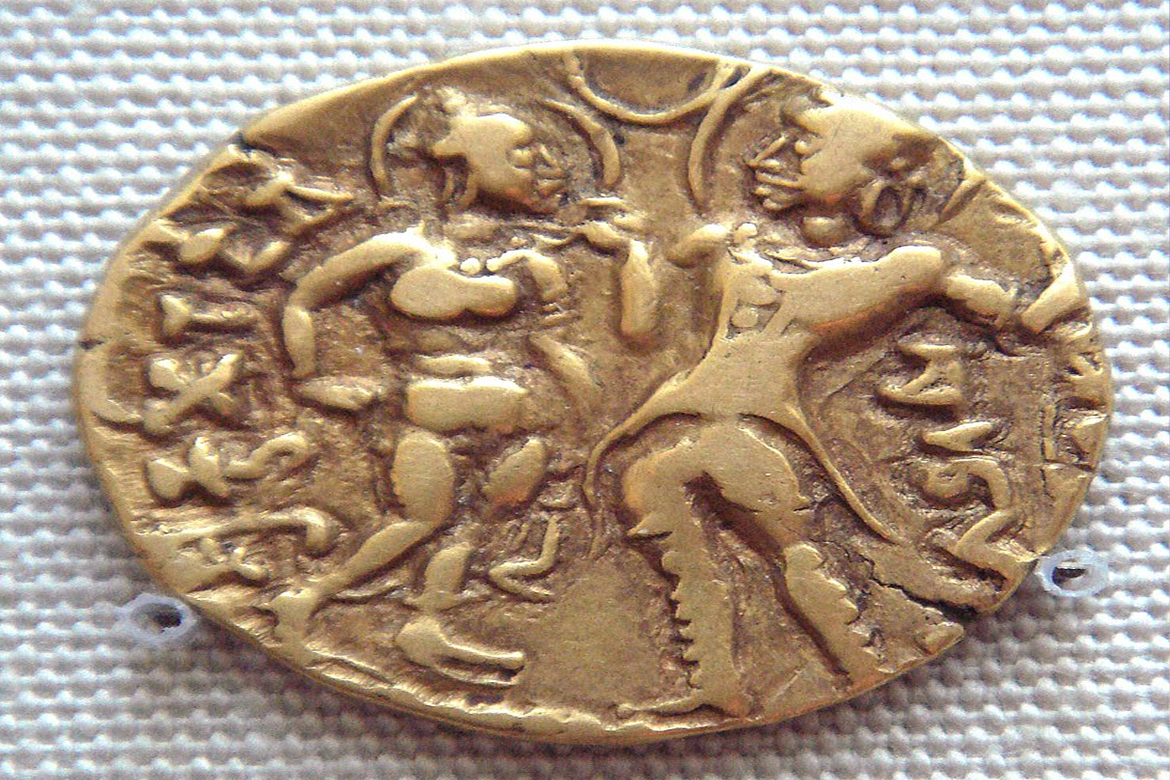
#2. Samudragupta is famously depicted on some of his gold coins engaged in which cultural activity?
#3. In his mathematical treatise, the Aryabhatiya, what value did Aryabhata calculate for the constant π?
#4. Which astronomical observation is specifically attributed to Varahamihira in the provided text?
#5. The Iron Pillar of Delhi, dating back to the Gupta era, is scientifically significant today primarily because of its:
#6. The play ‘Mudrarakshasa’, which details the political machinations of Chanakya, was written by which Gupta-era author?
#7. Which architectural style for Hindu temples was initiated and perfected during the Gupta period?
#8. According to the observations of the Chinese pilgrim Fa-Hien, how was the Gupta judicial system characterised?
Why is the Gupta period called the Golden Age?
Because of the extraordinary achievements in art, literature, science, mathematics, and architecture.
Who was known as the “Napoleon of India”?
Samudragupta, due to his extensive military conquests.
Which Chinese pilgrim visited India during the Gupta period?
Fa-Hien (Faxian) visited during Chandragupta II’s reign.
Who wrote the play Shakuntala?
Kalidasa, the greatest poet of the Gupta era.
Who founded Nalanda University?
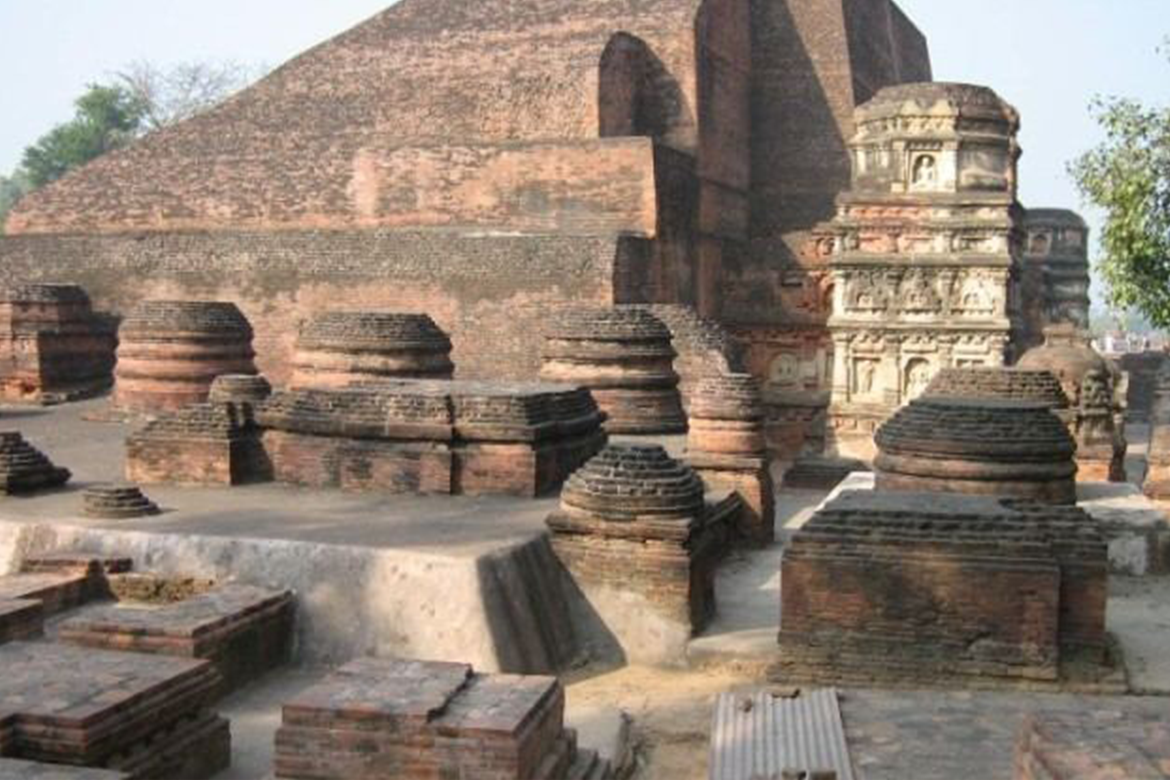
Kumaragupta I founded Nalanda University.
Sources & References
K.S. Shukla and K.V. Sarma (ed. and tr.), Āryabhaṭīya of Āryabhaṭa (Indian National Science Academy, 1976) — the text, the boat verse and the eclipse verses; recommended for checking before publishing.
Kim Plofker, Mathematics in India: 500 BCE–1800 CE (Princeton University Press, 2009) — Aryabhata’s work and its reception; recommended for checking before publishing.
Avinash Sathaye, “Bhāskarācārya and infinity” (University of Kentucky) — the pravaha wind and the rejection of Aryabhata’s rotating Earth by later astronomers.
Wikipedia, “Aryabhata” and “Aryabhatiya” — his age in 499 CE, Kusumapura, and the geocentric framework of the text; to be replaced with a scholarly source before publishing.
Author


Exploring the Soul of Bharat through History, Science, Culture, and its Diversity
Our Mission
Curious Indian is a definitive knowledge portal dedicated to chronicling the events, personalities, and cultural shifts that defined the Indian subcontinent. From the ancient Vedic Period to the complexities of 21st-century politics, our goal is to provide deep-dive analysis that inspires.
Editorial Standards & E-E-A-T
Every article published under our brand undergoes a rigorous fact-checking process. We prioritize primary historical records, academic citations, and credible archives to ensure our readers receive accurate, high-authority information.
Historical Integrity Directly sourcing from ASI archives and academic journals.Topical Authority Comprehensive clustering of Indian Science, Biographies, and Wars.Managed by Paripurna Datta and TEAM | Dedicated to the Knowledge of India.