A change of address, January 1900
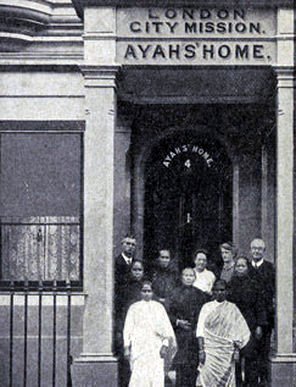
On 1 January 1900, a notice went out that "Rogers’s Original Ayahs’ Home" had a new address: 26 King Edward’s Road, Hackney, in east London. The house was a villa from the 1860s that had once been a boarding school. A photograph taken around that year shows its front entrance, with the name of the home over the door.
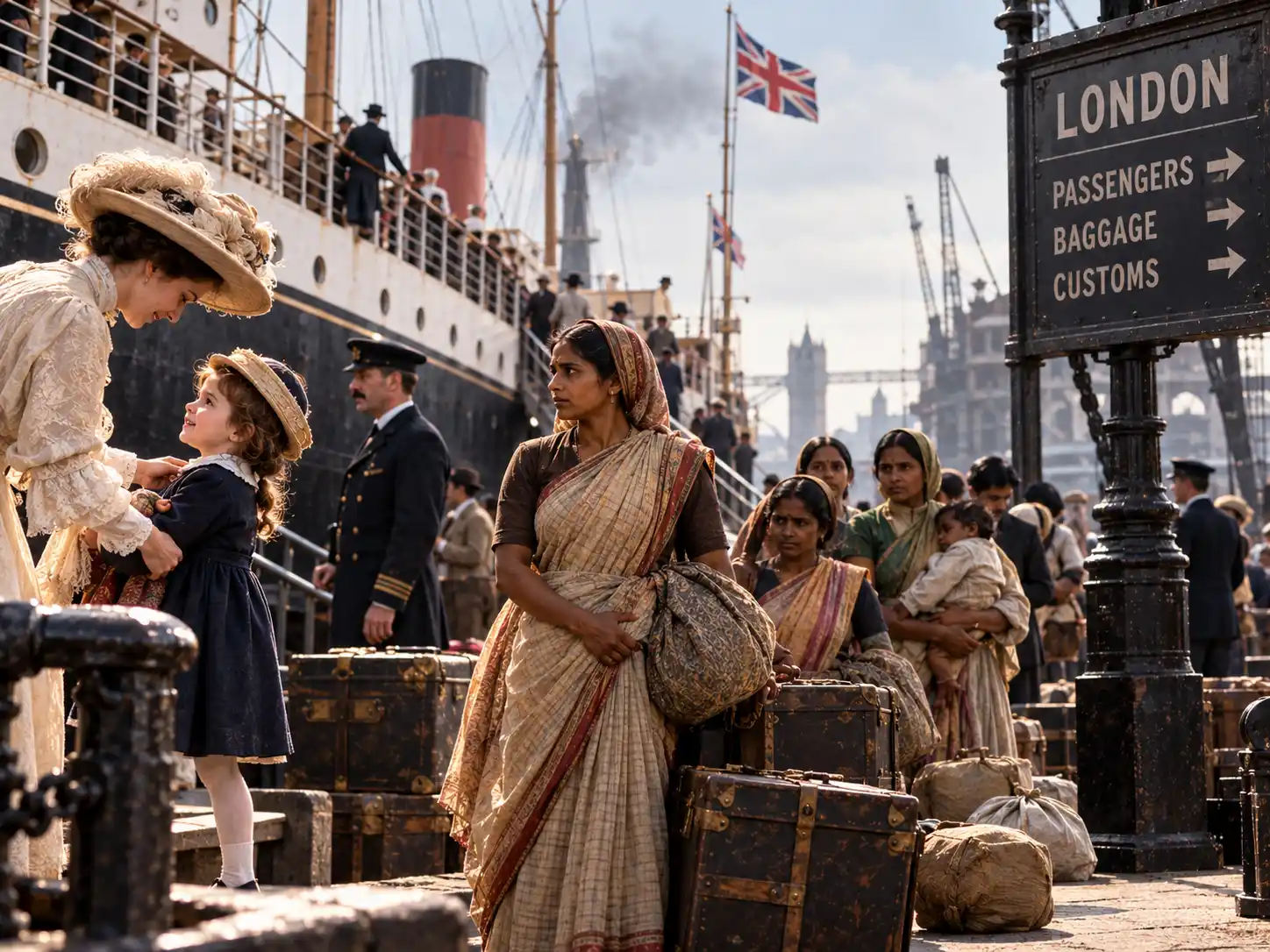
The women who stayed there had come a long way to reach it. Most were from India and Ceylon. Others were from China, Hong Kong, Singapore and Java. They had one job in common. They had looked after British children on a ship.
The sailor-nurses
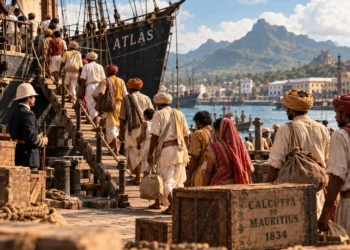
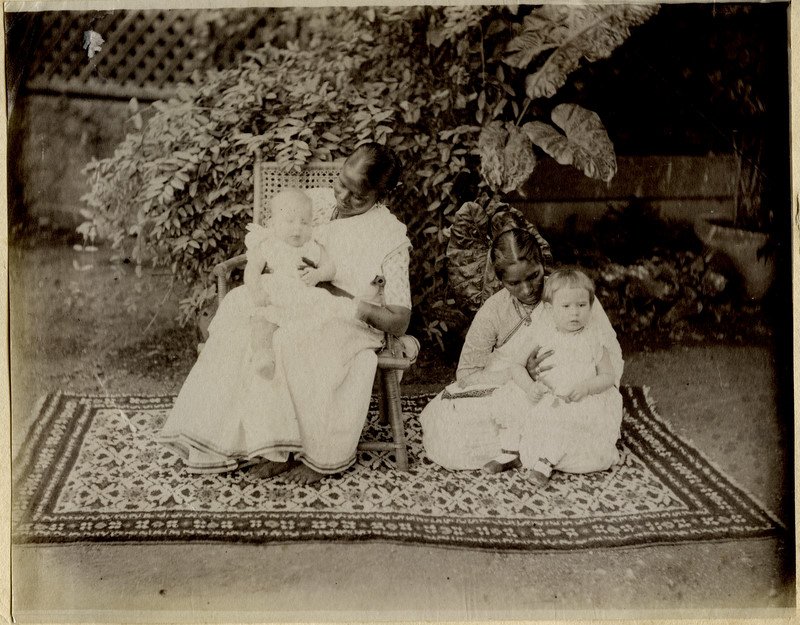
An ayah was an Indian nanny or lady’s maid in a British household. The word amah was used for women doing the same work from China and south-east Asia. When a British family in Calcutta or Madras sailed for England, with small children and weeks of sea ahead, they often took the ayah along. Some women were hired only for the voyage, and people called them
sailor-nurses.
The practice was old. According to Hackney Museum, the directors of the East India Company were receiving requests in the 1690s for servants, ayahs among them, to be given a passage back to India. It grew with the empire. About 250 European women lived in India in 1810. By 1901 there were 42,000 British women there.
In 1895 the magazine The Sketch interviewed the woman who then ran the home, Mrs Hanson. Asian women made good sailors, she said, knew the language and were used to the climate. An English servant on the same voyage would be "worse than useless".
Some ayahs made the crossing over and over. One, recorded as Mrs Antony Pereira, is said to have sailed between India and Britain 54 times. For women like her this was a trade, and London was a stop between two jobs.
What could go wrong at the dock
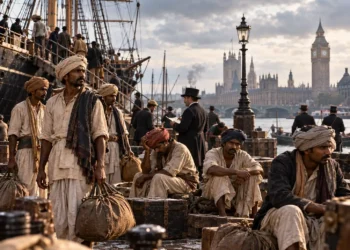
The trouble came when the ship arrived. The family went home, where English servants were waiting. The ayah was no longer needed until someone wanted her for a voyage east.
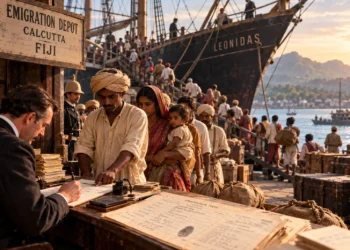
Good employers had arranged this in advance. They paid for her lodging and her passage back, or kept her on until they sailed again. But historians Rozina Visram and Florian Stadtler note that ayahs usually had no written contract, and a promise made in India could be dropped in England. Some women were dismissed without wages. They were in a city where they knew nobody, often without English, and India was thousands of miles off.
An 1855 report found fifty or sixty ayahs living together in a rough lodging house on Ratcliffe Highway, near the docks. Some had been reduced to begging for a passage. The London Mu seum records cases of police taking stranded ayahs to the workhouse.
Two cases put names and dates to this. In 1892 a magistrate in Southwark dealt with Minnie Green, who was eighteen and had been born in Madras. Her employers drank heavily and had mistreated her. The court placed her in a Salvation Army home in Hackney, where her conduct was noted as "very good". From there she was sent on to the Ayahs’ Home. The home found her a place as ayah to a Mr and Mrs Rose, who were sailing for India, and she went back with them.
The other woman is not named in the record. In November 1909 the home’s matron, Mrs S. Dunn, gave evidence to a government committee on distressed Indian and colonial subjects. She described an ayah "found in the streets in Hornsey by a lady" that October. The woman said she had served her employer for three years and had then been turned out of the house with her boxes. The employer refused to do anything more for her.
A lodging house that sold tickets
Nobody is sure when the home began. The usual story is that in the 1820s a couple named Rogers, living near Fenchurch Street in the City, took in a stranded ayah and then went on taking them. English Heritage calls this early history "somewhat obscure". The business moved between addresses in Aldgate for decades, and whoever ran it went by the name Rogers. Other accounts date the home, in the form people knew, only from 1891, in rooms above a warehouse on Jewry Street.
Mrs Hanson, the woman The Sketch interviewed, was Amina Hanson, born in north-east London to an English mother and a Moroccan father. She and her husband Christian ran the Jewry Street house. Around 1900 a Christian charity, the London City Mission, took it over and moved it to Hackney. She stayed on as matron until 1902.
The home paid its way with a simple arrangement, which Mrs Dunn explained to the committee. A family arriving from India handed over the ayah’s return ticket. The home then sold that ticket to a family about to sail east who wanted a nurse for the journey. The money covered the ayah’s bed and food while she waited, and she travelled back on wages, looking after a new set of children.
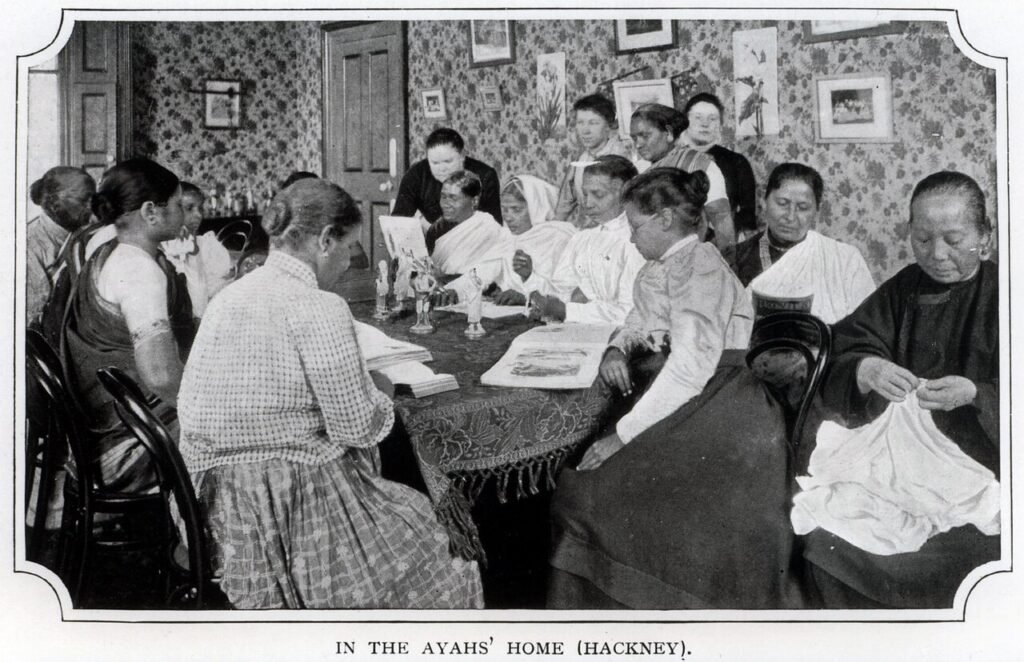
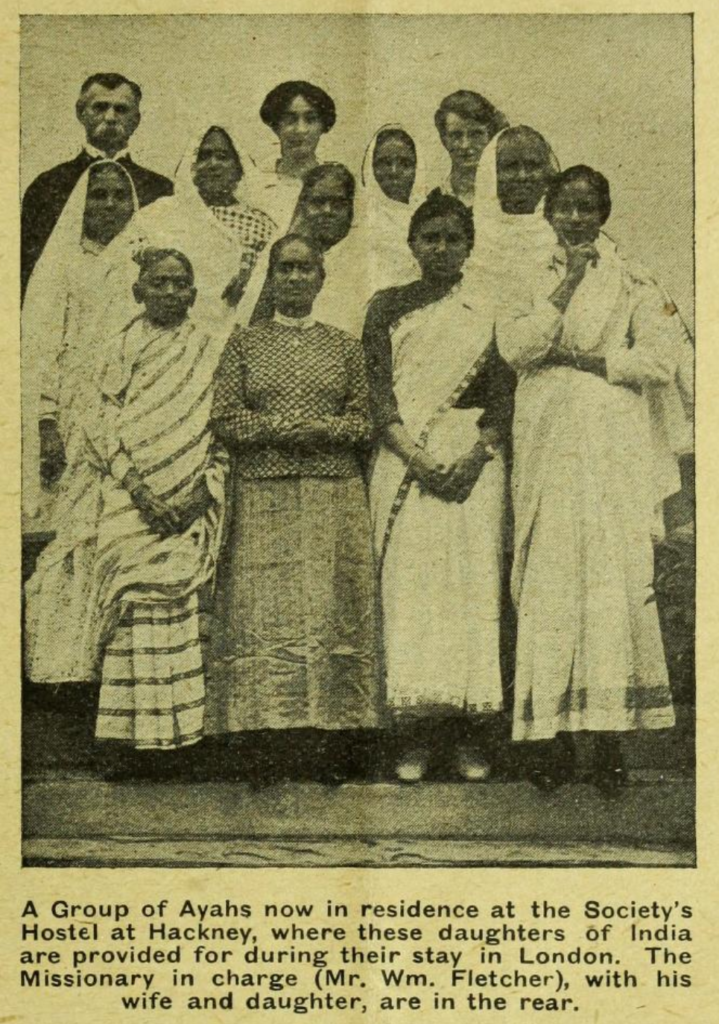
So the house was a hostel and an employment agency at once. It had about thirty rooms and took in ninety to a hundred women in a year, most of them between March and November, when the ships were busiest. In winter it was close to empty. On census night in 1911 it had five boarders: Ah Kum from Hong Kong, Elsie Hamey from Ceylon, and three Indian ayahs, Mary Stella, Pikya Sawmey and Mary Fernandez.
The residents cooked rice and curry together and were sometimes taken to the zoo. In April 1912 twenty of them minded a hundred babies in a playground at the Ideal Home Exhibition. The Mission also held Christian services there, and it hoped for converts.
It was not open to everyone. Mrs Hanson had told The Sketch that she always took in abandoned women. Under the Mission, English Heritage notes, the home did not "take charge of destitute ayahs". A woman with no ticket and no sponsor was a harder case, and the matron sometimes had to press the India Office for help.
War, and an empty house
The First World War stopped women and children sailing to India. Ayahs already in Britain could not leave, and the Mission raised money to keep them and find them work.
One of the five women from the 1911 census did get a ship. English Heritage’s researchers believe that the Mary Fernandez who died when the liner Persia was torpedoed in 1915 was the same ayah, and that she had given the home as her last address.
In 1921 the home moved a few doors along to a larger house at 4 King Edward’s Road. It was renamed the Ayahs’ and Amahs’ Home, since by then more of its residents were Chinese than Indian. On the eve of the Second World War five women were living there. In 1940, amahs from across London met at the house for Chinese New Year. By 1941 it was sheltering local families who had been bombed out, and by 1943 the address was listed as a church hostel. Hackney Museum says nobody knows what became of the last ayahs and amahs.
Indians who tried to cross the empire’s borders on their own terms had a harder time, as the passengers of the Komagata Maru learned at Vancouver in 1914. The ayahs were let in because a British family needed them for the voyage. How they got home again was left to the family.
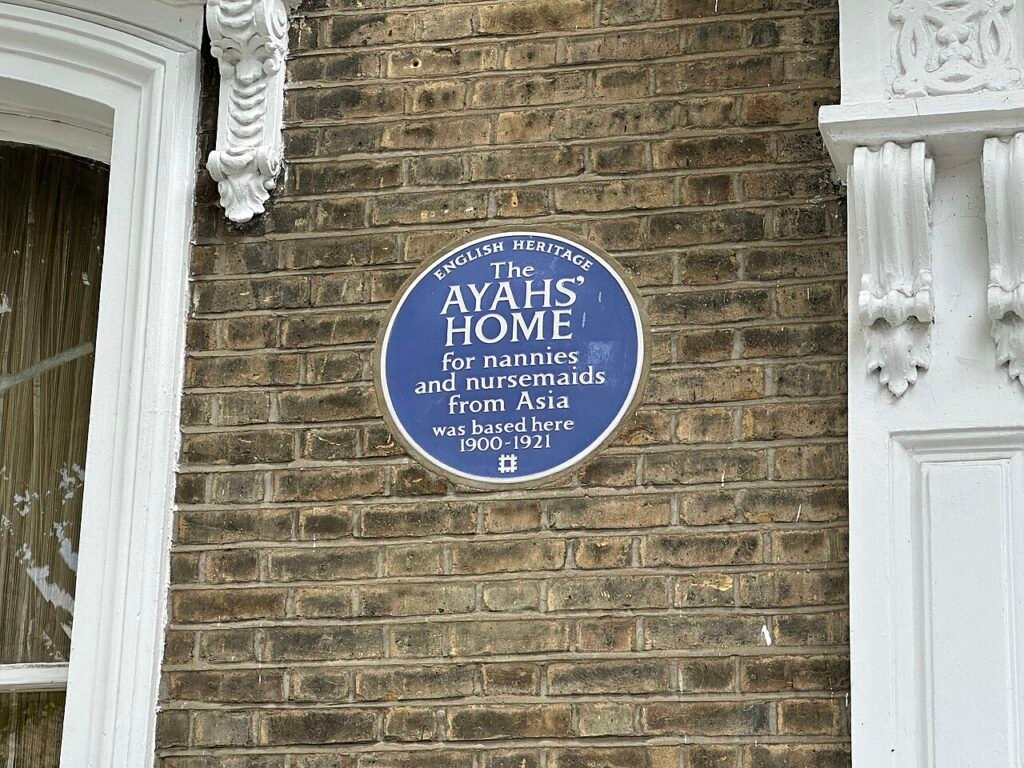
Both houses on King Edward’s Road are private homes now. In 2022 a blue plaque went up on number 26. It reads: "The Ayahs’ Home for nannies and nursemaids from Asia was based here 1900-1921."
Test your knowledge
Answer 5 questions about the story.
What was an ayah?
An ayah was an Indian nanny or lady’s maid employed by a British family. Travelling ayahs looked after children on the sea voyage between India and Britain.
What is the difference between an ayah and an amah?
Ayah was the term for nannies from India and South Asia. Amah was used for women doing the same work from China, Hong Kong, Singapore and other parts of east and south-east Asia.
Where was the Ayahs’ Home in London?
It was in Aldgate in the nineteenth century, at 26 King Edward’s Road, Hackney, from 1900 to 1921, and at 4 King Edward’s Road from 1921.
Were all ayahs in London abandoned?
No. Many had a return passage arranged and some made the voyage dozens of times. The home housed women waiting for their next ship as well as those dismissed without support.
When did the Ayahs’ Home close?
It stopped functioning during the Second World War. By 1943 the building was listed as a hostel of the East London Tabernacle.
Sources and further reading
London Museum, "How Asian ayahs and amahs arrived in London".
English Heritage, Blue Plaques: "The Ayahs’ Home".
Hackney Museum, "The Ayahs’ and Amahs’ Home, Hackney", 27 January 2025.
Florian Stadtler and Rozina Visram, "A home for the ayahs: from India to Britain and back again", Our Migration Story.
Rozina Visram, Asians in Britain: 400 Years of History (Pluto Press, 2002).
The Open University, Making Britain database, "Ayahs’ Home".