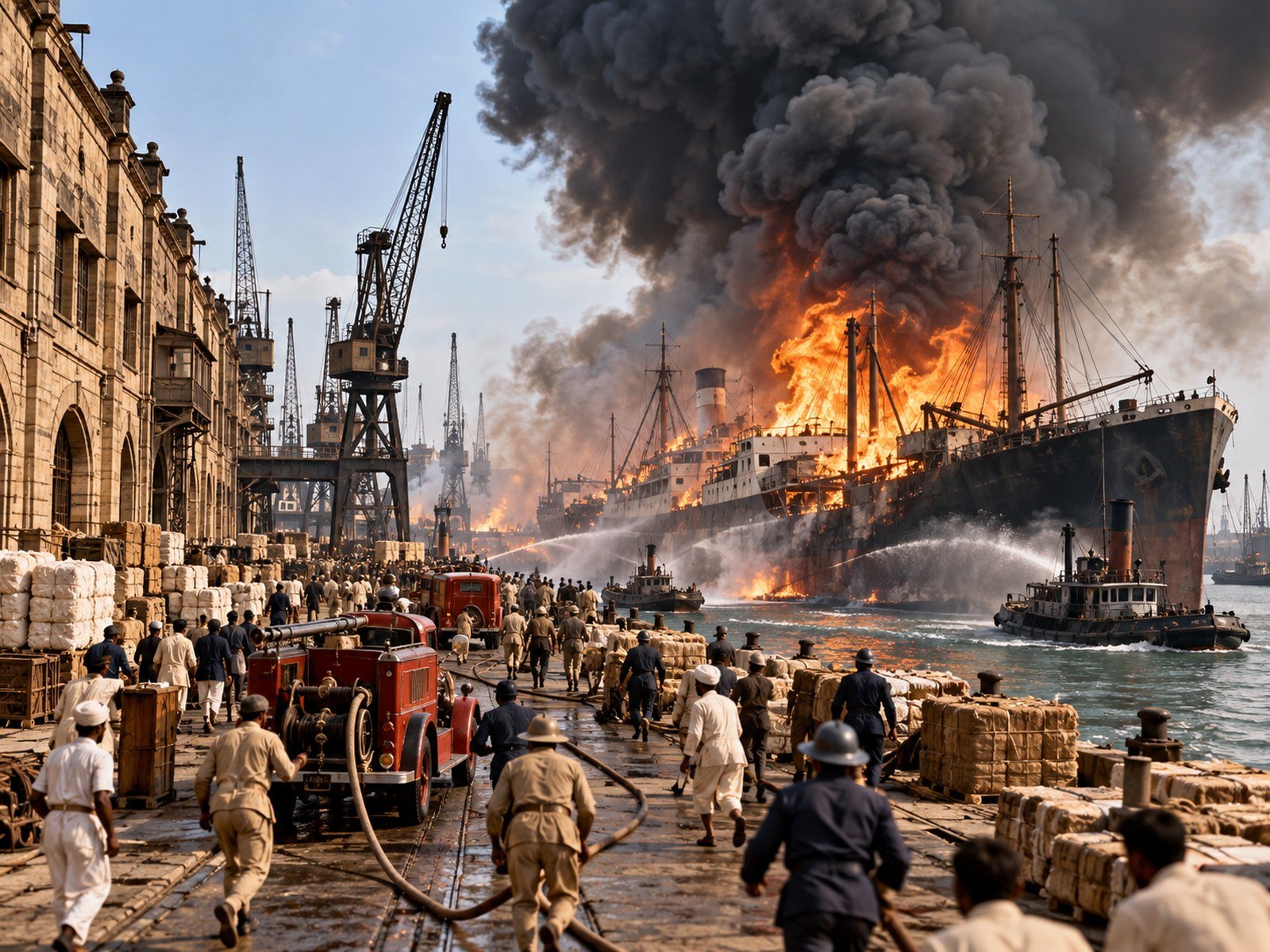
At about a quarter to two on the afternoon of 14 April 1944, a stevedore foreman named Mohamed Taqi looked into the No. 2 hold of a freighter in Bombay’s Victoria Dock and saw smoke coming up between the cotton bales.
Officers on neighbouring ships had noticed smoke from the same vessel an hour earlier and done nothing about it. Now the crew ran out hoses. Someone on the quay tried to telephone the fire brigade control room, could not get through, and broke the glass of a fire alarm instead.
A street alarm could only say that there was a fire. It could not say what was burning. The Bombay Fire Brigade sent two engines.
What the ship was carrying
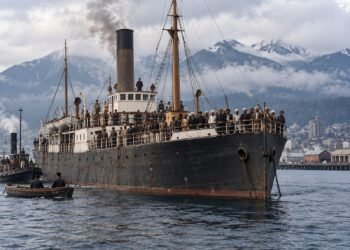
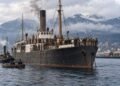
The ship was the SS Fort Stikine, 7,142 tons, built in British Columbia in 1942. She had left Birkenhead on 24 February with a war cargo for India: crated Spitfire fighters, and 1,395 tons of explosives that included shells, torpedoes, mines and incendiary bombs. She also carried gold, 31 crates of four bars each, worth about 890,000 pounds.
At Karachi the Spitfires came off, and the empty space was filled with whatever was waiting on the quay. That meant 8,700 bales of raw cotton, a thousand barrels of lubricating oil, timber, scrap iron, sulphur, resin and fish manure. Much of the cotton went into No. 2 hold, below the explosives.
Her master, Captain Alexander Naismith, objected. The British writer John Ennis, who reconstructed the disaster in 1959, records him saying that his ship now held "just about everything that will either burn or blow up."
The Fort Stikine reached Bombay on 12 April. A ship with explosives aboard was supposed to fly a red warning flag. In wartime that rule was not being followed, and she did not fly one. Explosives were also supposed to be unloaded first. Two days later only the fish manure and some leaking oil drums had been taken off. Her engine was under repair, so she could not move without tugs.
Two hours on a burning ship
The first firemen aboard could not see what they were fighting. The hold was full of smoke and they poured water into it blind. More pumps arrived as the afternoon went on. By the end, more than 900 tons of water had gone into the ship, and the fire was still burning somewhere underneath it.
At 2.25 an army ordnance officer, Major Oberst, came aboard, asked to see the stowage plan, and understood at once what it meant. He warned that the ship could destroy the docks and said she should be sunk where she lay. That could not be done. The Fort Stikine drew about twenty feet, and the dock was only a few feet deeper. She would have settled on the bottom with the burning hold still above water.
Colonel J.R. Sadler, the general manager of the docks, wanted her towed out to sea. Norman Coombs, who commanded the fire brigade, still believed the fire could be beaten where it was. Two water tugs came alongside after three o’clock. The men ashore who had the authority to decide between these plans could not be found. On the ship itself, the UK National Archives’ account of the day says flatly, nobody took overall command.
So the firemen went on doing the one thing they had been sent to do. By 2.45 the steel wall between No. 1 and No. 2 holds was hot to the touch, and men working in No. 1 could hear small explosions on the other side of it. A hot spot appeared on the hull plating. Someone fetched cutting gear to open a hole there and get a hose directly onto the fire. The equipment failed.
By a quarter past three, burning cotton bales were floating in the water inside the hold. At 3.50 a great flame came up out of the hatch. Captain Naismith gave the order to abandon ship, and the firemen came down onto the quay with the crew.
They were still there, among their engines, sixteen minutes later.
4.06 pm
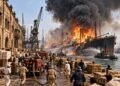
The first explosion cut the Fort Stikine in two. Her boiler was found half a mile away. An anchor weighing three tons landed a thousand yards off. The water in the dock rose in a wave that lifted the freighter Jalapadma and left her on the quay with her back broken. The clock on the dock tower stopped at 4.06.
Captain Naismith had gone back toward his ship with his chief officer to make sure no one was left aboard. Neither man was seen again.
At 4.33 the rest of the explosives went up in a second blast. It was heard 80 kilometres away. Windows broke 12 kilometres from the docks. The seismograph at Colaba Observatory recorded both shocks, and one at Shimla, 1,700 kilometres to the north, is said to have registered the tremor.
Then the cargo came down on the city. Blazing cotton bales fell on warehouses, on ships and on the crowded streets behind the docks, and started fires wherever they landed. A piece of propeller came down in the grounds of St Xavier’s High School, about five kilometres away. A story Bombay still tells is of a gold bar that came through the roof of a flat in Girgaum, whose owner, Burjorji Motiwala, handed it to the police and gave his reward to the relief fund.
The city on fire
Thirteen ships were lost. Fifty warehouses were flattened. The fires joined up and burned for three days before they were brought under control, and the last of them was not out until two weeks later. To stop the blaze reaching the rest of the city, the army cleared and demolished a strip of buildings in its path. More than a thousand American soldiers who happened to be in Bombay spent the first night carrying about 1,500 tons of explosives out of nearby godowns before the flames got to them.
The warehouses had held more than 50,000 tonnes of food grain. It burned in a year when Bengal was still starving.
The dead have never been properly counted. The official figures listed 231 men of the dock and military services and more than 500 civilians. Most estimates of the true total run from 800 to 1,300, and about 80,000 people lost their homes. Wartime censors kept the news out of the papers. The first report to the outside world came the next day from Radio Saigon, which was in Japanese hands.
Of the Bombay Fire Brigade, 66 officers and men were dead or missing and 83 were injured. The engines drawn up beside the ship were gone, and their crews with them.
What was learned
A commission of inquiry found that the explosion was an accident and could not say what had started the fire. It could say what had made it a catastrophe: cotton stowed with explosives, no warning flag, two days’ delay in unloading, a late call to the brigade, and nobody in charge. The government accepted responsibility and paid compensation.
It took 8,000 men seven months to clear half a million tons of debris and reopen the docks. The gold kept turning up for decades. Dredgers in the harbour brought up bars as late as 2011.
At the fire brigade headquarters in Byculla there is a memorial column, paid for by the citizens of Bombay, to the 66 firemen. India marks 14 April every year as Fire Services Day. It is the date two engines were sent to a cotton fire in Victoria Dock.
Test your knowledge
Answer 5 questions about the story.
What caused the Bombay Dock Explosion in 1944?
A fire aboard the cargo ship SS Fort Stikine in Victoria Dock reached explosive cargo on 14 April 1944, causing devastating explosions and fires.
Where did the SS Fort Stikine explode?
The vessel exploded at Victoria Dock in Bombay, now Mumbai, on 14 April 1944.
What was the SS Fort Stikine carrying?
Its mixed wartime cargo included explosives as well as combustible goods, including raw cotton and oil, which made the fire particularly dangerous.
Why is 14 April observed as Fire Service Day in India?
The date commemorates the firefighters who died responding to the 1944 Bombay dock disaster.
How many Bombay firemen died in the disaster?
The fire brigade memorial commemorates 66 firemen who lost their lives in the explosion and response.
Sources and further reading
The National Archives (UK), "Anatomy of a disaster: the Bombay Docks Explosion": https://blog.nationalarchives.gov.uk/anatomy-disaster
John Ennis, The Great Bombay Explosion (Duell, Sloan and Pearce, 1959)
Lt. Edward F. Oliver, "The Bombay Explosion", U.S. Naval Institute Proceedings, March 1957: https://www.usni.org/magazines/proceedings/1957/march/bombay-explosion
Municipal Corporation of Greater Mumbai, Chief Fire Officer’s departmental manual: https://portal.mcgm.gov.in/irj/go/km/docs/documents/MCGM%20Department%20List/Chief%20Fire%20Officer/RTI%20Manuals/Chief_Fire_Officer_RTI_E02.pdf
Leora Pezarkar, "The Explosion that shook Bombay in 1944", Live History India: https://www.livehistoryindia.com/story/snapshort-histories/the-explosion-that-shook-bombay-in-1944/