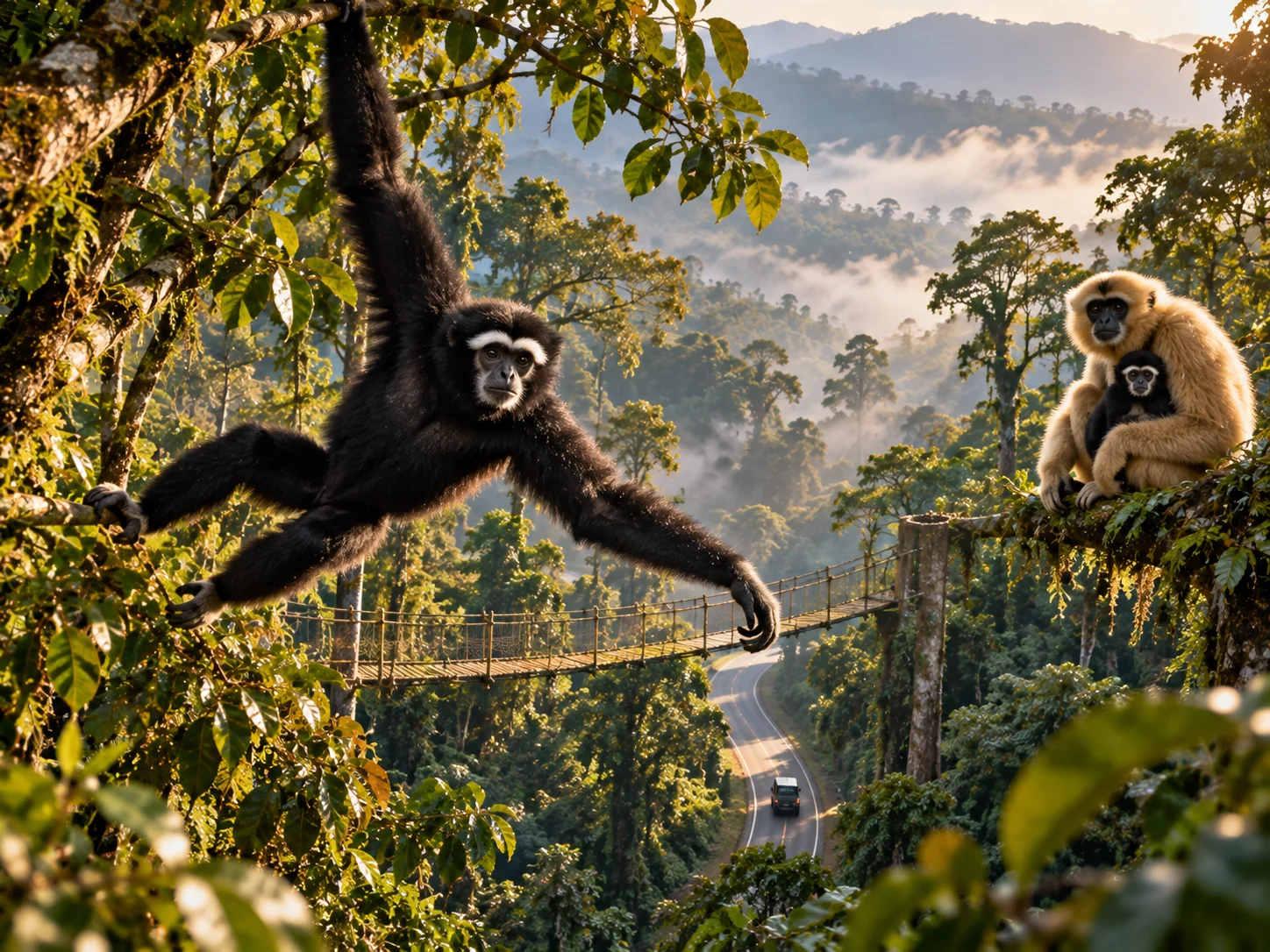
Hidden away in the tall green trees of Northeast India lives a truly magnificent creature. The hoolock gibbon is the only ape species found in the entire country. Unlike regular monkeys these amazing animals do not have tails and they spend their entire lives swinging high up in the forest canopy. They are deeply famous for their beautiful loud morning songs that echo across the misty valleys. However their safe forest homes are slowly being cut down for new roads and farms trapping these gentle animals in small spaces. Today a massive team of local villagers scientists and government heroes are working together to plant new trees build rope bridges and save these beautiful singers before their voices fade away forever.| Feature | Details |
| Animal Name | Hoolock Gibbon |
| Special Status | The only ape species found in India |
| Native Region | Northeast India |
| Unique Trait | Extremely loud and beautiful morning songs |
| Biggest Threat | Losing their tall forest canopy home |
Deep in the lush green jungles of Northeast India there is a sound that completely stops you in your tracks. It is a loud beautiful singing that echoes through the tall trees breaking the morning silence. This is the morning song of the Hoolock Gibbon India. If you look up into the high branches you might see a flash of black or golden fur swinging gracefully from tree to tree. As the only ape species found in the entire country this magnificent creature holds a very special place in our natural history. But today their beautiful song is slowly fading away as their forest homes shrink. Learning about these gentle singers is the first step in making sure they never disappear from our wild forests.
Kishore Kumar (1929–1987): The Eccentric Genius of Indian Cinema
The Singing Apes of the Forest
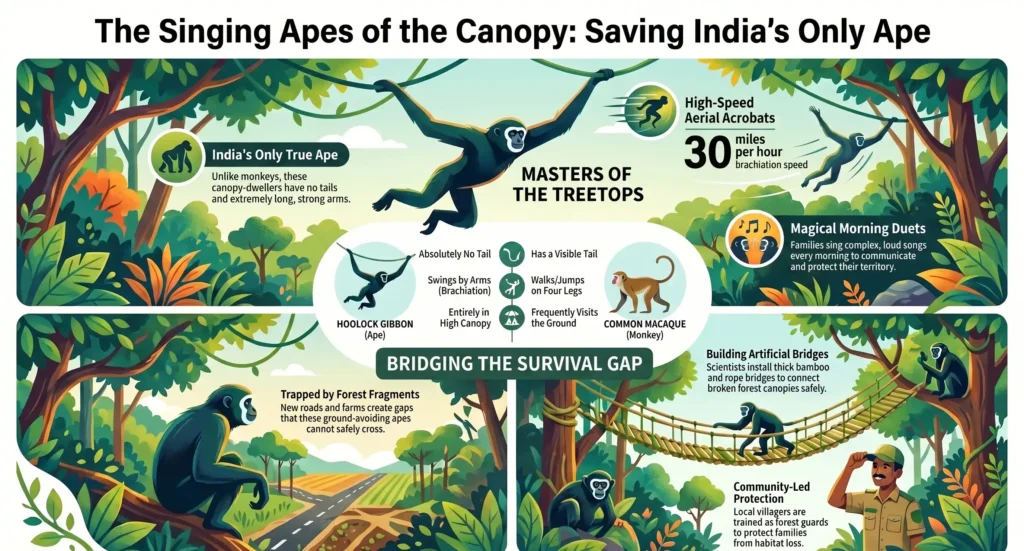
When we talk about monkeys and apes people often get confused. India has many different types of monkeys but it has only one true ape. Apes do not have tails and they have very long strong arms perfectly designed for swinging. The hoolock gibbon is a true master of the treetops. They spend their entire lives high up in the forest canopy and they rarely ever touch the ground.
Their most famous feature is their incredible voice. Every morning a gibbon family wakes up and sings a loud echoing song together. The male and the female sing different parts creating a beautiful duet that can be heard from miles away. This song starts very softly but quickly grows into a loud joyful chorus. It tells other gibbon families exactly where they are and helps them protect their territory. It is one of the most magical sounds you will ever hear in the wild.
A Unique Family Life
Unlike many other wild animals these apes form very tight and loving families. A male and a female will choose each other and stay together for their entire lives. They usually have one baby at a time and both parents work incredibly hard to take care of it. The baby gibbon clings tightly to its mothers belly for many months while she swings wildly through the high branches.
It is very easy to tell the boys from the girls when they grow up. The adult males are covered in thick dark black fur with striking white eyebrows that make them look very wise. The adult females look completely different wearing a beautiful golden or light brown coat. Interestingly every single baby is born with pale fur. As they grow older their colors change like magic. When you see a golden mother carrying a tiny black baby through the green leaves it paints a perfect picture of maternal love in the wild.
The Life and Legacy of Madhubala: The Venus of Indian Cinema
The Canopy Is Their Kingdom
These apes are perfectly built for life in the sky. Their arms are much longer than their legs allowing them to swing across massive gaps between trees. This amazing way of moving is called brachiation. They can travel through the forest incredibly fast grabbing branches and flying through the air like skilled acrobats. When they sit down to rest on a branch they sleep sitting straight up on rough patches of skin on their bottoms.
They are also very picky eaters. They do not eat just any leaf they find in the jungle. They absolutely love ripe sweet fruits tender young leaves and occasional insects. Because they eat so much fruit they play a huge role in keeping the forest healthy. When they drop seeds from the high branches they help plant new trees across the entire jungle. Experts from the International Union for Conservation of Nature keep a very close watch on their population because if the apes disappear the entire forest ecosystem will suffer greatly.
The Shrinking Green Home
Sadly the modern world is not very kind to these gentle acrobats. Their biggest problem is losing their home. As human populations grow massive areas of the jungle are being cut down to make room for tea gardens wide roads and new villages. Because these apes are completely terrified of the ground a single new road can trap a family in a small patch of trees forever.
When the forest is cut into tiny pieces the gibbons cannot travel to find enough food or meet new families. This forces them to live in very small spaces where they can easily get sick or run out of sweet wild figs. If they are forced to come down to the ground to cross a road they can easily be attacked by wild dogs. The Forest Survey of India uses satellite maps to show exactly how much of their thick canopy home is disappearing every single year highlighting the massive and urgent need for action.
Hema Malini: From Cinema’s Darling to Mathura’s MP
Heroes Saving The Apes
Thankfully there is a lot of bright hope for these singing apes. Many dedicated people are working day and night to save them. In the state of Assam there is a very special place called the Hollongapar Gibbon Sanctuary. This is a protected evergreen forest completely dedicated to keeping these apes safe. Here you can walk quietly with local guides and watch dozens of happy gibbon families living in total peace.
To help the apes cross dangerous gaps where trees have been cut down smart scientists are building artificial canopy bridges. They tie thick strong bamboo and natural ropes high above the ground connecting broken parts of the forest. The apes slowly learn to use these ropes to swing safely across roads without ever touching the dangerous dirt below. Groups like the Wildlife Trust of India are actively training local villagers to become official forest guards and proudly protect these amazing animals from harm.
A Future In The Treetops
Saving this beautiful creature is about much more than just saving one single animal. It is about saving the deep ancient jungles of the northeast. The government is stepping up to help in a big way. The Ministry of Environment Forest and Climate Change provides essential funding to create larger protected areas and strictly stop illegal tree cutting.
At the same time massive global organizations like the World Wildlife Fund are working directly with local village schools to teach young children how to love and respect the apes. When a child learns that their backyard holds the only ape in the entire nation they feel a massive sense of pride. By protecting the tall trees and supporting the local tribal communities we can absolutely ensure that the beautiful morning song of the gibbon will always echo through the misty valleys of India.
Guru Dutt Biography: A Life of Shadows, Silence, and Cinema
Quick Comparison Table
| Feature | Hoolock Gibbon | Common Macaque Monkey |
| Tail | Absolutely no tail | Has a long visible tail |
| Movement | Swings rapidly by the arms | Walks and jumps using all four legs |
| Habitat | Stays entirely in the high canopy | Frequently comes down to the ground |
| Sound | Sings complex musical duets | Makes simple warning calls and grunts |
Curious Indian Fast Facts
- They can swing across the tree branches at incredibly fast speeds reaching up to thirty miles per hour.
- A gibbon family rarely sleeps in the exact same tree two nights in a row to avoid wild predators like leopards.
- When they are forced to walk on flat ground they hold their long arms high up in the air to keep their balance.
- They drink rainwater by dipping their hairy hands into tree hollows and sucking the water off their own fur.
- There are two distinct types found in India known as the western and the eastern hoolock gibbon.
Conclusion
The story of our only ape is a powerful reminder of how unique and fragile our wildlife truly is. The dense tropical forests of the eastern border hold treasures that you cannot find anywhere else on the entire planet. The hoolock gibbon is not just a wild animal swinging in the trees. It is the brilliant singing voice of the jungle and the ultimate master of the green canopy.
Protecting these gentle apes means protecting the giant ancient trees the fresh forest air and the local communities that live nearby. When we choose to build safe rope bridges instead of cutting down forests we show deep respect for the natural world. By spreading their story and supporting the brave people who guard their homes we can make sure that future generations will always be able to stand perfectly still in the morning mist and listen to the magical joyful song of the gibbon.
Naseeruddin Shah: 5 Decades of Mastery and The Man Behind the Legend
If you think you have remembered everything about this topic take this QUIZ
Why is the hoolock gibbon so special in India?
It is incredibly special because it is the only true ape species found naturally in the entire country completely separating it from the common monkeys.
How can you tell the difference between a male and a female?
Adult males have thick black fur with bright white eyebrows while adult females have a light golden or tan colored coat.
Why do they sing so loudly in the morning?
They sing loud duets as a family to mark their territory talk to other gibbon families and build a very strong emotional bond with their partner.
Can they survive if they have to come down to the ground?
They are highly vulnerable on the ground because their bodies are not built for walking making them an easy target for wild dogs and natural predators.
Where is the best place to see them safely?
The Hollongapar Gibbon Sanctuary in Assam is widely considered the absolute best and safest place to observe them freely swinging in their natural habitat.