Thursday, April 16, 2026
26 °c
Columbus
Curious Indian
  • Arts & Culture
  • Festivals of India
  • Indian History
  • Indian Politics
  • Biography
    • Entertainment Personalities
    • Science Personalities
  • Unsolved India
No Result
View All Result
  • Arts & Culture
  • Festivals of India
  • Indian History
  • Indian Politics
  • Biography
    • Entertainment Personalities
    • Science Personalities
  • Unsolved India
No Result
View All Result
Curious Indian
No Result
View All Result
Home Arts & Culture Cultural Insights

The Heritage Of Northeast India Local Brews Unveiled

paripurnadatta by paripurnadatta
in Cultural Insights, North East India, Regional Culture, SOCIETY & MYSTERIES
Reading Time: 9 mins read
0 0
A A
Deendayal Upadhyaya

Deendayal Upadhyaya

Share on FacebookShare on Twitter

Table of Contents

Toggle
  • The Sweet Magic of Judima
  • The Smoky Spirit of Apong
  • The Warmth of Meghalaya Kyat
  • The Science of Indigenous Fermentation
  • Preserving the Ancient Recipes
  • Quick Comparison Table
  • Curious Indian Fast Facts
  • Conclusion 
  • If you think you have remembered everything about this topic take this QUIZ
  • Results
    • #1. What is the name of the sweet rice wine from the Dimasa tribe that has a Geographical Indication (GI) tag?
    • #2. What unique ingredient gives Apong its characteristic smoky flavor and dark color?
    • #3. In which state is the bubbling rice beer called Kyat primarily found?
    • #4. What are the small wooden local shops in Meghalaya called where people gather to socialize and drink Kyat?
    • #5. Who is traditionally responsible for the sacred duty of brewing these indigenous drinks?
    • #6. According to the text, what is used to serve these local brews that adds a subtle earthy flavor?
    • #7. What is done with the leftover fermented rice mash after the drink is separated?
    • #8. Which organization studies these traditional techniques to understand safe fermentation without chemicals?
    • What makes these local drinks different from factory made alcohol?
    • Can travelers easily taste these drinks?
    • Are these drinks very strong?
    • Who usually makes these beverages in the village?
    • Can tourists try Kyat in Meghalaya safely?
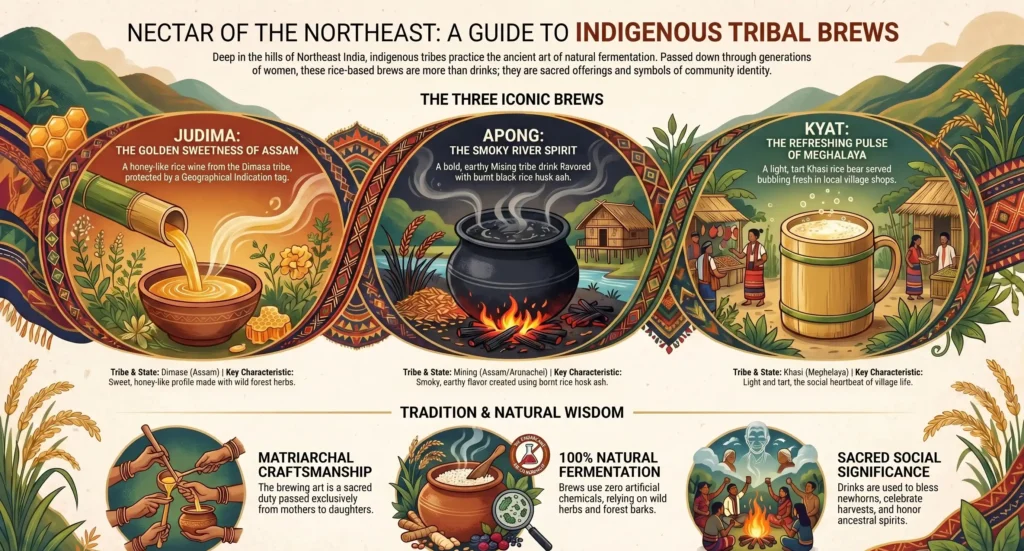
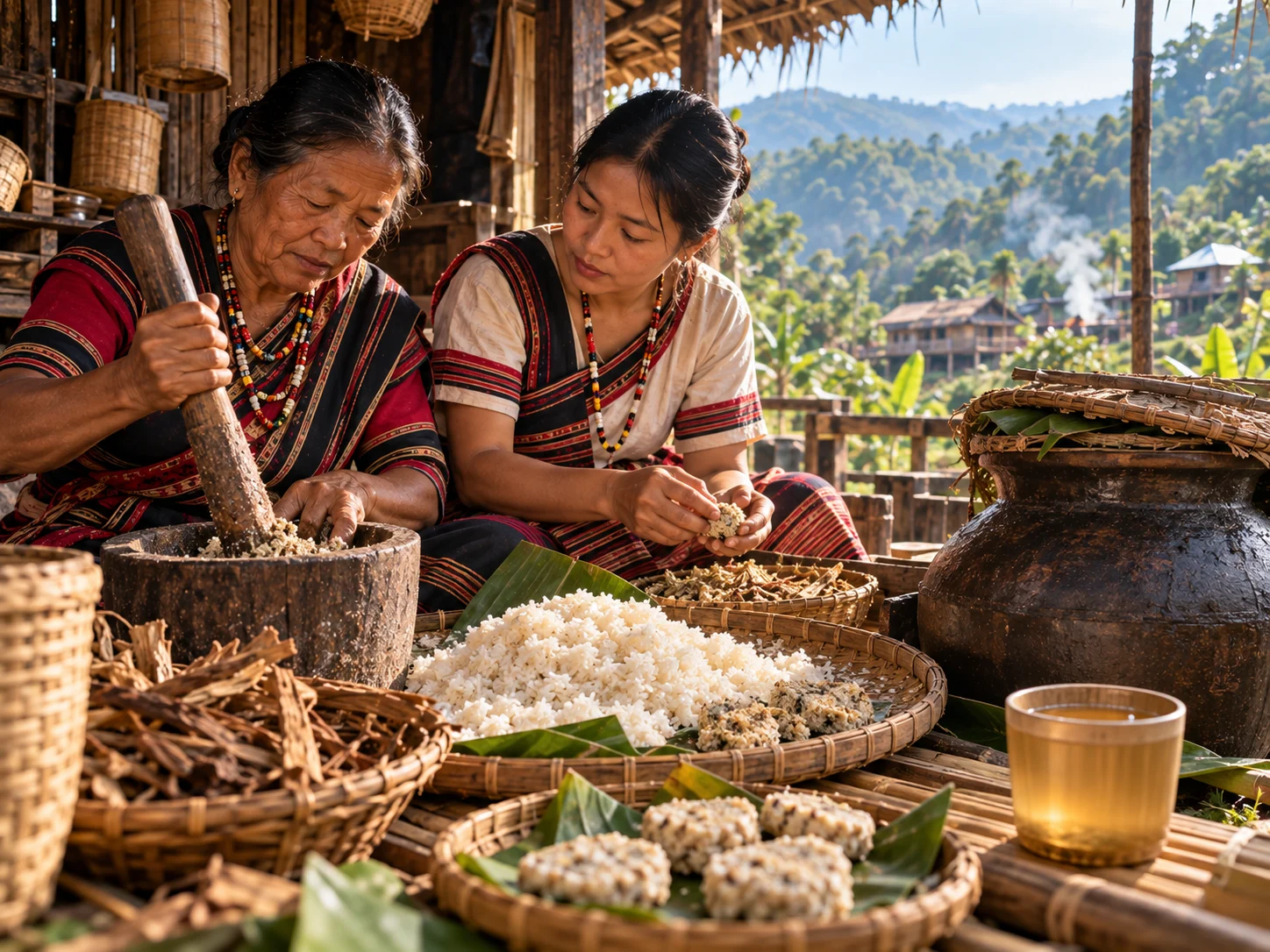
Traveling through the misty hills of Northeast India reveals much more than beautiful landscapes. It uncovers a deeply rooted tradition of hospitality centered around unique handmade drinks. These are not just ordinary beverages. They are sacred offerings, joyful celebration drinks and a symbol of love made by village mothers. Drinks like Judima from Assam, Apong from the Mising tribe and Kyat from Meghalaya each tell a fascinating story of native wisdom. By fermenting local rice and wild forest herbs these communities have created completely natural drinks that bring people together during festivals, weddings and quiet winter evenings.
FeatureDetails
Focus RegionNortheast India
Famous BrewsJudima Apong Kyat
Main Base IngredientLocally grown rice
Core ProcessNatural herbal fermentation

The thick green forests and winding rivers of the eastern frontier hide some of the most wonderful cultural secrets in the country. When you visit a traditional tribal home you are rarely greeted with a simple glass of water. Instead you are welcomed with a warm smile and a bamboo cup filled with a completely unique local drink. The creation of Northeast India local brews is a beautiful art form that has been passed down from mothers to daughters for countless generations.

These special drinks are completely intertwined with the daily life and spiritual beliefs of the people. They are poured to bless a newborn baby they are shared to celebrate a bountiful harvest and they are offered to the spirits of ancestors. Making these beverages is considered a highly sacred duty. It requires immense patience a deep understanding of forest herbs and a lot of love. Let us take a beautiful journey to understand the magic behind three of the most famous indigenous drinks.

READ MORE:  The 10th Century Legacy: Halayudha Life Story Unfolded
Northeast India local brews

The Sweet Magic of Judima

Deep in the lush valleys of Assam lives the proud Dimasa tribe. For hundreds of years the women of this community have been brewing a completely magical drink known as Judima. The name itself holds a beautiful meaning. Ju means wine and Dima refers to the people who make it. This drink is famous for its gorgeous pale yellow color and a sweet taste that resembles rich honey.

The process of making this sweet wine is a true labor of love. The village women first collect a very specific type of wild herb from the dense forest. They dry these herbs and mix them with rice flour to create natural starter cakes. These cakes act like magic seeds that help the fermentation process. They then cook a special sticky rice and mix it with the starter cakes. The mixture is carefully wrapped in fresh banana leaves and left to rest in a dark quiet room.

After several days a sweet smelling liquid begins to naturally separate from the rice. This is the precious Judima. The government recognized how truly special and unique this process is. In fact the Geographical Indications Registry proudly recognized this sweet wine giving it a special tag to protect its authentic identity. This means that true Judima belongs only to the Dimasa people and their native land.

The Smoky Spirit of Apong

If you travel closer to the great Brahmaputra river you will meet the Mising people. They are deeply connected to the river and the fertile soil. Their traditional drink is called Apong and it has a completely different personality from the sweet wines of the hills. Apong is bold, earthy and carries a fascinating smoky flavor that surprises every visitor.

The secret to this unique taste lies in the completely brilliant way it is prepared. The women take dry rice husks and slowly burn them over an open fire until they turn into black ash. They mix this dark ash directly into the cooked rice along with special medicinal herbs gathered from the riverbanks. This black ash completely changes the color and the flavor of the final drink.

When the village celebrates the grand festival of Bihu, huge pots of Apong are prepared. The elders pour the very first cup onto the ground as a respectful offering to the earth and their ancestors. Scholars at the Indian Council of Historical Research often document these exact rituals because they show a profound connection between agriculture and human spirituality. Sharing a cup of Apong around a crackling evening fire is the ultimate symbol of brotherhood in these river villages.

READ MORE:  Revocation of Article 370 (2019): The Historic Integration of Jammu & Kashmir

The Warmth of Meghalaya Kyat

High up in the clouds of Meghalaya the Khasi people have their own wonderful tradition. Their local drink is called Kyat and it is the absolute heartbeat of their social life. The hills of Meghalaya are famous for being very cold and rainy. To stay warm and happy the locals rely on this lightly fermented rice beer.

Unlike other drinks that are hidden away, Kyat is celebrated openly in small local shops called dukan. These tiny wooden shops are the social centers of the village. After a long day of working in the steep fields men and women gather at the dukan to share stories, laugh loudly and sip on fresh Kyat. The Department of Tourism Meghalaya encourages visitors to safely experience these lively local spots to truly understand the warm and welcoming nature of the Khasi culture.

The drink is bubbling fresh and slightly tart. The mothers who brew it do not let it sit for very long so it remains very light and refreshing. Every family has their own tiny secret ingredient which means the drink tastes slightly different in every single home you visit.

The Science of Indigenous Fermentation

While these drinks taste like pure magic there is a brilliant science happening inside the clay pots. The local women might not use big laboratories but they are incredible scientists. They know exactly which leaves will create sweetness and which barks will prevent the drink from spoiling. They understand perfect temperature control simply by touching the side of the pot.

Modern scientists are absolutely fascinated by this native wisdom. Organizations like the Food Safety and Standards Authority of India studies traditional fermentation techniques to understand how these natural herbs create safe and healthy drinks without using any artificial chemicals or preservatives. These ancient methods prove that nature has always provided the best and healthiest ways to preserve food.

Preserving the Ancient Recipes

Today the modern world is changing very quickly. Factory made drinks in glass bottles are reaching even the most remote villages. There is a real fear that the young generation might forget the difficult art of brewing these traditional drinks.

However there is a massive movement to protect this heritage. The Ministry of Tribal Affairs works hard to showcase these indigenous crafts at national festivals. By bringing Judima Apong and Kyat to the big cities they are helping the village women earn a proud living from their ancient skills. When we take the time to understand and respect these local brews we are doing much more than tasting a new flavor. We are raising a glass to the brilliant women of the northeast and ensuring their beautiful traditions never fade away.

READ MORE:  The Powerful Meira Paibis Legacy In Northeast India

Quick Comparison Table

FeatureJudimaApongKyat
Origin StateAssam Dimasa TribeAssam and ArunachalMeghalaya Khasi Tribe
Taste ProfileSweet and honey likeEarthy and smokyLight tart and fresh
Unique ElementSpecial wild forest herbBurnt black rice husk ashServed bubbling fresh
Cultural RoleBirths and marriagesHarvest festivalsDaily social gatherings

Curious Indian Fast Facts

  • Traditional brewers strictly avoid using any artificial sugar letting the rice create natural sweetness.
  • Many tribal customs forbid pregnant women from making the starter cakes out of deep respect for the sacred process.
  • The bamboo cups used to serve these drinks add a very subtle and pleasant earthy flavor to the liquid.
  • In many Northeast communities refusing a cup of the local brew offered by a host is considered highly disrespectful.
  • The leftover fermented rice mash is completely organic and is often fed to village livestock to keep them healthy.

Conclusion 

The rich story of these handmade beverages is a beautiful reminder of human connection. The misty hills and deep river valleys of the eastern states hold traditions that are older than written history. Through drinks like the sweet Judima, the smoky Apong and the lively Kyat we see a perfect reflection of the land itself. These brews are born from the rain, the soil and the incredibly hardworking hands of the village mothers.

When travelers visit these beautiful states and share a bamboo cup with a local family the differences of language and background instantly melt away. A simple drink becomes a bridge between two human hearts. By supporting and respecting these ancient culinary arts we help preserve the very soul of the indigenous communities. The next time you hear about the wonders of the Northeast, remember that some of its greatest treasures are poured quietly from a clay pot beside a warm kitchen fire.

If you think you have remembered everything about this topic take this QUIZ


Results

Share your score!
Tweet your score!
Tweet your score!
Share to other
QUIZ START

#1. What is the name of the sweet rice wine from the Dimasa tribe that has a Geographical Indication (GI) tag?

Previous
Next

#2. What unique ingredient gives Apong its characteristic smoky flavor and dark color?

Previous
Next

#3. In which state is the bubbling rice beer called Kyat primarily found?

Previous
Next

#4. What are the small wooden local shops in Meghalaya called where people gather to socialize and drink Kyat?

Previous
Next

#5. Who is traditionally responsible for the sacred duty of brewing these indigenous drinks?

Previous
Next

#6. According to the text, what is used to serve these local brews that adds a subtle earthy flavor?

Previous
Next

#7. What is done with the leftover fermented rice mash after the drink is separated?

Previous
Next

#8. Which organization studies these traditional techniques to understand safe fermentation without chemicals?

Previous
Finish

What makes these local drinks different from factory made alcohol?

They are made entirely by hand using purely natural ingredients like local rice and wild forest herbs without any artificial chemicals or preservatives.

Can travelers easily taste these drinks?

Yes many rural homestays and local village festivals happily offer these traditional drinks to visitors as a gesture of warm hospitality.

Are these drinks very strong?

Most of these traditional brews are very mild and light because they are naturally fermented for a short time unlike strong distilled spirits.

Who usually makes these beverages in the village?

The brewing process is highly respected and is almost exclusively done by the elder women of the community who hold the secret family recipes.

Can tourists try Kyat in Meghalaya safely?

Yes, the Meghalaya Department of Tourism encourages responsible cultural exchange. Many local villages have designated shops or homestays where Kyat is brewed fresh daily. It is best enjoyed in moderation while engaging with local stories

Tags: Cultural HeritageLocal BrewsNortheast IndiaTraditional FermentationTribal Culture
ShareTweetPin
paripurnadatta

paripurnadatta

Related Posts

Zan millet porridge
North East India

Discovering The Hearty Zan Millet Porridge

April 16, 2026
Meira Paibis
Indian History

The Powerful Meira Paibis Legacy In Northeast India

April 16, 2026
Act East Policy India
Historical Events & Turning Points

The Act East Policy India And Northeast Connections

April 16, 2026
No Result
View All Result

Stay Updated

  • Trending
  • Latest
Life of Mahavira: From Prince Vardhamana to Great Conqueror

Life of Mahavira: From Prince Vardhamana to Great Conqueror

April 11, 2026
Life of Buddha: The Journey to Enlightenment

Life of Buddha: The Journey to Enlightenment

April 11, 2026
Christmas in India

Christmas in India: A Festive Blend of Faith, Flavors, and Tradition

April 11, 2026
From Shimla to Stardom: The Complete Biography of Anupam Kher

From Shimla to Stardom: The Complete Biography of Anupam Kher

April 11, 2026
Deendayal Upadhyaya

The Heritage Of Northeast India Local Brews Unveiled

April 16, 2026
Zan millet porridge

Discovering The Hearty Zan Millet Porridge

April 16, 2026
Meira Paibis

The Powerful Meira Paibis Legacy In Northeast India

April 16, 2026
Act East Policy India

The Act East Policy India And Northeast Connections

April 16, 2026

Widget Title

Facebook Twitter Youtube RSS
Curious Indian Logo

Explore the soul of Bharat with Curious Indian. A definitive guide to Indian history, arts, culture, biographies, and the events that defined our future.

Follow us on social media:

Recent News

  • The Heritage Of Northeast India Local Brews Unveiled
  • Discovering The Hearty Zan Millet Porridge
  • The Powerful Meira Paibis Legacy In Northeast India

Category

  • Ancient Civilizations & The Vedic Age
  • Architecture
  • Artists & Cultural Icons
  • Arts & Culture
  • Battles of India
  • Biography
  • Business & Industrialists
  • Colonial India
  • Cultural Insights
  • Dance & Music
  • Entertainment Personalities
  • Festivals of India
  • Freedom Fighters
  • Freedom Movement
  • Historical Events & Turning Points
  • Indian History
  • Indian Politics
  • Major Festivals
  • Medieval India
  • North East India
  • Paintings & Visual Arts
  • Political Leaders
  • Post-Independence India
  • Regional Culture
  • Religious & Spiritual Figures
  • Science Personalities
  • Scientific Discoveries
  • Sculpture
  • Social Issues
  • SOCIETY & MYSTERIES
  • Textiles & Handicrafts
  • Uncategorized
  • Unsolved India
  • Unsung Heroes

© 2026 Curious Indian- Everything about India

Welcome Back!

Login to your account below

Forgotten Password?

Retrieve your password

Please enter your username or email address to reset your password.

Log In

Add New Playlist

No Result
View All Result
  • Arts & Culture
  • Festivals of India
  • Indian History
  • Indian Politics
  • Biography
    • Entertainment Personalities
    • Science Personalities

© 2026 Curious Indian- Everything about India

This website uses cookies. By continuing to use this website you are giving consent to cookies being used. Visit our Privacy and Cookie Policy.
Are you sure want to unlock this post?
Unlock left : 0
Are you sure want to cancel subscription?
×