How the fiercest warrior of the Gupta age was also its greatest poet and musician
Most great conquerors are remembered for one thing above all: how much they managed to destroy. Samudragupta, the mightiest warrior of ancient India’s golden age, destroyed a great deal. He was nicknamed “the Napoleon of India,” and it was said that he never once lost a battle.
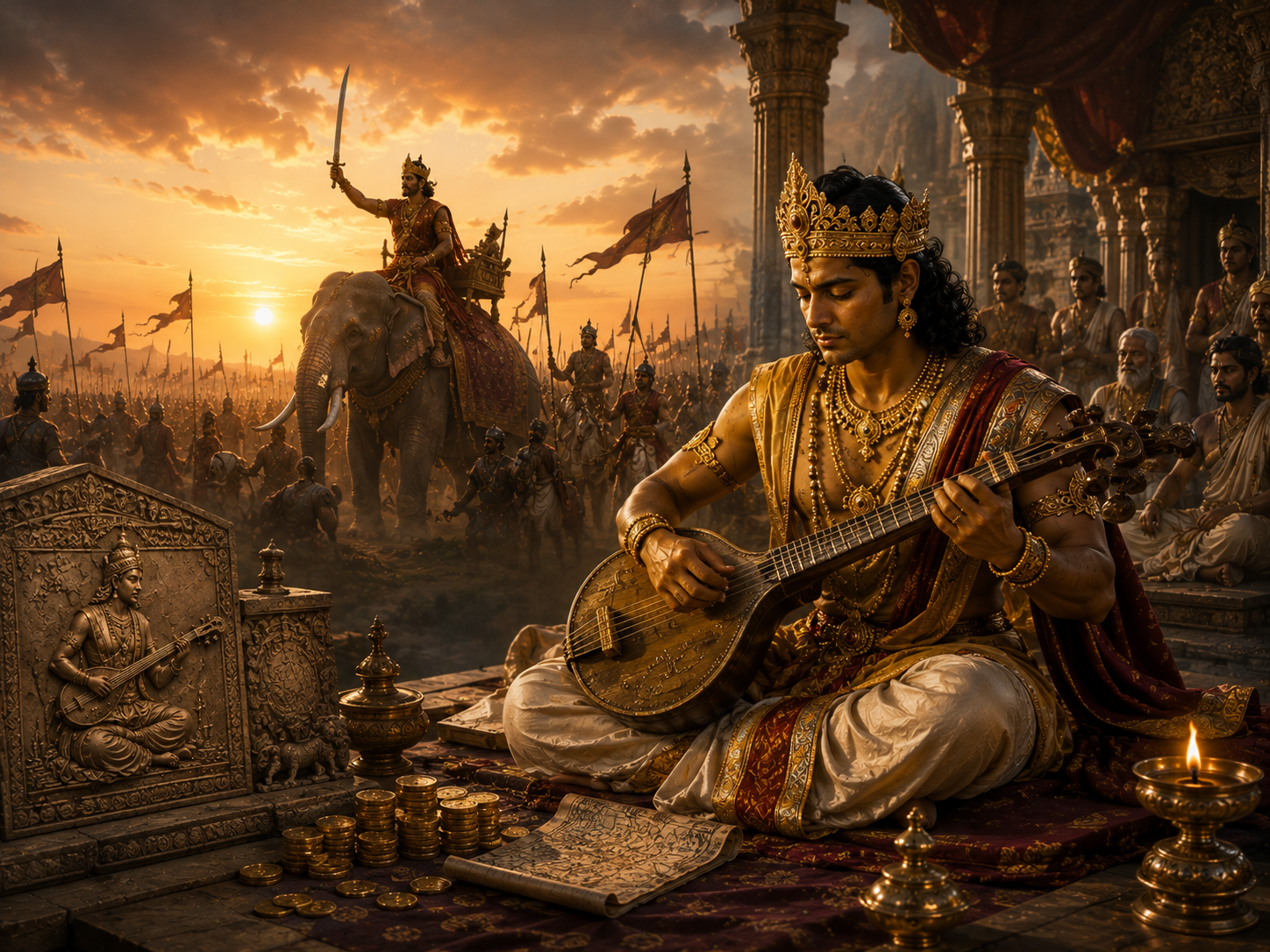
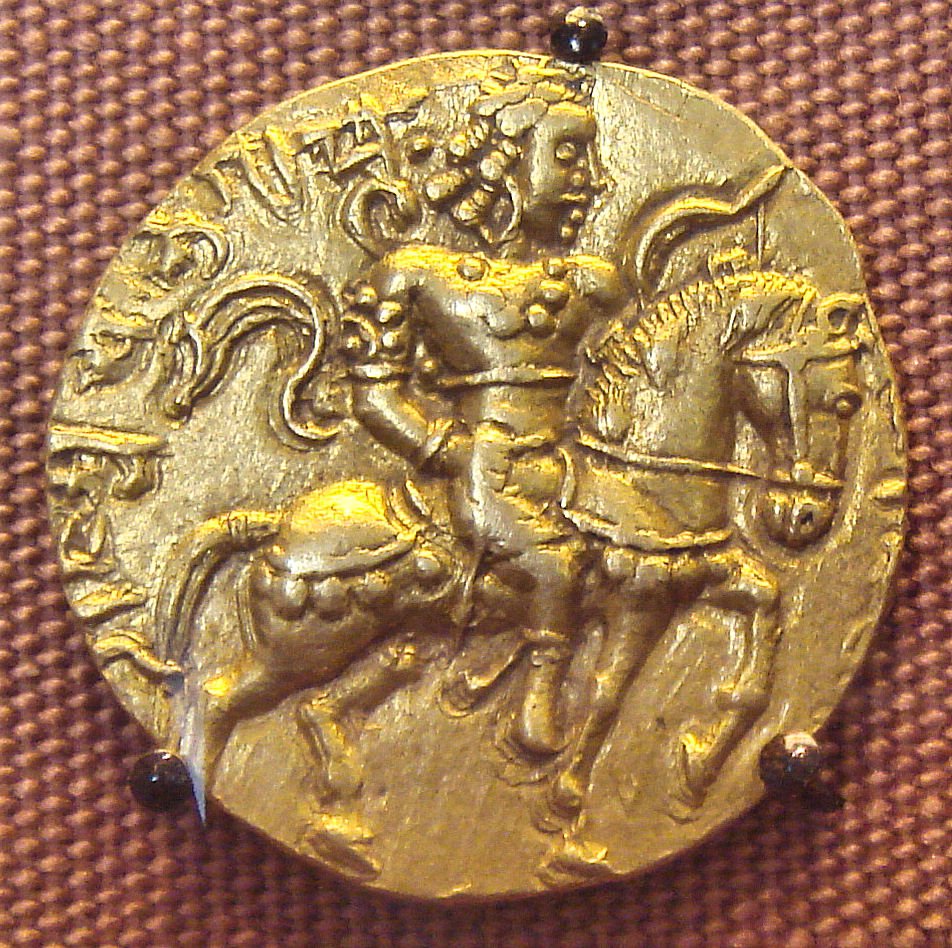
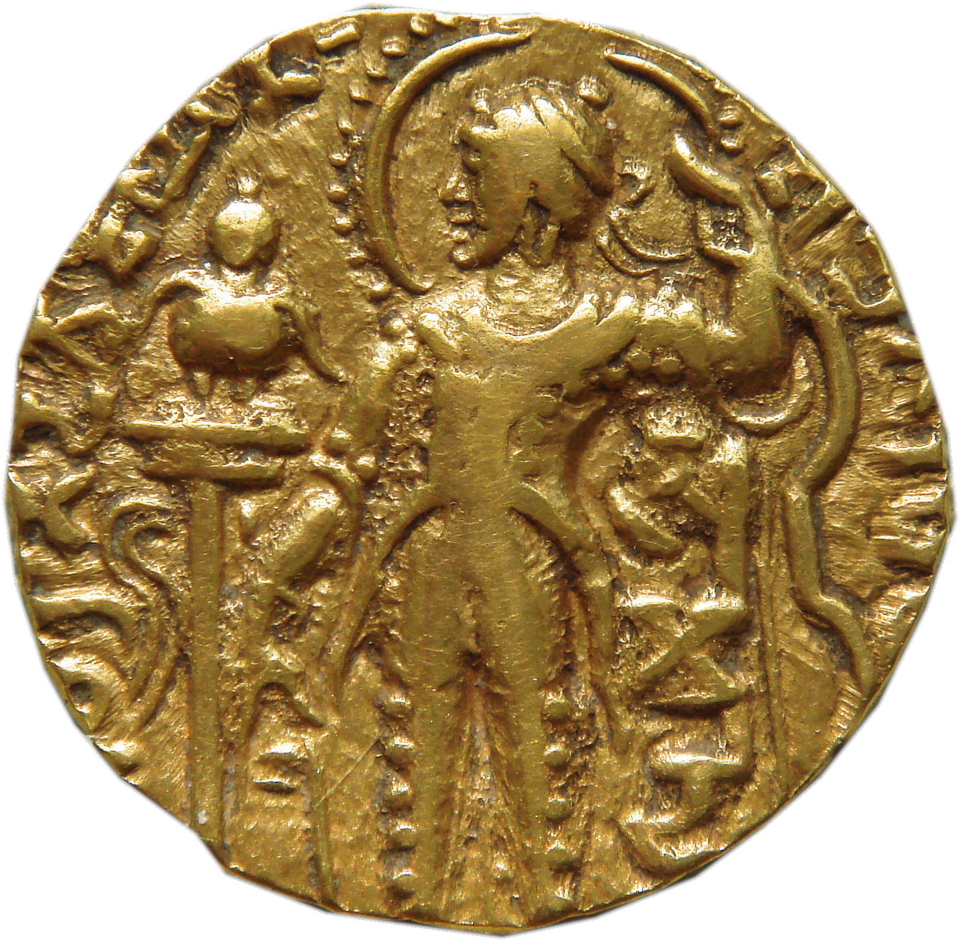
But this emperor wanted to be remembered for something else as well. And so, on the gold coins that he minted for his empire, this fearsome conqueror had himself shown not gripping a sword or drawing a bow, but sitting quietly and peacefully, playing a lyre. It is the only coin quite like it in all of the ancient world: an emperor proudly advertising, to every one of his subjects, that he was also a musician. This is the story of the strange and wonderful king who was both the sword and the lyre.
The Napoleon of India
Samudragupta inherited a solid but modest little kingdom from his father, and he swiftly turned it into a giant one. He was a brilliant and utterly relentless soldier, marching his armies across the whole length and breadth of India, and, as far as anyone can tell, he simply never lost. Later historians, struck by his unbroken run of victories, nicknamed him after the great European conqueror Napoleon.
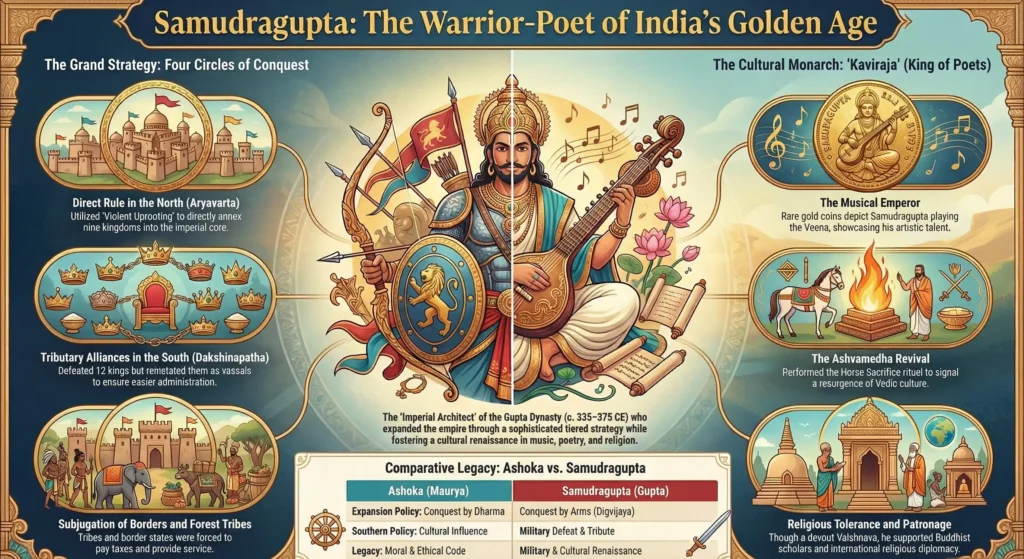
But he was no mere brute with a big army. He was a genuinely clever conqueror. In the north of India, close to his own home, he simply crushed his rival kings and swallowed their lands directly into his growing empire. But in the distant south, he did something far wiser.
In the north, Samudragupta crushed his rivals and seized their lands outright. But in the far south, he would defeat a king and then hand him back his own throne, as a tribute-paying friend.
He knew perfectly well that a king who owed you his very crown was worth a great deal more than a rebellious province a thousand miles away that you could barely control. Capture, and then release. It was the mark of a mind that carefully thought, and did not merely smash. And to announce to the entire world that he was now the supreme emperor of the land, he revived a grand and ancient royal ceremony, the horse sacrifice, that had not been performed in centuries, and struck special gold coins to mark it.
Reign of Chandragupta II Vikramaditya: The Golden Age of India
Reign of Harshavardhana 606-647 CE: The Empire of Benevolence
The pillar of two emperors
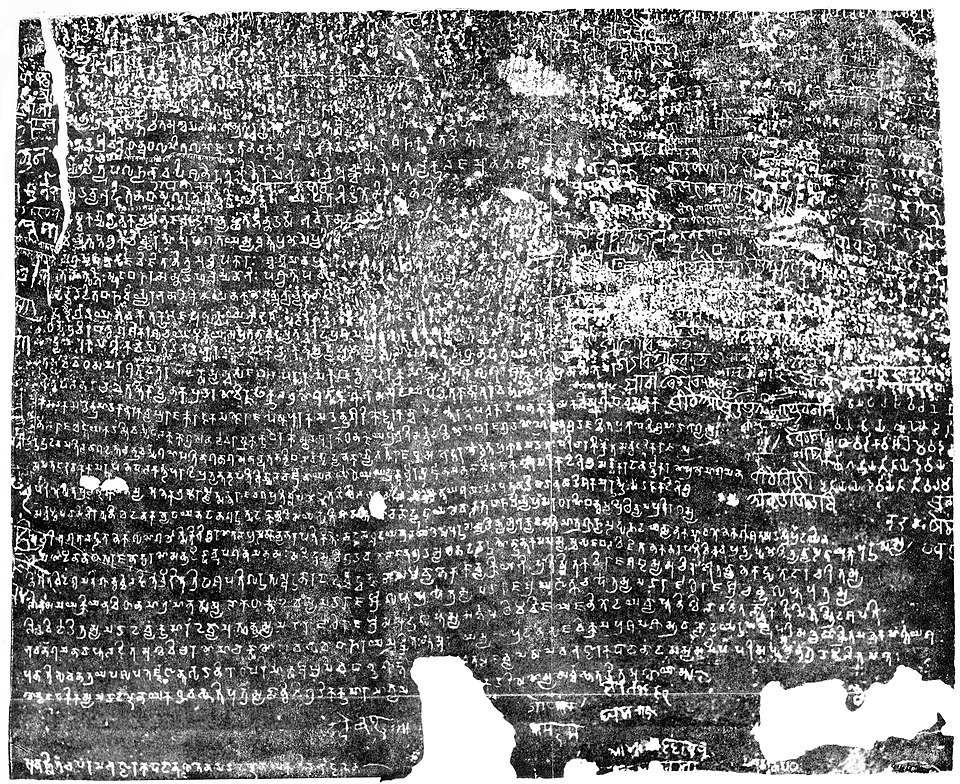
Almost everything we know about Samudragupta comes down to us from a single, quite extraordinary stone. His court poet, a gifted man named Harishena, composed a long and elegant poem in Sanskrit, praising the emperor’s many conquests and virtues, and had the whole of it carefully carved into a tall stone pillar.
But here is the truly wonderful thing about that particular pillar. It was not a new one at all. It was already ancient. It was, in fact, one of the very pillars that the emperor Ashoka had raised some seven hundred years earlier, and it already carried Ashoka’s own words upon it: his gentle, famous edicts, urging all his people toward peace, kindness, and non-violence.
So onto the very same stone that already bore Ashoka’s message of peace, Samudragupta’s poet now carved a glowing record of war. On one pillar, seven centuries apart, two of India’s greatest emperors speak, one of peace and one of conquest.
Stand before that ancient pillar today, and you find yourself reading two of India’s greatest emperors at once, across a gulf of seven hundred years: the one who famously laid down the sword, and the one who took it up again so very brilliantly.
The king of poets
And now we come back, at last, to that lyre. Because for all of his many wars, Samudragupta was, in his very heart, a man of the arts.
He was himself a fine and genuine poet, so accomplished that his own court gave him the proud title of “King of Poets.” He gathered scholars and musicians and thinkers around him, and he supported their work. And though he was a devout Hindu, he was a broad-minded and tolerant one: when the Buddhist king of far-off Sri Lanka sent an embassy asking his permission to build a monastery for pilgrims at the holy site of Bodh Gaya, Samudragupta graciously granted it.
On his famous gold coins, the great conqueror is shown seated at his ease, bent over his veena, lost in his own music. No other king of the entire ancient world is known to have shown himself, on his own money, as an artist.
The same hands that had commanded whole armies are seen there resting gently upon the strings. It tells us something that he very clearly wanted us to know across the centuries: that he did not think of himself only as a man who could win wars.
Reign of Raja Raja Chola I: The Golden Age of the Cholas
The sword and the lyre
That is the rare and rather lovely thing about Samudragupta. He was, in a real sense, two men living inside one. He was at once the fiercest warrior of his whole age and also its most graceful artist. He could crush a rival king in the morning, and lose himself entirely in a piece of music by the evening. And he made very sure, on the coins that would go on to outlast him by a full fifteen hundred years, that we would always remember both halves of him.
There is a deep kind of wisdom hidden in that choice. An empire, Samudragupta seemed to understand better than most conquerors ever have, is won by the sword. But it is only ever made truly golden by the arts, by poetry and music and beauty. And so he gave his empire both of these things. Upon the strong, brilliant, and deeply cultured foundation that this warrior-poet built, his son and his grandsons would in time raise up the full and dazzling glory of India’s golden age, the age of the zero and of the great poets. It was born, in no small part, from a mighty conqueror who loved, above every one of his many victories, the simple sound of a lyre.


Chola Naval Expedition to Southeast Asia: When India Ruled the High Seas
If you think you have remembered everything about this topic take this QUIZ
Results


#1. Which primary historical source, inscribed on an ancient Ashokan pillar, provides a detailed account of Samudragupta’s military campaigns?
#2. What was the specific ‘Southern Policy’ (Dakshinapatha) used by Samudragupta to maintain influence without the burden of direct administration?
#3. Which unique depiction on his gold coins provides evidence of Samudragupta’s personal talent in music and his title ‘Kaviraja’?
#4. What ancient Vedic tradition did Samudragupta revive to signal a resurgence of Brahmanical culture and his status as a universal conqueror?
#5. According to the ‘Quick Comparison’ table, how did Samudragupta’s religion differ from Ashoka’s in terms of his primary patronage?
#6. Why did historian V.A. Smith give Samudragupta the nickname ‘Napoleon of India’?
#7. What diplomatic favor did Samudragupta grant to King Meghavarman of Sri Lanka?
#8. What is the ‘Kacha’ mystery in Gupta history?
Why is Samudragupta called the “Napoleon of India”?
He is called so because of his extensive military conquests and the fact that he was reportedly undefeated in battle, expanding the Gupta EmpireGupta coinage across the subcontinent.
What is the main source of information about his reign?
The Allahabad Pillar Inscription (Prayaga Prashasti), composed by his court poet Harisena.
Which musical instrument did Samudragupta play?
He played the Veena, as depicted on his gold coins.
What was his policy towards South Indian kings?
He adopted the policy of “Capture and Release” (Grahana-Moksha-Anugraha), reinstating them as tributary vassals instead of annexing their lands.
Who was the court poet of Samudragupta?
Harisena was his court poet and minister.
Sources and references
- Itihaas and Vajiram & Ravi (“Samudragupta”) — Samudragupta (r. c. 335–375 CE) as the “Napoleon of India,” his undefeated military record, his synthesis of martial prowess and cultural grace, and his coins depicting him playing the veena.
- Prepp and Prayag Tourism (“Allahabad Pillar / Prayag Prashasti”) — the inscription composed by his court poet and minister Harishena on an Ashokan pillar, the uprooting of nine kings in the north and the defeat and reinstatement of twelve kings in the south, and the submission of frontier states and forest tribes.
- Curious Indian’s own overview (“Reign of Samudragupta”) — the “capture and release” (Grahana-Moksha-Anugraha) policy toward southern kings, the unique veena gold coin as the only ancient coin showing a king’s musical talent, the title Kaviraja, and his patronage of scholars such as Vasubandhu.
- Study.com and general histories — Samudragupta as a musician who played the vina and enjoyed the company of poets, the Gupta monetary system of seven coin types, and his succession by his son Chandragupta II.
- Sources on the Ashvamedha and tolerance — the revival of the Vedic horse sacrifice to proclaim universal sovereignty (with commemorative gold coins), and his granting the Sri Lankan king Meghavarna permission to build a monastery at Bodh Gaya.
Author


Exploring the Soul of Bharat through History, Science, Culture, and its Diversity
Our Mission
Curious Indian is a definitive knowledge portal dedicated to chronicling the events, personalities, and cultural shifts that defined the Indian subcontinent. From the ancient Vedic Period to the complexities of 21st-century politics, our goal is to provide deep-dive analysis that inspires.
Editorial Standards & E-E-A-T
Every article published under our brand undergoes a rigorous fact-checking process. We prioritize primary historical records, academic citations, and credible archives to ensure our readers receive accurate, high-authority information.
Historical Integrity Directly sourcing from ASI archives and academic journals.Topical Authority Comprehensive clustering of Indian Science, Biographies, and Wars.Managed by Paripurna Datta and TEAM | Dedicated to the Knowledge of India.