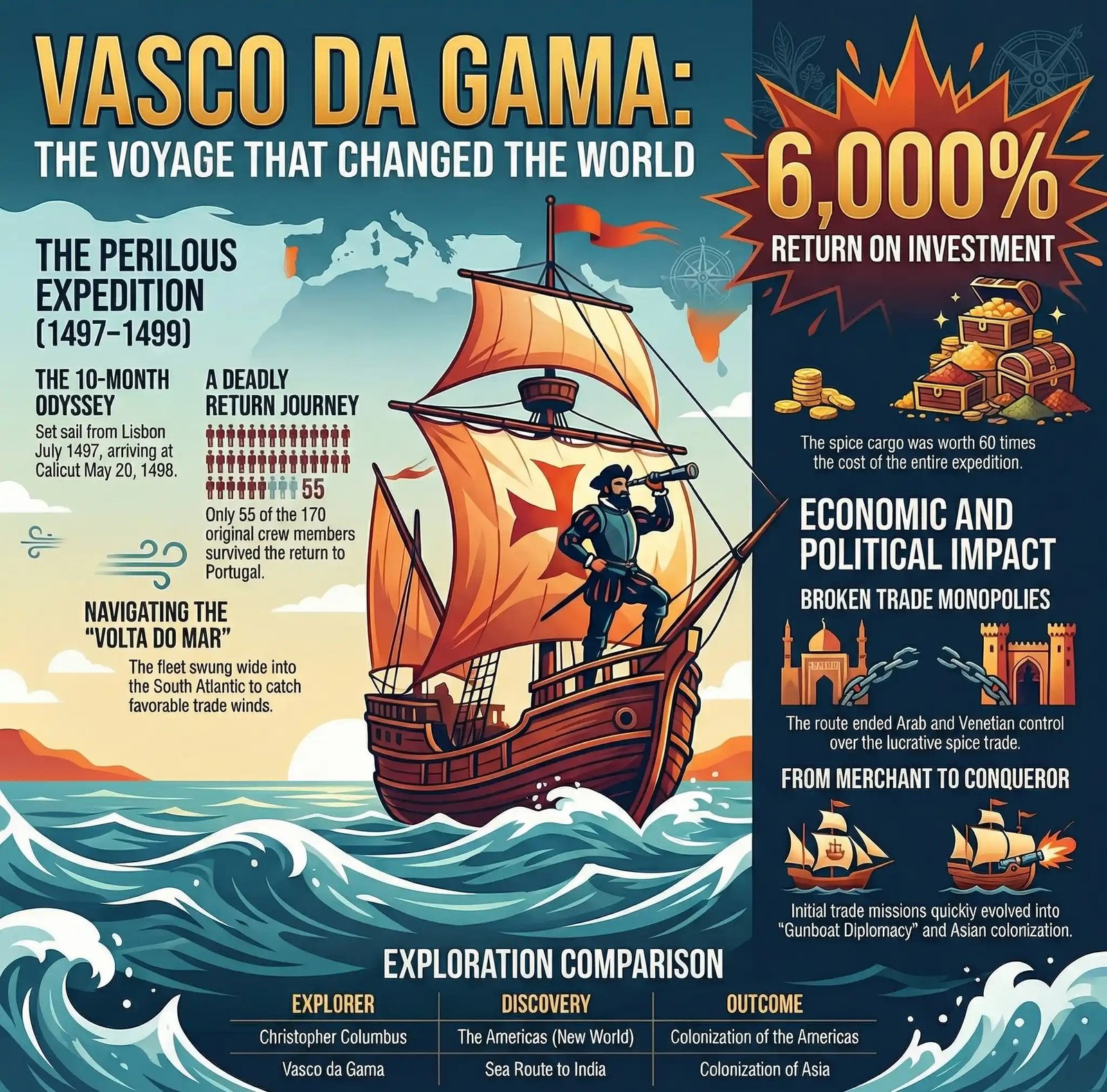
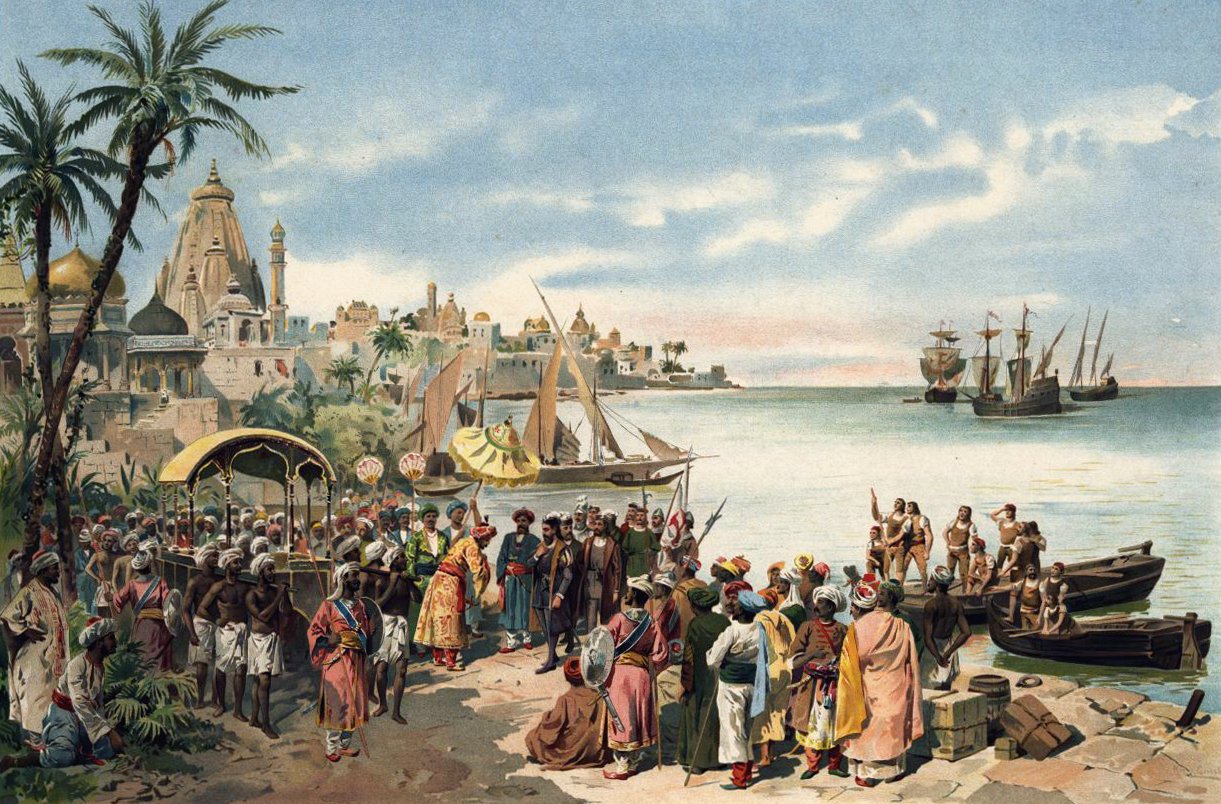
On May 20, 1498, Portuguese explorer Vasco da Gama arrived at Kappad Beach, near Calicut (Kozhikode), India. This marked the end of a grueling 10-month voyage from Lisbon, around the Cape of Good Hope, and across the Indian Ocean. Commander of the ship São Gabriel, da Gama was the first European to establish a direct sea link between Europe and Asia. His arrival broke the centuries-old monopoly of the Arab and Venetian merchants over the spice trade. Although his initial meeting with the Zamorin (ruler of Calicut) was strained due to misunderstandings and poor gifts, the voyage proved that the sea route was viable. Da Gama returned to Portugal with a cargo worth 60 times the cost of the expedition, initiating the era of European colonization in Asia.| Feature | Details |
| Arrival Date | May 20, 1498 |
| Arrival Location | Kappad Beach, Calicut (Kerala) |
| Ships | São Gabriel, São Rafael, Berrio, Stores Ship |
| Portuguese King | King Manuel I |
| Indian Ruler | The Zamorin (Manavikrama Raja) |
| Key Pilot | A Malindi Pilot (often debated as Ibn Majid or Gujarati) |
| Cargo Sought | Pepper, Cinnamon, Ginger |
| Return Profit | 6000% (60 times the cost) |
| Outcome | Opening of the “Cape Route” to India |
The Quest for Spices
In the 15th century, spices like pepper and cinnamon were worth their weight in gold in Europe. However, the trade routes were controlled by the Ottoman Empire and Italian merchant states like Venice. Europe was desperate to find a way around these “middlemen.” Under King Manuel I, Portugal invested heavily in maritime exploration. After Bartolomeu Dias rounded the southern tip of Africa in 1488, the path was clear for a daring attempt to reach India directly.
British East India Company: From Spices to Empire
The Voyage: 170 Men Against the Ocean
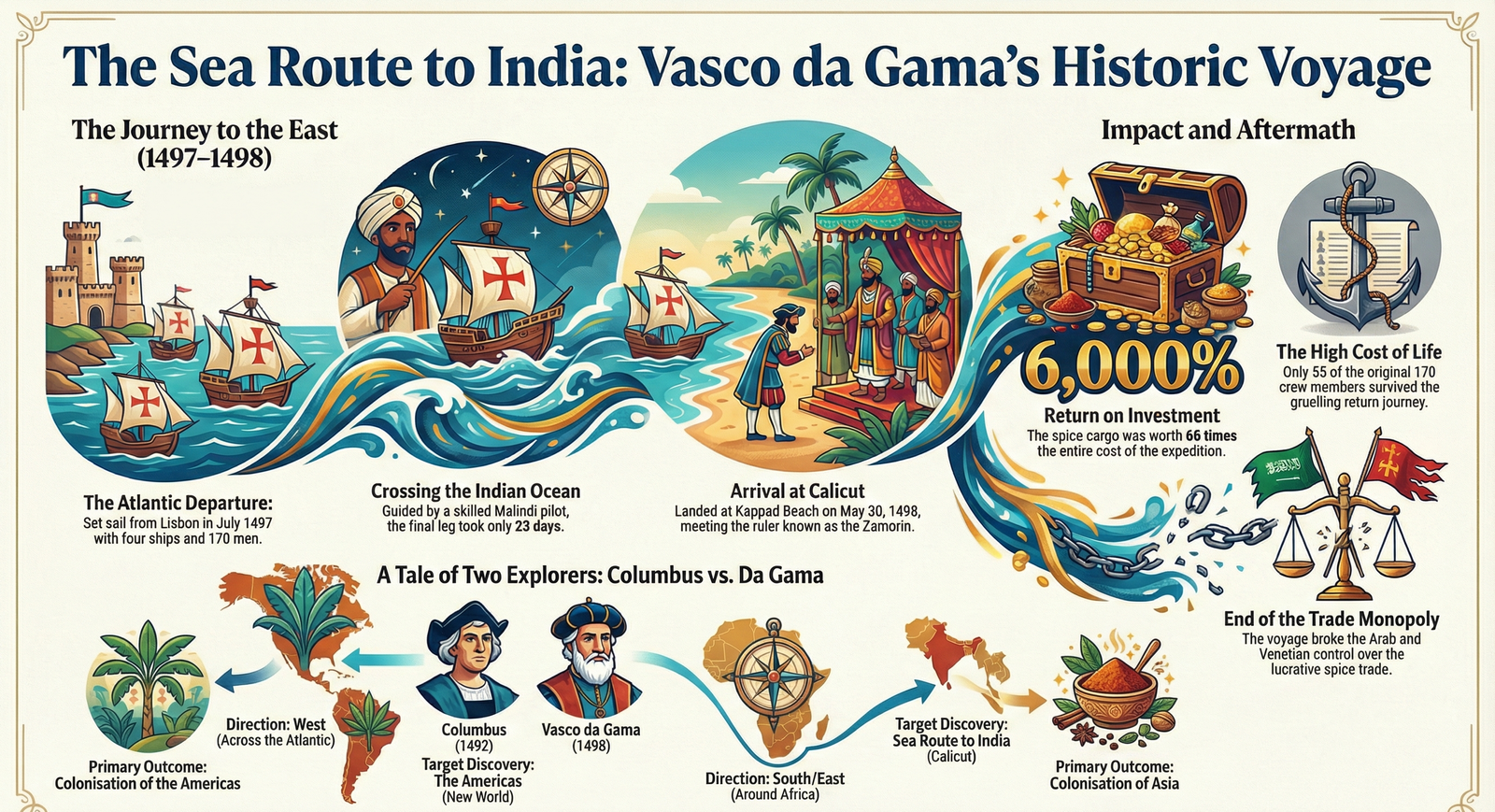
On July 8, 1497, Vasco da Gama set sail from Lisbon with four ships and about 170 men. The journey was perilous.
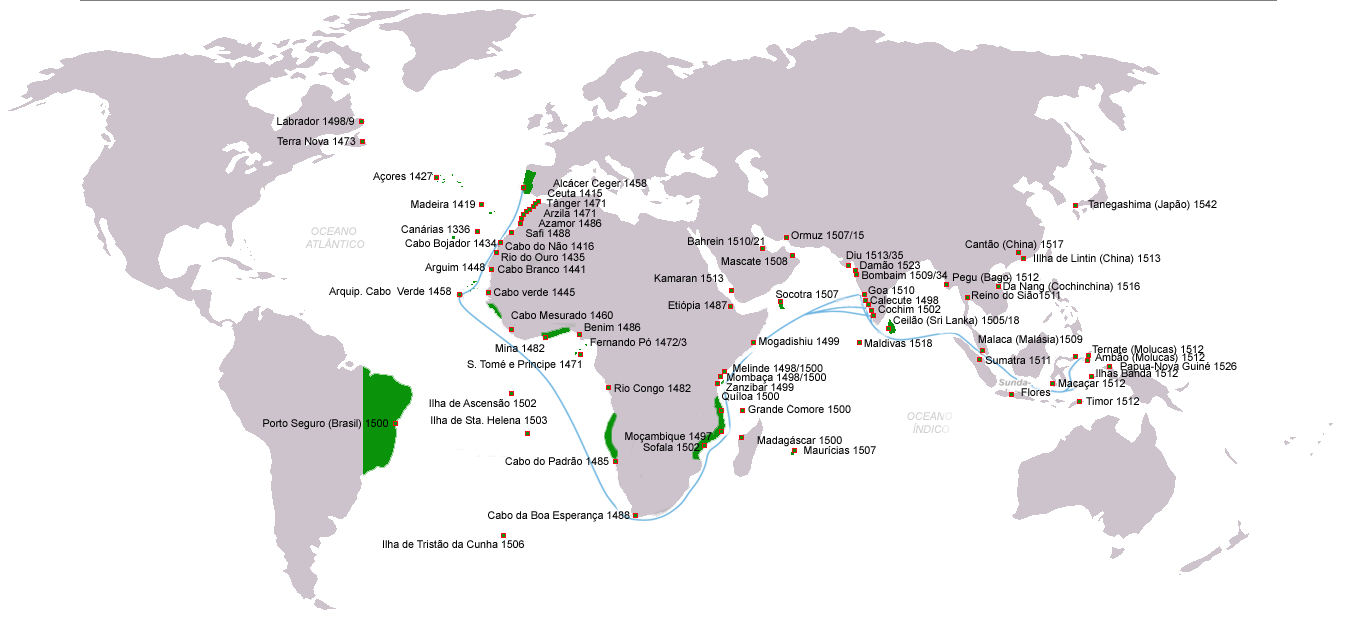
- The “Volta do Mar”: To catch favorable winds, they swung wide into the South Atlantic, almost reaching Brazil, before turning east toward Africa.
- Cape of Good Hope: They rounded the treacherous Cape in November.
- East Africa: In Mozambique and Mombasa, they faced hostility from local Sultans who were suspicious of these “Christian pirates.” However, in Malindi (Kenya), the Sultan was friendly and provided a skilled pilot who knew the monsoon winds. This pilot guided them across the Indian Ocean to the Malabar Coast in just 23 days.
Arrival at Calicut: “Christians and Spices”
On May 20, 1498, the fleet anchored at Kappad. When local fishermen asked two Tunisian convicts (who could speak the language) why they had come, the famous reply was: “Vimos buscar cristãos e especiarias” (We seek Christians and spices).
Da Gama was taken to meet the Zamorin of Calicut. The meeting was awkward. Da Gama presented gifts—washbasins, cloth, and honey—which were common in Africa but insulted the wealthy Indian king, who was accustomed to gold and jewels. The Muslim merchants in Calicut, fearing competition, also poisoned the Zamorin’s mind against the Portuguese.
Despite the tension, da Gama managed to buy a significant amount of spices.
The Deadly Return
The return journey was a nightmare. Ignoring the local advice about monsoon winds, da Gama set sail against the wind. The crossing that took 23 days to reach India took 132 days to return. Scurvy ravaged the crew. So many men died that da Gama had to burn his ship São Rafael because there weren’t enough hands to sail it. Only 55 of the original 170 men made it back to Lisbon in 1499.

The Aftermath: Gunboat Diplomacy
Despite the loss of life, the profit was undeniable. The cargo of spices paid for the entire expedition 60 times over. This success changed Portugal’s approach. The next time da Gama returned in 1502, he didn’t come as a merchant; he came as a conqueror with a fleet of warships, bombing Calicut to force a trade treaty. This marked the beginning of the Estado da India (State of India) and the colonization of Goa, Daman, and Diu.
Battle of Talikota 1565: The Fall of the Vijayanagara Empire
Quick Comparison Table: Columbus vs. Vasco da Gama
| Feature | Christopher Columbus (1492) | Vasco da Gama (1498) |
| Target | India (The East) | India (The East) |
| Direction | West (across Atlantic) | South/East (around Africa) |
| Discovery | The Americas (New World) | The Sea Route to India (Calicut) |
| Outcome | Colonization of Americas | Colonization of Asia |
| Accuracy | Thought he was in India | Knew exactly where he was |
Curious Indian: Fast Facts
- The Pilot Mystery: Historians have long debated who the pilot was that guided da Gama from Africa. While legend names the famous Arab navigator Ibn Majid, modern research suggests he was likely a Gujarati sailor or a local Swahili pilot.
- The “Christian” King: The Portuguese initially thought the Hindus were a sect of Christians because they worshipped images (unlike Muslims) and had temples. They even mistook “Krishna” for “Christ.”
- Kappad Pillar: Today, a stone monument at Kappad Beach reads: “Vasco da Gama landed here, Kappakadavu, in the year 1498.”
- The “Admiral of the Seas”: Upon his return, King Manuel I bestowed upon da Gama the title “Admiral of the Seas of Arabia, Persia, India, and all the Orient.”
Conclusion
Vasco da Gama’s arrival in India was the first domino in a chain of events that led to European dominance over the globe. It shifted the center of the world economy from the Mediterranean to the Atlantic. While for Europe it was an Age of Discovery, for India it was the beginning of an Age of Exploitation. The pepper that flavored European meat came at the cost of Indian sovereignty.
Battle of Plassey 1757: The Betrayal That Changed India’s Destiny
If you think you have remembered everything about this topic take this QUIZ
Results


#1. What was the primary navigational reason for the ‘Volta do Mar’ manoeuvre performed during the voyage?
#2. According to the source, what was the approximate financial return on the expedition’s investment?
#3. Why did Vasco da Gama order the destruction of the ship São Rafael during the return journey?
#4. How did the return journey across the Indian Ocean compare to the initial crossing to India?
#5. Both crossings were approximately equal in duration
#6. The Portuguese initially mistook the Hindus of Calicut for which religious group?
#7. What title did King Manuel I bestow upon Vasco da Gama following his successful return to Portugal?
#8. What specific gifts did da Gama offer the Zamorin that were considered insulting to the Indian ruler?
Establishment of the British Raj 1858: The Dawn of Imperial India
When did Vasco da Gama reach India?
He reached India on May 20, 1498.
Where did Vasco da Gama land in India?
He landed at Kappad Beach, near Calicut (Kozhikode), Kerala.
Which Portuguese King sponsored the voyage?
King Manuel I sponsored the voyage.
Who was the ruler of Calicut when da Gama arrived?
The ruler was the Zamorin (Manavikrama Raja).
What was the main purpose of the voyage?
To find a direct sea route to India to trade in spices (pepper, cinnamon) and bypass the Arab/Venetian middlemen.
What was the main purpose of the voyage?
To find a direct sea route to India to trade in spices (pepper, cinnamon) and bypass the Arab/Venetian middlemen.