The Man Who Died for Someone Else’s Faith
How the martyrdom of Guru Tegh Bahadur in 1675 defended the freedom to believe
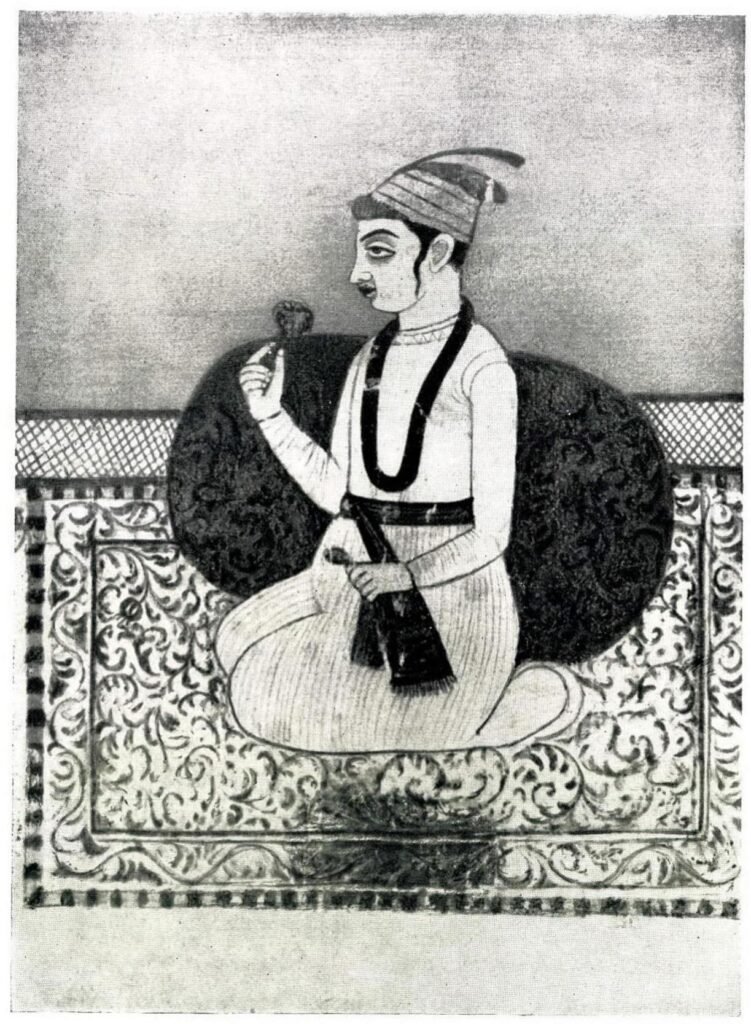
Source: Wikimedia Commons · See description · Public domain
Most people who die for their religion die for their own.
Guru Tegh Bahadur did something rarer and, when you truly sit with it, almost unbelievable. He was the ninth Guru of the Sikhs. And the people he gave his life to protect were not Sikhs at all. They were Hindus.
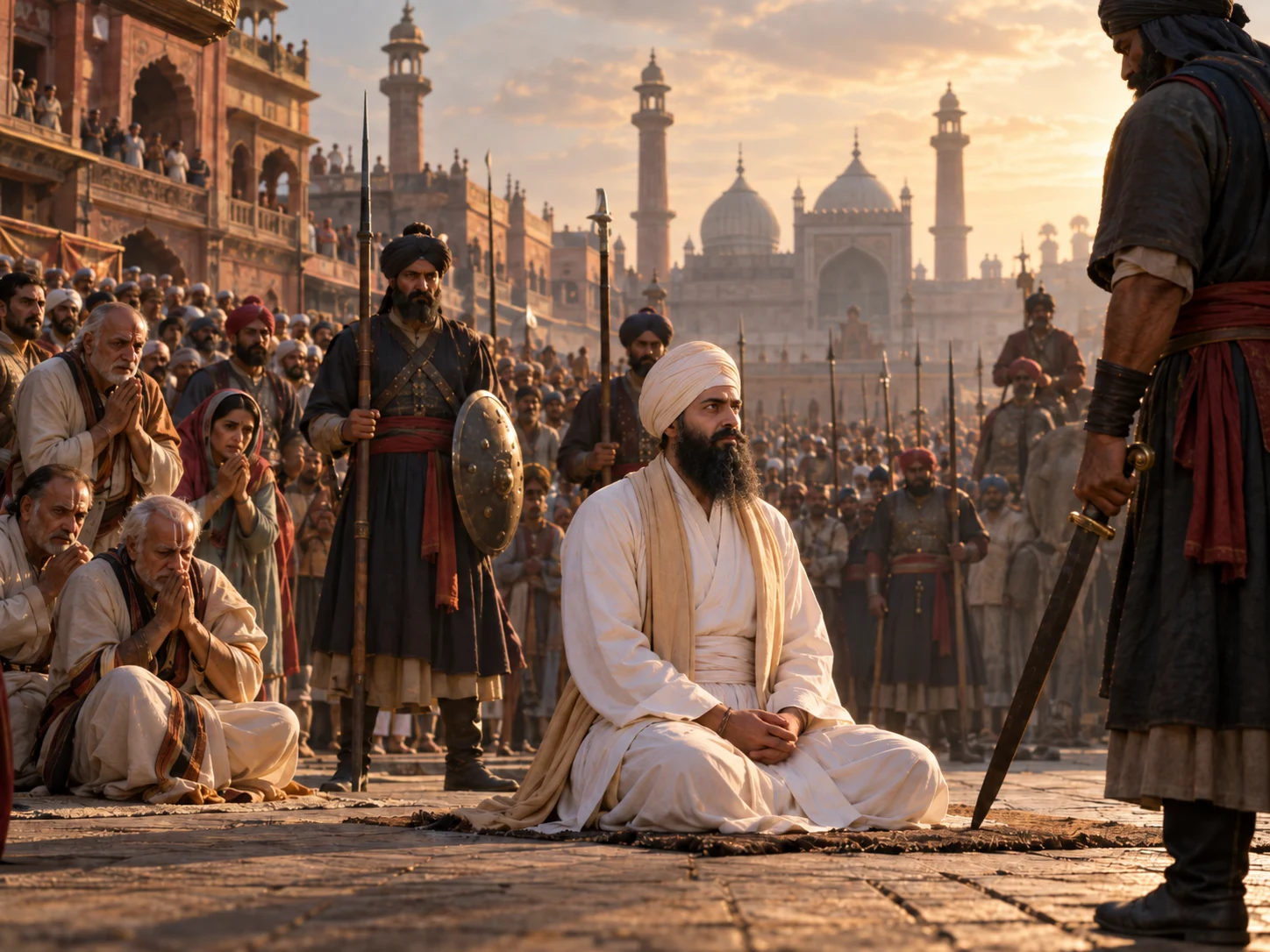
In the winter of 1675, in the heart of Delhi, he was beheaded on the orders of the Mughal emperor Aurangzeb. He could have saved himself at any moment simply by giving in. He did not, because he had decided that the right of ordinary people to keep their own faith, a faith that was not even his, was worth dying for.
Source: Wikimedia Commons · Biswarup Ganguly · CC BY 3.0
That is why Sikhs remember him with a title that says everything: Hind di Chadar, the Shield of India. This is the story of the man behind it.
Death of Tipu Sultan: The Fall of the Tiger of Mysore
A knock at Anandpur
The story begins far away, in Kashmir.
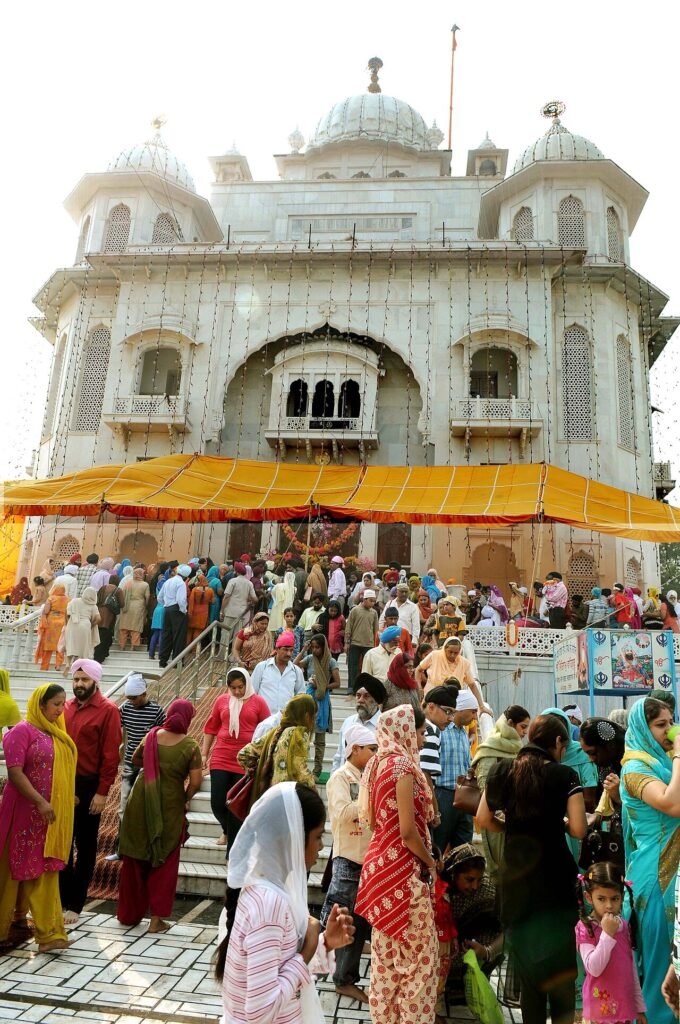
Source: Wikimedia Commons · Ministry of Culture · GODL-India
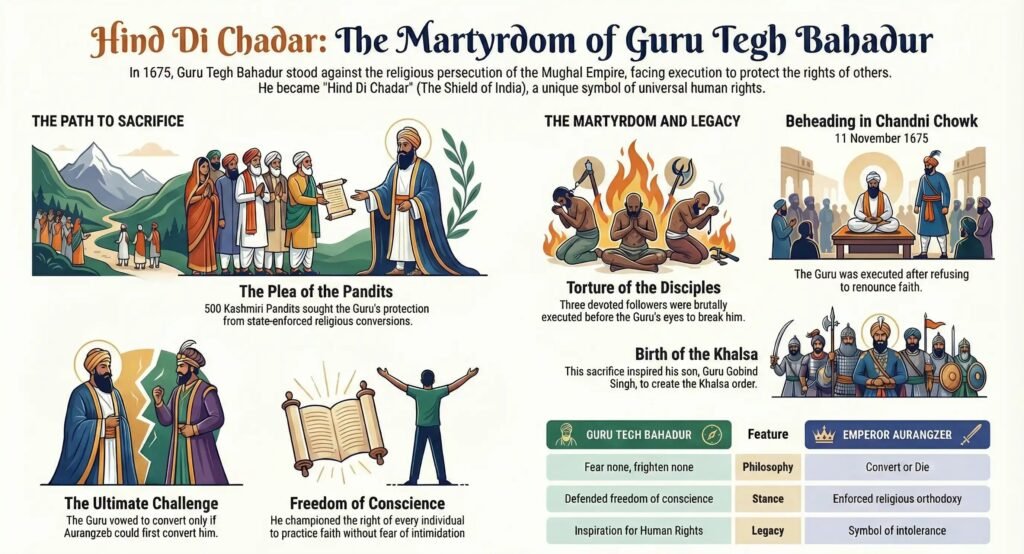
Aurangzeb’s rule had taken a hard turn toward religious orthodoxy, and in Kashmir the local Mughal governor had begun forcing Hindu Brahmins, the Kashmiri Pandits, to convert to Islam. The thinking behind it was cold and simple: break the most respected community, and the ordinary people would follow.
Frightened and out of options, a group of these Pandits made a long journey to the town of Anandpur in Punjab, to the home of Guru Tegh Bahadur. They were Hindus, coming to a Sikh, because they had nowhere else to turn.
They asked him to help them. And he understood at once that helping them might cost him his life.
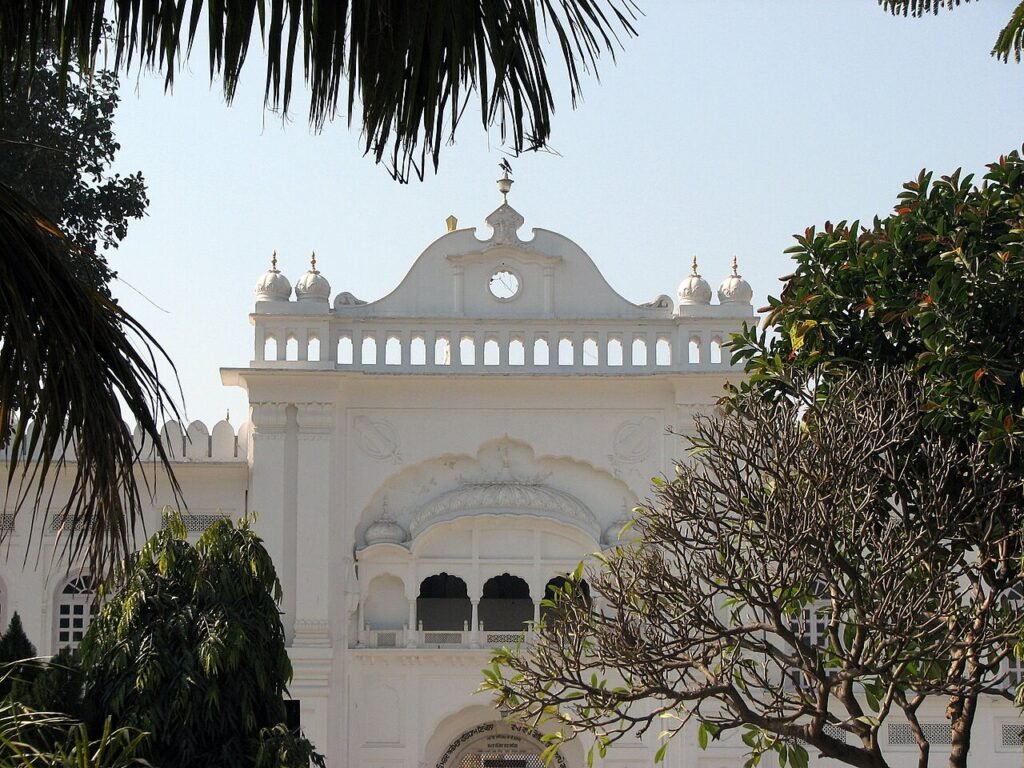
Source: Wikimedia Commons · jasleen_kaur · CC BY-SA 2.0
The question of a child
What happened next is one of the most tender moments in Sikh memory.
The Guru sat lost in thought, and his nine-year-old son, Gobind Rai, noticed the weight on his father’s face and asked what was wrong. The Guru answered gently that this cruelty could only be stopped if a truly great soul were willing to offer himself as a sacrifice.
The little boy looked at his father and asked, “And who is greater than you, father?”
Source: Wikimedia Commons · Jakub Hałun · CC BY-SA 4.0
It is said the Guru smiled. In the honesty of his own child, he seemed to find his answer. He would go.
He sent word to the emperor with a challenge that turned the whole logic of the persecution on its head. If Aurangzeb could persuade him, Guru Tegh Bahadur, to accept Islam, then he agreed that the Pandits and everyone else would convert too. Everything now rested on one man.
Foundation of the Khalsa 1699: The Birth of the Saint-Soldiers
The choice offered in Delhi
The Guru was arrested and taken to Delhi, along with three of his devoted companions. There, in prison, he was offered a way out.
He could perform a miracle to prove he was a man of God. He could accept Islam. Or he could die.
He refused the first two without hesitation. To show off a miracle, he said, was an act of pride and a meddling with the will of God. And to trade away his faith to save his own skin was simply not a thing a person of conscience does.
His three companions were tested first, and here the story turns very dark. Bhai Mati Das, Bhai Sati Das and Bhai Dayala were each put to death before the Guru’s eyes, killed with terrible cruelty for refusing to abandon their beliefs. Sikhs honour all three by name to this day. Through all of it, we are told, the Guru remained calm and unbroken, absorbed in prayer.
Death of Tipu Sultan: The Fall of the Tiger of Mysore
Chandni Chowk
On 11 November 1675, in the great market of Chandni Chowk in Delhi, before a large and silent crowd, Guru Tegh Bahadur was led to the place of execution.
He sat, and he prayed, and he bowed his head one last time. Then the sword fell.
By the memory Sikhs have carried ever since, his answer to the emperor was complete: he gave his head, but he would not give his faith.
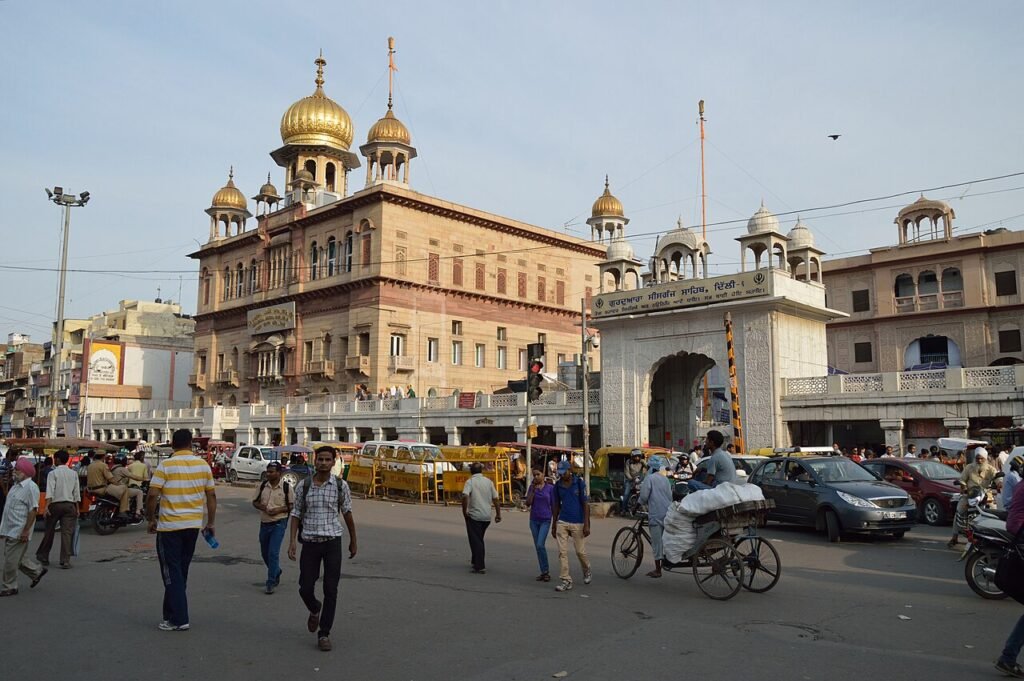
The spot where he died is today one of the most sacred places in the Sikh world, marked by the Gurudwara Sis Ganj Sahib. He is remembered there not as a man who was defeated, but as one who won the only victory that ever mattered to him.
The bodies carried home
There is a final chapter to this story, and it is one of pure devotion.
The Mughal authorities meant to leave the Guru’s body on public display, a warning to anyone who might defy the empire. His followers could not bear it. And so, in the confusion of the moment, two ordinary men did two extraordinary things.
One, Bhai Jaita, gathered up the Guru’s head, wrapped it with care, and carried it hundreds of miles north to Anandpur, to place it before the Guru’s grieving young son. The other, a trader named Lakhi Shah Vanjara, spirited away the body hidden in a cart. To cremate it with honour without being discovered, he set fire to his own house, so that the flames of his home became the Guru’s funeral pyre.
One man carried the Guru’s head to his son. Another burned down his own home to give the body a fitting fire.
Two of Delhi’s holiest gurdwaras, Sis Ganj and Rakab Ganj, stand today on the sites of those two acts of love.
Annexation of Punjab 1849: The Fall of the Sikh Empire
The shield that still stands
So why does this death, out of all the countless deaths in India’s long history, still matter so much?
Because of what it was for. Guru Tegh Bahadur did not raise an army or seize a throne. He simply refused to accept that anyone should be forced to give up their God. And, crucially, the God he defended was not his own. A Sikh laid down his life so that Hindus could go on being Hindus. There are few purer defences of freedom of conscience anywhere in human history.
His death, like the martyrdom of the fifth Guru, Arjan Dev, before him, changed his community forever. His son grew up to become Guru Gobind Singh, who in 1699 founded the Khalsa, the order of saint-soldiers pledged to stand against tyranny. The gentleness of the father became the resolve of the son.
But the heart of it is simpler than any history. A man was asked to save himself by looking away while others were forced to betray their faith. He would not look away. He stood between them and the sword, and he called it his duty. That is what a shield does. And that is why, three and a half centuries later, they still call him the Shield of India.
Nadir Shah’s Invasion of Delhi 1739: The Massacre That Emptied India
If you think you have remembered everything about this topic take this QUIZ
Results


#1. What was the primary reason the delegation of Kashmiri Pandits sought out Guru Tegh Bahadur in 1675?
#2. Which name did the Ninth Guru hold at birth before receiving the title ‘Tegh Bahadur’?
#3. According to the source, why did Guru Tegh Bahadur refuse to perform a miracle to save himself from execution?
#4. Which disciple was martyred by being boiled alive in a cauldron while meditating on the Name of God?
#5. What daring method did Lakhi Shah Vanjara use to cremate the Guru’s torso without alerting the Mughal guards?
#6. What role did the 9-year-old Gobind Rai play in the events leading up to the Guru’s sacrifice?
#7. Which Gurudwara stands at the site in Delhi where Guru Tegh Bahadur was beheaded?
#8. What was the significance of the dust storm that occurred immediately after the execution?
When was Guru Tegh Bahadur martyred?
He was martyred on November 11, 1675.
Who ordered the execution of Guru Tegh Bahadur?
The Mughal Emperor Aurangzeb ordered the execution.
Why is he called “Hind Di Chadar”?
He is called “Hind Di Chadar” (Shield of India) because he sacrificed his life to protect the religious freedom of the Kashmiri Pandits and, by extension, the Hindu faith in India.
Where was Guru Tegh Bahadur executed?
He was executed at Chandni Chowk, Delhi. The site is marked by Gurudwara Sis Ganj Sahib.
Who were the three disciples executed with the Guru?
Bhai Mati Das (sawn in half), Bhai Sati Das (burnt alive), and Bhai Dayala (boiled alive).
Sources & References
- Encyclopaedia Britannica (“Tegh Bahadur”) — the ninth Guru’s life, his execution in Delhi in 1675 under Aurangzeb, and its significance.
- Shiromani Gurdwara Parbandhak Committee (SGPC) — the martyrdom, the defence of religious freedom, and the title Hind di Chadar.
- Delhi Sikh Gurdwara Management Committee — the sites of Gurudwara Sis Ganj Sahib and Gurudwara Rakab Ganj Sahib and the recovery of the Guru’s body.
- Encyclopaedia Britannica (“Gobind Singh”) — the tenth Guru and the founding of the Khalsa in 1699 that followed.