How India took back the heights of Kargil, and what it cost
Picture a wall of ice and bare rock, rising more than a kilometre almost straight up, far higher than any place a human being is meant to live, where the air is so thin that simply standing still leaves you gasping for breath.
Now picture, dug in at the very top of that wall, an enemy with machine guns and artillery, looking straight down.
And now picture a line of young Indian soldiers, many of them barely out of their teens, being ordered to climb that wall, in the open, into that fire, and to take the top back.
That was the Kargil War. It was one of the hardest and highest battles ever fought by any army in the history of the world, and it was won by boys doing something that should not have been possible. This is the story of that war, and of what it cost.
Peace on paper
Only a few months before the fighting began, there had been real hope of peace.
In early 1999, the Prime Ministers of India and Pakistan had met in the city of Lahore and signed a hopeful declaration, a solemn promise to ease the long hostility between their countries. And yet, even as that ink was drying, Pakistani forces were quietly slipping across the Line of Control, the ceasefire line high in the mountains, and seizing the empty, snowbound peaks that Indian troops pulled back from every winter. They dug themselves in on the heights that looked down on the vital highway below.
When Indian shepherds and patrols stumbled on them in the spring, the shock was total. The enemy already held the high ground, deep on India’s side of the line.
Even as the two countries signed a solemn peace down in the valley, soldiers were slipping across the line to seize the peaks above it.
8 Defining Chapters in the Vikram Sarabhai Biography
The disadvantage of the low ground
In almost every war ever fought, holding the high ground is the great advantage. At Kargil, the enemy held it completely, and India had to take it away from them.
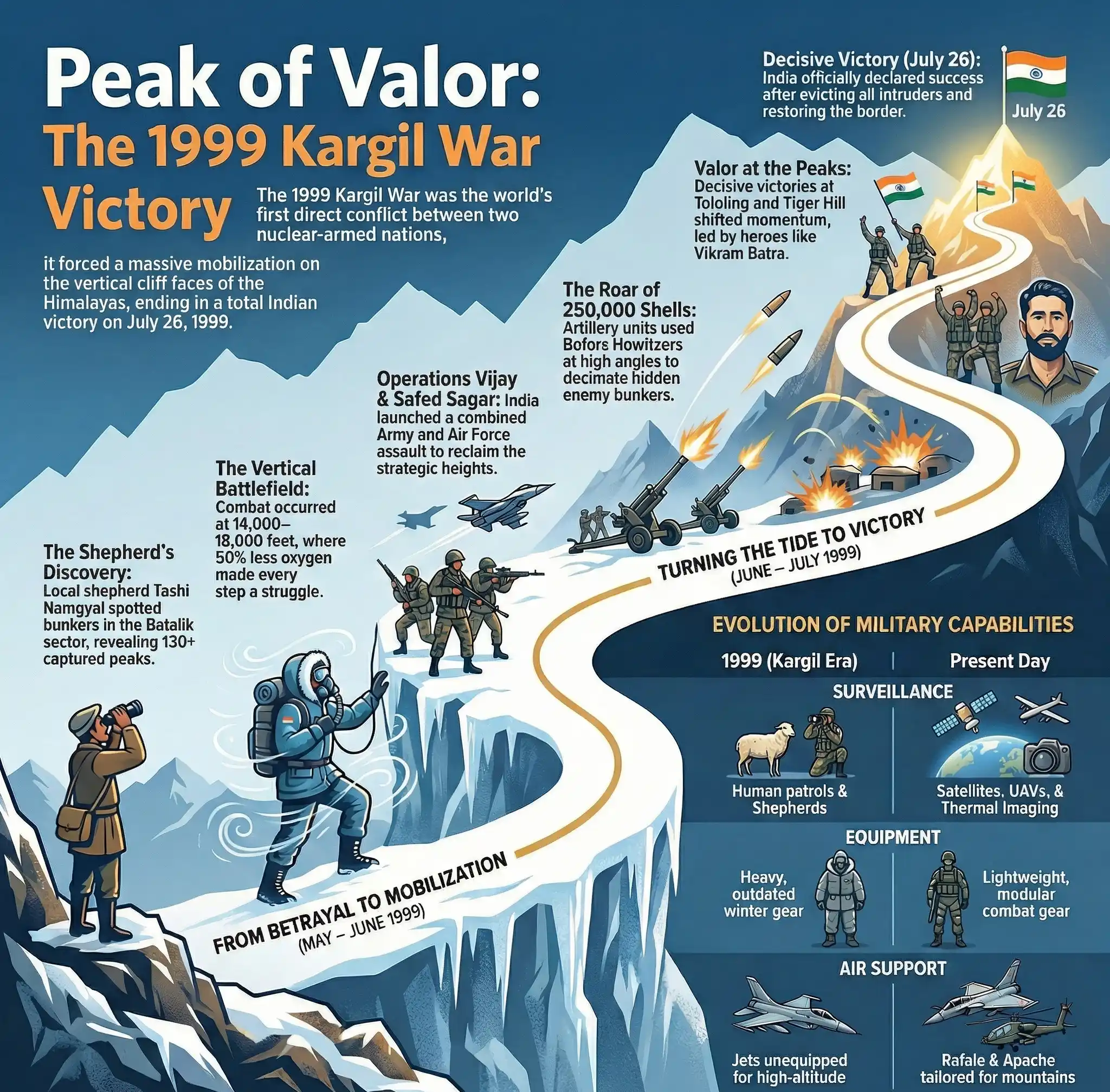
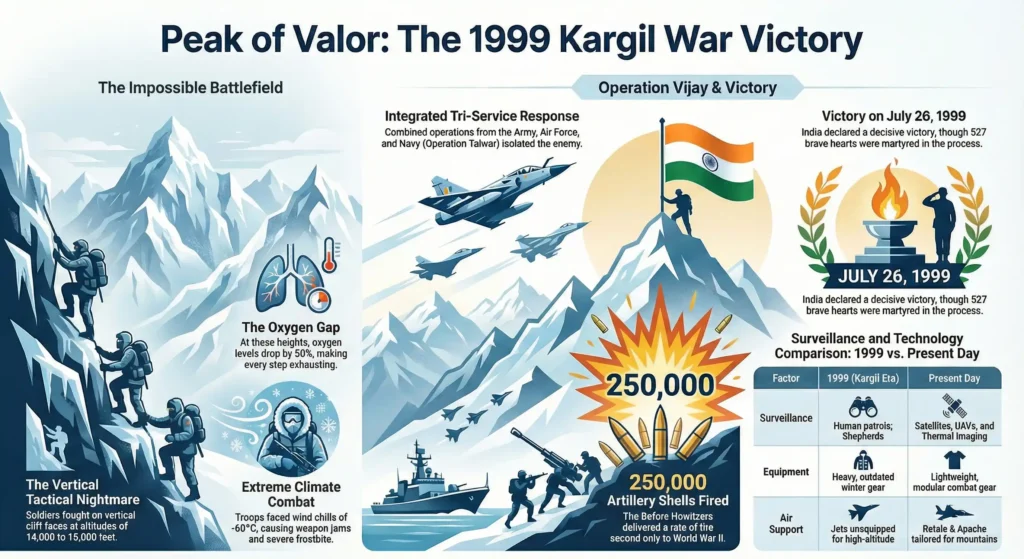
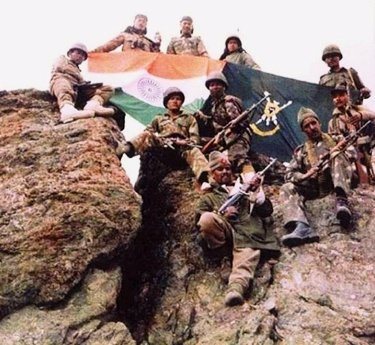
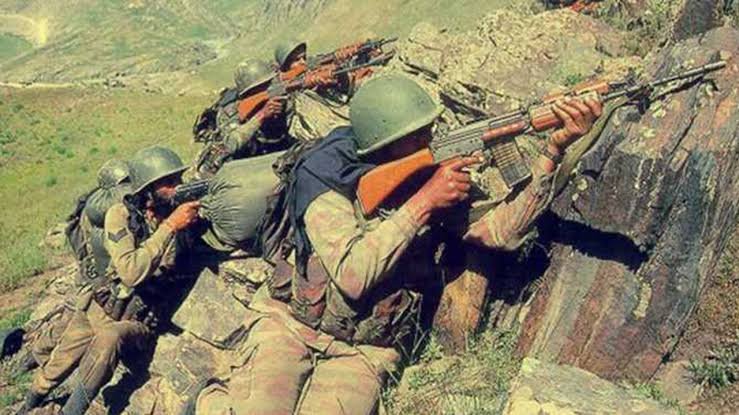
That meant India’s soldiers had to attack upward. They had to climb sheer slopes of ice and loose stone, in plain view, toward an enemy firing down on them from prepared bunkers at the top, and they had to do it at sixteen, seventeen, eighteen thousand feet, in a cold that can kill an unprotected man, where hauling your own body up a slope leaves you fighting for every breath.
They had to climb, in the open, up sheer walls of ice, into an enemy firing down on them from the top of the world. Every rule of war said it could not be done.
By the cold logic of warfare, attacks like that are supposed to fail. At Kargil, again and again, they did not, because the men making them refused to let them.
Point by point, peak by peak
The war was not one great battle but a long series of separate, desperate ones, each for a single peak, and the names of those peaks passed into the memory of a nation: Tololing, Tiger Hill, Point 4875.
They were taken the only way they could be taken. Young men climbed through the night, hand over frozen hand, and then charged the last open stretch into the machine guns. Some fell, and the next wave climbed over them and kept going. It produced acts of courage that India still tells its children about, like that of Captain Vikram Batra, whose fearlessness on those slopes became legend before he was killed leading his men, and of a badly wounded young grenadier who took a final enemy bunker almost alone.
Perhaps five hundred Indian soldiers were killed, most of them very young, and a great many of them officers, because at Kargil the officers led from the front, which meant they were often the first to die.
That last fact deserves to be sat with. This was not a war won by generals moving markers on a map far behind the line. It was won by boys and by the young men who led them, dying at the front, one freezing peak at a time.
The Purulia Arms Drop Mystery 1995: When the Sky Rained Guns
The line they would not cross
There is a part of the Kargil story that is less often celebrated, and it may be the most remarkable part of all.
India fought the entire war under a rule of iron self-restraint. Its soldiers and its pilots were forbidden to cross the Line of Control, even though crossing it, to outflank the enemy or cut off their supplies, would have made their brutal task far easier and saved many Indian lives. India held that line for a reason. Just the year before, both India and Pakistan had openly become nuclear powers, and the whole world was watching this mountain war in terror, afraid that it might climb, step by step, toward something no one could survive.
India chose to win the hard way, clearing its own peaks one bloody metre at a time, rather than widen a war that two nuclear neighbours could not afford to lose control of.
So India took back its territory the hardest way there was, metre by bloody metre, without ever widening the war. And in choosing that restraint, it won something beyond the peaks themselves. It kept the world’s sympathy, and it held the moral high ground to match the physical heights its soldiers were dying to reclaim.
The soldiers no one claimed
And there is a quieter tragedy on the far side of those peaks, one that an honest telling should not leave out.
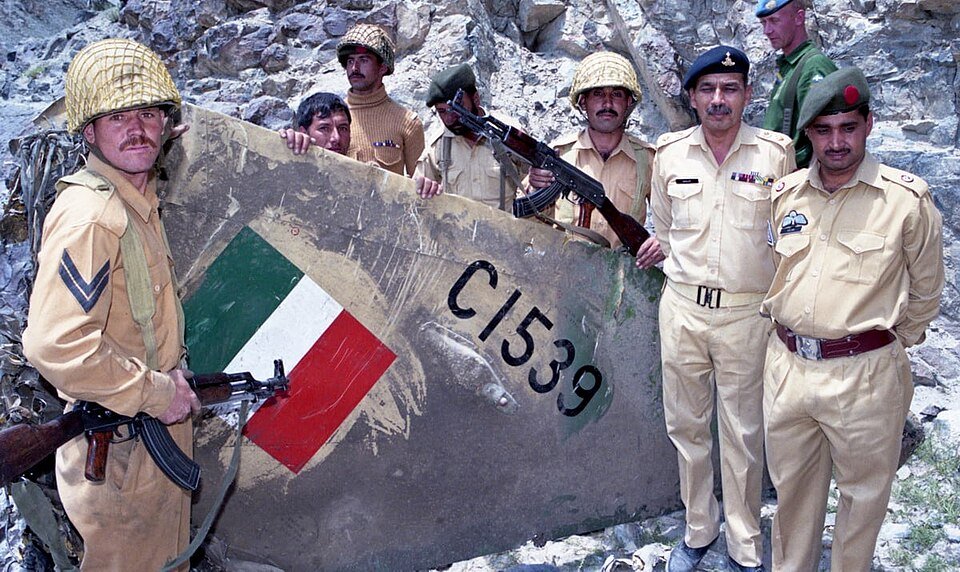
Many of the men dug in on those heights were themselves soldiers, and they fought and died with courage in the same killing cold. But the state that had sent them up there, in order to keep the whole operation deniable, at first refused to admit that they were its own regular troops at all. And so, when the guns fell silent, a number of their bodies were left behind on the mountainsides, unclaimed by the country they had died for.
In the end it was Indian soldiers who buried some of the enemy dead, with the full rites of their faith, because their own side would not come to claim them.
It is a bleak reminder of something true of almost every war. The ordinary soldier on both sides, the young man far from home doing what he is told, is so often the one who pays the whole price, sent up the mountain to die by men who will not climb it, and sometimes not even owned by them in death.
1971 Nagarwala Case: India’s Great Bank Heist Mystery
What the mountains kept
So what did that terrible summer on the heights leave behind?
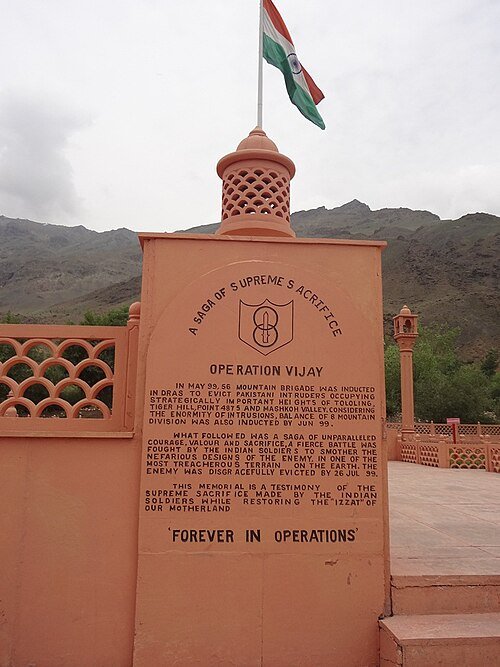
India won. It cleared the intruders from every peak and restored the line, and it did so with a discipline and a raw courage that made a bruised and doubting nation stand a little taller, and that turned a generation of very young dead men into names schoolchildren still learn by heart.
But a war fought over frozen, empty mountains that grow nothing and shelter no one is a strange thing to wave a flag over, and the truest way to honour Kargil is not to celebrate it but to count, honestly, what it cost. Some five hundred young men, on the Indian side alone, who had families and futures and their whole lives still in front of them, lie under the earth because of a handful of barren peaks.
The mountains were taken back. The boys who took them did not come down. That is the price a nation’s safety is paid in, and it is paid by the youngest and the bravest among us.
The deepest thing Kargil holds is not the glory of the victory, but the weight of what victory costs. The pride and the security that the rest of us enjoy so easily are bought, over and over, by the very youngest and bravest, climbing uphill into the guns so that the rest of us never have to. The least we owe them, in return, is to remember exactly what was paid on those slopes, and by whom, without ever letting the flag-waving make it sound cheaper or easier than it was.


The Roopkund Skeleton Lake Mystery: Why Were Greeks Dying in the Indian Himalayas?
If you think you have remembered everything about this topic take this QUIZ
Results


#1. Who was the local individual whose initial report triggered the discovery of the massive Pakistani infiltration in the Batalik sector?
#2. What was the specific tactical challenge that made the Kargil terrain a ‘nightmare’ for the Indian troops?
#3. Which officer, posthumously awarded the Param Vir Chakra, famously used the code name ‘Sher Shah’ and the slogan ‘Yeh Dil Maange More!’?
#4. What was the code name of the Indian Air Force operation that utilized Mirage 2000 jets and laser-guided bombs at extreme altitudes?
#5. Which weapon system, previously controversial in Indian politics, proved to be the decisive ‘game-changer’ during the artillery duels in Kargil?
#6. According to the ‘Fast Facts,’ what was the naval operation that cut off Pakistan’s oil supply routes during the conflict?
#7. The war officially ended on July 26, 1999. What is this day now celebrated as in India?
#8. According to the ‘Quick Comparison’ table, how has intelligence gathering changed since 1999?
Why did the Kargil War happen?
It happened because Pakistani troops infiltrated the Indian side of the Line of Control (LoC) during winter to capture strategic peaks and cut off the highway connecting Srinagar to Leh (Ladakh).
Who won the Kargil War?
India won the war decisively. The Indian Army recaptured all the occupied peaks, and Pakistan was forced to withdraw its remaining troops under international pressure.
How long did the Kargil War last?
The conflict lasted for roughly two months and three weeks, from early May 1999 to July 26, 1999.
Who was Captain Vikram Batra?
Captain Vikram Batra was an officer of the Indian Army who was posthumously awarded the Param Vir Chakra. He is famous for his bravery in capturing Point 5140 and Point 4875, and for his catchphrase “Yeh Dil Maange More.”
What role did the Bofors gun play in Kargil?
The Bofors howitzers were crucial in tilting the war in India’s favor. Their ability to fire “high angle” shots allowed them to destroy enemy bunkers hidden behind steep mountain ridges that direct fire couldn’t reach.
Sources & References
- Encyclopaedia Britannica (“Kargil War”) — the 1999 conflict, its origins, and its course.
- Indian Army (Operation Vijay) — the recapture of the peaks along the Line of Control.
- Gallantry Awards portal, Government of India (the Kargil Param Vir Chakra recipients) — the soldiers decorated for their valour, including Captain Vikram Batra.
- Arms Control Association (the 1999 Kargil crisis) — the nuclear dimension and the danger of escalation.
Author


Exploring the Soul of Bharat through History, Science, Culture, and its Diversity
Our Mission
Curious Indian is a definitive knowledge portal dedicated to chronicling the events, personalities, and cultural shifts that defined the Indian subcontinent. From the ancient Vedic Period to the complexities of 21st-century politics, our goal is to provide deep-dive analysis that inspires.
Editorial Standards & E-E-A-T
Every article published under our brand undergoes a rigorous fact-checking process. We prioritize primary historical records, academic citations, and credible archives to ensure our readers receive accurate, high-authority information.
Historical Integrity Directly sourcing from ASI archives and academic journals.Topical Authority Comprehensive clustering of Indian Science, Biographies, and Wars.Managed by Paripurna Datta and TEAM | Dedicated to the Knowledge of India.