Tuesday, April 14, 2026
5 °c
Eagle Mountain
Curious Indian
  • Arts & Culture
  • Festivals of India
  • Indian History
  • Indian Politics
  • Biography
    • Entertainment Personalities
    • Science Personalities
  • Unsolved India
No Result
View All Result
  • Arts & Culture
  • Festivals of India
  • Indian History
  • Indian Politics
  • Biography
    • Entertainment Personalities
    • Science Personalities
  • Unsolved India
No Result
View All Result
Curious Indian
No Result
View All Result
Home Arts & Culture

Exploring The Assam Handloom Heritage And Silk

paripurnadatta by paripurnadatta
in Arts & Culture, North East India, Textiles & Handicrafts
Reading Time: 9 mins read
0 0
A A
Assam handloom heritage
Share on FacebookShare on Twitter
https://open.spotify.com/episode/6emeec24qvktL9SwztMqln?si=nDdVULqrTgSk5smT0bUL7w
The weaving traditions of Assam are a beautiful mix of history, nature, and human skill. From the rare golden Muga silk that shines like the sun to the warm and peaceful Eri silk, every thread tells a story of the hardworking weavers. This craft is deeply woven into the lives of the Assamese people, keeping alive a royal legacy that you can still feel today. Mothers teach their daughters, and families work together on wooden looms, making sure this special art never fades away.
FeatureDetails
RegionAssam India
Famous SilksMuga Eri Pat
Unique TraitMuga gets shinier after every wash
Key HubSualkuchi village

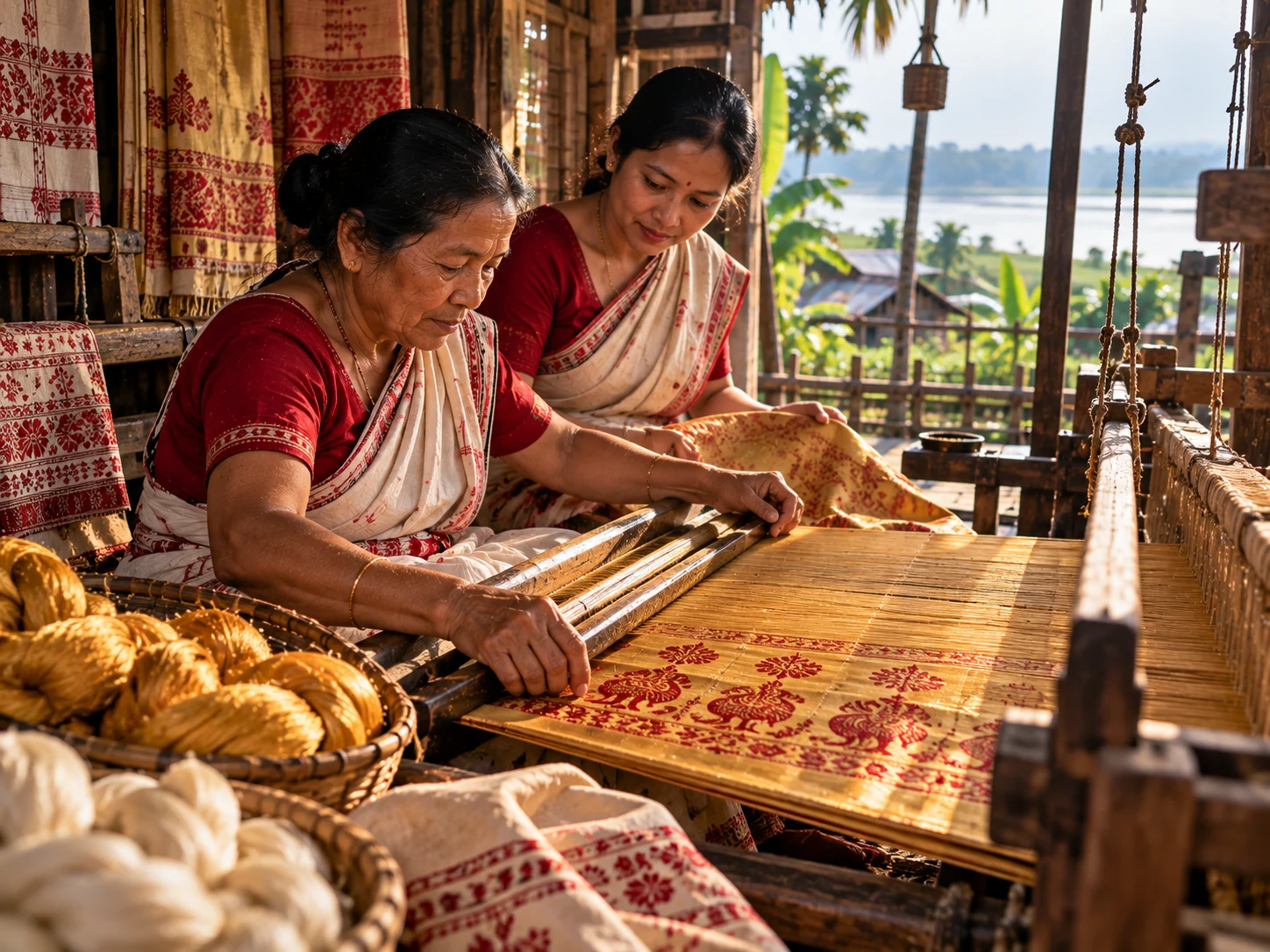
Walk down any narrow dirt path in a village near the Brahmaputra river, and you will hear a wonderful sound. It goes click clack, click clack. This rhythmic noise comes from almost every house. It is the sound of the wooden loom, the heartbeat of the village. For the people here, weaving is not just a job. It is a way of life. The Assam handloom heritage is a magical story of how humans work perfectly with nature to create clothes that look like they belong to fairies and kings.

For hundreds of years, the families in this green and rainy state have grown up watching their mothers and grandmothers turn simple threads into breathtaking clothes. They do not use big noisy factory machines. Everything is done by hand, with patience and deep love. When you hold a piece of this fabric, you are holding weeks of hard work and a piece of someone’s heart.

Exploring The Assam Handloom Heritage And Silk

Table of Contents

Toggle
  • The Glow of Golden Threads
    • A Cloth That Lives Forever
  • The Warmth of Peace Silk
    • A Hug for the Winter
  • The Weaving Village of Sualkuchi
  • The Kings Who Loved Silk
  • Keeping the Magic Alive Today
  • Quick Comparison Table
  • Curious Indian: Fast Facts
  • Conclusion
  • If you think you have remembered everything about this topic take this QUIZ
    • What makes the golden silk so different?
    • What does the term peace silk mean?
    • Where is the best place to see this weaving?
    • Is it hard to take care of these handmade clothes?
    • Is it difficult to maintain and take care of these handmade Assamese silks?

The Glow of Golden Threads

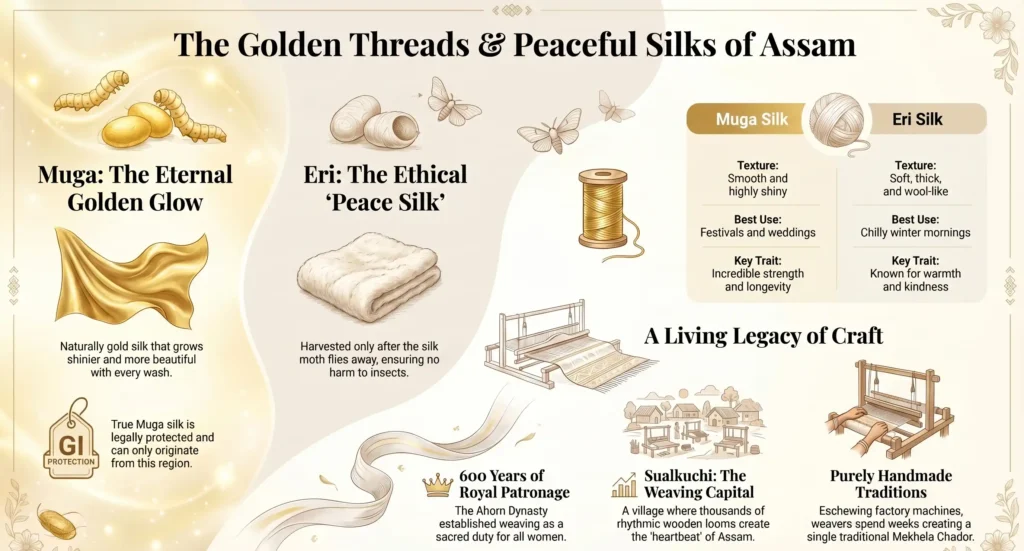
The most famous part of this story is Muga silk. You will not find this fabric anywhere else in the whole world. It is incredibly rare and very special. The magic starts in the thick green forests of Assam. There is a specific type of silkworm that only eats the leaves of the Som and Soalu trees. Because of this very strict diet, the silk they make comes out naturally gold.

READ MORE:  Contemporary Indian Sculpture: From Colonial Realism to Global Installations

Weavers do not need to use any harsh chemicals or artificial colors to make it shine. It looks like pure sunlight caught in a thread. Because this process is so unique to this specific land, the government gave it a Geographical Indication tag to protect it from copycats. This means true Muga can only come from this region.

A Cloth That Lives Forever

The most surprising thing about this golden fabric is how strong it is. A dress made of this material can last for a very long time. In many local families, a grandmother will wear a beautiful golden dress and then give it to her daughter, who will later give it to her own daughter. The dress never tears or loses its magic. In fact, it has a secret trick. Every single time you wash it, the fabric gets even shinier. While normal clothes look old and faded after a few washes, this silk grows more beautiful with time.

The Warmth of Peace Silk

While the golden threads are famous for their shine, Eri silk is famous for its kindness. People all over the world call it Ahimsa silk, which means the silk of peace. The story of this fabric is very gentle. To make normal silk, people usually have to boil the cocoon while the little insect is still inside. But the weavers of Assam do things differently for this special type of cloth.

They wait patiently for the moth to grow wings and fly away safely into the sky. Only after the empty shell is left behind do they collect it to spin their yarn. This process takes a lot of time, but it shows how much respect the local people have for all living creatures. The Central Silk Board of India often praises this method because it protects nature while creating something useful.

A Hug for the Winter

When you touch this peaceful cloth, it does not feel slippery or thin like other silks. It feels thick, soft, and very warm, almost like fine wool. It is the perfect thing to wrap around your shoulders on a chilly winter morning. Because it is made with such care and love, wearing it feels like getting a warm hug. It is a true symbol of comfort and kindness.

READ MORE:  Beyond the Shadow: The Remarkable Transformation of Pran

The Weaving Village of Sualkuchi

If you want to see the true heart of this craft, you must visit a town called Sualkuchi. People often call it the weaving capital of the east. The moment you step into this town, the sound of the looms surrounds you completely. Thousands of skilled men and women sit at their wooden frames all day, throwing the shuttle back and forth to create magic.

The patterns they weave into the borders are beautiful. You will see tiny woven flowers, little birds, and ancient shapes that tell stories of the land. It takes an incredible amount of focus and cleverness to make these designs perfect without using any computers. The rich culture here is so vibrant that scholars studying the UNESCO Silk Roads program find great value in understanding how these tight knit communities keep their traditions totally alive.

The Kings Who Loved Silk

This beautiful craft survived for so long because of the ancient kings of the Ahom dynasty. These rulers governed the land for six hundred years, and they absolutely loved the local weaving. They believed that every woman should know how to spin thread and create cloth. The queens would even invite village girls to the royal palace to teach them new and better ways to use the loom.

During those old days, these gorgeous clothes were kept only for the royal family and their special guests. Sometimes, the shiny golden cloth was even used like money to pay for things. If you visit the National Museum in New Delhi today, you can see some of the stunning royal outfits preserved behind glass, looking just as rich and bright as they did centuries ago.

Keeping the Magic Alive Today

Today, the weavers face some tough times. Big factories make cheap, fake fabrics that look a little bit like the real thing, but they do not have the same soul. Many young boys and girls are moving to big cities to work on computers instead of wooden looms.

READ MORE:  Madhubani Painting: The Ancient Wall Art of Mithila

However, there is a lot of hope. People all over the world are waking up. They want clothes that do not hurt the earth. Organizations like the Handloom Export Promotion Council are trying to help these village artists sell their wonderful creations to buyers across the globe. When we learn about this heritage and choose to support true, handmade crafts, we help keep a magical tradition breathing. We ensure that the golden glow and the peaceful warmth of Assam never fade into the dark.

Quick Comparison Table

FeatureMuga SilkEri Silk
ColorNatural shiny goldCream or dull white
TextureSmooth and highly shinySoft warm and wool like
NatureKnown for extreme strengthKnown as peaceful or Ahimsa silk
Best TimeFestivals and weddingsCold winter months

Curious Indian: Fast Facts

  • The golden silkworms are so sensitive that they cannot survive if there is too much pollution in the air.
  • A traditional Assamese dress called a Mekhela Chador takes several weeks to weave entirely by hand.
  • The empty cocoons of the peace moth are spun into thread much like cotton, instead of being unreeled in one long string.
  • Weaving is considered a sacred duty in many rural homes, and the loom is treated with great respect.
  • Before modern dyes were invented, weavers used local flowers and tree bark to add extra touches of color to their designs.

Conclusion

The beautiful weaving story of this green state is a treasure we must protect. It shows us a perfect picture of human patience, brilliant skill, and a deep love for the forest. The shining golden threads and the gentle, warm fabrics are much more than just items to wear. They are history woven into cloth. Every time a weaver sits at their wooden frame, they are keeping the memory of ancient kings and wise grandmothers alive. By understanding and sharing the beauty of this craft, we ensure that the rhythmic sound of the village loom continues to echo for many generations to come.

If you think you have remembered everything about this topic take this QUIZ

What makes the golden silk so different?

It has a bright yellow gold color created entirely by nature. It also gets much shinier every time you wash it with water, which is completely different from normal clothes that fade over time.

What does the term peace silk mean?

It means the fabric is made without hurting any insects. The weavers wait for the tiny moth to naturally leave its shell before they take the empty cocoon to make the soft thread.

Where is the best place to see this weaving?

A large village named Sualkuchi is the most famous place. Almost everyone there works with wooden looms, and you can hear the weaving sounds echoing through the entire town.

Is it hard to take care of these handmade clothes?

They are surprisingly strong, especially the golden kind. You should wash them gently with mild soap and keep them wrapped in clean cloth to protect them from dust.

Is it difficult to maintain and take care of these handmade Assamese silks?

While they appear delicate, these silks—especially Muga—are incredibly strong and long-lasting. They should be washed gently with mild soap and stored in soft cotton cloth to protect them from dust and moisture, ensuring they can be passed down as family heirlooms.

Tags: AssamEri SilkHandloomIndian CultureMuga Silk
ShareTweetPin
paripurnadatta

paripurnadatta

Related Posts

Inner Line Permit System
Colonial India

The Inner Line Permit System And Indigenous Tribes

April 14, 2026
Majuli Island
Cultural Insights

Visiting Majuli Island Monasteries 365 Days

April 13, 2026
Manipuri Eromba dish
Cultural Insights

Cooking the Manipuri Eromba Dish 365 Days

April 13, 2026
No Result
View All Result

Stay Updated

  • Trending
  • Latest
Life of Mahavira: From Prince Vardhamana to Great Conqueror

Life of Mahavira: From Prince Vardhamana to Great Conqueror

April 11, 2026
Christmas in India

Christmas in India: A Festive Blend of Faith, Flavors, and Tradition

April 11, 2026
Life of Buddha: The Journey to Enlightenment

Life of Buddha: The Journey to Enlightenment

April 11, 2026
From Shimla to Stardom: The Complete Biography of Anupam Kher

From Shimla to Stardom: The Complete Biography of Anupam Kher

April 11, 2026
Inner Line Permit System

The Inner Line Permit System And Indigenous Tribes

April 14, 2026
Assam handloom heritage

Exploring The Assam Handloom Heritage And Silk

April 14, 2026
Majuli Island

Visiting Majuli Island Monasteries 365 Days

April 13, 2026
Manipuri Eromba dish

Cooking the Manipuri Eromba Dish 365 Days

April 13, 2026

Widget Title

Facebook Twitter Youtube RSS
Curious Indian Logo

Explore the soul of Bharat with Curious Indian. A definitive guide to Indian history, arts, culture, biographies, and the events that defined our future.

Follow us on social media:

Recent News

  • The Inner Line Permit System And Indigenous Tribes
  • Exploring The Assam Handloom Heritage And Silk
  • Visiting Majuli Island Monasteries 365 Days

Category

  • Ancient Civilizations & The Vedic Age
  • Architecture
  • Artists & Cultural Icons
  • Arts & Culture
  • Battles of India
  • Biography
  • Business & Industrialists
  • Colonial India
  • Cultural Insights
  • Dance & Music
  • Entertainment Personalities
  • Festivals of India
  • Freedom Fighters
  • Freedom Movement
  • Historical Events & Turning Points
  • Indian History
  • Indian Politics
  • Major Festivals
  • Medieval India
  • North East India
  • Paintings & Visual Arts
  • Political Leaders
  • Post-Independence India
  • Regional Culture
  • Religious & Spiritual Figures
  • Science Personalities
  • Scientific Discoveries
  • Sculpture
  • Social Issues
  • SOCIETY & MYSTERIES
  • Textiles & Handicrafts
  • Uncategorized
  • Unsolved India
  • Unsung Heroes

© 2026 Curious Indian- Everything about India

Welcome Back!

Login to your account below

Forgotten Password?

Retrieve your password

Please enter your username or email address to reset your password.

Log In

Add New Playlist

No Result
View All Result
  • Arts & Culture
  • Festivals of India
  • Indian History
  • Indian Politics
  • Biography
    • Entertainment Personalities
    • Science Personalities

© 2026 Curious Indian- Everything about India

This website uses cookies. By continuing to use this website you are giving consent to cookies being used. Visit our Privacy and Cookie Policy.
Are you sure want to unlock this post?
Unlock left : 0
Are you sure want to cancel subscription?
×