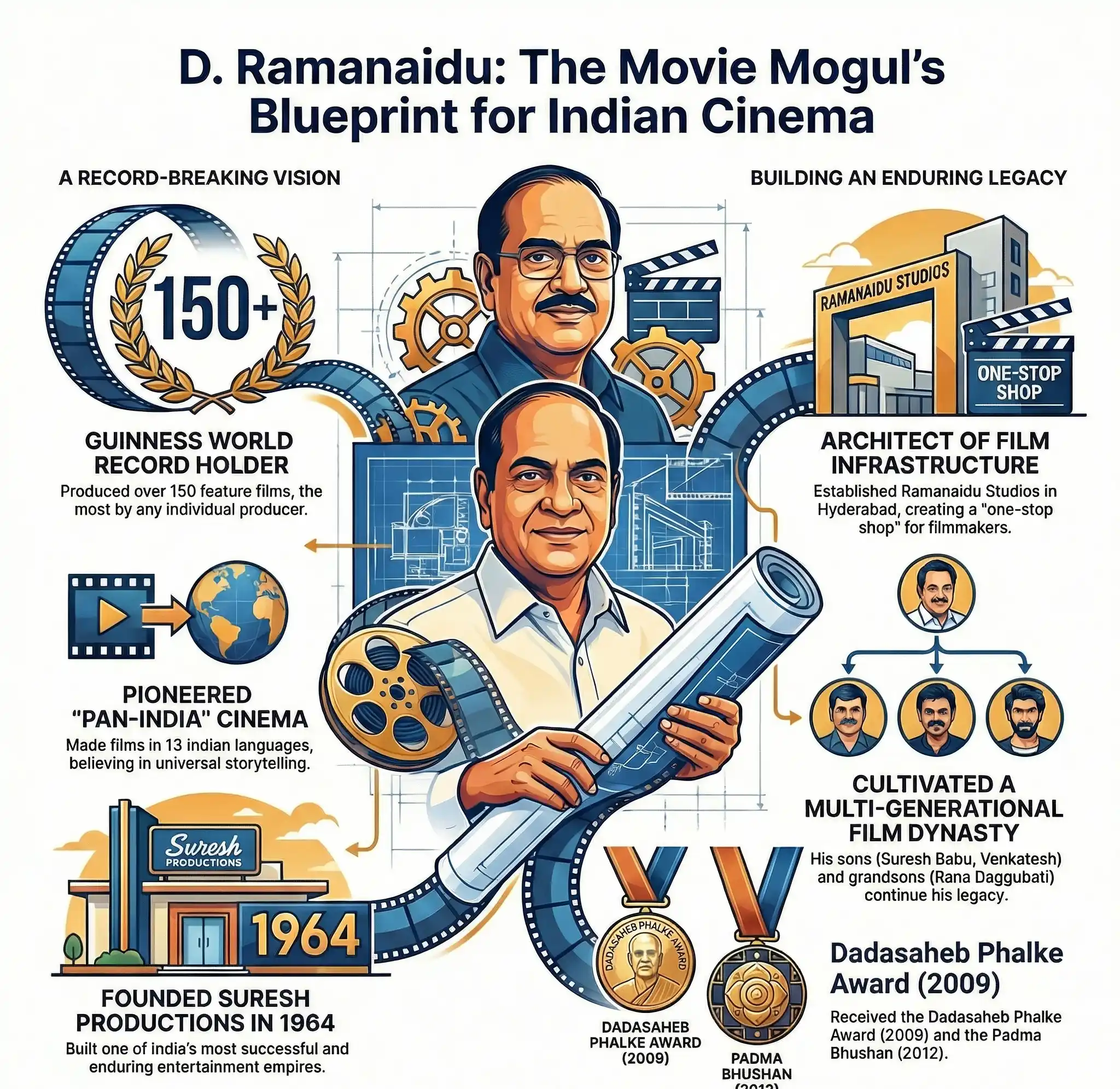
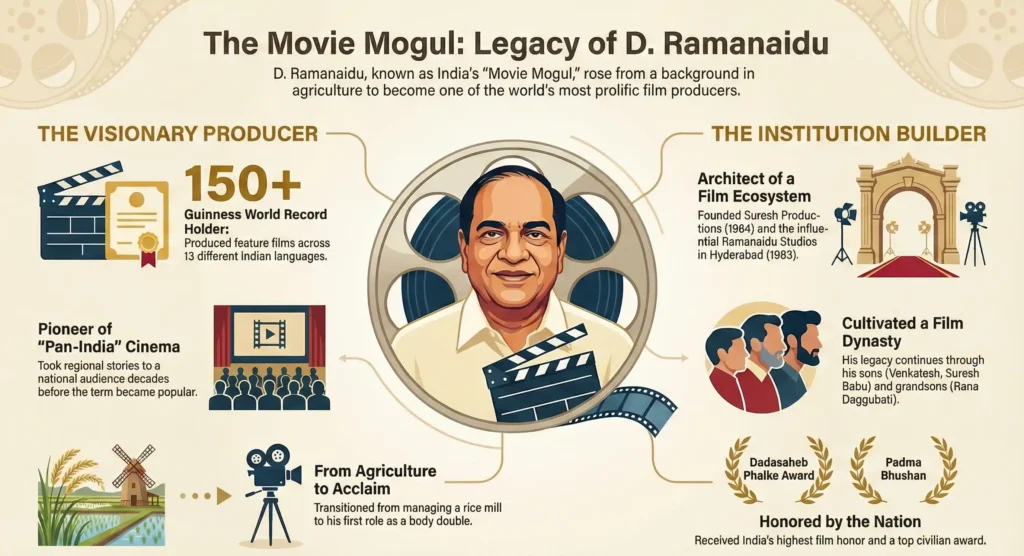
D. Ramanaidu was a legendary figure in Indian cinema whose influence transcended linguistic and regional borders. Known as the "Movie Mogul," he transitioned from a background in agriculture and transport to become one of the most prolific film producers in the world. By founding Suresh Productions and building state-of-the-art studios in Hyderabad, he created a self-sustaining ecosystem for cinema. His relentless pursuit of diverse storytelling led him to produce films in thirteen different languages, earning a prestigious spot in the Guinness World Records. Beyond business, his legacy is defined by his contribution to the cultural fabric of India and the success of the multi-generational Daggubati film family.| Feature | Details |
| Full Name | Daggubati Ramanaidu |
| Known As | Movie Mogul |
| Born | June 6, 1936 |
| Founder of | Suresh Productions (1964) |
| World Record | Highest number of films by a producer (150+ films) |
| Key Awards | Dadasaheb Phalke Award (2009), Padma Bhushan (2012) |
| Political Office | Member of Parliament, Bapatla (1999–2004) |
The Extraordinary Journey of an Indian Cinema Titan
The foundations of the D Ramanaidu movie legacy were laid not in a grand studio, but in the fertile agricultural lands of Karamchedu, Andhra Pradesh. Born into a modest family in 1936, young Ramanaidu’s early life was defined by the rhythms of rural tradition and hard work. While he initially managed his father’s rice mill and transport business, fate intervened during a chance encounter with the film industry in 1958. His family co-produced the film Nammina Bantu, where Ramanaidu actually served as a body double for the legendary actor Akkineni Nageswara Rao. This brief brush with the camera ignited a passion that would eventually transform the entire landscape of Indian filmmaking.
In 1962, fueled by an unshakeable ambition, he moved to Chennai, which was then the beating heart of the South Indian film world. Two years later, he founded Suresh Productions, naming the company after his eldest son. The first production, Anuragam, was a commercial disappointment, but Ramanaidu was not a man to be deterred by initial setbacks. He doubled down on his vision with the 1964 film Ramudu Bheemudu, starring the iconic N.T. Rama Rao. The film became a massive hit, providing the financial and creative momentum required to build what would become one of India’s most successful entertainment empires.
6 Unfoldings in the Subrahmanyan Chandrasekhar Biography
Breaking Barriers: A Guinness World Record in Languages
One cannot discuss the D Ramanaidu movie legacy without highlighting his unparalleled record of producing films in thirteen different Indian languages. At a time when most producers were content to dominate their local regional markets, Ramanaidu viewed the entire Indian subcontinent as his audience. He believed that the core human emotions of love, betrayal, and heroism were universal. If a story resonated with a farmer in Andhra Pradesh, he saw no reason why it shouldn’t touch a heart in Bengal or Punjab.
This linguistic versatility was not just a business strategy; it was a cultural mission. By producing films in Telugu, Tamil, Hindi, Kannada, Malayalam, Bengali, Oriya, Marathi, and even English, he effectively pioneered the “Pan-India” concept decades before it became a modern industry buzzword. His inclusion in the Guinness World Records for producing more than 150 feature films remains a testament to his work ethic and his commitment to the democratic spread of entertainment. Every film he produced was a brick in the wall of a legacy that championed diversity and regional pride.
The Architect of Modern Film Infrastructure
Beyond the box office numbers, the D Ramanaidu movie legacy is defined by the physical infrastructure he built to support future generations of filmmakers. In 1983, when most major studios were still concentrated in Chennai, Ramanaidu took a bold step by establishing Ramanaidu Studios in Hyderabad. This move was instrumental in shifting the center of gravity for the Telugu film industry, helping Hyderabad evolve into the global cinema hub it is today.
His studios were designed to be more than just shooting locations; they were “one-stop shops” for filmmakers. From high-end post-production facilities to diverse outdoor sets that could mimic a village square or a modern city street, Ramanaidu Studios offered everything a creative mind needed to bring a vision to life. He was known for his “producer-first” mentality, often walking through the sets himself to ensure that every shoot was running efficiently. His business acumen ensured that Suresh Productions didn’t just survive the volatile shifts of the market—it thrived, maintaining an astounding success rate that was the envy of his peers.
Cultivating a Dynasty of Talent
A legacy is often measured by the people it leaves behind, and in this regard, the Daggubati family stands as a towering pillar of the Indian film industry. Ramanaidu didn’t just build a company; he nurtured a family of storytellers. His eldest son, D. Suresh Babu, took over the management of Suresh Productions with the same strategic precision as his father. His younger son, Venkatesh Daggubati, became one of the most beloved leading men in Telugu cinema, known for his versatility and family-friendly appeal.
The influence of the D Ramanaidu movie legacy extends into the third generation with his grandsons, Rana Daggubati and Naga Chaitanya. Rana, in particular, has carried his grandfather’s vision of crossing boundaries, becoming a global icon through films like Baahubali. Ramanaidu often spoke about how his family’s success was his greatest achievement. He viewed his role as a patriarch and a mentor with the same level of seriousness as his role as a producer, ensuring that the values of discipline, punctuality, and creative integrity were passed down through the bloodline.
7 Incredible Facts in the Satyendra Nath Bose Biography
A Career Honored by the Nation
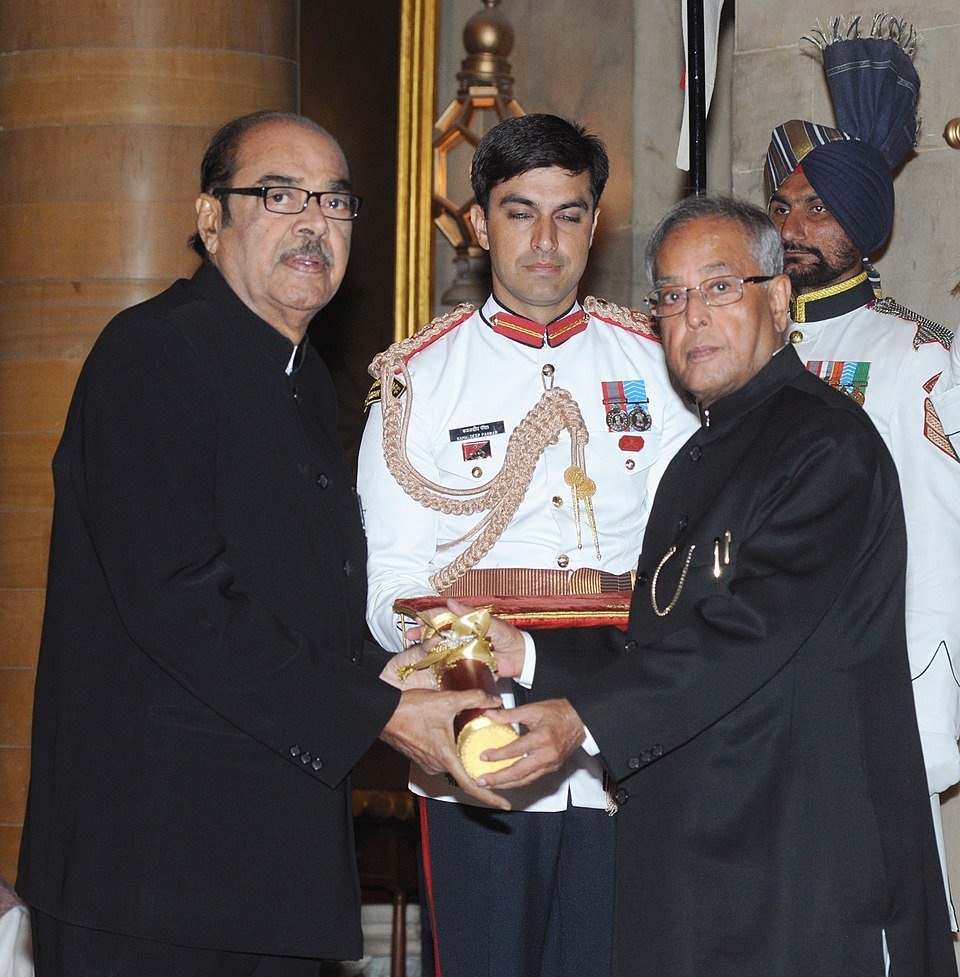
The magnitude of D. Ramanaidu’s contribution was officially recognized with the highest civilian and artistic honors in India. In 2009, he was conferred with the Dadasaheb Phalke Award, the highest honor in Indian cinema, for his lifetime contribution to the medium. This was followed in 2012 by the Padma Bhushan, India’s third-highest civilian award. These accolades were not just for his productivity, but for his role as a cultural bridge-builder who used cinema to unify a diverse nation.
His foray into politics in 1999 as a Member of Parliament for the Telugu Desam Party was another facet of his commitment to public service. Even in the halls of the Lok Sabha, he remained a champion for the arts and for the welfare of his constituency. Whether through his films or his political work, he remained focused on the “common man,” ensuring that his work always remained accessible and impactful. When he passed away in 2015, the industry didn’t just lose a producer; it lost its North Star.
8 Fascinating Facts in the Homi Jehangir Bhabha Biography
Quick Comparison: Content Depth vs. Fast Facts
| Comparison Point | Main Article Narrative | Curious Indian Fast Facts |
| Scope of Story | A deep narrative dive into his emotional and business journey. | A concise bulleted list of essential milestones. |
| Language Context | Explains the “why” behind producing in 13 languages. | Simply lists the number of languages as a record. |
| Legacy Focus | Explores the impact on the Daggubati dynasty and studios. | Highlights individual awards and specific family names. |
| Origin Detail | Details his work as a body double and rice mill owner. | Focuses on his background in agriculture and transport. |
Curious Indian: Fast Facts
- Agricultural Roots: Before the glitz of cinema, Ramanaidu ran a rice factory and a transport business in Andhra Pradesh.
- Body Double: He made an uncredited appearance as a body double for Akkineni Nageswara Rao in the 1958 film Nammina Bantu.
- Guinness Record Holder: He produced over 150 films across 13 Indian languages, a feat recorded in the Guinness Book of World Records.
- Political Career: He served as a Member of Parliament (MP) for the Bapatla constituency from 1999 to 2004.
- The Suresh Name: He founded Suresh Productions in 1964, naming it after his eldest son, D. Suresh Babu.
- Philanthropy: He established the Ramanaidu Charitable Trust in 1991, which contributes significantly to healthcare and education.
Conclusion
The D Ramanaidu movie legacy is a testament to the fact that a single visionary can change the course of an entire industry. From his humble beginnings in a village to the pinnacle of world records, his journey reflects the spirit of modern India—resilient, diverse, and ambitious. He proved that cinema is a language of its own, capable of uniting a billion people. As Suresh Productions continues to break new ground under the leadership of his descendants, the spirit of the “Movie Mogul” remains the foundation of everything they achieve.
8 Remarkable Secrets in the Jagadish Chandra Bose Biography
If you think you have remembered everything about this topic take this QUIZ
Results


#1. Before becoming a world-renowned producer, D. Ramanaidu had a very different career background. What was it?
#2. What unusual role did D. Ramanaidu play in his first ‘brush with the camera’ in 1958?
#3. D. Ramanaidu holds a Guinness World Record for producing the highest number of films. In how many different languages did he produce movies?
#4. Which major Indian city evolved into a global cinema hub largely due to Ramanaidu establishing a state-of-the-art studio there in 1983?
#5. D. Ramanaidu founded Suresh Productions in 1964. Who was the company named after?
#6. In 1999, D. Ramanaidu expanded his career into public service by serving as a Member of Parliament (MP). Which constituency did he represent?
#7. Which of his grandsons has crossed global boundaries to become an icon through films like ‘Baahubali’?
#8. Which prestigious honor did D. Ramanaidu receive in 2009 for his lifetime contribution to Indian cinema?
How many films did D. Ramanaidu produce?
D. Ramanaidu produced more than 150 films throughout his career, which earned him a place in the Guinness World Records for the highest number of films produced by an individual.
Which languages were included in the D Ramanaidu movie legacy?
His filmography spans 13 languages, including Telugu, Tamil, Hindi, Kannada, Malayalam, Bengali, Oriya, Marathi, Gujarati, Bhojpuri, Assamese, Punjabi, and English.
Is the actor Venkatesh related to D. Ramanaidu?
Yes, the acclaimed actor Venkatesh Daggubati is the younger son of D. Ramanaidu. His elder brother, D. Suresh Babu, is a successful producer.
What are the major awards received by D. Ramanaidu?
He was honored with the Dadasaheb Phalke Award in 2009 and the Padma Bhushan in 2012 for his monumental contributions to Indian cinema.
Read More: https://curiousindian.in/rishi-kapoor/