How India endured the pandemic, and what its people showed one another
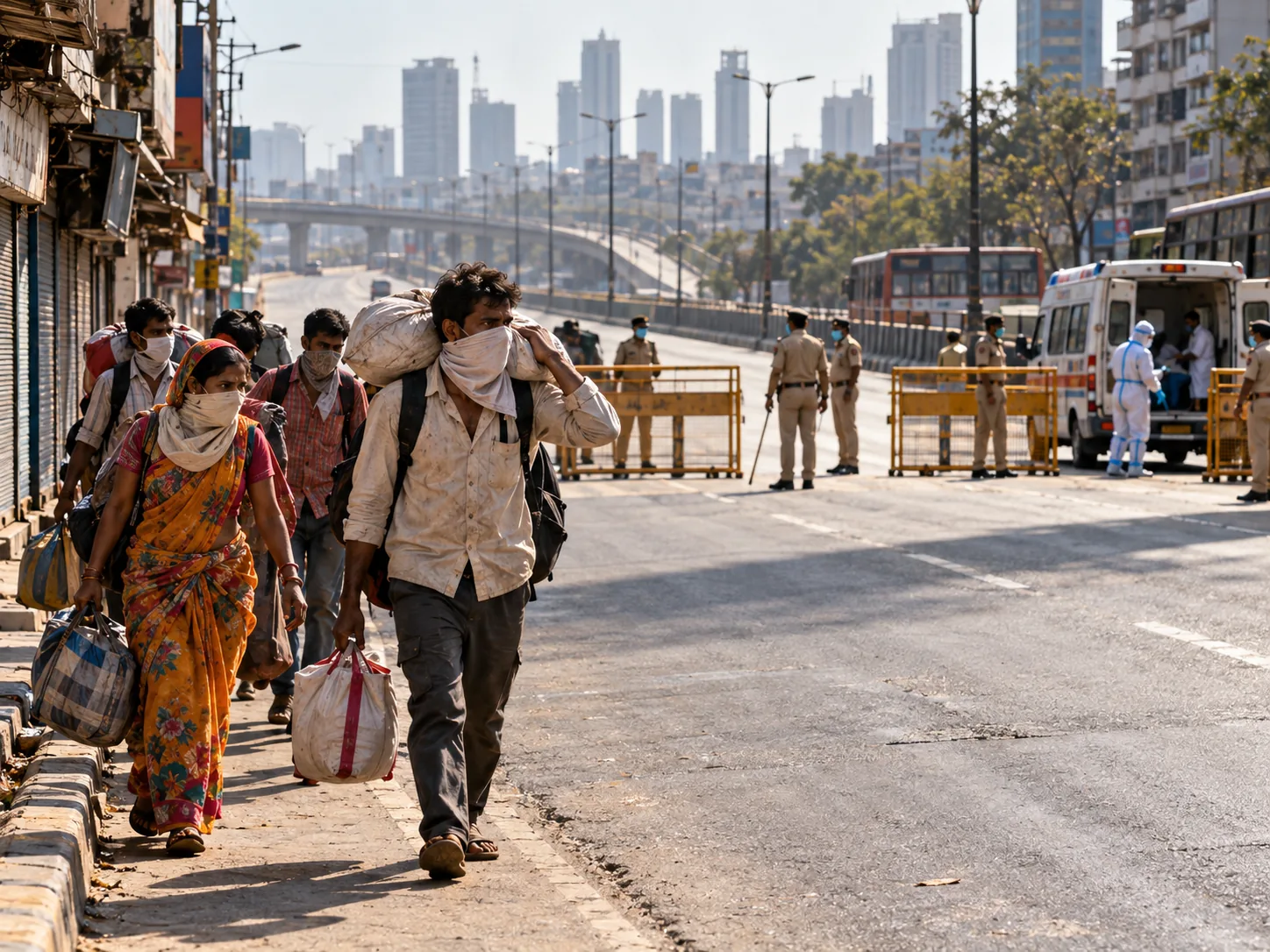
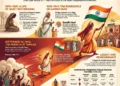
In the spring of 2020, on the strangely empty highways of India, a sight appeared that the country will never forget. Millions of people, walking.
Whole families, on foot, carrying small children on their shoulders and their entire lives in bundles on their heads, walking out of the great cities and back toward the villages they had once come from, along hundreds of kilometres of scorching road. They were the migrant workers, the men and women whose labour built and cleaned and fed the cities. When a sudden nationwide lockdown shut everything down to slow a spreading virus, they lost their jobs, their wages and their rented rooms overnight. The trains and the buses stopped. And so, with nowhere else to turn and no other way to get there, they simply began to walk.
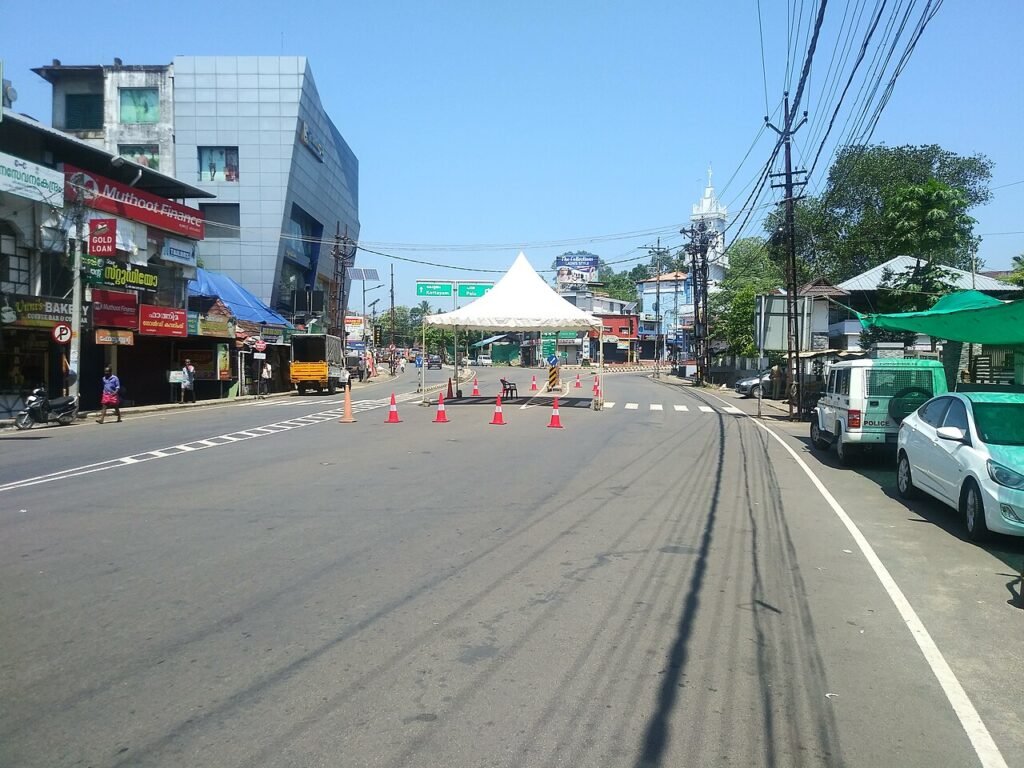
Empty street during COVID-19 pandemic lockdown in India @ Ponkunnam.jpg Related to article: The Long Walk Home · Source: Wikimedia Commons · Praveenp · CC BY-SA 4.0
Some of them, exhausted and hungry, would die on the road before they ever reached home.
That long walk became the human face of India’s pandemic. This is the story of that time. Not of the policies and the numbers, but of the people: of what the pandemic did to them, and, above all, of what they did for one another.
The invisible enemy
In early 2020, a new virus that had emerged the previous winter spread across the whole world, and it reached India as it reached everywhere else.
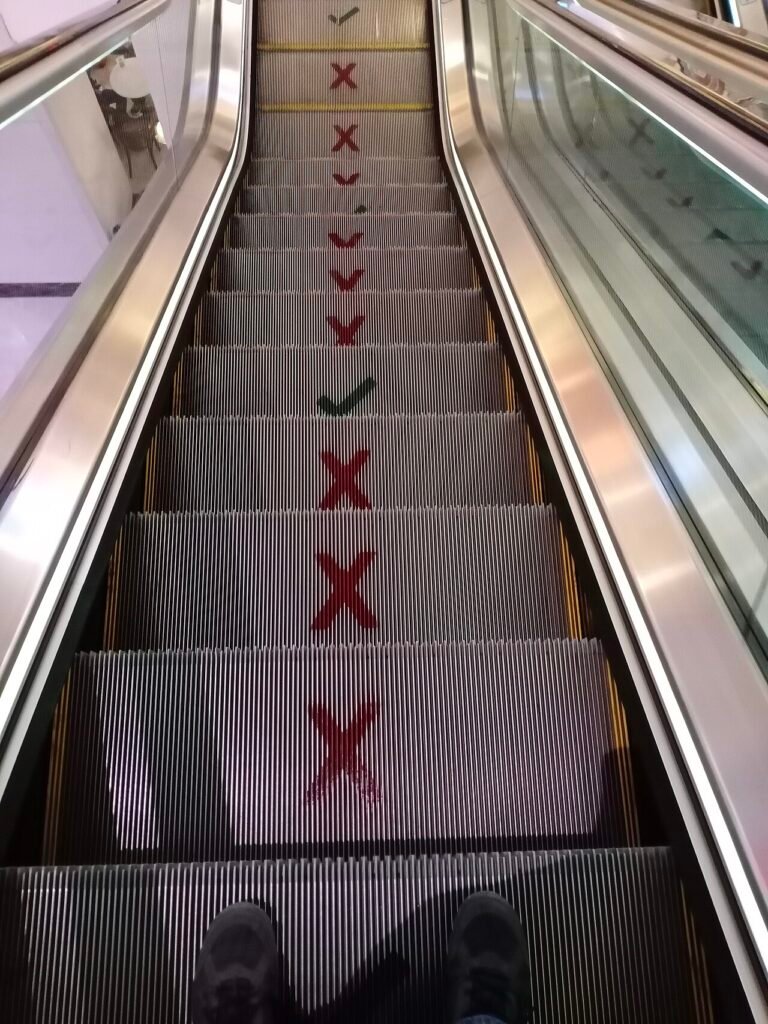
Delhi mall escalator covid signs social distancing.jpg Related to article: The Long Walk Home · Source: Wikimedia Commons · DiplomatTesterMan · CC BY-SA 4.0
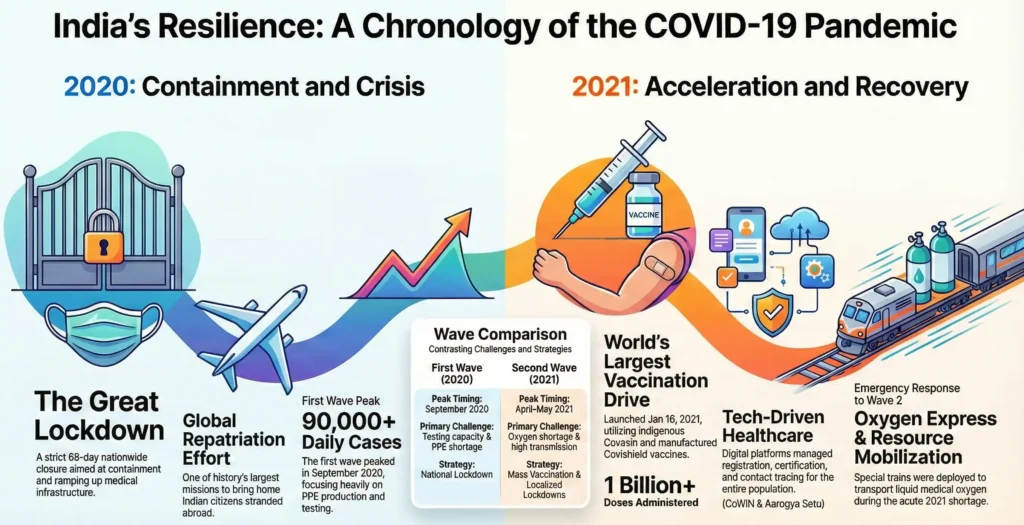
It was a frightening thing. It was invisible, barely understood, with no cure and no vaccine, and it could fill the lungs of a healthy person and kill them within days. To slow its spread, India did what much of the world was doing, and imposed a lockdown, ordering more than a billion people to stay inside their homes. For a country of that size, it was a staggering thing even to attempt, and its purpose was a humane one: to save lives by keeping people apart.
But in a land where hundreds of millions of people live hand to mouth, earning each day the food they will eat that night, shutting everything down carried a second, brutal edge. The virus threatened everyone’s health. The stopping of the world threatened the poor with something more immediate. It threatened them with hunger.
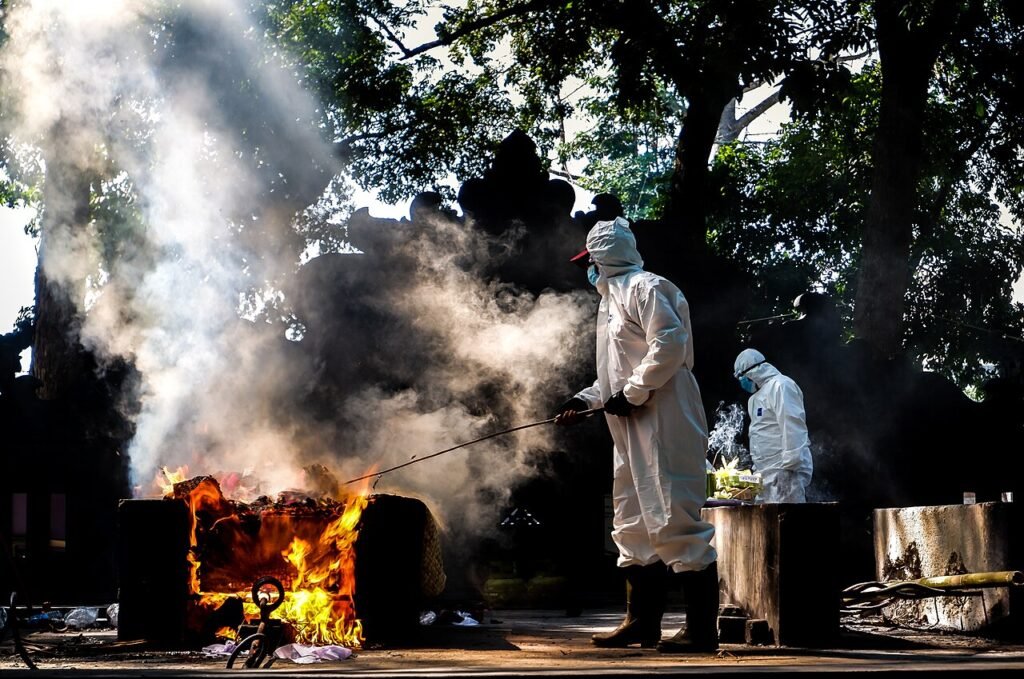
Coal Fire and Covid 19.jpg Related to article: The Long Walk Home · Source: Wikimedia Commons · Anis Mujahid Akbar · CC BY-SA 4.0
The long walk
The people who paid the steepest price for the lockdown were the ones who had the least to begin with.
Tens of millions of migrant workers had left poor villages to find work in distant cities. Now, in a matter of days, they had no work, no wages, and no way to pay the rent on the cramped rooms they shared. Stranded, frightened, and wanting only to be with their families if the worst should come, and with all transport halted, they set out on foot. Some faced journeys of hundreds, even a thousand, kilometres. They walked in the punishing heat, along railway lines and empty motorways, carrying their children and their few belongings, hungry and blistered and afraid.
They walked because there was nothing else to do, and because home was where the people who loved them were. Some lay down exhausted along the way and did not get up again.
INDIA, Colonial. British India. temp. Victoria. 1837-1901. Seal Matrix. Seal of judge Shar’ Nabi Mir Fateh Allah. Probably for use in Sind, Balochistan, or Punjab. Dated AH 1260 (AD 1844) (1114 1).jpg Related to article: The Long Walk Home · Source: Wikimedia Commons · Shar’ Nabi Mir Fateh Allah · CC BY-SA 2.5
And yet the road held another sight too, alongside the suffering. All along those routes, ordinary Indians, many of them poor themselves, came out to the roadside with whatever they had: water, food, tea, slippers for bleeding feet, a lift in a truck for a few miles. In the middle of a catastrophe, strangers fed strangers. It would not be the last time that happened.
The spring of grief
After that first wave eased, the country began, cautiously, to hope. And then, in the spring of 2021, came something far worse.
A new and more vicious wave of the virus swept across India with terrifying speed, and in many places the health system simply broke beneath it. Hospitals filled, and then overflowed, and then could take no more. And the thing that ran out, the thing whose sudden scarcity became the nightmare of that season, was oxygen.
Across the country, desperate families went searching for a cylinder of oxygen to keep a gasping mother or father or child alive, and too often could not find one in time. It was a season of grief on a scale that is hard to hold in the mind. The official count of the dead ran into the hundreds of thousands, and the true number was almost certainly far higher. Behind each one was a person, and a family whose loss the rest of us, who were spared, can only begin to imagine.
There is no way to write about that spring that does justice to it. It is enough to say that a great many people died who did not have to, and that a great many more will carry the grief of it for the rest of their lives.
And here, in the very darkest hour, is the part of the story that matters most, and that must never be forgotten.
As the official systems buckled under a weight no system could have easily borne, ordinary people rose up to save one another. Across the country, strangers organised themselves, over their phones and across social media, into vast and spontaneous networks of help. Young people gave up their sleep for nights on end, working the phones to track down an oxygen cylinder or a hospital bed for a family they had never met and would never meet. Restaurants and temples and gurudwaras and ordinary kitchens cooked and carried food to the sick and the shut-in. People rolled up their sleeves to donate blood plasma for strangers.
And through all of it, the doctors and the nurses, the ward boys and the ambulance drivers and the sanitation workers, went in to work, day after exhausting and dangerous day, standing between the virus and the rest of us. Many of them caught it. Many of them died. They were, quite simply, the people who did not run.
A pandemic has no face to hate and no army to fight. What India discovered, in the worst of it, was that the only thing that could stand against a faceless catastrophe was ordinary people refusing to abandon one another.
The great vaccination
In time, the tide turned, and it turned in large part because of one of the largest human efforts of its kind the world has ever seen.
India, long one of the great vaccine-making nations of the world, produced the new vaccines by the billion, and then set about the staggering task of putting a dose into the arm of a country of 1.4 billion people, reaching out even to its remotest villages to do it. It was a colossal undertaking of science, organisation and sheer determined labour, carried out by an army of health workers, and it did more than anything else to bring the pandemic, at last, to heel.
So what is worth remembering about those two long, hard years?
The numbers, vast and uncertain as they are, cannot hold it. Behind every one of them was a whole world: a grandmother, a young father, a friend, gone, and a family left with a grief the rest of us can only guess at. So the first thing to remember is simply them, the dead, and to hold them with the tenderness they are owed.
But the second thing to remember is the answer that the living gave. A pandemic cannot be reasoned with, or defeated by any one person alone. And what it laid bare, in India as everywhere on earth, was the oldest truth there is: that in the face of a disaster none of us can face alone, the only thing that saves us is each other. The doctor who would not stop. The stranger who found the oxygen at three in the morning. The poor family that came to the roadside to feed the walkers. The neighbour who left a plate of food at a locked and frightened door.
The migrant workers walked home because home was where the people who loved them were. And in its own way, the whole country walked a long road home in those years, and what carried it, step by weary step, was one another.
That is what the pandemic took from India, in such terrible numbers, the people we loved. And, strangely and quietly, it is also a part of what the pandemic gave back, written in grief and in a thousand small acts of kindness: the reminder that in the end we belong to one another, and that this belonging, and nothing grander, is the only real shelter any of us has ever had.
If you think you have remembered everything about this topic take this QUIZ
Results
QUIZ START
#1. When was the first confirmed case of COVID-19 reported in India?
Previous
Next
#2. On which date did the nationwide lockdown officially begin in India?
Previous
Next
#3. What was the name of the digital platform that served as the backbone for India’s vaccination registration?
Previous
Next
#4. Which massive repatriation mission was launched to bring back Indians stranded abroad during the lockdown?
Previous
Next
#5. India launched the world’s largest vaccination drive on which date?
Previous
Next
#6. What was a primary challenge specifically associated with the Second Wave (2021) in the text?
Previous
Next
#7. Under which initiative did India export millions of vaccine doses to friendly nations?
Previous
Next
#8. The voluntary “Janata Curfew” observed by nearly 1.3 billion people took place on:
Previous
Finish
When was the first COVID-19 case reported in India?
The first case was reported on January 30, 2020, in Kerala.
What was the Janata Curfew?
It was a voluntary 14-hour public curfew observed on March 22, 2020, to prepare the nation for the subsequent lockdown.
Which vaccines were primarily used in India?
The two main vaccines used were Covishield (manufactured by Serum Institute of India) and Covaxin (developed by Bharat Biotech).
What was the Vande Bharat Mission?
It was a massive repatriation operation launched by the Indian government to bring back Indian citizens stranded abroad due to travel restrictions.
What is the CoWIN platform?
CoWIN is the digital platform used by the Indian government to manage the registration, appointment scheduling, and certification for the COVID-19 vaccination drive.
Sources & References
World Health Organization (COVID-19 in India) — the course and scale of the pandemic.
Encyclopaedia Britannica (“COVID-19 pandemic”) — the global pandemic, the lockdowns, and the waves of infection.
International Labour Organization (the pandemic’s impact on informal and migrant workers) — the crisis faced by India’s migrant workforce.
Ministry of Health and Family Welfare, Government of India (the national vaccination programme) — the scale of the vaccine drive.