How One borrowed Word came to Hold many Rival Dreams of India
Some words start a fight just by being spoken. “Nationalism” is one of them.
Everyone wants to own it. People call themselves nationalists with their chest puffed out, and hurl the word “anti-national” at their rivals like a stone. But there is a strange secret hiding inside the word. When two people say “nationalism,” they very often mean two completely different things.
This is the story of one word, and the many rival dreams of the country that people have packed inside it.
Subramania Bharati: The Mahakavi of Indian Nationalism
A word India borrowed
“Nationalism” is not an old Indian word. It arrived from Europe in the 1800s.
The European idea was roughly this: a nation is a group of people who share a land, a language and a history, and who ought to rule themselves. It was a powerful thought, and it travelled the world.
India took the word. But Indians did not fill it with just one meaning. They poured many different dreams into the same small word, and those dreams did not always agree.
The nationalism that was easy
For a long time, nationalism in India felt simple, because it had one clear enemy.
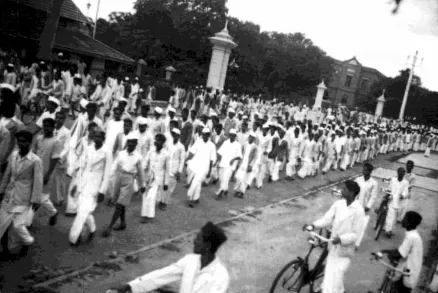
Against British rule, almost everyone could stand together. Hindu and Muslim, Sikh and Christian, rich and poor, speakers of dozens of languages, all could share one feeling: this is our country, and we want it back. That shared, anti-colonial nationalism grew huge, and in the end it won India her freedom.
But it hid a much harder question underneath. Once the British were gone, what exactly was this nation supposed to be? On that, Indians held very different answers.
Dream one: the nation of everyone
The first dream is the composite one, carried by people like Jawaharlal Nehru and, in his own way, Mahatma Gandhi.
In this dream, India is one country because so many different kinds of people choose to share it. Its variety is its strength. A Hindu, a Muslim, a Tamil, a Naga are all equally and fully Indian, held together by shared rules and respect rather than by one religion or one language.
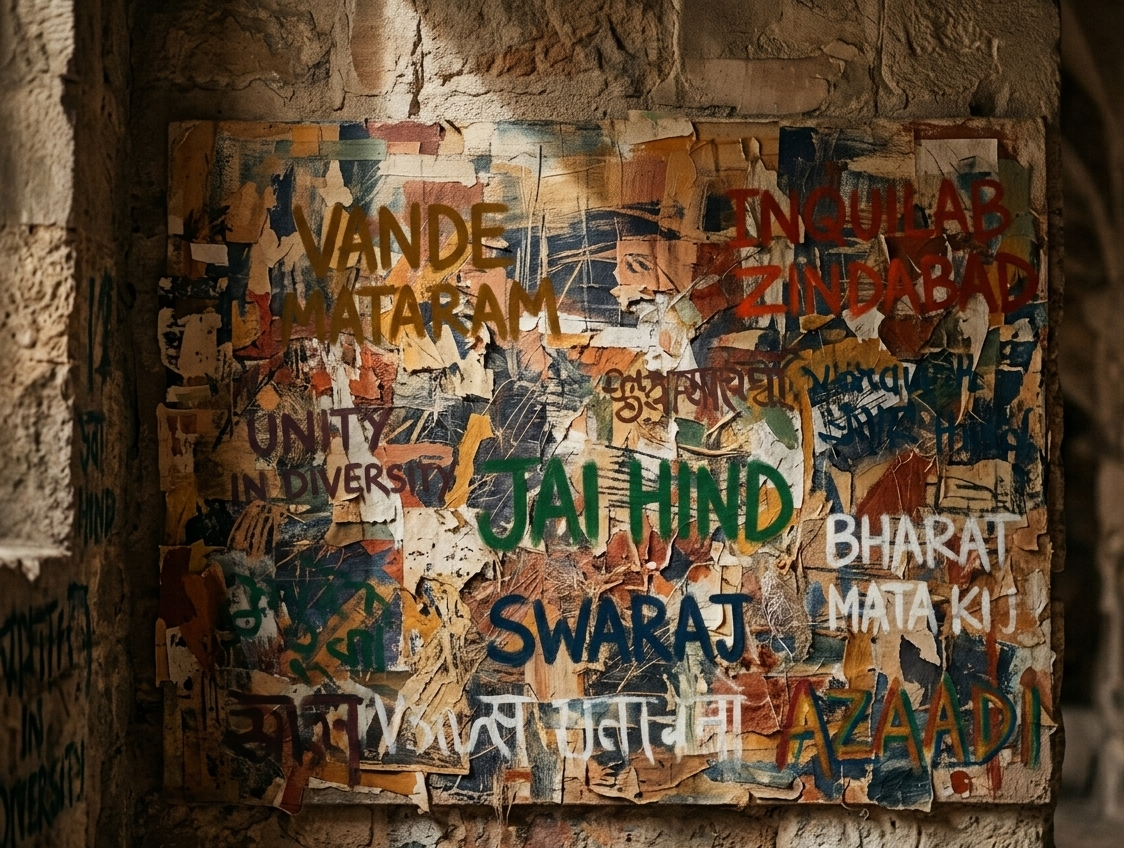
This is the dream that was written into the Constitution: many peoples, one country, unity in diversity.
Dream two: the nation of one civilisation
The second dream is Hindu nationalism, often called Hindutva.
In 1923, a thinker named V.D. Savarkar wrote a book that gave this idea its shape. His argument was that India is, at its heart, a Hindu civilisation, and that this shared culture is what truly makes it one nation.
In his 1923 book, Savarkar defined a Hindu as a person whose fatherland and holy land both lie within India.
By that test, Hindus, Sikhs, Buddhists and Jains belonged to the core of the nation, because their faiths were born in this land. Muslims and Christians, whose holiest places lie outside India, sat outside that core. Savarkar’s aim was to gather Hindus, long divided by caste, into one strong and united people. Today this dream is carried by groups like the RSS, founded in 1925, and is the guiding idea of the ruling BJP. To those who hold it, it is the truest form of love for the country.
These first two dreams are both sincere, and both are held by people who love India with all their heart. They simply disagree about the deepest question: what holds the nation together? Shared values and difference, or a shared civilisation?
India. Source: Wikimedia Commons
Why the Poetry of Faiz Ahmad Faiz Still Resonates in Modern Protests
Dream three: a separate nation
A third answer was the sharpest of all.
Muhammad Ali Jinnah and the Muslim League came to argue that Hindus and Muslims were not one nation at all, but two, too different to live under a single government. This became known as the “two-nation” idea.
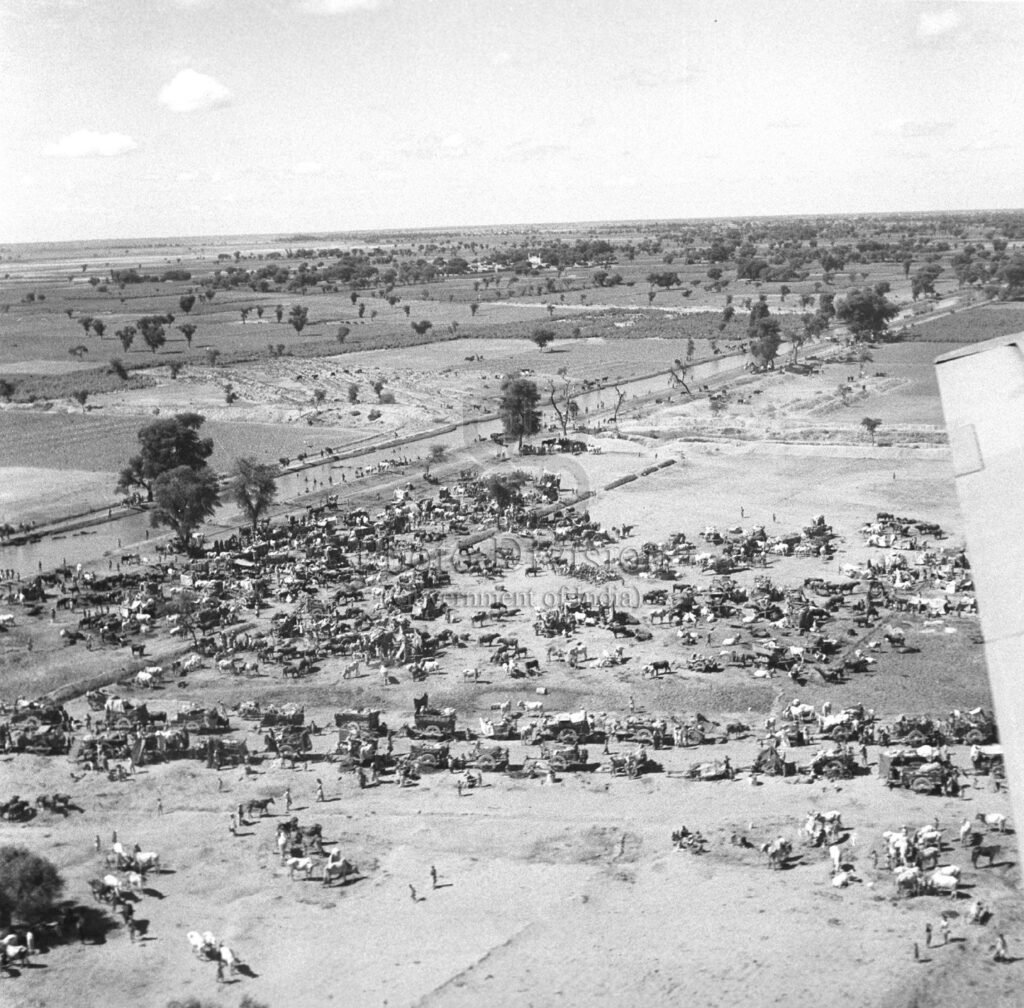
It was a rival dream that did not want to share the country, but to split it. In 1947 it led to the creation of Pakistan and the painful tearing apart of the land, a wound the subcontinent still carries.
The poet who distrusted the whole idea
Then there was a man who looked at all these dreams and grew uneasy with the word itself.
Rabindranath Tagore, in a set of lectures he gave in 1917, warned that loving your country and worshipping “the Nation” are not the same thing. He feared the nation could turn into a cold, greedy, angry machine, and that bowing down to it could make good people cruel. He had just watched nationalism help set the whole world on fire in a terrible war.
Tagore loved India deeply. He simply did not trust the -ism, and he wanted people to hold on to their humanity first.
The reformer who asked a harder question
Bhimrao Ambedkar pressed a question that still stings today.
How, he asked, can a people call themselves one proud nation while millions among them are treated as untouchable and shut out from ordinary life? A country cracked down the middle by caste, he warned, is not yet truly a nation at all. First make people equal, he said, and then speak of unity.
His challenge was a reminder that a nation is not just a feeling. It has to be fair to everyone inside it, or the word is only half true.
How Madam Bhikaiji Cama Unfurled India’s Flag in Germany
The smaller nations inside the nation
For some Indians, the “nation” they feel first is not India as a whole. It is their own language or people, Tamil or Bengali, Naga or Kashmiri, and many more.
They ask where their smaller world fits inside the big one, and whether the giant nation will crush it or make room for it. This too is a kind of nationalism, quietly pulling in its own direction.
One word, many dreams
Whose nation? Which –ism?
Tap a dream to see what’s packed inside.
The nation of everyone
Composite nationalism
India is one country because so many different kinds of people choose to share it. Its variety is its strength — a Hindu, a Muslim, a Tamil, a Naga, all equally and fully Indian.
The nation of one civilisation
Hindutva
India is, at its heart, a Hindu civilisation, and that shared culture is what truly makes it one nation. To those who hold it, this is the truest form of love for the country.
A separate nation
The two-nation idea
Hindus and Muslims were not one nation at all, but two — too different to live under a single government. This dream did not want to share the country, but to split it.
Distrust of the –ism
Tagore’s warning
Loving your country and worshipping “the Nation” are not the same thing. The Nation could turn into a cold, greedy, angry machine, and bowing down to it could make good people cruel.
A harder question
Ambedkar’s challenge
How can a people call themselves one proud nation while millions among them are treated as untouchable? A country cracked down the middle by caste is not yet truly a nation.
Smaller nations within
Regional nationalism
For some, the “nation” they feel first is not India as a whole, but their own language or people — Tamil or Bengali, Naga or Kashmiri. They ask whether the giant nation will crush their smaller world or make room for it.
Why the word became a weapon
Now you can see why one small word can start such big fights.
When a person today shouts “nationalist” with pride or spits “anti-national” as an insult, they are almost always standing inside one of these dreams and judging everyone else by it. Someone loyal to the dream of everyone can look “anti-national” to someone loyal to the dream of one civilisation, and the other way around too.
But look closely at what is really going on. They are not usually arguing about whether to love the country, because nearly everyone does. They are arguing about which dream of the country is the real one.

The suitcase we all carry
Here is a way to hold all of this in your head. Picture the word “nationalism” as a suitcase. Everyone carries one, and every suitcase has the same label on the outside. But each person has packed something different inside.
That is why two people who both call themselves nationalists can end up shouting at each other in the street. Their labels match, but their contents do not.
So before you cheer the word, or throw it at someone as an insult, it is worth opening the suitcase and asking one simple question: whose nation, and which -ism? Once you know what a person has packed inside, you understand what they are really fighting for. And you may notice something surprising. Very often, the person arguing with you loves the same country you do. They just dream it differently.
Surya Sen: Chittagong Armoury Raid That Shook British India
If you think you have remembered everything about this topic take this QUIZ
Results


#1. Where did the concept of “nationalism” originally come from in the 1800s?
#2. What was the shared, clear enemy of early nationalism in India?
#3. Which leaders were key proponents of “composite nationalism” (the dream of everyone)?
#4. In what year did V.D. Savarkar publish his defining text on Hindutva?
#5. Which competing idea led to the creation of Pakistan in 1947?
#6. Which Indian thinker distrusted the “Nation” and warned it could become a cruel machine?
#7. B.R. Ambedkar argued that India could not be a true nation until what issue was solved?
#8. What metaphor does the article use to explain modern arguments over nationalism?
What is nationalism in India?
Nationalism in India is not a single, unified idea, but a collection of different visions for the country.
While it started as a shared anti-colonial movement against British rule, it eventually fractured into
rival dreams, including composite nationalism, Hindutva, and regional loyalties.
What is composite nationalism?
Composite nationalism is the vision supported by leaders like Jawaharlal Nehru and Mahatma
Gandhi, which believes India’s diversity is its greatest strength. It argues that people of all religions,
languages, and cultures are equally Indian, held together by shared constitutional rules and mutual
respect.
What did V.D. Savarkar mean by Hindutva?
In his 1923 book, V.D. Savarkar defined Hindutva as the belief that India is fundamentally a Hindu
civilisation. He argued that true nationhood is based on a shared culture and history, uniting those
whose faiths were born within the Indian subcontinent.
Why did Rabindranath Tagore criticize nationalism?
In his 1917 lectures, Rabindranath Tagore warned that worshipping the “Nation” could turn into a
mechanical, greedy, and aggressive force. Watching the devastation of the First World War, he
feared that blind nationalism could make otherwise good people cruel.
What was B.R. Ambedkar’s view on Indian nationalism?
B.R. Ambedkar challenged the idea of a united nation by pointing out the deep, painful divisions
caused by the caste system. He argued that a society cannot call itself a true nation until it treats
all its citizens with equality and eradicates untouchability
Sources and references
- Britannica (“Hindutva”) and Wikipedia (“Essentials of Hindutva”) — the coining of Hindutva by V.D. Savarkar in his 1923 pamphlet, his definition of a Hindu through fatherland and holy land, the inclusion of Sikhs, Buddhists and Jains, and the association of Hindutva today with the RSS and BJP.
- PolSci Institute and ThePrint (Savarkar excerpt) — Savarkar writing the text in prison, his aim of uniting caste-divided Hindus into a single political people, his vision of a Hindu Rashtra, and the RSS being founded in 1925.
- BharatNotes (Class 11 Political Theory) and LSE Undergraduate Political Review — the contrast between composite, civic, constitutional nationalism (Nehru and Gandhi) and cultural or Hindu nationalism, and the Constitution adopting the composite vision.
- Rabindranath Tagore, “Nationalism” (1917 lectures) — his distinction between love of country and the “Nation” as a mechanical, aggressive organisation of power, and his warning that worship of the nation is morally dangerous, delivered against the backdrop of the First World War.
- Standard histories of the freedom movement and Partition — the shared anti-colonial nationalism that united communities against British rule, and the Muslim League’s two-nation theory under Jinnah leading to the creation of Pakistan in 1947.
- B.R. Ambedkar, “Annihilation of Caste” (1936) and related writings — his argument that a society divided by caste cannot be a true nation until its people are made equal.