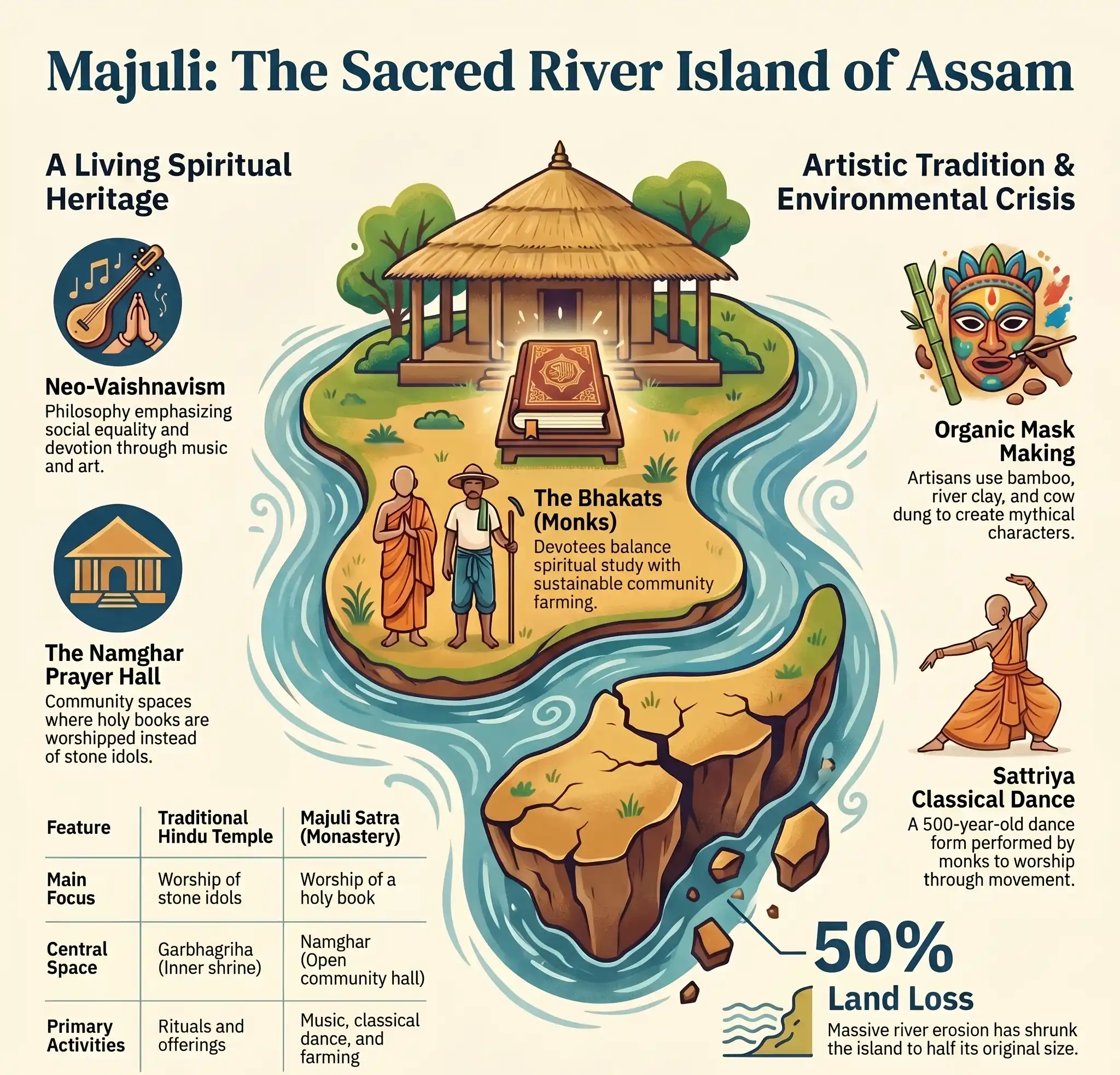
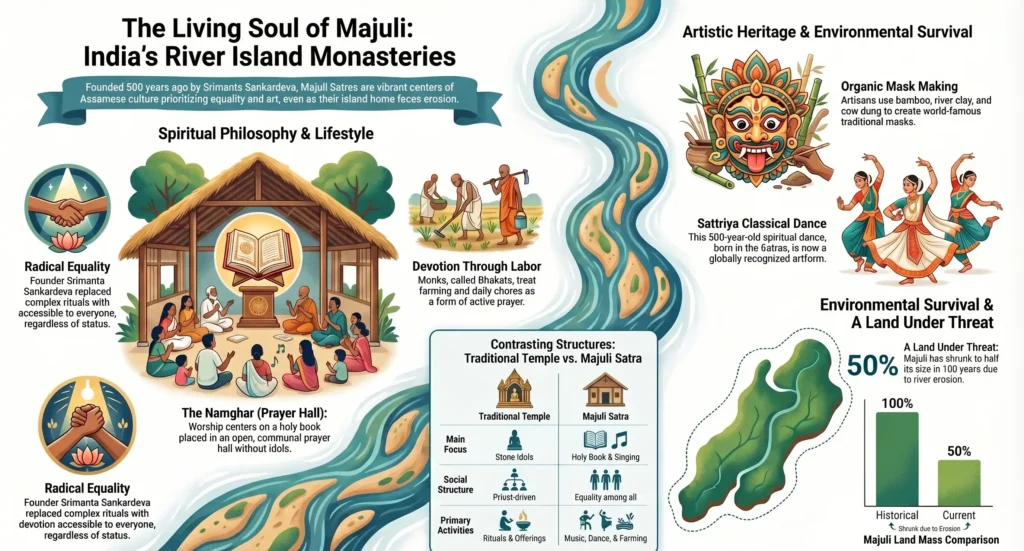
Nestled on one of the largest river islands in the world, the Majuli Island monasteries are vibrant, living centers of Assamese culture. Built over five hundred years ago by the beloved saint Srimanta Sankardeva, these spiritual hubs, locally known as Satras, teach a very simple and beautiful way of life. Instead of focusing on strict rules or complicated rituals, the monks celebrate equality and devotion to God through music, dance, and traditional crafts. Today, even as the island faces the continuous threat of river erosion, these communities hold tightly to their heritage. They offer a warm, welcoming, and peaceful escape for anyone looking to experience the pure, untouched traditions of Northeast India.| Feature | Details |
| Location | Assam, India |
| Local Name for Monastery | Satra |
| Key Founder | Srimanta Sankardeva |
| Main Philosophy | Neo-Vaishnavism (Devotion to Lord Krishna) |
| Famous Art Forms | Sattriya dance, traditional mask making |
| Major Geographical Threat | Brahmaputra river erosion |
The trip to this magical place begins with a simple wooden ferry ride. To reach the island, you must cross the mighty Brahmaputra river, a body of water so wide that it sometimes looks like the ocean. As the ferry moves slowly across the muddy, swirling water, the noisy world of cities and traffic fades away. You start to see a flat, bright green land appearing on the horizon. This is Majuli. It is a place where time seems to slow down, and nature dictates the rhythm of daily life. When you step off the boat, the fresh air and the sound of birds welcome you to a completely different world.
Right at the heart of this island are the famous Majuli Island monasteries. For hundreds of years, these spiritual centers have been the soul of the island. They are not just buildings where people go to pray. They are living, breathing communities that protect the art, culture, and history of the Assamese people. To understand the people who live here, you must understand the peaceful teachings that happen inside these walls.
To truly appreciate these places, we have to travel back in time over five hundred years. In the fifteenth century, a brilliant saint and social reformer named Srimanta Sankardeva traveled across the land. During his travels, he noticed that religion had become very complicated. Only a few powerful people were allowed to read the holy texts or enter the main temples. He wanted to change this part of the history of Indian spiritual movements. He believed that everyone, no matter if they were rich or poor, a king or a farmer, deserved a direct connection to God.
Sankardeva brought a beautiful new idea called Neo-Vaishnavism to the region. His message was incredibly simple. He taught that you do not need expensive offerings to please God. All you need is a pure heart. To bring people together, he used things that everyone loved: music, poetry, and theater. He established the first monasteries, known as Satras, as places where people could gather, learn, and sing together as equals.
When you walk into the main prayer hall of a Satra, which is called a Namghar, you will notice something very interesting. There are no large stone statues or idols. Instead, at the very center of the large room, there is a holy book placed on a special wooden stand. This book contains the teachings of devotion. The believers sit together on the floor around the book, clapping their hands and singing hymns. It is a deeply touching experience that makes everyone feel like part of one big family.
The people who live in these monasteries dedicate their lives to this peaceful path. They are called Bhakats. But unlike monks in some other traditions who spend all day sitting in silence, the Bhakats are very active. They believe that working with your hands is a form of prayer. In the early morning, after their first prayers, you will see them heading out to the fields. They grow their own rice, mustard, and fresh vegetables using sustainable farming practices.
Their daily routine is a perfect balance of work, art, and prayer. Older monks teach the younger boys how to read ancient texts, how to play traditional musical instruments like the long drum called the Khol, and how to cook large meals for the community. The older monks act as fathers, teachers, and guides to the younger ones, passing down wisdom in the gentlest way possible.
One of the most exciting things you will discover on the island is the incredible craft of mask making. Some Satras, specifically the Samaguri Satra, are world-famous for this skill. These masks are not just for decoration; they are used in traditional plays that tell stories of good defeating evil. Making these masks requires a deep understanding of traditional crafts and cultural heritage.
The process is purely organic and uses only materials found in nature. The artists start by building a frame out of thin strips of bamboo. Then, they cover the frame with layers of cloth, soft river clay, and cow dung. Once the clay dries in the sun, it becomes surprisingly hard and lightweight. Finally, the artists paint the masks using bright, natural colors made from tree bark, seeds, and leaves. When an actor wears one of these massive masks, they completely transform into mythical birds, noble kings, or scary demons.
Along with the masks, the monasteries are the birthplace of a beautiful classical dance called Sattriya. For centuries, this dance was performed only by the male monks inside the prayer halls as a way to worship Lord Krishna. The dancers wear crisp white and golden silk clothes. Their movements are graceful, controlled, and deeply expressive. Today, this dance has moved beyond the walls of the monasteries and is recognized all over the world, but its purest form remains right here on the island.
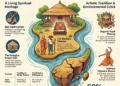
While the culture here is rich and vibrant, the island itself is facing a heartbreaking challenge. The giant river that gives the island its life is also taking it away. Every year, during the heavy monsoon rains, the river floods. When the water goes down, it pulls away large pieces of the sandy shore. This soil erosion is a serious threat. Over the last century, the island has shrunk to less than half of its original size. Many ancient monasteries have already been washed away, forcing the monks to pack up their holy books and move further inland.
Despite this danger, the people of Majuli do not easily give up. There are massive environmental conservation efforts happening to save the land. Locals are planting thousands of trees along the riverbanks to help hold the soil together. The monks continue to teach, sing, and paint, determined to keep their culture alive no matter what happens. Their positive spirit in the face of nature’s power is truly inspiring.
Quick Comparison Table
| Feature | Traditional Hindu Temple | Majuli Satra (Monastery) |
| Main Focus | Worship of stone idols | Worship through a holy book and singing |
| Social Structure | Often relies on priests | Emphasizes equality among all people |
| Primary Activities | Rituals and offerings | Music, classical dance, and farming |
| Central Space | Garbhagriha (Inner shrine) | Namghar (Open community prayer hall) |
Curious Indian: Fast Facts
- Majuli is recognized as the first island district in the country of India.
- The holy text placed in the center of the Namghar is called the Bhagavat Purana.
- The island is a paradise for bird watchers, hosting hundreds of rare migratory birds during the winter months.
- The traditional plays performed wearing the bamboo masks are known as Bhaona.
- Handloom weaving is another major craft here, with local women creating beautiful textiles from Muga silk.
- The local Mishing tribe lives harmoniously alongside the monasteries, building their houses on tall bamboo stilts to stay safe from the floods.
Conclusion
Visiting the Majuli Island monasteries is like stepping into a beautiful painting where the colors never fade. The island offers a rare and precious gift: the gift of slowing down. In our modern world, we are constantly rushing from one task to another, often forgetting to look around and appreciate the simple things. The monks of Assam teach us that true joy does not come from gathering wealth, but from sharing a song, crafting something beautiful with our hands, and treating everyone we meet as an equal.
The survival of this incredible culture is a testament to human resilience. The river may wash away the soil, but it cannot wash away the deep roots of devotion and art that Srimanta Sankardeva planted centuries ago. The sound of the Khol drum echoing across the water and the sight of bright clay masks drying in the sun remind us that traditions can survive if we protect them with love.
As we continue to explore the hidden wonders of our country, this river island stands out as a shining beacon of peace. It invites you to leave your worries on the mainland, cross the muddy waters, and sit down in the quiet halls of the Namghar. If you are seeking a place that touches the soul, the vibrant, living heart of Assam is waiting for you.
If you think you have remembered everything about this topic take this QUIZ
What is a Satra?
A Satra is a traditional monastery and cultural center in Assam. It is a place where monks live, pray, and practice arts like music, dance, and mask making, following the teachings of Srimanta Sankardeva.
How do you reach the island?
The only way to reach the island is by taking a ferry across the Brahmaputra river. Most visitors take a boat from the Nimati Ghat near the city of Jorhat.
What is the main religion practiced here?
The main faith practiced in the monasteries is Neo-Vaishnavism. It is a branch of Hinduism that focuses on simple devotion to Lord Krishna without the need for idols or complex rituals.
Why is the island shrinking?
The island is made of soft river sand and soil. Every year, massive floods during the monsoon season cause severe erosion, washing away large portions of the land into the river.
Can tourists stay inside the monasteries?
Yes, many of the larger Satras have simple guest houses. Visitors are welcome to stay, enjoy basic traditional meals, and respectfully observe the daily routine and cultural practices of the monks.