Vasco da Gama Reaches India: Four Ships That Changed the Indian Ocean
On May 20, 1498, Vasco da Gama’s fleet made landfall near Calicut (Kappad), completing the first direct European sea voyage to India by rounding the Cape of Good Hope—a breakthrough that reoriented Afro–Eurasian commerce and inaugurated a century of Portuguese naval–commercial expansion in the Indian Ocean world.
How the sea route to India opened an age of empire
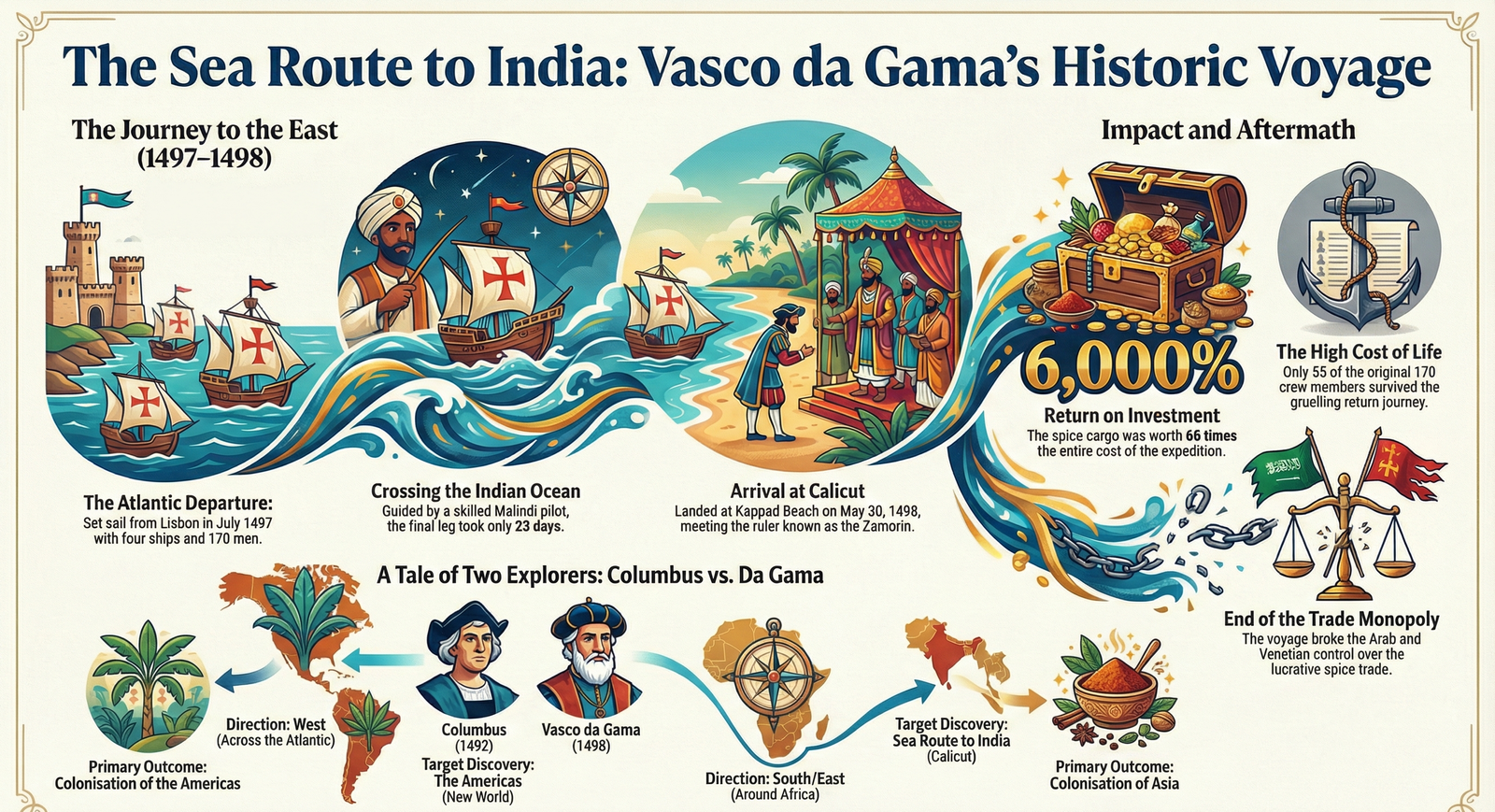
In the summer of 1497, four small wooden ships sailed out of Lisbon. About 170 men were on board. Most of them would never see home again.
They were chasing a rumour. If you sailed far enough south, right past the bottom of Africa, and then turned east, you would reach India. No one from Europe had ever done it by sea.
Portrait of Vasco da Gama, the Portuguese commander whose 1497–1499 voyage reached India by sea. Source: Wikimedia Commons · Pedro Ribeiro Simões from Lisboa, Portugal · CC BY 2.0
Ten months later, one of those ships dropped anchor off a beach in Kerala. And the world was never quite the same.
The man who led them was called Vasco da Gama. This is the story of his voyage — and of the door it opened, a door that India would not be able to close for the next four hundred years.
Why would anyone risk it for pepper?
To understand why grown men would sail off the edge of the known world, you have to understand pepper.
A map of Vasco da Gama’s route around the Cape of Good Hope to India. Source: Wikimedia Commons · Lee Cannon from Bayville aka West Fenwick, DE, USA · CC BY-SA 2.0
In Europe, spices like pepper and cinnamon were worth a fortune. People used them to flavour food, to show off their wealth, to make medicines. And they all came from the East — from India and the islands beyond it.
But Europeans could not buy them directly. The spices passed through many hands on the long trip overland — Arab traders, then merchants in cities like Venice — and each pair of hands added a price. By the time a sack of pepper reached Lisbon, it cost a small fortune.
Whoever could sail straight to India and load spices at the source would cut out every middleman in between. The profits would be almost beyond counting.
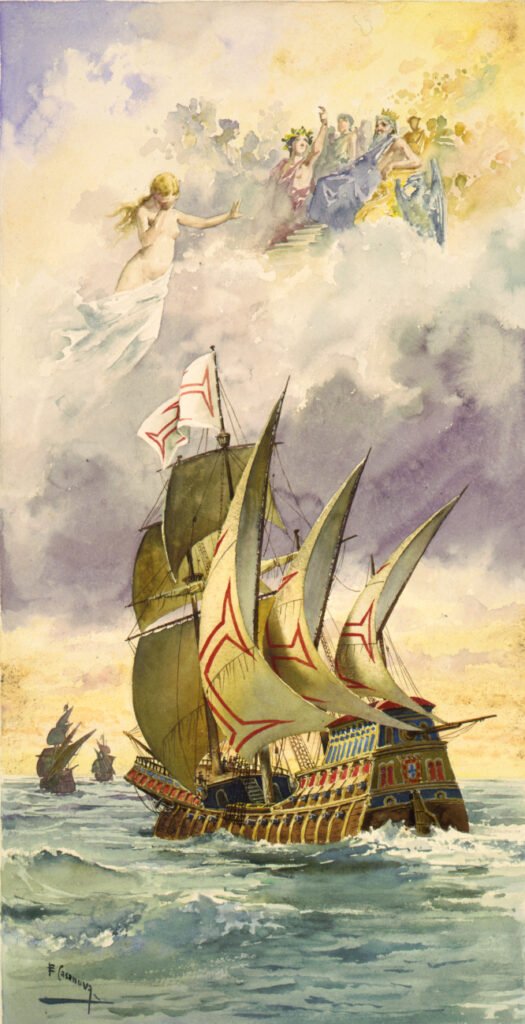
A historical representation of the ships associated with Vasco da Gama’s first voyage to India. Source: Wikimedia Commons · Ernesto Casanova · Public domain
That was the prize, and Portugal wanted it badly. After one of its captains, Bartolomeu Dias, managed to round the southern tip of Africa in 1488, the king began to believe the whole trip might actually be possible.
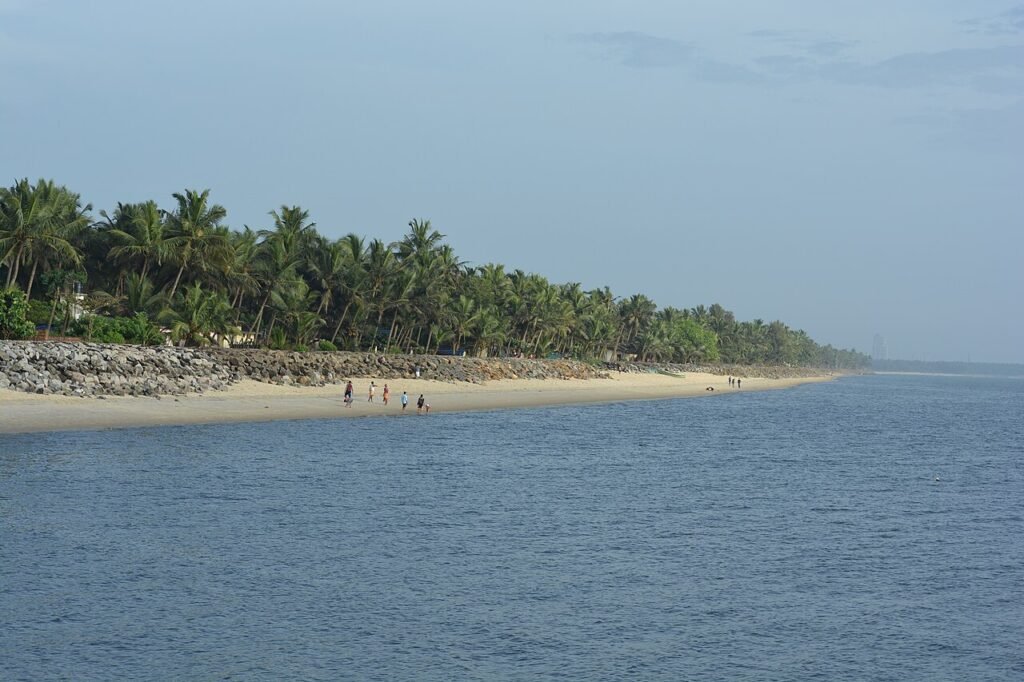
The Kappad landing memorial in Kerala, associated with Vasco da Gama’s arrival near Calicut in 1498. Source: Wikimedia Commons · SidhardhRamesh · CC BY-SA 4.0
Instead of hugging the African coast the whole way, he swung his ships far out into the open Atlantic, almost close enough to touch Brazil, to catch better winds. It was a huge, lonely loop across empty ocean. Sailors called it the volta do mar — the turn of the sea.
It worked. The ships rounded the Cape of Good Hope in November and started up the eastern coast of Africa.
There the welcome was cold. In ports like Mozambique and Mombasa, local rulers took one look at these strangers and wanted them gone. But at Malindi, in what is now Kenya, the ruler was friendly. He gave da Gama something priceless: a pilot who knew the Indian Ocean.
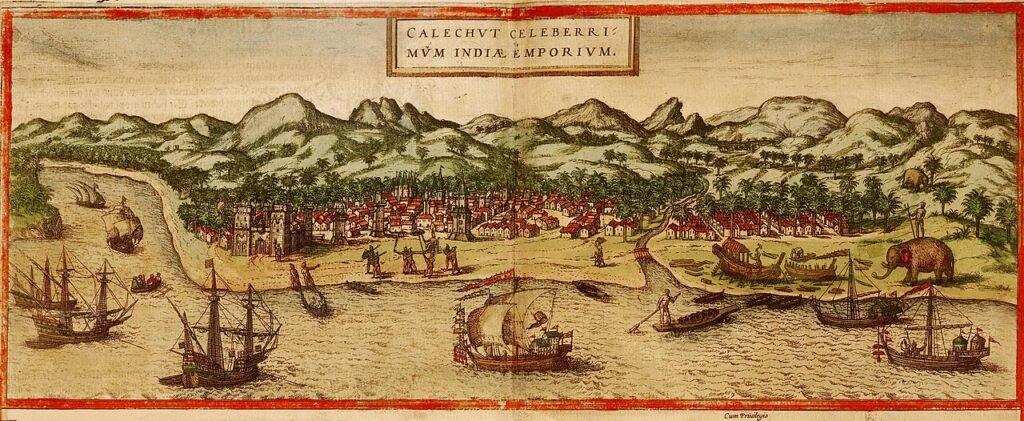
An early map or view connected with Calicut, the Malabar port where Vasco da Gama met the Zamorin. Source: Wikimedia Commons · BRAUN AND HOGENBERG, · Public domain
This pilot understood the monsoon winds — the great seasonal breath of air that, at the right time of year, blows straight across the ocean toward India. With his help, the ships crossed the last stretch in just twenty-three days.
On 20 May 1498, they anchored off Kappad, near the city of Calicut.
The meeting that went wrong
Da Gama had crossed half the planet. Now he had to actually do business. And here, the great captain stumbled.
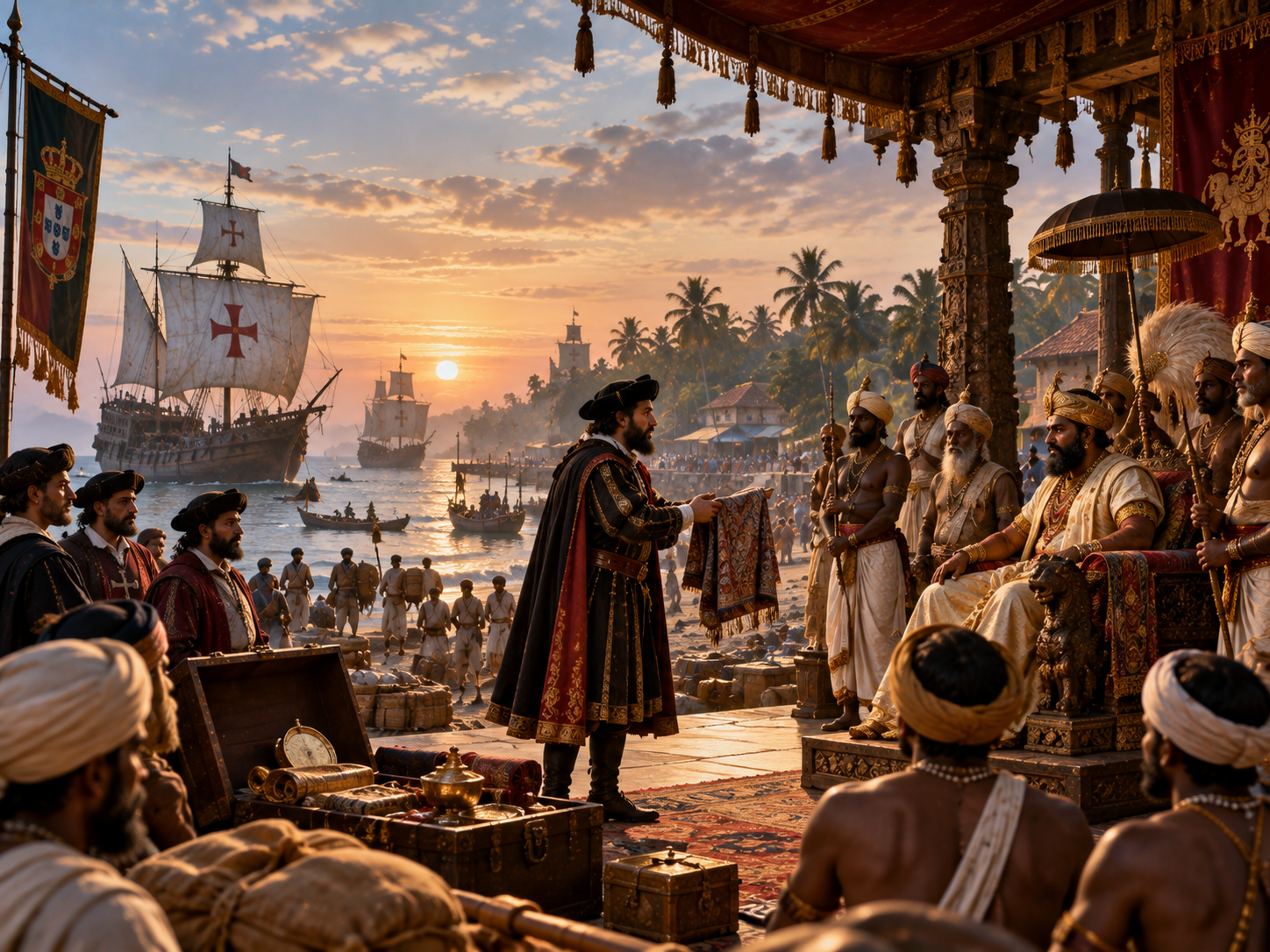
He was brought before the Zamorin, the ruler of Calicut, a rich and powerful king. It was normal to bring such a king fine gifts. So da Gama laid out what he had carried all the way from Portugal: some cloth, a little sugar and honey, and a few basins for washing hands.
These were gifts you might hand a minor chief. To an Indian king who was used to gold, jewels and the finest silk, they looked almost like an insult. The Zamorin’s own officials laughed at them.
It got worse. Calicut was already full of Muslim traders who ran the spice business, and they had no wish to share it with newcomers. They whispered against the Portuguese and worked to turn the king against them.
Still, after weeks of tension and haggling, da Gama managed to fill his holds with pepper and cinnamon. He had what he came for. Now he only had to get it home.
The journey that killed two-thirds of them
The way out had been hard. The way back was a slaughter.
Da Gama ignored what the local sailors told him about the winds and set off at the wrong time of year, straight into the teeth of the monsoon. The crossing that had taken twenty-three days on the way out now dragged on for months.
Twenty-three days to reach India. One hundred and thirty-two days to claw his way back across the same ocean.
On that endless return, a disease called scurvy crept through the ships. We know now it comes from a lack of fresh fruit and vegetables; back then it was a mystery that made men’s gums rot and their bodies fail. Sailors died week after week.
So many were gone that there were no longer enough hands to sail every ship. Da Gama had one of his own vessels, the São Rafael, emptied and burned, because there was nobody left to crew her.
Four ships and about 170 men had left Lisbon. Two ships and 55 men came home. Nearly two out of every three never returned.
When they weighed the spices da Gama had carried home, the numbers were staggering. The cargo was worth around sixty times what the whole expedition had cost — the ships, the wages, the lost men, everything.
Even after losing most of his crew and one of his ships, da Gama came home with a profit of about 6,000 per cent.
That single figure changed everything. It told Portugal, and soon the rest of Europe, that the sea road to India was not just possible. It was a river of gold.
So they came back. And the second time, they did not come to ask.
When da Gama returned in 1502, he did not arrive as a nervous trader with a bag of cheap gifts. He came with a fleet of warships and cannon. He bombarded Calicut until it agreed to trade on his terms.
The first voyage was an explorer knocking politely at the door. The second was a soldier kicking it in.
This was the start of the Estado da Índia — the Portuguese “State of India” — and of European forts and colonies on Indian soil, from Goa to Daman to Diu. Other Europeans soon followed the same sea road: the Dutch, the French, and in time the English, whose small trading company would one day rule the whole subcontinent.
The door that would not shut
So how should we remember that day on the beach at Kappad?
For Europe, it was one of the proudest moments of what they called the Age of Discovery. A brave captain, a clever route, a fortune in pepper. From their side of the water, it is a story of courage.
But history looks different depending on which shore you are standing on.
For India, that same arrival was the first thread of a net that would slowly tighten for the next four hundred years. The spices that made European food taste rich were, in the end, paid for with Indian freedom.
Vasco da Gama did not conquer India. He did something quieter, and in the long run much heavier. He found the road. And once the road was open, others would come down it who had no intention of ever leaving.
He landed at Kappad Beach, near Calicut (Kozhikode), Kerala.
Which Portuguese King sponsored the voyage?
King Manuel I sponsored the voyage.
Who was the ruler of Calicut when da Gama arrived?
The ruler was the Zamorin (Manavikrama Raja).
What was the main purpose of the voyage?
To find a direct sea route to India to trade in spices (pepper, cinnamon) and bypass the Arab/Venetian middlemen.
Sources & References
Encyclopaedia Britannica (“Vasco da Gama”) — the outline of the 1497–1499 voyage, the four ships and roughly 170 crew, the route around the Cape of Good Hope, and the arrival near Calicut on 20 May 1498.
Kerala Tourism (Kappad Beach, Kozhikode) — the landing point at Kappad and the memorial marking the spot where da Gama came ashore.
UNESCO Silk Road programme (spice routes) — the value of the spice trade and the chain of Arab and Venetian middlemen that Europe wanted to bypass.
Library of Congress (Portuguese in India) — the strained meeting with the Zamorin, the poor gifts, and the hostility of the established Muslim merchants at Calicut.