Monday, April 20, 2026
Curious Indian
  • Arts & Culture
  • Festivals of India
  • Indian History
  • Indian Politics
  • Biography
    • Entertainment Personalities
    • Science Personalities
  • Unsolved India
No Result
View All Result
  • Arts & Culture
  • Festivals of India
  • Indian History
  • Indian Politics
  • Biography
    • Entertainment Personalities
    • Science Personalities
  • Unsolved India
No Result
View All Result
Curious Indian
No Result
View All Result
Home Arts & Culture Regional Culture North East India

The Ethics Of Entomophagy In Northeast India

paripurnadatta by paripurnadatta
in North East India, Regional Culture
Reading Time: 9 mins read
0 0
A A
Ethics of entomophagy

Ethics of entomophagy

Share on FacebookShare on Twitter

Table of Contents

Toggle
  • The Sustainable Protein of the Future
  • Silk Worm Pupae The Golden Delicacy
  • Giant Water Bugs The Spicy Treat
    • Overcoming the Psychological Barrier
  • The Economic and Ethical Balance
  • A Lesson in Natural Harmony
  • Quick Comparison Table
  • Curious Indian Fast Facts
  • Conclusion
  • If you think you have remembered everything about this topic take this QUIZ
    • What exactly does the word entomophagy mean?
    • Are silk worms and water bugs actually safe to eat?
    • Why is eating insects considered better for the environment?
    • What do giant water bugs actually taste like?
    • Do people in Northeast India eat insects out of necessity?
https://open.spotify.com/episode/4YhYEI1jdFmKXY3p8d2sxN?si=_Yo1JdL6T7iw6mLyxxxRvA
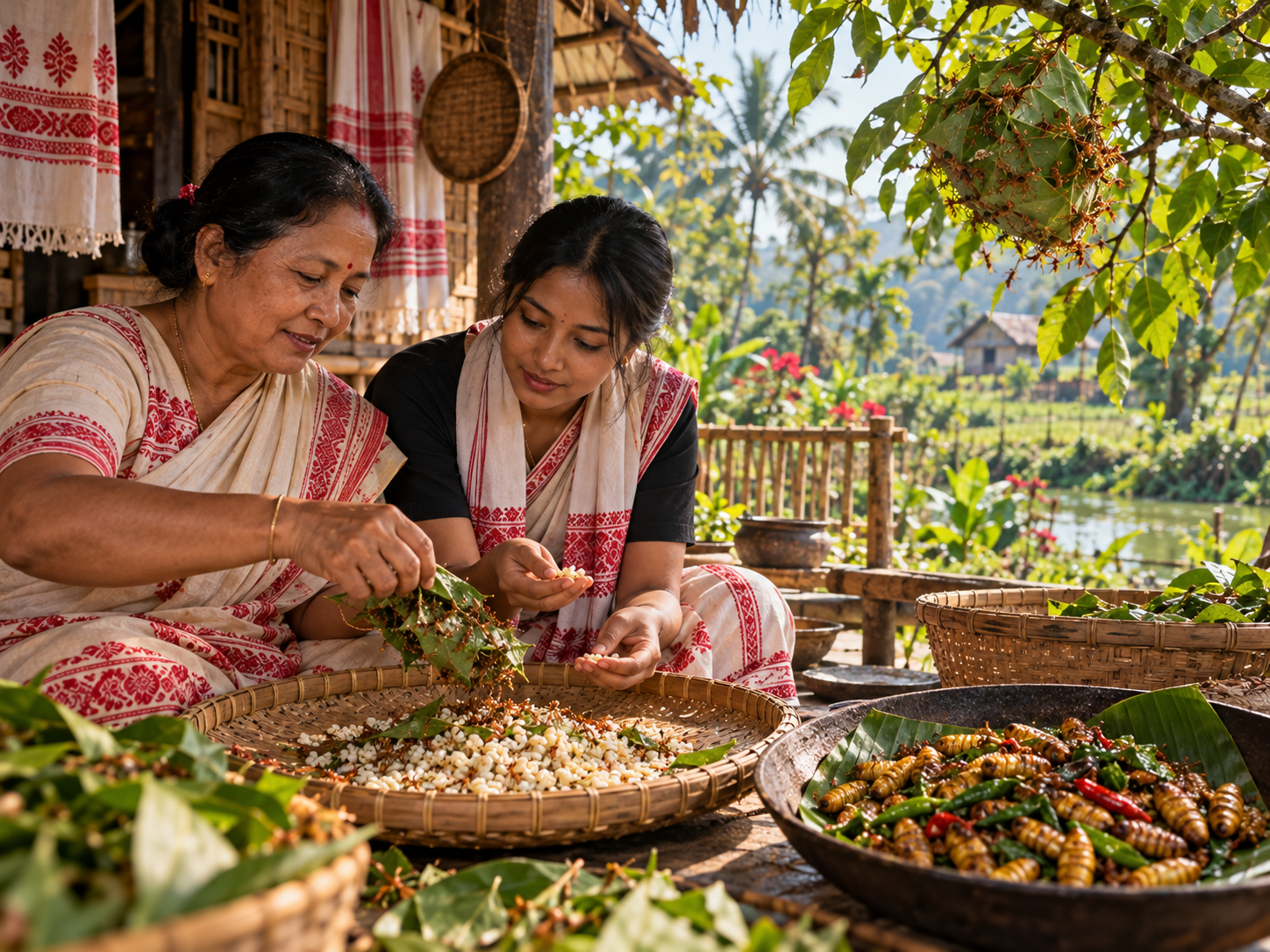
Walking through a traditional village market in Northeast India offers a completely different view of what counts as delicious food. Here you will not just find common chickens or fish. You will find large bamboo baskets filled with golden silk worm pupae and giant aquatic water bugs. The practice of eating insects is formally known as entomophagy. While it might surprise visitors from big cities this ancient tribal diet is actually one of the most environmentally friendly and ethical ways to consume protein on the entire planet. By exploring the delicious world of edible insects we discover how indigenous communities have been practicing zero waste sustainable living for hundreds of years.
FeatureDetails
Practice NameEntomophagy
Popular RegionAssam Nagaland Manipur
Key DelicaciesEri silk worm pupae and giant water bugs
Main BenefitExtremely low environmental carbon footprint
Nutritional ValueMassive amounts of clean protein and iron

If you visit a bustling local market in the deep green valleys of Assam or the misty hills of Nagaland your eyes will immediately be drawn to the vibrant local food stalls. Next to the fresh green leafy vegetables and spicy ghost peppers you will often see small woven baskets filled with squirming or freshly roasted insects. For someone who grew up in a modern concrete city the idea of eating a bug might sound like a dare from a wild survival television show. However for the local indigenous communities this is a highly celebrated daily meal.

This beautiful ancient tradition is known scientifically as entomophagy. It is not about eating bugs because there is a lack of other food. It is a deliberate delicious and culturally rich choice. More importantly as the modern world struggles with the terrible environmental damage caused by giant factory farms the ancient wisdom of eating insects is finally being recognized globally as the ultimate ethical solution to our future food crisis.

READ MORE:  Exploring The Deep Namdapha National Park Rainforest
The Ethics Of Entomophagy In Northeast India

The Sustainable Protein of the Future

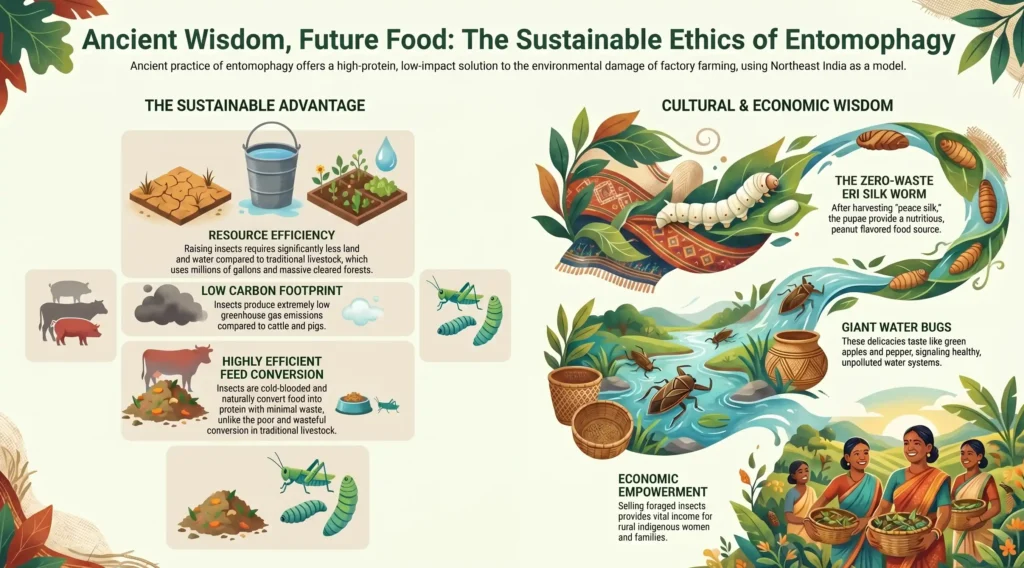
To truly understand the ethics of this diet we have to look at the massive environmental cost of normal meat. Raising cows pigs and chickens requires millions of gallons of fresh water massive amounts of land and produces terrible greenhouse gases. On the other hand raising insects requires almost zero extra land and just a few drops of water.

Insects are incredibly efficient at converting the food they eat into high quality edible protein. The Food and Agriculture Organization of the United Nations is heavily promoting entomophagy worldwide. They officially recognize that if more people switched to eating insects we could drastically reduce global warming and completely stop cutting down ancient forests to make room for cattle farms. When a tribal family in the northeast chooses a bowl of roasted insects over a piece of factory farmed meat they are actually making an incredibly advanced environmental decision.

Silk Worm Pupae The Golden Delicacy

One of the most famous and beloved edible insects in Assam is the Eri silk worm pupae locally known as Polu. The story of this specific insect is a brilliant example of a completely ethical zero waste food cycle. The local farmers raise these worms primarily to harvest the famous Ahimsa or peace silk. Unlike regular silk production where the worm is boiled alive inside the cocoon the Eri silk process allows the worm to safely spin its thread and begin its transformation.

Once the silk thread is carefully unspun by the village weavers the nutritious pupa is left behind. Instead of throwing this pupa away as useless garbage the local people fry it with mustard oil garlic and fiery green chilies. It has a beautiful crunchy outside and a soft rich center that tastes very similar to roasted peanuts or sweet shrimp. By eating the pupa the villagers ensure that absolutely nothing goes to waste. The Indian Council of Agricultural Research often highlights this dual purpose farming as the ultimate model for sustainable rural agriculture.

Giant Water Bugs The Spicy Treat

If you travel slightly further east into Nagaland or Manipur you will encounter a completely different kind of delicacy. Here the giant water bug is highly prized. These are large flat insects that live in fresh slow moving streams and local rice paddies. Catching them requires immense skill and deep knowledge of the local water systems.

READ MORE:  Life On The Loktak Lake Floating Phumdis

When cooked these bugs have an incredibly surprising flavor. They do not taste like dirt or mud. They have a very strong sweet and spicy aroma that tastes exactly like green apples mixed with black pepper. The mothers in the village usually roast them over an open wood fire or grind them up to make a thick highly flavored chutney. Because these bugs can only survive in completely pure unpolluted water finding them is a great sign that the local rivers are healthy and completely free of toxic chemical pesticides.

Overcoming the Psychological Barrier

The biggest challenge facing this incredible food source is simply human psychology. Many people in western societies or modern urban cities have been trained since childhood to view insects as dirty pests. We are taught to spray them with chemicals rather than put them on a dinner plate.

However this is just a cultural habit not a scientific fact. Biologically insects are very closely related to crabs lobsters and prawns which are considered expensive luxury foods in fancy city restaurants. The Ministry of Tribal Affairs works to break down this unfair stigma by proudly showcasing traditional tribal insect recipes at national food festivals. When adventurous food lovers finally close their eyes and take their first crunchy bite they almost always smile in total surprise at how delicious and clean the flavors really are.

The Economic and Ethical Balance

The ethics of entomophagy go far beyond just saving the environment. It is also about human economics and fair trade. Gathering and selling edible insects is a very important source of income for many poor rural families especially women. They do not need to buy expensive farm equipment or massive plots of land to participate in this economy.

They can sustainably forage for water bugs in the local ponds or raise silk worms right in their own small backyards. When tourists and open minded visitors buy these local delicacies they are putting money directly into the hands of indigenous women rather than massive global meat corporations. It completely empowers the local village economy while keeping a deeply sacred culinary tradition totally alive.

A Lesson in Natural Harmony

The world is changing very fast and we are quickly running out of resources to feed a massive global population. The quiet village kitchens of Northeast India have secretly held the answer to this massive problem all along. They teach us that human beings do not need to destroy the earth just to get a good healthy meal.

READ MORE:  Discovering The Hearty Zan Millet Porridge

We can live in total harmony with the forest and the rivers by eating lower on the food chain. The next time you see a plate of roasted silk worms or spicy water bug chutney do not look away in fear. Look at it with deep respect. You are looking at a brilliant piece of indigenous wisdom a powerful environmental statement and perhaps the true future of global food.

Quick Comparison Table

FeatureTraditional LivestockEdible Insects
Water NeededMillions of gallonsVery little almost none
Space RequiredMassive cleared forestsSmall boxes or local ponds
Carbon EmissionsExtremely highExtremely low
Feed ConversionVery poor and wastefulHighly efficient

Curious Indian Fast Facts

  • Weight for weight many edible insects contain significantly more protein and iron than premium cuts of beef.
  • The giant water bug is completely safe to eat but you must remove its hard outer wings and sharp legs before chewing.
  • Eating insects is completely natural for humans and was a major part of the diet for early human ancestors across the entire globe.
  • The Eri silk worm pupae are so highly valued in Assam that they are often more expensive per kilogram than regular chicken or pork.
  • Because insects are cold blooded they do not waste any food energy trying to keep their bodies warm making them perfect natural food converters.

Conclusion

The traditional practice of eating insects in Northeast India is a beautiful and highly misunderstood cultural treasure. It is easy for outsiders to judge what they do not understand but a closer look reveals an incredibly advanced system of ethical survival. The crispy silk worms and aromatic water bugs are not just exotic snacks. They represent a deep respect for nature a commitment to zero waste and a brilliant understanding of sustainable protein.

As the modern world desperately searches for new ways to heal the environment and feed billions of people we must look toward the ancient wisdom of indigenous tribes. By embracing the ethics of entomophagy we can break down our own mental barriers and learn to appreciate the massive gifts that nature provides in the smallest of packages. Celebrating this unique culinary art ensures that the brave gatherers and brilliant tribal cooks are finally recognized as the true environmental pioneers they have always been.

If you think you have remembered everything about this topic take this QUIZ

What exactly does the word entomophagy mean?

Entomophagy is the official scientific term for the human practice of eating insects as a source of daily food and nutrition.

Are silk worms and water bugs actually safe to eat?

Yes they are completely safe and highly nutritious when they are gathered from clean environments and properly cooked or roasted over a fire.

Why is eating insects considered better for the environment?

Insects require a tiny fraction of the land water and feed compared to traditional farm animals like cows making their environmental footprint incredibly small.

What do giant water bugs actually taste like?

When properly roasted they do not taste like mud. They have a very unique complex flavor that many people describe as a mix of sweet green apples and spicy black pepper.

Do people in Northeast India eat insects out of necessity?

No it is not done out of desperation or poverty. It is a highly respected cultural tradition and these insects are often considered expensive delicacies reserved for special meals.

Tags: Cultural HeritageEntomophagyNortheast IndiaSustainabilityTraditional Food
ShareTweetPin
paripurnadatta

paripurnadatta

Related Posts

Deepor Beel
North East India

The Threat Of Deepor Beel Urban Encroachment

April 19, 2026
Hoolock Gibbon
North East India

Protecting The Rare Hoolock Gibbon India 

April 19, 2026
Bhaona traditional theatrical arts
Arts & Culture

Experiencing Bhaona Traditional Theatrical Arts

April 18, 2026
No Result
View All Result

Stay Updated

  • Trending
  • Latest
Life of Mahavira: From Prince Vardhamana to Great Conqueror

Life of Mahavira: From Prince Vardhamana to Great Conqueror

April 11, 2026
Life of Buddha: The Journey to Enlightenment

Life of Buddha: The Journey to Enlightenment

April 11, 2026
Christmas in India

Christmas in India: A Festive Blend of Faith, Flavors, and Tradition

April 11, 2026
From Shimla to Stardom: The Complete Biography of Anupam Kher

From Shimla to Stardom: The Complete Biography of Anupam Kher

April 11, 2026
Ethics of entomophagy

The Ethics Of Entomophagy In Northeast India

April 20, 2026
Deepor Beel

The Threat Of Deepor Beel Urban Encroachment

April 19, 2026
Hoolock Gibbon

Protecting The Rare Hoolock Gibbon India 

April 19, 2026
Deendayal Upadhyaya

Deendayal Upadhyaya Murder Mystery: The Questions That Were Never Answered

April 19, 2026

Widget Title

Facebook Twitter Youtube RSS
Curious Indian Logo

Explore the soul of Bharat with Curious Indian. A definitive guide to Indian history, arts, culture, biographies, and the events that defined our future.

Follow us on social media:

Recent News

  • The Ethics Of Entomophagy In Northeast India
  • The Threat Of Deepor Beel Urban Encroachment
  • Protecting The Rare Hoolock Gibbon India 

Category

  • Ancient Civilizations & The Vedic Age
  • Architecture
  • Artists & Cultural Icons
  • Arts & Culture
  • Battles of India
  • Biography
  • Business & Industrialists
  • Colonial India
  • Cultural Insights
  • Dance & Music
  • Entertainment Personalities
  • Festivals of India
  • Freedom Fighters
  • Freedom Movement
  • Historical Events & Turning Points
  • Indian History
  • Indian Politics
  • Major Festivals
  • Medieval India
  • North East India
  • Paintings & Visual Arts
  • Political Leaders
  • Post-Independence India
  • Regional Culture
  • Religious & Spiritual Figures
  • Science Personalities
  • Scientific Discoveries
  • Sculpture
  • Social Issues
  • SOCIETY & MYSTERIES
  • Strange & Unknown Stories
  • Textiles & Handicrafts
  • Uncategorized
  • Unsolved India
  • Unsung Heroes

© 2026 Curious Indian- Everything about India

Welcome Back!

Login to your account below

Forgotten Password?

Retrieve your password

Please enter your username or email address to reset your password.

Log In

Add New Playlist

No Result
View All Result
  • Arts & Culture
  • Festivals of India
  • Indian History
  • Indian Politics
  • Biography
    • Entertainment Personalities
    • Science Personalities

© 2026 Curious Indian- Everything about India

This website uses cookies. By continuing to use this website you are giving consent to cookies being used. Visit our Privacy and Cookie Policy.
Are you sure want to unlock this post?
Unlock left : 0
Are you sure want to cancel subscription?
×