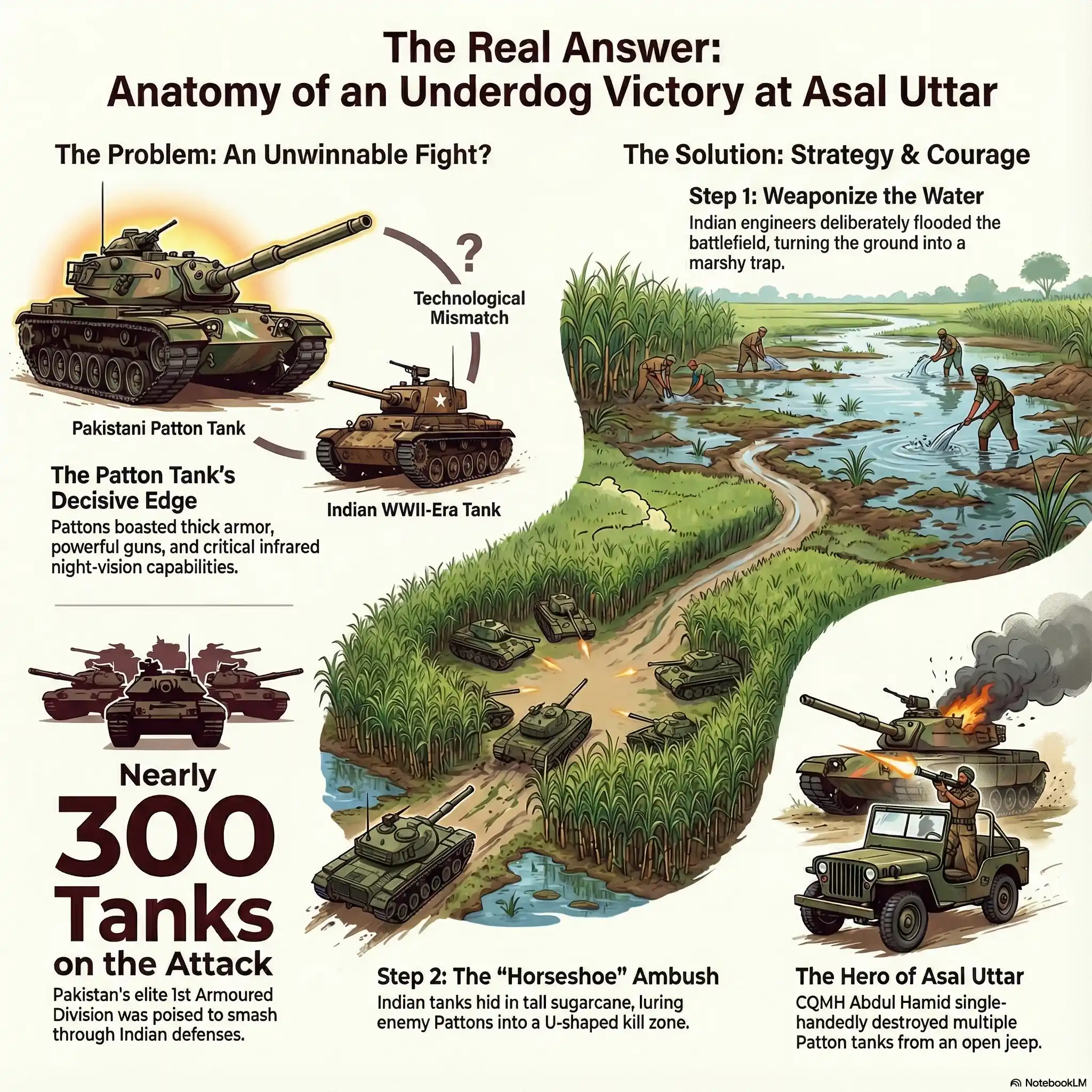
The Battle of Asal Uttar 1965 tank mystery describes the tactical masterpiece where the Indian Army defeated a superior Pakistani force. By flooding sugarcane fields and utilizing the legendary bravery of soldiers like CQMH Abdul Hamid, India turned the Khem Karan sector into a graveyard for Patton tanks. This victory is celebrated as one of the greatest armored confrontations in history, proving that strategy and courage outweigh technical superiority.| Category | Details |
| Date | September 8 – 10, 1965 |
| Location | Asal Uttar, Khem Karan, Punjab, India |
| Conflict | Indo-Pakistani War of 1965 |
| Key Figure | CQMH Abdul Hamid (Param Vir Chakra) |
| Tanks Involved | Indian Centurion/Sherman vs. Pakistani Patton |
| Outcome | Decisive Indian Victory; Creation of “Patton Nagar” |
The Day the Earth Stood Still in Khem Karan
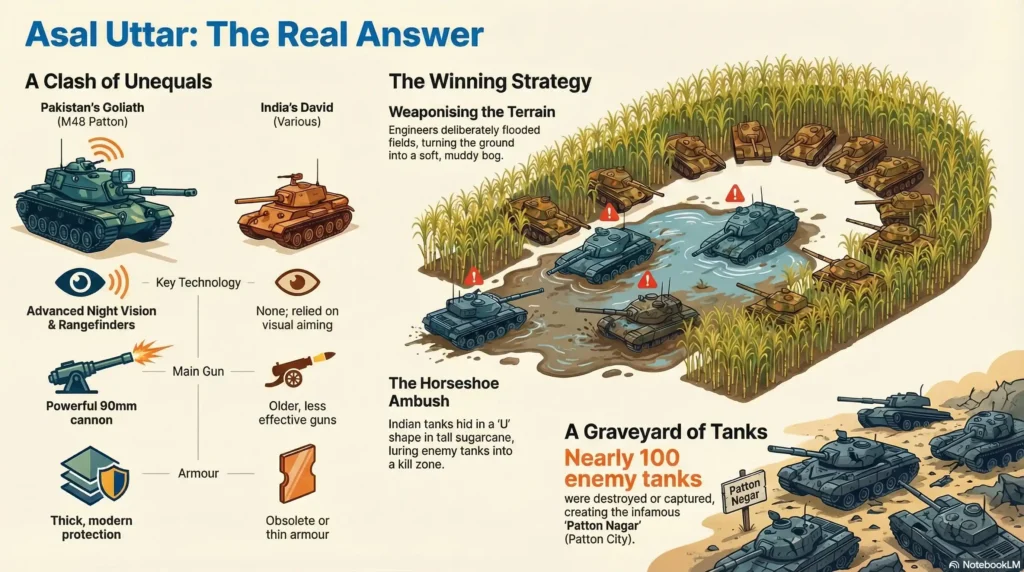
The scent of damp sugarcane and ripening crops hung heavy over the village of Asal Uttar in September 1965. For the local farmers, it was just another harvest season, but for the Indian Army, it was the setting for the Battle of Asal Uttar 1965 tank mystery, a confrontation that would decide the fate of the Punjab plains. The air was thick not just with humidity, but with the looming roar of hundreds of engines. On one side stood the Pakistani 1st Armoured Division, boasting the American-made M48 Patton tanks—the most sophisticated machines of their time. On the other side stood the Indian soldiers, primarily equipped with aging Centurions and Shermans, seemingly outmatched and outgunned.
This was a moment of absolute asymmetric warfare. The world expected the Pattons to roll over the Indian defenses and reach the gates of Amritsar or even Delhi. However, history is rarely written by machines alone; it is carved by the spirit of the men who operate them. The mystery of how a technically inferior force decimated a modern juggernaut remains one of the most studied chapters in military academies worldwide.
The “Honey Trap” Strategy: Tactical Superiority
The Indian commanders knew they could not win a head-on race against the faster, more powerful Pattons. Instead, they relied on Indian Army tank tactics that prioritized the terrain over firepower. The “Asal Uttar” strategy was born out of a desperate need to neutralize the enemy’s speed. The village name itself, which translates to “The Fitting Reply,” became a prophetic label for the events that followed.
The Indian Army performed a tactical retreat, drawing the Pakistani armor into a horseshoe-shaped ambush. But the true genius lay in the sugarcane fields. Indian troops breached the local canals, deliberately flooding the agricultural land. When the 45,000-pound Patton tanks entered the fields, the soft Punjab soil turned into a marshy quagmire. The superior machines were trapped, their tracks spinning uselessly in the mud. They were no longer mobile fortresses; they were sitting ducks.
The Legend of CQMH Abdul Hamid Bravery
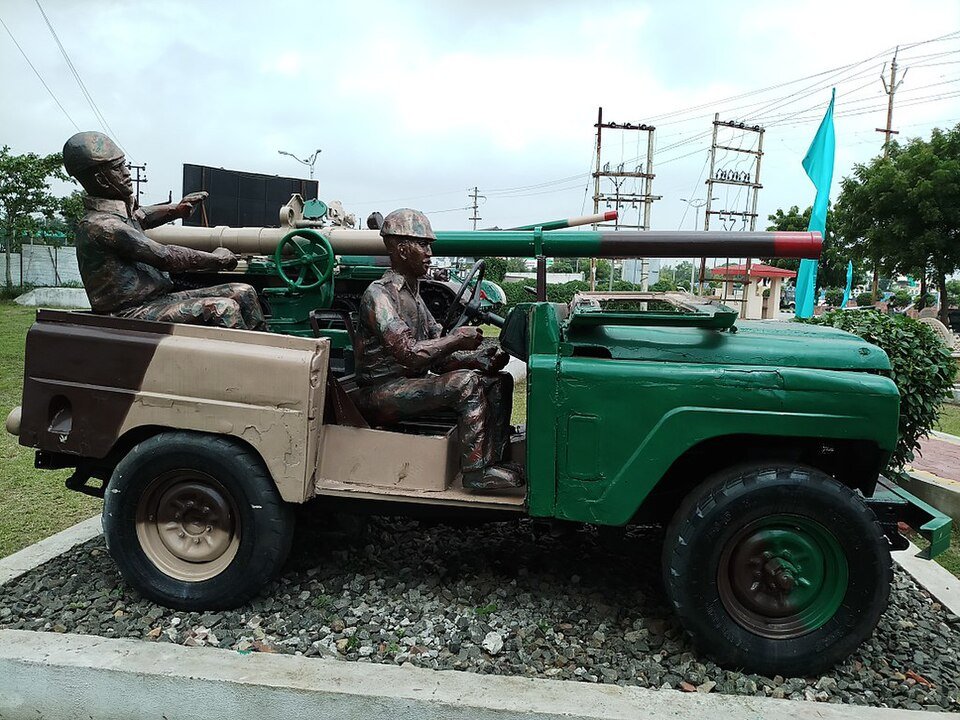
No discussion of this conflict is complete without honoring the CQMH Abdul Hamid bravery that redefined the limits of human courage. Company Quartermaster Havildar Abdul Hamid was not even in a tank; he was mounted on a simple Jeep fitted with a Recoilless (RCL) gun. In the eyes of a tank commander, a Jeep is a mere nuisance. However, Hamid turned it into a nightmare.
Hiding in the tall sugarcane, Hamid used the “shoot and scoot” method. He would wait until a Patton tank was within range, fire a precise shot at its vulnerable side or rear, and then vanish into the green maze before the enemy could traverse their heavy turrets. He destroyed three tanks single-handedly on the first day. By the time he was martyred while targeting his eighth tank, he had single-handedly broken the morale of the Pakistani armored advance. His Param Vir Chakra was not just a medal; it was a symbol of how one man’s resolve can stop an entire division.
The Birth of Patton Nagar Graveyard
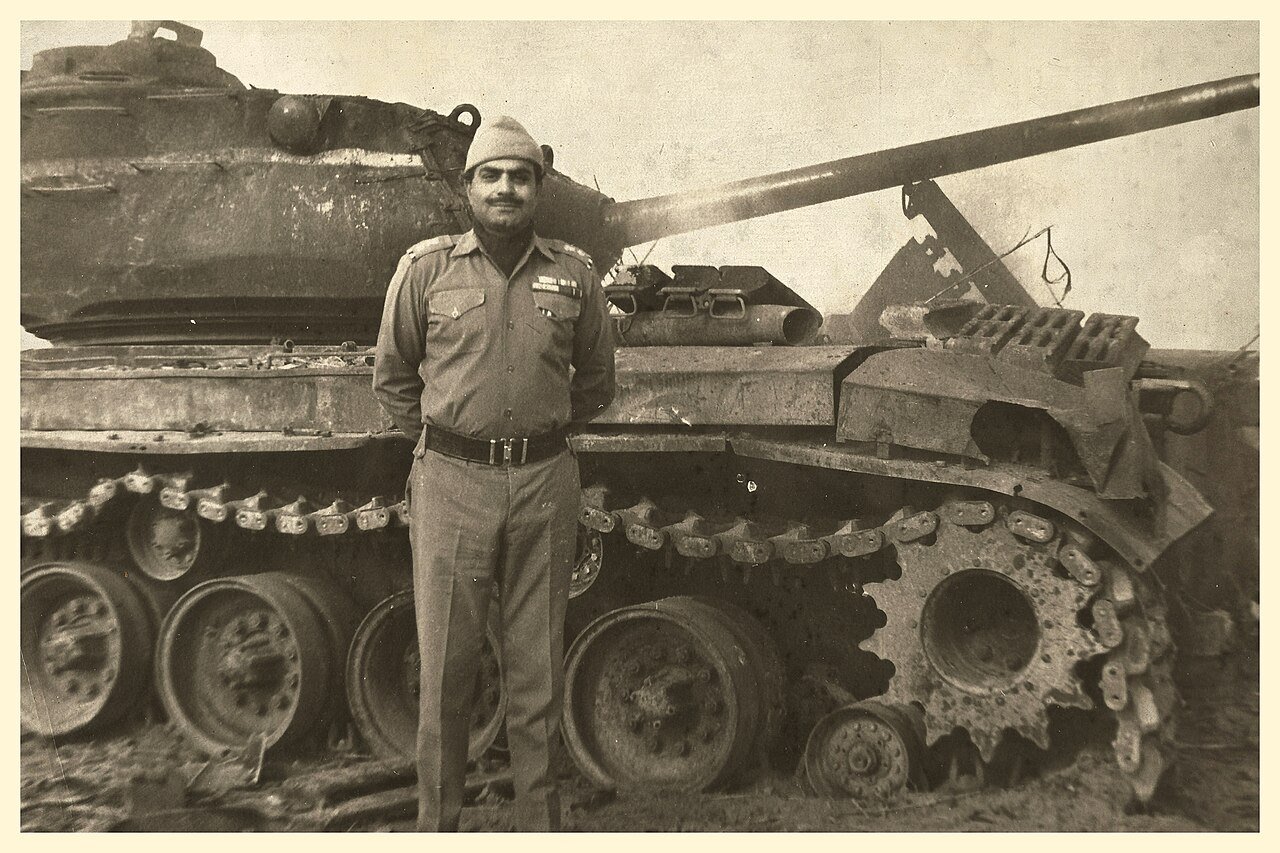
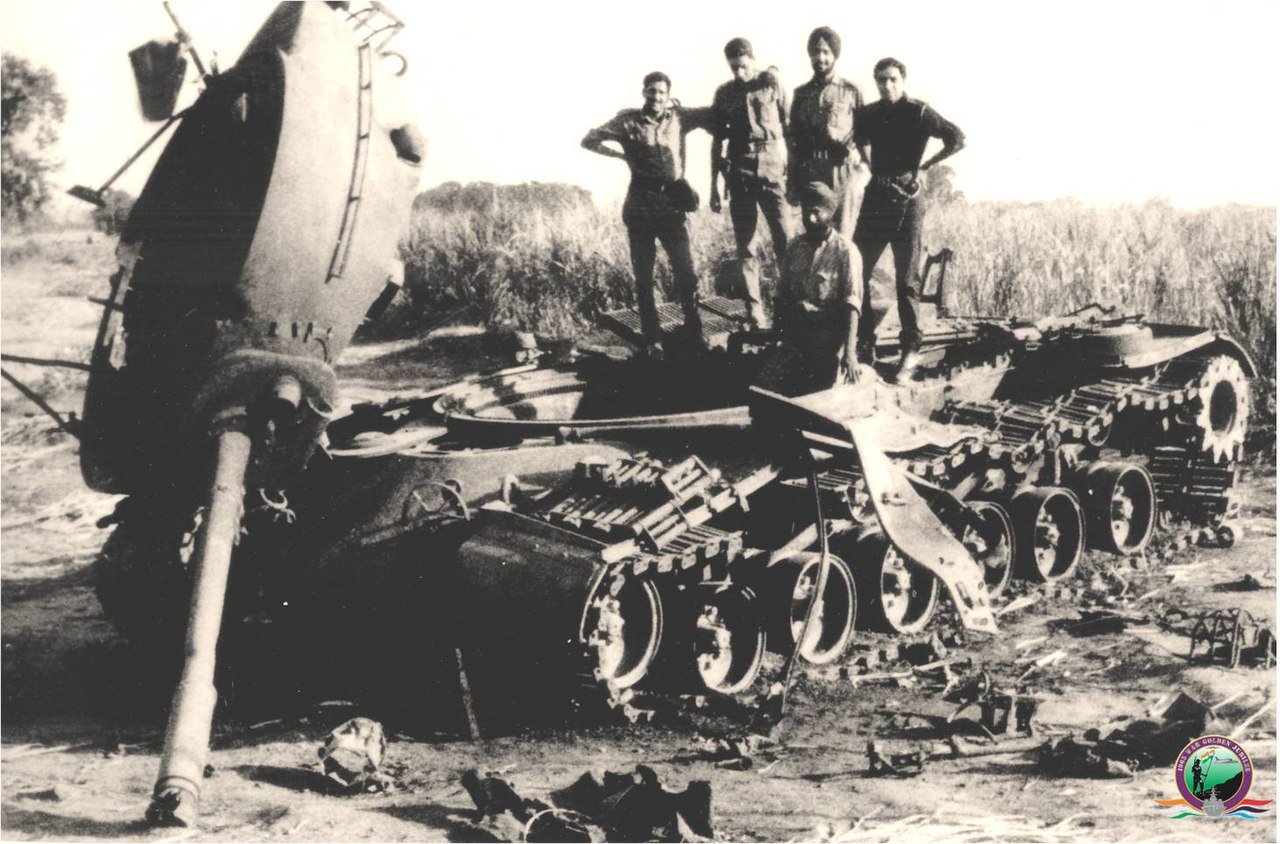
As the smoke cleared by September 10, the scale of the destruction became visible. The once-pristine fields were littered with the charred remains of nearly 100 Pakistani tanks. The sight was so overwhelming that the area near Bhikkiwind was renamed the Patton Nagar graveyard. It became a tourist attraction of sorts for the soldiers, a place where they could walk among the giants they had slain.
The Khem Karan war history shows that Pakistan lost nearly an entire armored division in this sector alone. The “unbeatable” Patton tanks, which featured infrared sights and superior range, were defeated by Indian soldiers who used simple math, local knowledge, and an unwavering love for their land. The Indian Centurion tanks, despite their age, proved to be more rugged and reliable in the muddy conditions, proving that technology is only as good as the tactics behind it.
Quick Comparison: Indian vs. Pakistani Forces
| Feature | Indian Army | Pakistani Army |
| Primary Tank | Centurion & Sherman (Older) | M48 Patton (State-of-the-Art) |
| Strategy | Defensive Ambush & Flooding | High-Speed Armored Thrust |
| Key Advantage | Terrain Knowledge & RCL Jeeps | Night Vision & Superior Range |
| Outcome | Tactical Victory; Minimal Losses | 97 Tanks Lost; Retreat |
Analyzing the Strategic Failure
Why did the Pakistani advance fail so spectacularly? The Battle of Asal Uttar 1965 tank mystery suggests a lack of coordination between their infantry and armor. While the tanks were technologically advanced, they were operated by crews who struggled with the complex electronic systems under the pressure of the Indian ambush. Furthermore, the Pakistani command failed to anticipate the tactical flooding, a move that turned their primary strength—mobility—into their greatest weakness.
The Indian victory at Asal Uttar was not just a military win; it was a psychological turning point. It proved to the world that the newly formed Republic of India had the military maturity to defend its borders against high-tech aggression. The graveyard of tanks at Asal Uttar stands as a silent reminder that on the battlefield, the “Fitting Reply” is always delivered by those who know their ground.
Curious Indian: Fast Facts
- Patton Nagar: After the war, nearly 60 captured Patton tanks were displayed in a village near Khem Karan, which locals nicknamed “Patton Nagar.”
- The 3-Day Stand: The most intense part of the battle lasted only 72 hours, but it resulted in the largest tank battle since World War II.
- Centurion vs. Patton: Though the Patton was newer, the Indian Centurions had 105mm guns that proved highly effective at piercing the Patton’s armor.
- Tactical Flooding: The Indian Army didn’t just flood fields; they used the natural slope of the land to ensure the water stayed exactly where the enemy tanks would pass.
- Abdul Hamid’s Jeep: The Jeep used by Abdul Hamid is still remembered as one of the most cost-effective “tank killers” in history.
Conclusion
The fields of Asal Uttar today are once again filled with the peaceful rustle of sugarcane, but the soil still holds the echoes of the 1965 victory. The Battle of Asal Uttar 1965 tank mystery teaches us that the best defense is a deep understanding of one’s own roots and terrain. For every “Curious Indian,” this story is a reminder that when the heart is committed, no machine is too big to fall. It remains a shining example of Indian military brilliance that continues to inspire generations.
If you think you have remembered everything about this topic take this QUIZ
Results


#1. What was the core element of the Indian Army’s “Honey Trap” strategy at the Battle of Asal Uttar?
#2. Which type of vehicle did CQMH Abdul Hamid use to destroy multiple Patton tanks?
#3. What nickname was given to the area near Bhikkiwind following the battle?
#4. According to the analysis, what was a primary reason for the failure of the technologically advanced Pakistani armoured division?
#5. Despite being an older model, what advantage did the Indian Centurion tanks possess over the M48 Pattons in this battle?
#6. The initial confrontation at Asal Uttar is described as ‘asymmetric warfare’. What does this imply?
#7. What specific tactic did CQMH Abdul Hamid employ to maximise his effectiveness and survivability?
#8. The Indian strategy involved luring the Pakistani armour into what specific shape of ambush?
What is the significance of the Battle of Asal Uttar?
The Battle of Asal Uttar is significant because it halted the Pakistani armored offensive in 1965, preventing them from capturing Punjab. It is considered one of the greatest defensive victories in Indian military history and the largest tank battle in Asia.
Why were the M48 Patton tanks called “Tommy Cookers”?
Indian engineers breached the banks of the Rohi Nallah stream, directing water into the fields where the enemy was expected to advance. The water turned the soil into soft mud, causing the heavy Pakistani tanks to get stuck (bogged down), making them easy targets.
How did the flooding strategy work?
Indian engineers breached the banks of the Rohi Nallah stream, directing water into the fields where the enemy was expected to advance. The water turned the soil into soft mud, causing the heavy Pakistani tanks to get stuck (bogged down), making them easy targets.
Who was CQMH Abdul Hamid?
CQMH Abdul Hamid was a soldier in the 4 Grenadiers regiment. He is a national hero for destroying multiple enemy tanks with a jeep-mounted Recoilless Gun during the battle. He was posthumously awarded the Param Vir Chakra.
What happened to the captured tanks?
Many of the captured Patton tanks were displayed at a site nicknamed “Patton Nagar” near Bhikhiwind to show the public the scale of the victory. Today, many of these tanks stand as war trophies at various military cantonments and museums across India.
What tanks did India use in this battle?
The Indian forces used a mix of World War II-era M4 Shermans, French AMX-13 light tanks, and British Centurion Mk 7 tanks. Despite being older than the Pakistani Pattons, the Centurions proved highly effective due to their superior guns and the skill of the Indian crews.