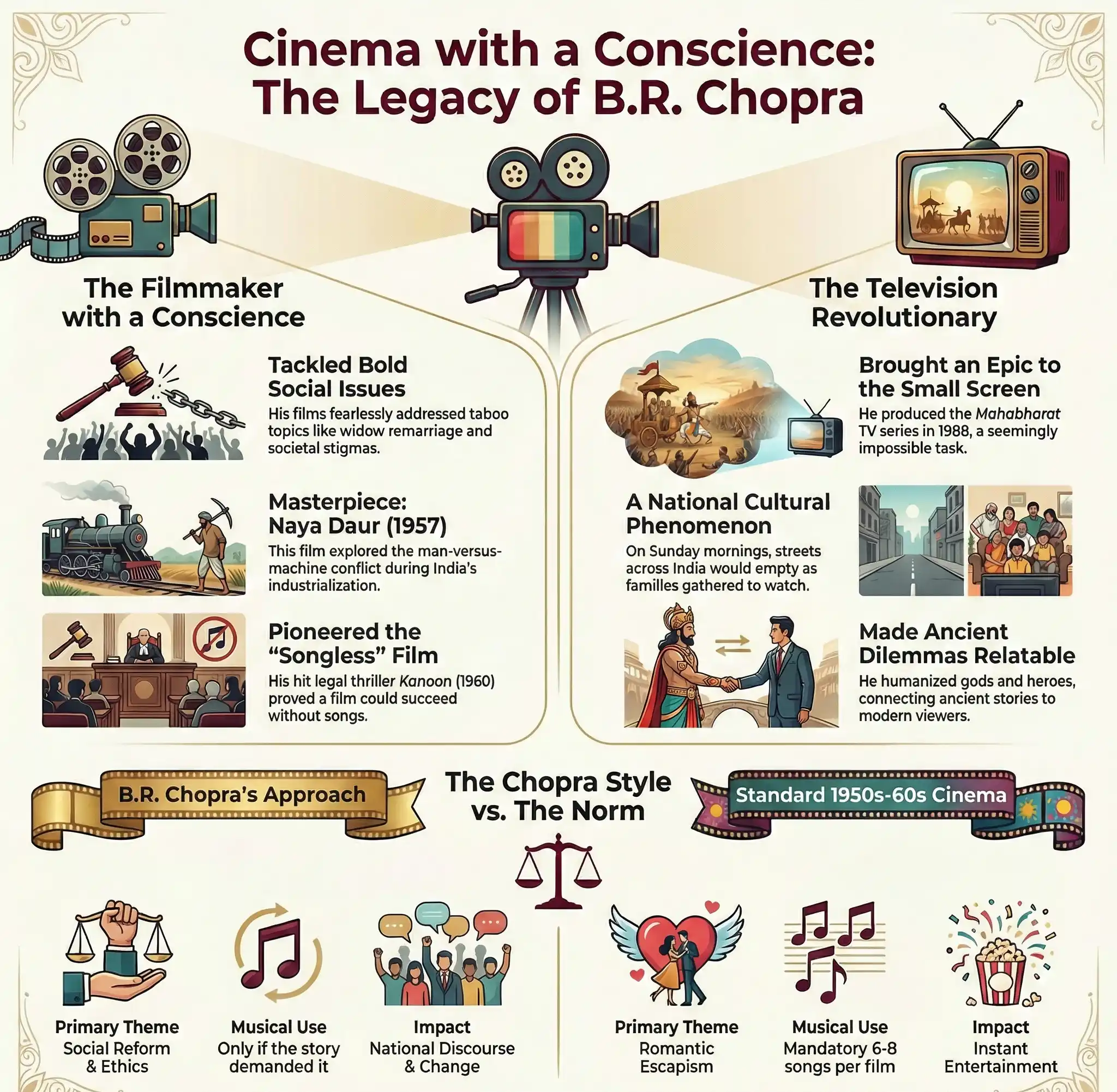
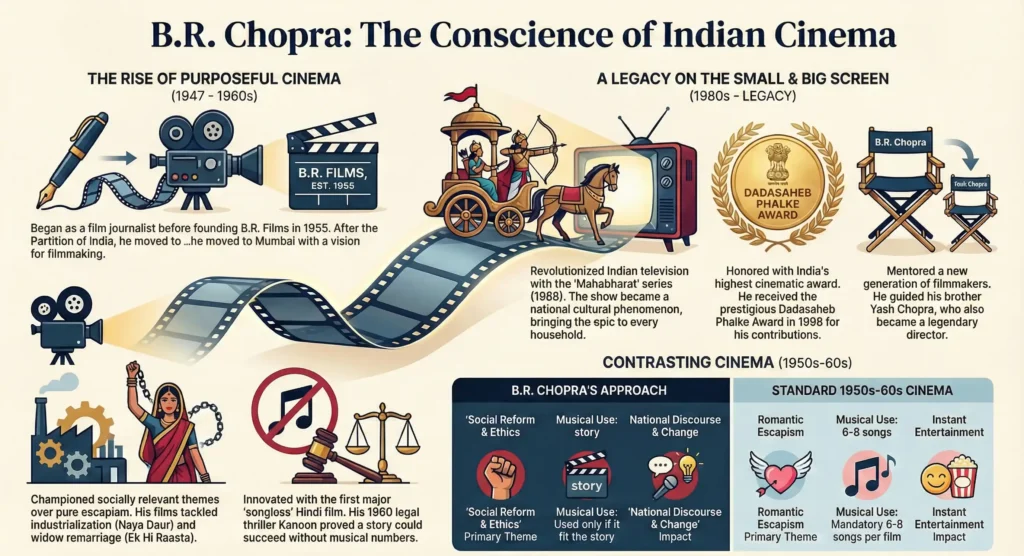
Milestones of B.R. Chopra’s Contribution to Indian Cinema
From Partition’s Shadows to Bollywood’s Spotlight: The Inspiring Journey of B. R. Chopra, the Visionary Storyteller Behind Indian Cinema’s Social Revolution
B.R. Chopra was a titan of Indian storytelling who successfully bridged the gap between commercial entertainment and deep-rooted social consciousness. Starting his career as a film journalist in Lahore, he moved to Delhi and later Mumbai following the Partition, eventually founding the legendary B.R. Films. His body of work is characterized by "cinema with a purpose," tackling themes such as widow remarriage, the man-versus-machine conflict, and legal ethics. Beyond the silver screen, he revolutionized Indian television by producing the Mahabharat series, which became a cultural phenomenon, proving his ability to resonate with the masses while upholding the highest standards of artistic and moral integrity.
Feature
Details
Full Name
Baldev Raj Chopra
Born
April 22, 1914 (Rahon, Punjab)
Died
November 5, 2008 (Mumbai)
Production House
B.R. Films (Founded 1955)
Major Awards
Dadasaheb Phalke Award (1998), Padma Bhushan (2001)
Most Famous Work
Naya Daur (1957), Mahabharat (TV Series, 1988)
The Journalist Who Scripted a Nation
The story of the Indian film industry is often told through the lens of stardom, but the true foundation was laid by thinkers who saw the camera as a tool for revolution. B.R. Chopra’s contribution to Indian cinema began not on a film set, but in the editorial rooms of a film magazine in Lahore. Baldev Raj Chopra was a man of letters, a scholar who believed that every story must carry a “mystery” of human nature or a social lesson. When the Partition forced him to leave everything behind and migrate to India, he didn’t just bring his belongings; he brought a vision to rebuild the soul of a new nation through celluloid.
His arrival in Mumbai marked a turning point for what we now call the golden age of Bollywood directors. While others were focused on escapist fantasies, Chopra was interested in the “common man.” He understood that a newly independent India was grappling with identity, poverty, and ancient prejudices. His initial struggles in the industry only sharpened his resolve to create socially relevant Indian films that would do more than just entertain—they would provoke thought and inspire change.
In 1955, he established B.R. Films, a banner that would soon become synonymous with “meaningful cinema.” His early masterpiece, Naya Daur (1957), is perhaps the greatest example of his genius. At a time when India was industrializing, Chopra presented a “mystery” of progress: Could the human spirit survive the onslaught of machines? By pitting a horse-cart driver against a bus, he wasn’t just telling a story; he was narrating the anxiety of a million Indians. This film solidified his reputation for creating B.R. Films social moviesthat felt personal yet universal.
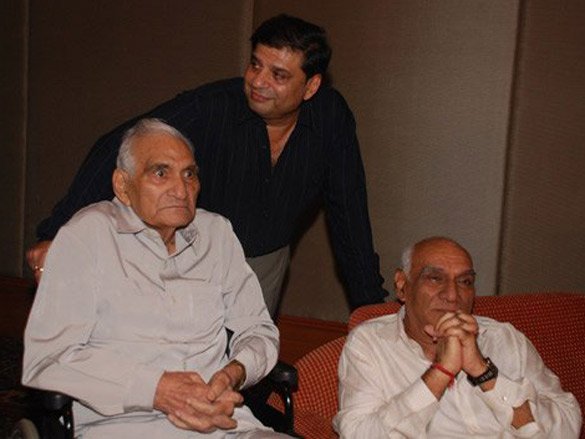
The emotional depth he brought to his sets was legendary. He was known to treat his cast and crew like an extended family, fostering an environment where creativity flourished. It was under his mentorship that his younger brother, Yash Chopra, began his journey, eventually becoming a legend himself. The bond between the brothers was a cornerstone of the industry, but B.R. Chopra remained the ideological anchor, always pulling the narrative back to the realities of the Indian household.
Breaking Taboos and Setting Precedents
One of the most fascinating aspects of his career was his fearless approach to taboo subjects. In Ek Hi Raasta (1956), he tackled the issue of widow remarriage—a topic so sensitive that many distributors were hesitant to touch it. Yet, Chopra’s storytelling was so compassionate and grounded that the audience embraced it. He followed this with Sadhna (1958), a film that questioned the societal stigma surrounding sex workers.
He was also a pioneer of the “songless” film—a radical idea in a musical-obsessed industry. With Kanoon (1960), he proved that a gripping legal thriller could succeed without a single song or dance sequence. This move highlighted B.R. Chopra’s contribution to Indian cinema as a technical and narrative innovator who wasn’t afraid to break the “Bollywood formula” if the story demanded it. His courtroom dramas were not just about crime; they were about the ethics of the judicial system, further cementing his place as a leader in socially relevant Indian films.
As the decades passed, Chopra’s vision expanded from the cinema hall to the living room. In the late 1980s, he undertook a task that many thought was impossible: bringing the epic Mahabharat to the small screen. TheMahabharat TV series impactwas nothing short of miraculous. On Sunday mornings, the streets of India would go silent; businesses closed, and people gathered around the few television sets available in their neighborhoods.
This wasn’t just a television show; it was a collective national experience. Chopra brought the same cinematic grandiosity and moral weight to the TV screen that he had brought to his films. By humanizing the gods and making the ancient dilemmas of the Kurukshetra war relatable to modern viewers, he ensured that the epic reached every corner of the country. This project remains perhaps the single most significant cultural broadcast in the history of the Indian subcontinent.
A Legacy of Integrity
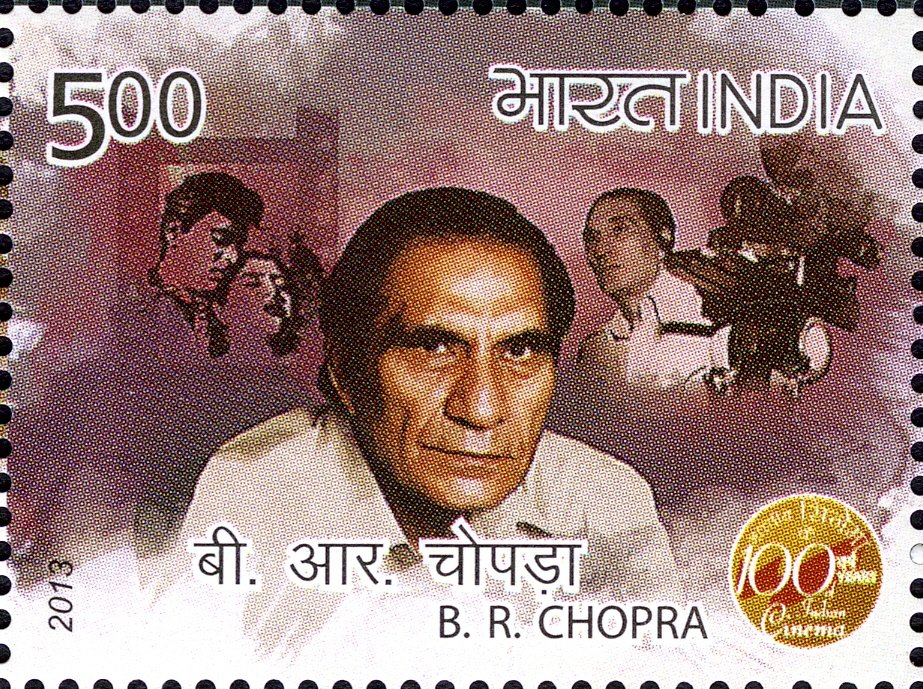
B.R. Chopra’s life was an anecdote of persistence. Even in his later years, he remained a student of the craft, always curious about new technologies and changing audience tastes. He received the Dadasaheb Phalke Award in 1998, the highest honor in Indian cinema, but his true legacy is the generation of filmmakers he inspired to look beyond the glamour and focus on the “why” of a story.
He turned the movie theater into a classroom and the television into a temple of wisdom. Every time a filmmaker today decides to tackle a difficult social issue, they are walking the path that B.R. Chopra cleared decades ago. He was the architect of a cinema that had a heart, a brain, and, most importantly, a conscience.
Comparison: The B.R. Chopra Style vs. Standard Commercial Cinema
Element
B.R. Chopra’s Approach
Standard 1950s-60s Cinema
Primary Theme
Social Reform & Ethics
Romantic Escapism
Narrative Tool
Real-world Conflict (e.g., Law, Labor)
Fantasy & Melodrama
Musical Use
Used only if it fit the story; sometimes absent
Mandatory 6-8 songs per film
Characterization
Nuanced, flawed human beings
Archetypal Heroes & Villains
Impact
National Discourse & Long-term Change
Instant Entertainment
1 of 2
–+
Curious Indian: Fast Facts
Journalistic Roots: Before becoming a filmmaker, he was the editor of the popular magazine Cine Herald in Lahore.
The “No Song” Risk: His film Kanoon was the first major Hindi film to succeed at the box office without any songs.
Family First: He mentored his brother Yash Chopra and his son Ravi Chopra, creating a multi-generational filmmaking dynasty.
National Integration: His films often featured characters from diverse religious and regional backgrounds to promote the idea of a unified India.
The Phalke Honor: He was awarded the Dadasaheb Phalke Award for his lifetime contribution to the growth and development of Indian cinema.
Conclusion
B.R. Chopra’s contribution to Indian cinema is a story of how art can be a powerful vehicle for social change. By refusing to settle for easy entertainment, he challenged his audience to look at their society and themselves with more honesty. His films and television series continue to be studied and admired, not just for their technical craft, but for the unwavering moral compass they provided to a nation in transition. For any “Curious Indian,” his life is a masterclass in how to use one’s passion to serve a greater good.
If you think you have remembered everything about this topic take this QUIZ
Results
QUIZ START
#1. Where did B.R. Chopra begin his career before the Partition of India forced him to move to Mumbai?
Previous
Next
#2. Which B.R. Chopra film is celebrated for its depiction of the ‘man-versus-machine’ conflict in a newly industrializing India?
Previous
Next
#3. What was the ‘radical’ technical choice B.R. Chopra made for his 1960 legal thriller ‘Kanoon’?
Previous
Next
#4. How did the ‘Mahabharat’ TV series affect the daily life of India during its original broadcast in the late 1980s?
Previous
Next
#5. Which sensitive social issue was addressed in Chopra’s film ‘Ek Hi Raasta’ (1956)?
Previous
Next
#6. According to the comparison table, how did B.R. Chopra’s characterization differ from standard commercial cinema of the 1950s?
Previous
Next
#7. Which younger brother of B.R. Chopra was mentored by him and later became a legendary filmmaker himself?
Previous
Next
#8. What is the highest honor in Indian cinema that B.R. Chopra received in 1998?
Previous
Finish
What made B.R. Chopra’s films different?
His films were known for “social realism.” He tackled issues like unemployment, the legal system, and women’s rights in a way that was accessible to the masses but intellectually stimulating.
Is B.R. Chopra related to Yash Chopra?
Yes, B.R. Chopra was the elder brother of Yash Chopra. He acted as a mentor to Yash, who directed several hits under the B.R. Films banner before forming Yash Raj Films.
Why was the Mahabharat series so popular?
It combined high production values with a deep understanding of the source material, making the complex philosophy of the epic understandable and emotionally resonant for a wide audience.