Tuesday, April 14, 2026
17 °c
Omaha
Curious Indian
  • Arts & Culture
  • Festivals of India
  • Indian History
  • Indian Politics
  • Biography
    • Entertainment Personalities
    • Science Personalities
  • Unsolved India
No Result
View All Result
  • Arts & Culture
  • Festivals of India
  • Indian History
  • Indian Politics
  • Biography
    • Entertainment Personalities
    • Science Personalities
  • Unsolved India
No Result
View All Result
Curious Indian
No Result
View All Result
Home Indian History Colonial India

The Inner Line Permit System And Indigenous Tribes

paripurnadatta by paripurnadatta
in Colonial India, Indian History, North East India, Regional Culture
Reading Time: 10 mins read
0 0
A A
Inner Line Permit System
Share on FacebookShare on Twitter
https://open.spotify.com/episode/2Cssz8eiXRmmi1XbwpQD5V?si=g4M0qSMJSSiYCBnNQW0u8g
he borderlands of Northeast India hold a very unique travel rule that surprises many visitors. To enter certain beautiful states even citizens of India must carry a special document. This rule is known as the Inner Line Permit System. It started over a hundred and fifty years ago when the British ruled the country. Back then they created an invisible boundary to protect their rich tea gardens from local tribes. However when India gained independence the government kept this old rule but completely changed its purpose. Today instead of protecting outside businesses it acts as a cultural shield. It stops large crowds from buying up local land and overwhelming the tiny indigenous communities. This fascinating flip from a colonial relic to a necessary protection makes it one of the most interesting laws in the country.
FeatureDetails
Origin YearEighteen Seventy Three
Original CreatorBritish Colonial Government
Active StatesArunachal Pradesh Nagaland Mizoram Manipur
Main PurposeProtecting local land and native cultures

Traveling to the extreme eastern edges of India feels like stepping into a beautiful green painting. The hills are covered in thick mist and the forests hold secrets that are thousands of years old. But if you plan to visit some of these magical places you will quickly learn about a very special rule. You cannot just pack your bags and cross the state border. You need a permission slip from the government. This unique rule is the Inner Line Permit System. It is a fascinating piece of history that tells a grand story about trade tribes and the survival of ancient human cultures.

To truly understand why this paper is so important we must travel back in time. We have to look at how a greedy empire tried to fence off the wilderness and how modern India turned that exact same fence into a protective wall for its most vulnerable people.

The Inner Line Permit System And Indigenous Tribes

Table of Contents

Toggle
  • The British Tea Secret
  • A Massive Change of Purpose
  • The Protected Lands of the Northeast
  • The Big Modern Debate
  • A Shield for the Future
  • Quick Comparison Table
  • Curious Indian Fast Facts
  • Conclusion
  • If you think you have remembered everything about this topic take this QUIZ
    • What exactly is this special travel document?
    • Why do Indian citizens need permission to travel inside India?
    • Which states currently require this entry pass?
    • Is it difficult to get this permission paper today?
    • Can outsiders buy land in these protected areas?

The British Tea Secret

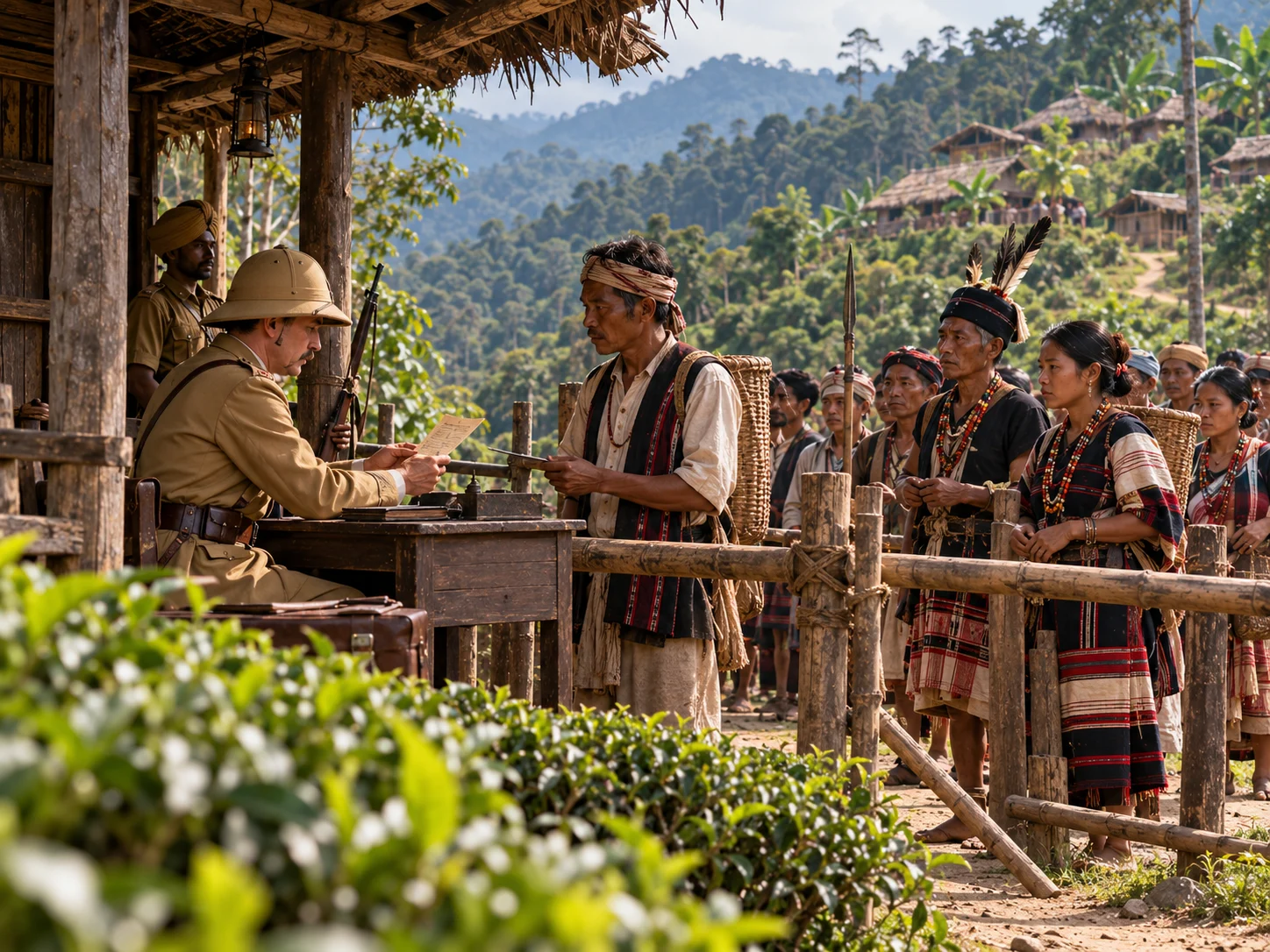
Our story begins a long time ago in the year eighteen seventy three. The British Empire was busy expanding its control over the Indian subcontinent. They discovered that the lush valleys of the northeast were absolutely perfect for growing tea. They also found wild elephants, rubber trees and valuable oil deep in the jungles. British businessmen started rushing into these areas to build massive tea estates and make huge fortunes.

READ MORE:  The Demolition of Babri Masjid 1992

But there was a big problem for the British. The deep forests and steep hills belonged to fierce and proud indigenous tribes. These local communities did not like strangers coming in, cutting down their ancient forests and stealing their resources. The tribes often raided the new British settlements to protect their home. The British colonial rulers got scared. They realized they needed a way to protect their highly profitable tea gardens.

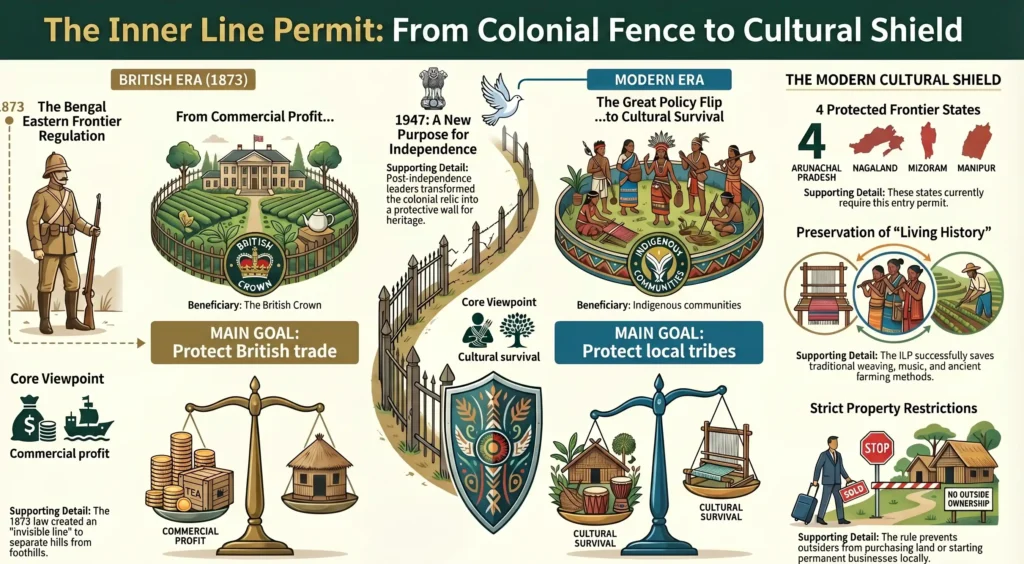
So they passed a strict law called the Bengal Eastern Frontier Regulation. This law drew an invisible line across the map at the edge of the foothills. The government told all British subjects that they could not cross this line without a special written pass. The British created this boundary entirely for their own selfish reasons. They wanted to lock the tribal people in the hills and keep the valuable flat lands for their own businesses. It was a classic colonial relic designed to separate and conquer.
A Massive Change of Purpose

Many decades passed and the world changed completely. In August nineteen forty seven India finally won its freedom. The British packed their bags and left. The new leaders of the free nation looked at all the old laws left behind. They had to decide what to keep and what to throw away. When they looked at the Bengal Eastern Frontier Regulation they saw something very interesting.

The clever leaders who wrote the Constitution of India realized that the isolated tribes of the northeast needed help. These communities were very small. They had their own beautiful languages, colorful clothing and unique spiritual beliefs. If millions of people from the crowded cities suddenly moved into these hills the native cultures would be completely washed away. The local people would lose their farming lands and their ancient way of life would disappear forever.

So the government made a brilliant decision. They kept the boundary line but they flipped its purpose completely upside down. Instead of using the permit to protect outside businesses from the tribes they used it to protect the tribes from the outside world. The permit stopped wealthy outsiders from buying land in these sensitive areas. It became a powerful shield for human heritage.

The Protected Lands of the Northeast

Today this special document is required to enter four incredibly beautiful states. The first is Arunachal Pradesh, the land where the sun rises first in India. It is home to snow covered mountains and deeply spiritual monasteries. The second is Nagaland, famous for its magnificent hornbill birds and vibrant warrior festivals. The third is Mizoram, a peaceful land of endless bamboo forests and rolling hills. The fourth is Manipur, a state known for its elegant classical dancing and the floating islands of Loktak Lake.

READ MORE:  The Indo-Pakistani War of 1965: When Courage Defeated Technology

If you are an Indian citizen from any other state you are considered a visitor here. You must apply for the document before you arrive. In the old days you had to stand in long lines at government offices to get this paper. Today the process is much easier because you can apply for it online using your phone or computer. The pass tells the local authorities who you are, where you are going and how long you plan to stay.

Groups like the Anthropological Survey of India spend a lot of time studying these protected areas. They report that because this boundary exists the local communities have successfully saved their traditional weaving music and farming methods. Without this rule many of these beautiful traditions would only exist in history books today.

The Big Modern Debate

Even though it serves a noble purpose the permit system sparks a lot of arguments today. Some business leaders believe it is a heavy anchor holding the region back. They argue that the strict rules make it very hard for tourists to visit. They say that if the permit was removed big companies would build luxury hotels massive hospitals and huge shopping centers. They believe this would bring a lot of money and modern jobs to the local youth.

Sometimes important legal experts at the Supreme Court of India have to review cases regarding these boundary rules to make sure they are fair to everyone. It is a very difficult balancing act. On one side you have the push for modern development and quick money. On the other side you have the deep fear of losing an entire culture.

The Ministry of Development of the North Eastern Region works extremely hard to find the middle ground. They try to build better roads, internet towers and schools inside these states without breaking the protective bubble. They want the indigenous youth to have modern opportunities while still holding onto their sacred ancestral lands.

A Shield for the Future

As the world moves faster every single day the quiet hills of the northeast remind us to slow down. Our planet is currently losing ancient languages and unique cultures at a terrifying speed. In a completely globalized world where every big city starts to look exactly the same, the protected states of India offer a breath of fresh air.

READ MORE:  The Fall of Sadiya: How the Chutiya Kingdom Met Its End in 1524

The travel permit acts like a giant pause button. It allows curious travelers to visit and experience the breathtaking beauty of these indigenous lands but it respectfully asks them to leave things exactly as they found them. It reminds visitors that they are guests in a very fragile and ancient home. While it originally started as a selfish colonial relic it has blossomed into a beautiful necessity. It proves that sometimes an old lock can be used to protect a brand new treasure.

Quick Comparison Table

FeatureBritish EraModern Era
Main GoalProtect British tradeProtect local tribes
BeneficiaryThe British CrownIndigenous communities
Primary AreaFoothill tea gardensSpecific Northeast states
Core ViewpointCommercial profitCultural survival

Curious Indian Fast Facts

  • The original boundary line was drawn physically using stone pillars placed deep in the dense jungle.
  • Foreign tourists visiting these protected states need a completely different document called a Protected Area Permit.
  • Residents of the protected states do not need to show this paper to travel around within their own home state.
  • The rule strictly prevents any outsider from purchasing property or starting a permanent business without special permission.
  • Many local student groups in neighboring states often protest and request the government to implement this protective rule in their areas too.

Conclusion

The story of the border pass is a perfect example of how India takes its complicated history and molds it into something positive. A rule that was once used to divide people is now the very thing that keeps a beautiful diverse culture alive. The green valleys the rhythmic tribal drums and the delicate handloom fabrics of the northeast are national treasures. They require a special kind of care and respect from the rest of the country.

By continuing to use this protective system the government ensures that the original caretakers of the land are never pushed out of their own homes. It teaches us a very valuable lesson about modern progress. True development should never mean destroying the past. When you finally pack your bags and apply for your own travel document to visit these magical states you will understand its importance. You will realize that you are not just crossing a state border you are crossing into a carefully guarded sanctuary of human heritage.

If you think you have remembered everything about this topic take this QUIZ

What exactly is this special travel document?

It is an official travel paper issued by the state government that allows an Indian citizen to enter a protected state for a limited amount of time.

Why do Indian citizens need permission to travel inside India?

Certain states have very small indigenous populations. The government requires permission to prevent massive crowds from settling there and taking over the local land and resources.

Which states currently require this entry pass?

If you want to visit Arunachal Pradesh Nagaland Mizoram or Manipur you must obtain this specific entry pass before crossing the border.

Is it difficult to get this permission paper today?

It is actually quite easy now. You can apply for it online through official state government websites by uploading your basic identity documents and a photograph.

Can outsiders buy land in these protected areas?

No, the primary rule of this system is that non residents are completely forbidden from purchasing land or permanent property inside these boundaries.

Tags: colonial laws in Indiahistory of ILPILP states in Indiaindigenous culture protectionNortheast India travel rules
ShareTweetPin
paripurnadatta

paripurnadatta

Related Posts

Assam handloom heritage
Arts & Culture

Exploring The Assam Handloom Heritage And Silk

April 14, 2026
Majuli Island
Cultural Insights

Visiting Majuli Island Monasteries 365 Days

April 13, 2026
Manipuri Eromba dish
Cultural Insights

Cooking the Manipuri Eromba Dish 365 Days

April 13, 2026
No Result
View All Result

Stay Updated

  • Trending
  • Latest
Life of Mahavira: From Prince Vardhamana to Great Conqueror

Life of Mahavira: From Prince Vardhamana to Great Conqueror

April 11, 2026
Christmas in India

Christmas in India: A Festive Blend of Faith, Flavors, and Tradition

April 11, 2026
Life of Buddha: The Journey to Enlightenment

Life of Buddha: The Journey to Enlightenment

April 11, 2026
From Shimla to Stardom: The Complete Biography of Anupam Kher

From Shimla to Stardom: The Complete Biography of Anupam Kher

April 11, 2026
Inner Line Permit System

The Inner Line Permit System And Indigenous Tribes

April 14, 2026
Assam handloom heritage

Exploring The Assam Handloom Heritage And Silk

April 14, 2026
Majuli Island

Visiting Majuli Island Monasteries 365 Days

April 13, 2026
Manipuri Eromba dish

Cooking the Manipuri Eromba Dish 365 Days

April 13, 2026

Widget Title

Facebook Twitter Youtube RSS
Curious Indian Logo

Explore the soul of Bharat with Curious Indian. A definitive guide to Indian history, arts, culture, biographies, and the events that defined our future.

Follow us on social media:

Recent News

  • The Inner Line Permit System And Indigenous Tribes
  • Exploring The Assam Handloom Heritage And Silk
  • Visiting Majuli Island Monasteries 365 Days

Category

  • Ancient Civilizations & The Vedic Age
  • Architecture
  • Artists & Cultural Icons
  • Arts & Culture
  • Battles of India
  • Biography
  • Business & Industrialists
  • Colonial India
  • Cultural Insights
  • Dance & Music
  • Entertainment Personalities
  • Festivals of India
  • Freedom Fighters
  • Freedom Movement
  • Historical Events & Turning Points
  • Indian History
  • Indian Politics
  • Major Festivals
  • Medieval India
  • North East India
  • Paintings & Visual Arts
  • Political Leaders
  • Post-Independence India
  • Regional Culture
  • Religious & Spiritual Figures
  • Science Personalities
  • Scientific Discoveries
  • Sculpture
  • Social Issues
  • SOCIETY & MYSTERIES
  • Textiles & Handicrafts
  • Uncategorized
  • Unsolved India
  • Unsung Heroes

© 2026 Curious Indian- Everything about India

Welcome Back!

Login to your account below

Forgotten Password?

Retrieve your password

Please enter your username or email address to reset your password.

Log In

Add New Playlist

No Result
View All Result
  • Arts & Culture
  • Festivals of India
  • Indian History
  • Indian Politics
  • Biography
    • Entertainment Personalities
    • Science Personalities

© 2026 Curious Indian- Everything about India

This website uses cookies. By continuing to use this website you are giving consent to cookies being used. Visit our Privacy and Cookie Policy.
Are you sure want to unlock this post?
Unlock left : 0
Are you sure want to cancel subscription?
×