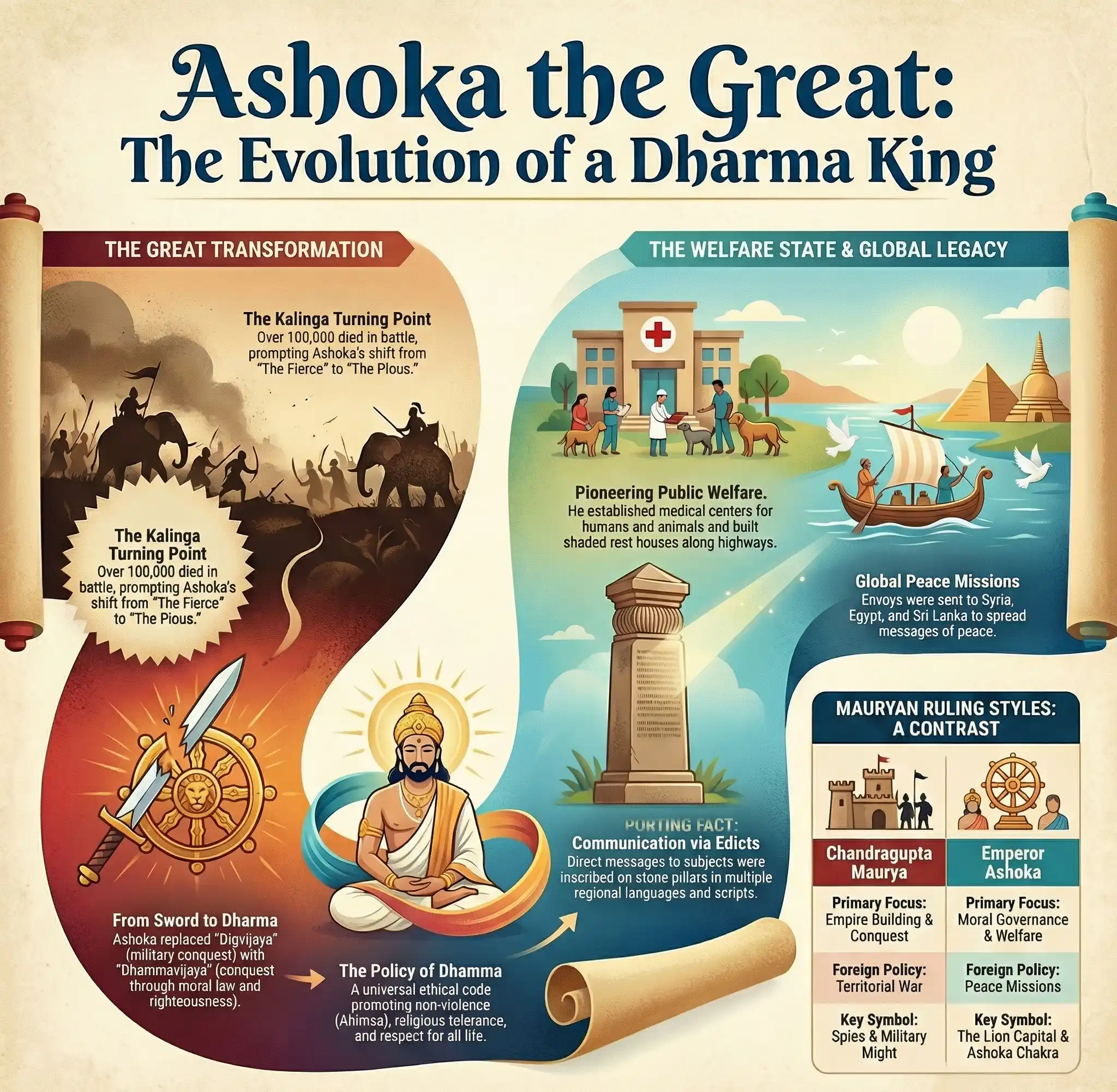
Emperor Ashoka (ruled c. 268–232 BCE) was the third emperor of the Mauryan Dynasty, grandson of Chandragupta Maurya. His reign is a unique chapter in world history. Initially known as Chandashoka (Ashoka the Fierce) for his ruthless expansion and elimination of rivals, his life changed forever after the Kalinga War in 261 BCE. The sheer scale of death witnessed on the battlefield drove him to remorse. He abandoned military conquest (Digvijaya) in favor of "Conquest by Dharma" (Dhammavijaya). He adopted Buddhism and dedicated the rest of his life to the welfare of his subjects, spreading messages of peace and tolerance through his famous Rock Edicts and Pillars. His emblem, the Lion Capital of Sarnath, is today the national emblem of India.| Feature | Details |
| Reign Dates | c. 268 – 232 BCE |
| Dynasty | Mauryan Dynasty |
| Capital | Pataliputra (Patna) |
| Titles | Devanam-piya (Beloved of the Gods), Piyadasi (He who looks with affection) |
| Turning Point | Kalinga War (c. 261 BCE) |
| Key Religion | Buddhism (Post-Kalinga) |
| Major Edicts | Rock Edicts (14 Major), Pillar Edicts (7 Major) |
| Children | Mahinda & Sanghamitta (Sent to Sri Lanka) |
| Legacy | Ashoka Chakra (Indian Flag), Lion Capital (National Emblem) |
Accession: The War of Succession
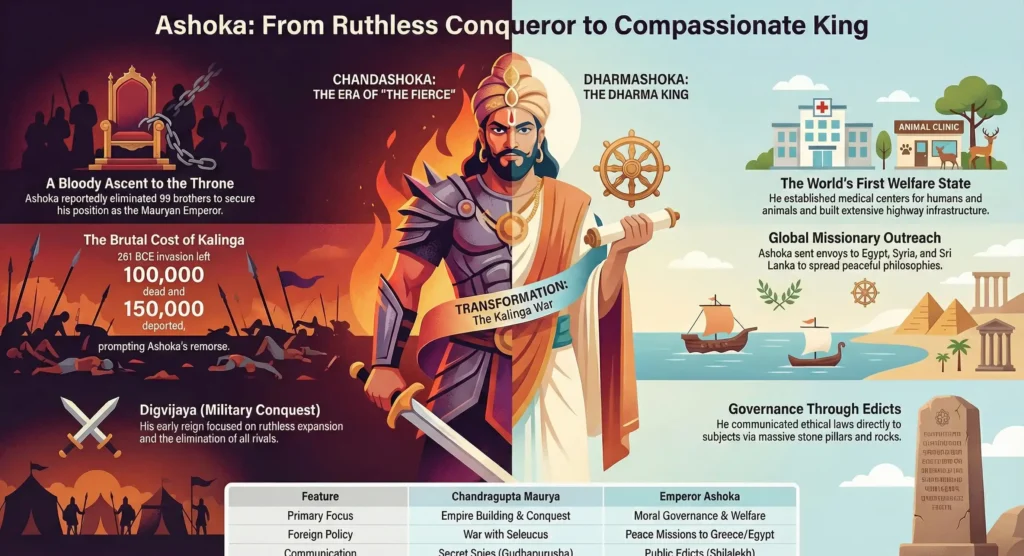
Ashoka was not the designated heir. According to Buddhist texts like the Mahavamsa, a bloody war of succession broke out after the death of his father Bindusara. Ashoka, who was the Viceroy of Ujjain, reportedly killed 99 of his brothers (sparing only the youngest, Tissa) to secure the throne. His coronation took place in 268 BCE, four years after seizing power.
Kalinga War c. 261 BCE: The Battle That Changed Ashoka Forever
The Kalinga War: The Turning Point
In the 8th year of his reign (261 BCE), Ashoka launched a massive invasion of Kalinga (modern Odisha). It was a slaughter. Major Rock Edict XIII records that 100,000 people were killed, 150,000 were deported, and countless others died of famine and disease.
Standing on the banks of the River Daya, which legend says ran red with blood, Ashoka was overcome with grief. He famously asked, “What have I done? Is this victory or defeat?” This moment marked the death of Chandashoka and the birth of Dharmashoka.
Ashoka’s Dhamma: A Policy of Ethics
Ashoka did not force Buddhism on his people. Instead, he formulated a code of conduct called Dhamma (Prakrit for Dharma). It was not a religion but a moral law based on human values.
- Key Principles: Respect for elders, kindness to animals (Ahimsa), truthfulness, and religious tolerance.
- Dhamma Mahamatras: He appointed special officers called Dhamma Mahamatras to travel across the empire and ensure the welfare of the people, including women and prisoners.
Reign of Chandragupta Maurya 321-297 BCE: The First Empire of India
Administration and Public Welfare
Ashoka arguably created the world’s first welfare state.
- Hospitals: He established medical centers for both humans and animals (Major Rock Edict II).
- Infrastructure: He planted banyan trees for shade, dug wells, and built rest houses every few kilometers along the highways.
- Judicial Softness: He introduced uniformity in judicial procedures and granted a 3-day respite to prisoners sentenced to death to allow them to appeal or prepare for the afterlife.
The Voice in Stone: Edicts and Pillars
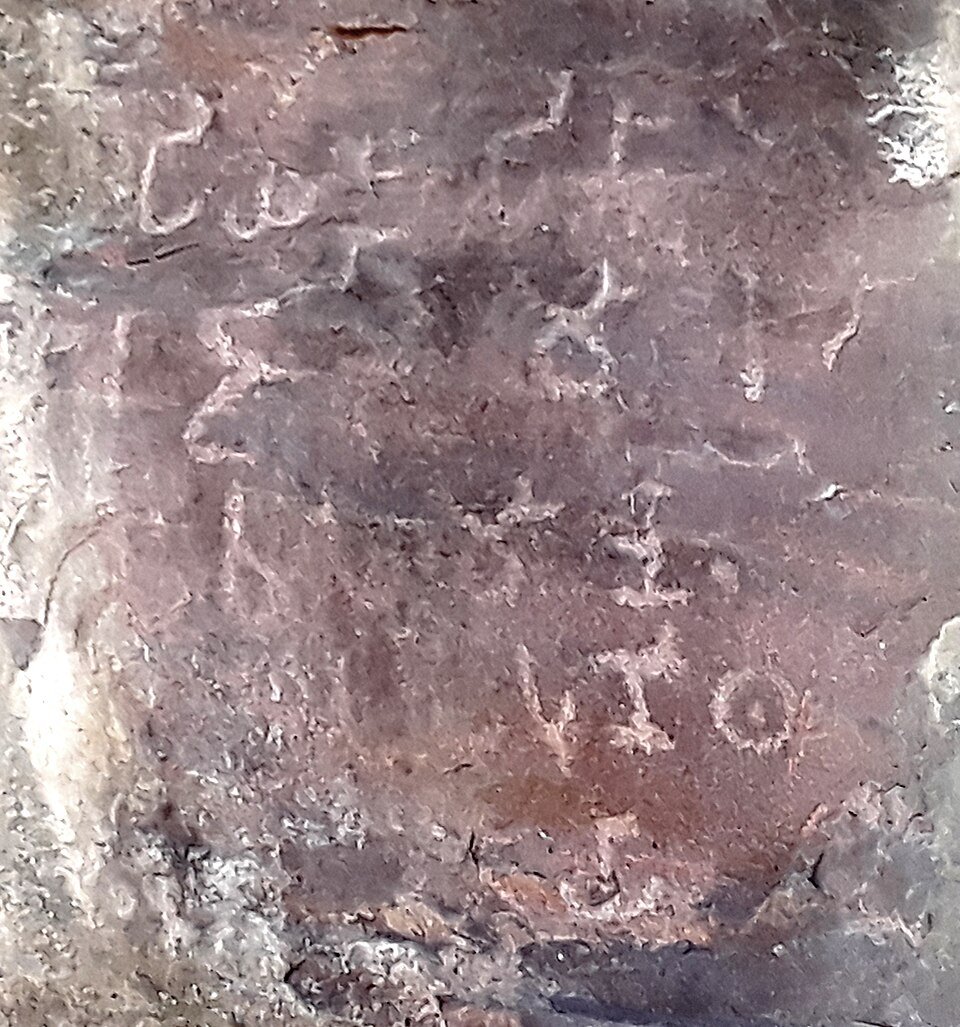
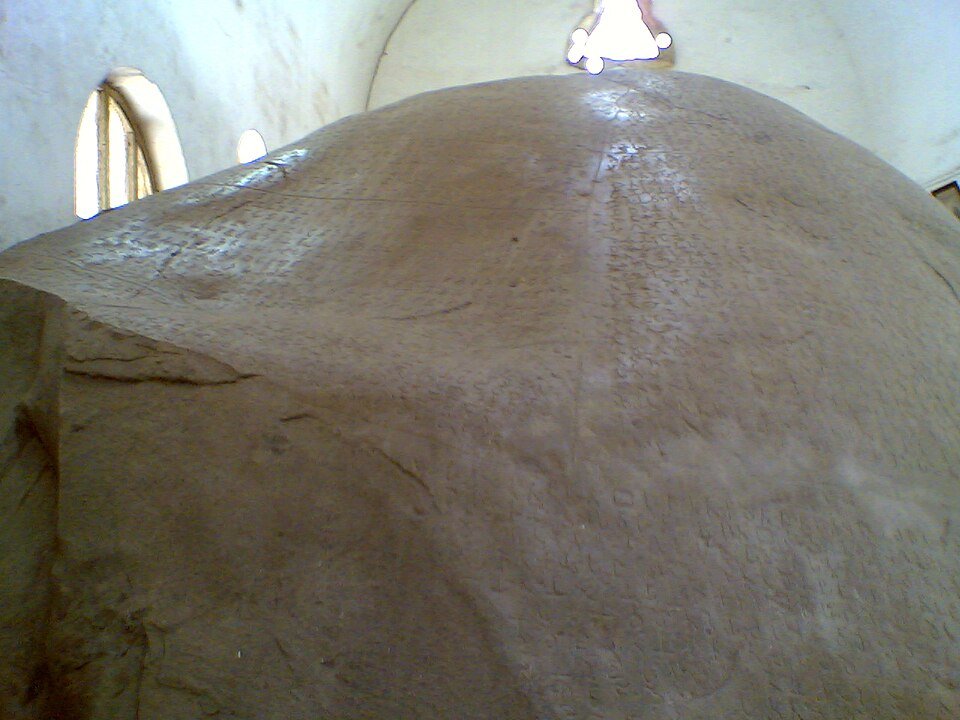
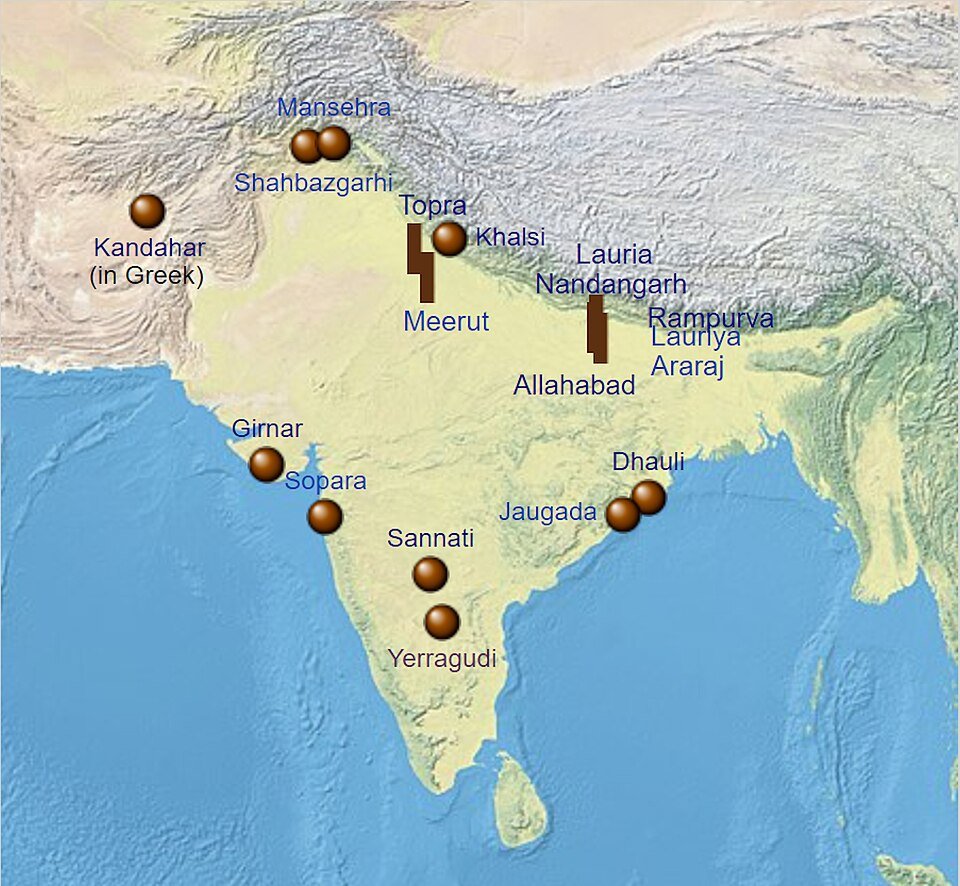
To communicate directly with his subjects, Ashoka inscribed his messages on rocks and polished sandstone pillars spread across the subcontinent (from Afghanistan to Karnataka).
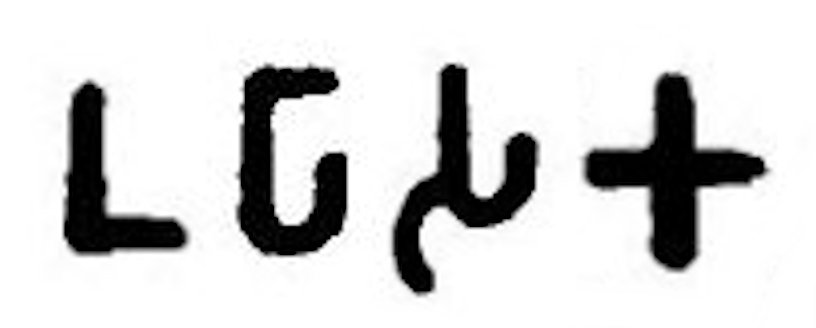
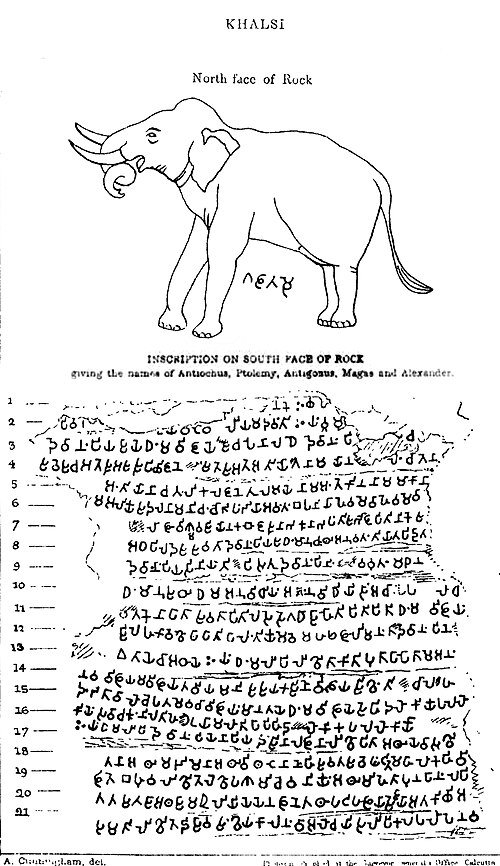
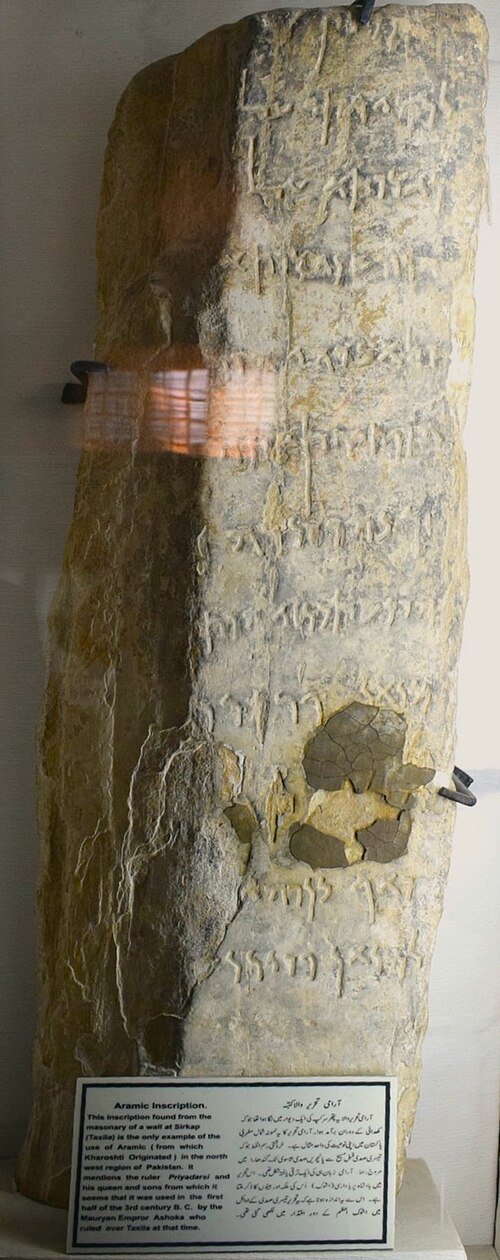
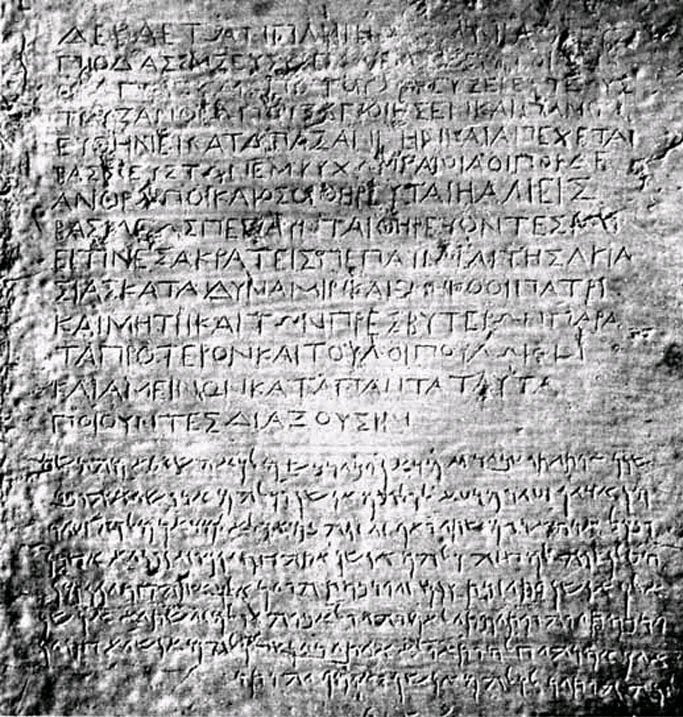
- Languages: The edicts were written in Brahmi (India), Kharosthi (Northwest), Aramaic, and Greek (Afghanistan), showing his desire to reach every subject in their own language.
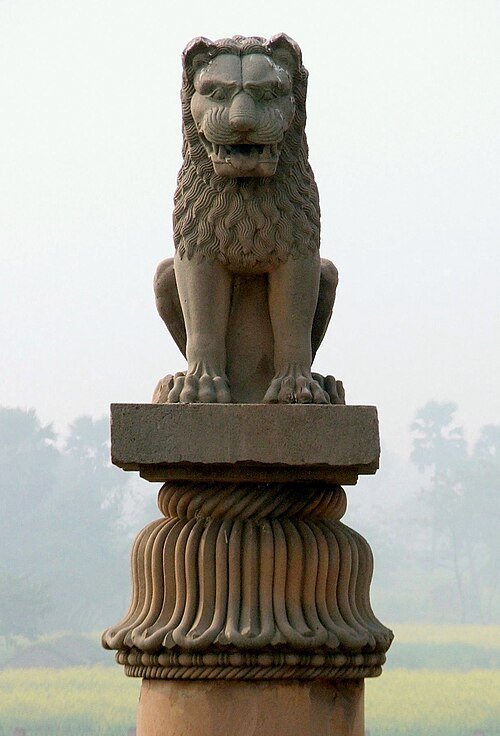
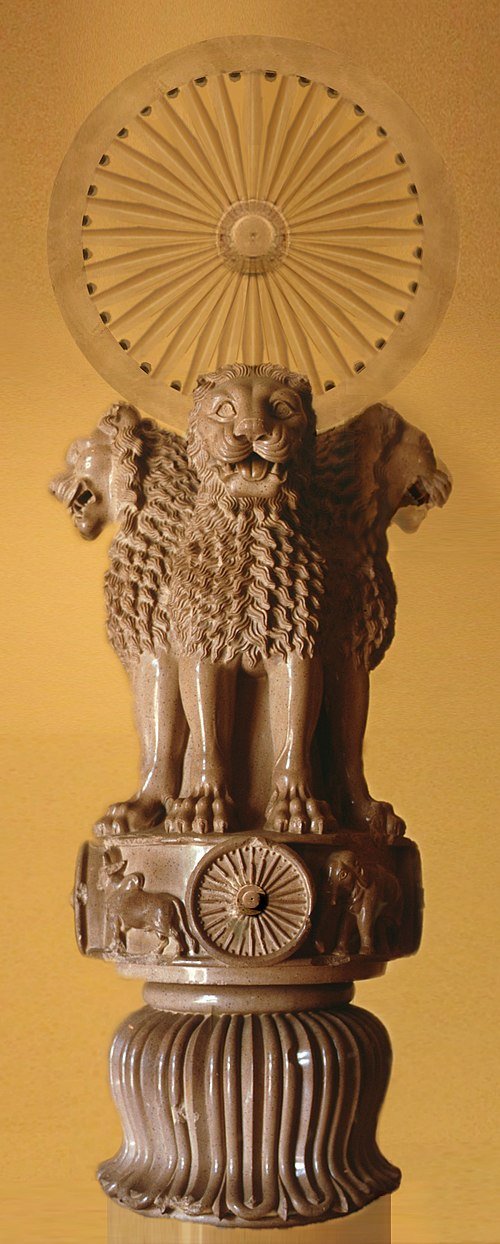
- Sarnath Lion Capital: The most famous pillar is at Sarnath, featuring four lions standing back-to-back, symbolizing power, courage, confidence, and pride. The wheel at the base is the Dharma Chakra.
Reign of Akbar 1556-1605: The Golden Age of the Mughal Empire
Missionary Activities
Ashoka turned Buddhism from a local sect into a world religion. He sent missionaries to:
- Sri Lanka: His son Mahinda and daughter Sanghamitta took a sapling of the Bodhi Tree to Sri Lanka.
- West Asia: He sent envoys to the courts of Hellenistic kings like Antiochus II (Syria) and Ptolemy II (Egypt), spreading the message of peace to the Mediterranean.
Quick Comparison Table: Chandragupta Maurya vs. Ashoka
| Feature | Chandragupta Maurya | Emperor Ashoka |
| Focus | Empire Building (Conquest) | Moral Governance (Welfare) |
| Religion | Jainism (Sallekhana) | Buddhism (Middle Path) |
| Foreign Policy | War with Seleucus | Peace Missions to Greece/Egypt |
| Communication | Spies (Gudhapurusha) | Edicts (Shilalekh) |
| Mentor | Chanakya (Kautilya) | Upagupta (Buddhist Monk) |
Curious Indian: Fast Facts
- The Name “Ashoka”: The name Ashoka means “Without Sorrow” (A = without, Shoka = sorrow). Ironically, his greatest transformation came from immense sorrow.
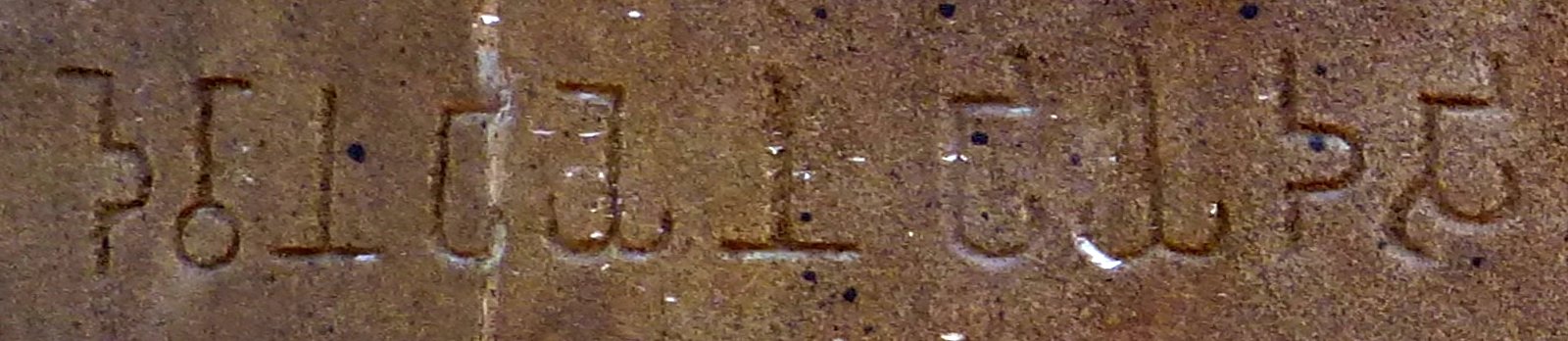
- Rediscovery: For centuries, Ashoka was forgotten. It was only in 1837 that British scholar James Prinsep deciphered the Brahmi script and identified “Devanam-piya Piyadasi” mentioned in the edicts as Emperor Ashoka.
- Vegetarianism: Ashoka banned the killing of many animals in his royal kitchen. He famously stated, “Formerly, hundreds of thousands of animals were killed daily for curry. Now, only three are killed… and soon, even these three shall not be killed.”
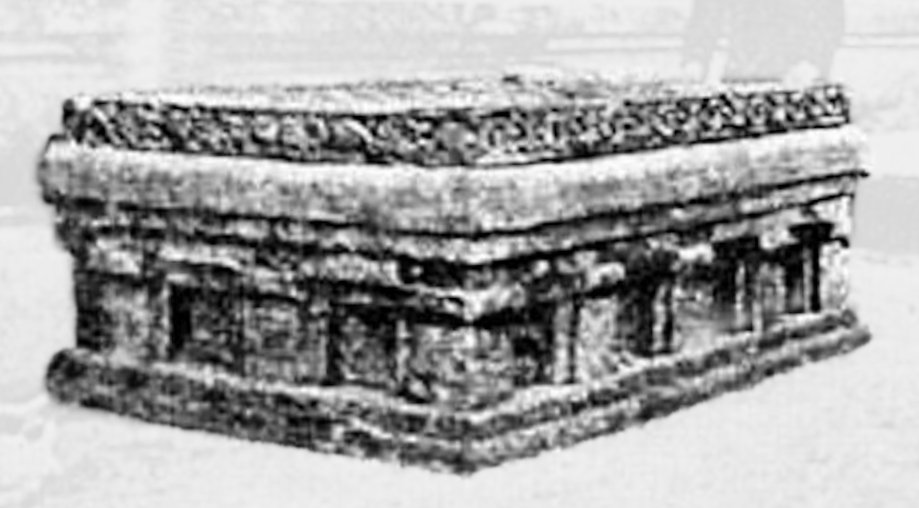
- The Third Buddhist Council: He convened the Third Buddhist Council at Pataliputra (c. 250 BCE) to purify the Buddhist Sangha and compile the scriptures.
Conclusion
The Reign of Emperor Ashoka stands as a beacon in human history. While Alexander the Great and Napoleon are remembered for how much land they conquered, Ashoka is remembered for how much he gave up. He proved that a king could be powerful without being cruel, and that the greatest strength lies not in the sword, but in the heart.
Reign of Samudragupta 335-375 CE: The Napoleon of India
If you think you have remembered everything about this topic take this QUIZ
Results


#1. Which catastrophic event in 261 BCE served as the ultimate turning point in Ashoka’s life, leading him to abandon military conquest?
#2. What was the name of the ethical code of conduct Ashoka promoted to ensure social harmony and religious tolerance?
#3. Ashoka is often credited with creating one of the world’s first ‘welfare states’. Which of these was a specific administrative measure he introduced?
#4. To communicate his messages of peace, Ashoka used polished sandstone pillars. Which of these is now the National Emblem of India?
#5. Ashoka’s edicts were written in several languages to ensure all his subjects understood him. Which language did he use for his edicts in Afghanistan?
#6. Who was the British scholar who, in 1837, deciphered the Brahmi script and rediscovered Ashoka’s historical identity?
#7. Ashoka sent his son Mahinda and daughter Sanghamitta to which island nation to spread Buddhism?
#8. According to the ‘Quick Comparison’ table, who was Ashoka’s primary mentor in his Buddhist journey, contrasting with his grandfather’s mentor Chanakya?
Which war changed Ashoka’s life?
The Kalinga War (261 BCE) changed his life, leading him to embrace non-violence.
What does “Devanam-piya Piyadasi” mean?
It means “Beloved of the Gods, He who looks with affection.” It was the title Ashoka used in his inscriptions.
Did Ashoka ban the death penalty?
No, he did not ban it completely, but he advocated for restraint and gave prisoners a grace period to appeal.
Where is the Ashoka Chakra on the Indian flag taken from?
It is taken from the abacus of the Lion Capital of Ashoka at Sarnath.
Who deciphered Ashoka’s edicts?
James Prinsep deciphered the Brahmi script of the edicts in 1837.