
Food is a universal language, and the Manipuri Eromba dish speaks volumes about the people of Manipur. This beloved staple is brilliantly simple. It is a hearty mash made primarily from boiled seasonal vegetables, fiery local chilies, and a very special ingredient called Ngari, which is traditional fermented fish. Instead of using rich cooking oils or complex spices, the people rely on the natural flavors of the earth and the river. Women in the family usually prepare it by carefully roasting the fish and chilies over an open fire before mashing everything together with steaming hot vegetables. The result is a deeply comforting, spicy, and savory paste that locals mix with mounds of white rice, bringing warmth and satisfaction to the soul.| Feature | Details |
| Origin Place | Manipur, India |
| Primary Ingredients | Seasonal vegetables, Ngari (fermented fish), King Chilli |
| Cooking Method | Boiling and mashing |
| Dietary Profile | Oil free, high in fiber, spicy |
| Best Paired With | Steamed white rice |
| Cultural Significance | A daily household staple |
The northeastern part of India is a treasure box of unique flavors and ancient traditions. If you walk into any home in Manipur just before lunchtime, you will likely smell something deeply savory, slightly smoky, and totally comforting. This is the unmistakable scent of the Manipuri Eromba dish being prepared. For the local people, this is not just food. It is a daily celebration of their land. Families do not need fancy equipment or expensive ingredients to make this meal. They use what grows in their backyards and what they can preserve for the rainy days.
The beauty of this food lies in its complete honesty. There are no hidden artificial flavors or heavy layers of oil to mask the true taste of the ingredients. Everything is boiled, roasted, and mashed by hand. When grandmothers sit by the kitchen fire to prepare this meal, they pass down a feeling of home to the younger generation. The process of making the food is just as important as eating it. It requires patience, a tolerance for heat, and a deep respect for the natural world.
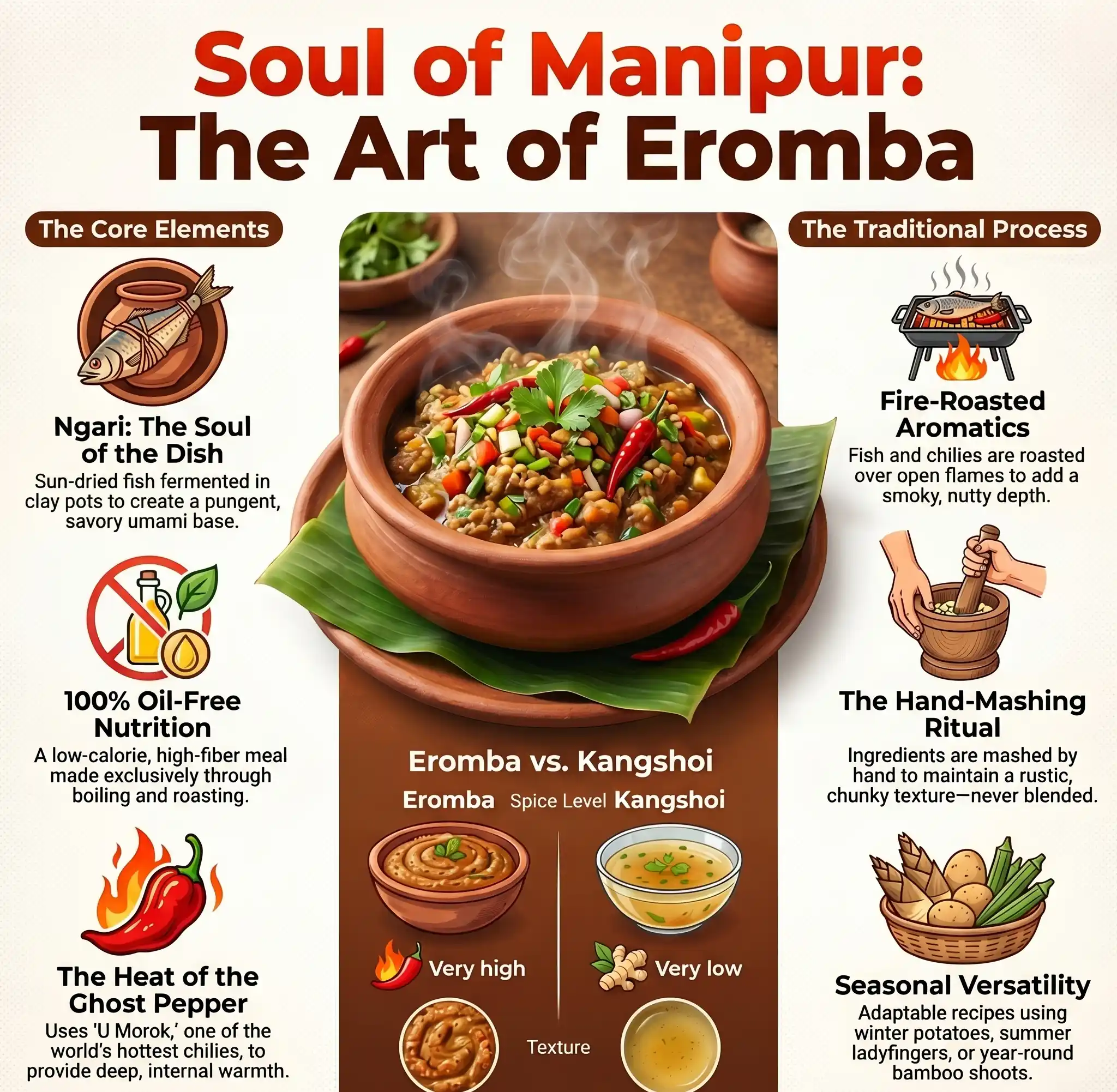
To truly understand this beloved recipe, you must first learn about Ngari. Ngari is the soul of Manipuri cooking. It is a type of small fish that is sun dried and then tightly packed into special clay pots called kharung. These pots are sealed and buried or kept in a dark place for many months. During this time, the fish ferments. Fermentation is an ancient way of keeping food safe to eat long after it is harvested. It also changes the flavor completely.
When you take the fermented fish out of the clay pot, it has a very strong, pungent smell. To someone who has never smelled it before, it can be quite surprising. But to a local person, that smell means comfort. Before the fish goes into the mash, it must be roasted. The cook will carefully hold the small fish over hot charcoal or an open flame. The fire crisps the outside and releases a rich, nutty, smoky aroma that fills the entire house. This roasted fish is the secret base that gives the dish its deep, savory taste.
Roasting the Ngari is an art form. If you burn the fish, the whole meal will taste bitter. If you do not roast it enough, the raw fermented flavor will be too strong. The cook watches the flame closely, turning the fish just at the right moment. This careful attention shows how much love goes into a humble plate of food.
Another wonderful thing about this recipe is that it changes with the seasons. There is no strict rule about which vegetables you must use. The only rule is that the vegetables must be boiled until they are completely soft. In the winter, families might use potatoes, cabbage, and peas. In the summer, they might use ladyfingers, tree beans, or banana stems. Bamboo shoots are also a huge favorite.
Because the region receives heavy rainfall, the soil is very rich. Vegetables grow easily and abundantly. Families often just step out into their gardens, pick whatever is ripe, and drop it straight into the boiling pot. Boiling the vegetables keeps all their natural nutrients intact. It makes the food very healthy and easy to digest. Once the vegetables are tender, they are drained, but the warm vegetable water is often kept aside to be used as a light soup.
You cannot talk about northeastern food without talking about the heat. The people of Manipur love spicy food, and they grow some of the hottest chilies in the world. The most famous one is the U morok, which many people know as the ghost pepper. This small, bright red or green chili packs an incredible punch.
Just like the fermented fish, the chili is often roasted over the open fire before it is used. Roasting softens the chili and brings out a hidden sweetness beneath the blazing heat. The cook will mash the roasted chili together with the roasted fish. This fiery, savory paste becomes the flavor engine of the entire meal. It warms the body from the inside out, which is especially helpful during the damp, cold monsoon months.
While the ghost pepper is popular, everyday meals might use milder local chilies. The goal is not just to burn your mouth. The goal is to create a warmth that spreads through your chest and makes you want to eat more of the plain white rice that accompanies the dish.
Once the fish and chilies are ground into a paste, the soft, boiled vegetables are added to the bowl. Now comes the most important part of the process. The cook must mash everything together. This is never done in an electric blender. A blender would make the texture too smooth, like baby food. The traditional way is to use a wooden masher or simply clean hands.
Mashing by hand leaves small chunks of potatoes or bamboo shoots in the mix. These different textures make eating the meal very interesting. As the ingredients are pressed together, the spicy, fishy paste coats every single piece of vegetable. Finally, the dish is garnished. The most common garnishes are chopped coriander leaves, sliced raw onions, and leaves from the chameleon plant, which has a fresh, slightly fishy taste of its own.
When the food is ready, it is carried to the center of the room. In traditional homes, the family sits together on the floor. A large mound of steaming white rice is placed on every plate. A generous spoonful of the spicy vegetable mash is placed right next to the rice.
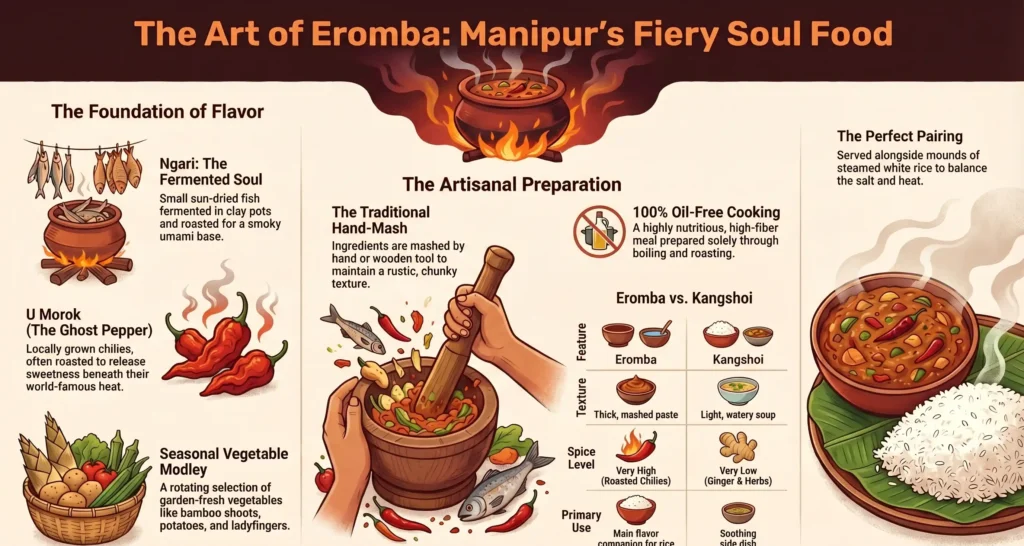
To eat it properly, you must use your fingers. You take a little bit of the mash, mix it deeply into the rice, and take a bite. The plain rice perfectly balances the intense saltiness and heat of the mash. It is a meal that forces you to slow down. You cannot eat it quickly because of the spice, and you do not want to eat it quickly because it tastes so good. Through this simple, ancient recipe, the people of Manipur stay connected to their ancestors, their land, and each other.
Quick Comparison Table
| Feature | Eromba | Kangshoi |
| Format | Thick, mashed paste | Light, watery soup |
| Spice Level | Very high (roasted chilies) | Very low (ginger and herbs) |
| Cooking Method | Boiled then mashed | Simmered with lots of water |
| Primary Use | Main flavor companion for rice | Soothing side dish or palate cleanser |
Curious Indian: Fast Facts
- The name of the dish roughly translates to mixing things until they are soft.
- It is naturally completely oil free, making it a very low calorie option despite its heavy flavor.
- Ngari, the fermented fish used in the recipe, is made without adding any salt during the fermentation process.
- The ghost pepper used for the heat was once certified as the hottest chili pepper in the entire world.
- Locals often use a special aromatic herb called Maroi Nakupi (Chinese chives) to garnish the final plate.
Conclusion
The journey into the kitchens of Manipur reveals a beautiful truth about human resilience and creativity. The Manipuri Eromba dish was born out of necessity. It was created by people who needed to preserve their food for long, harsh winters and heavy monsoon seasons. Yet, out of these basic survival techniques, they created something that is celebrated and craved every single day.
This simple vegetable mash shows us that you do not need expensive ingredients to make a memorable meal. All you need is a deep understanding of flavor, a respect for nature, and a willingness to put time and care into the cooking process. The intense heat of the chilies, the deeply savory notes of the fermented fish, and the comforting softness of the boiled vegetables create a harmony that is hard to find anywhere else.
As we explore the vast and diverse culinary landscape of India, it is dishes like these that truly stand out. They remind us that food is an anchor to our heritage. Every time a family sits down to a plate of rice and this spicy mash, they are keeping a vital piece of their culture alive. It is a fiery, flavorful testament to the spirit of the northeast.
What is the main flavor profile of this traditional mash?
It is intensely savory, spicy, and earthy. The combination of roasted fermented fish and roasted chilies gives it a strong, pungent umami flavor that pairs perfectly with plain rice.
Can this dish be made without fermented fish?
While the authentic version relies heavily on Ngari for its signature taste, vegetarians sometimes make a similar mash using roasted fermented soybeans, locally known as Hawaijar, to replicate the savory depth.
Is the meal considered healthy?
Yes, it is highly nutritious. Because the ingredients are only boiled and roasted, there is absolutely no cooking oil used. It is packed with fiber from the vegetables and vitamins from the fresh herbs.
What kind of vegetables work best for the boiling process?
Almost any vegetable that becomes soft when boiled works perfectly. Local favorites include potatoes, bamboo shoots, ladyfingers, taro roots, and banana stems.
Why is the food always mashed by hand instead of a machine?
Mashing by hand or with a wooden tool retains a rustic, chunky texture. An electric blender would turn the ingredients into a fine puree, which ruins the traditional mouthfeel of the meal.