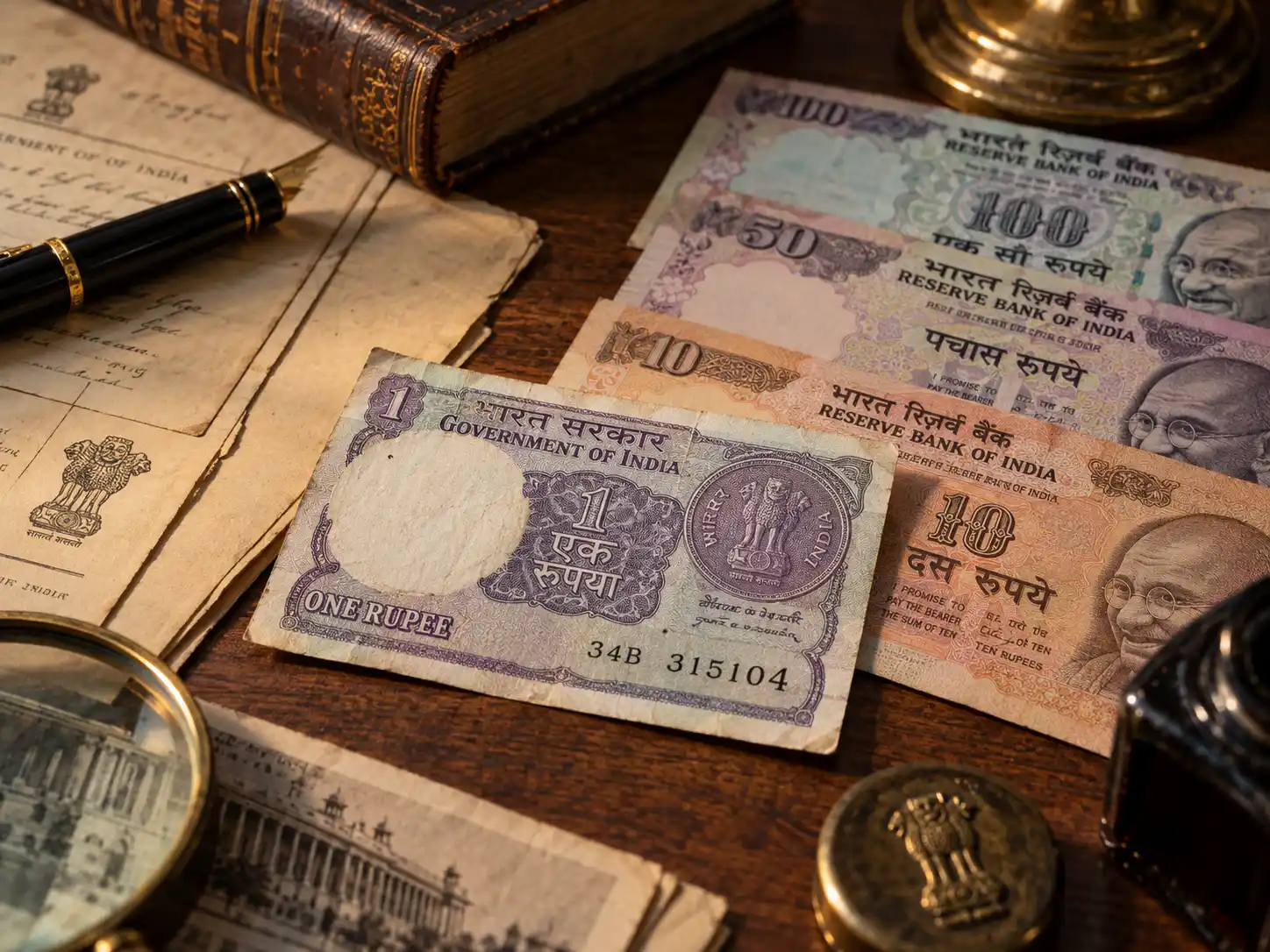
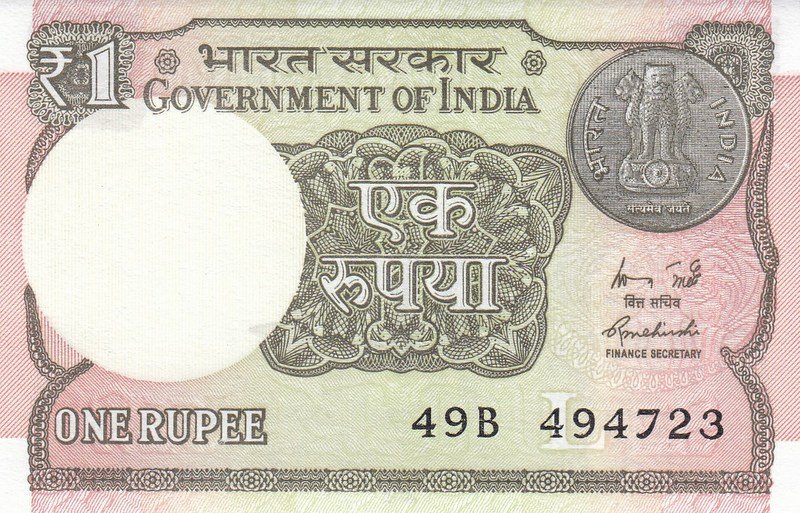
Put a ten-rupee note next to a one-rupee note and read them. The ten says Reserve Bank of India across the top. Below that is a sentence: I promise to pay the bearer the sum of ten rupees. Under the sentence is the signature of the Governor of the Reserve Bank. The one-rupee note says Government of India. It has no sentence promising anything. And the signature belongs to the Finance Secretary, the senior civil servant in the finance ministry. Nothing has gone wrong at the press. The two pieces of paper are different things in law. The ten is a banknote. The one, as far as the statute book is concerned, is a coin.
A coin the mint could not make
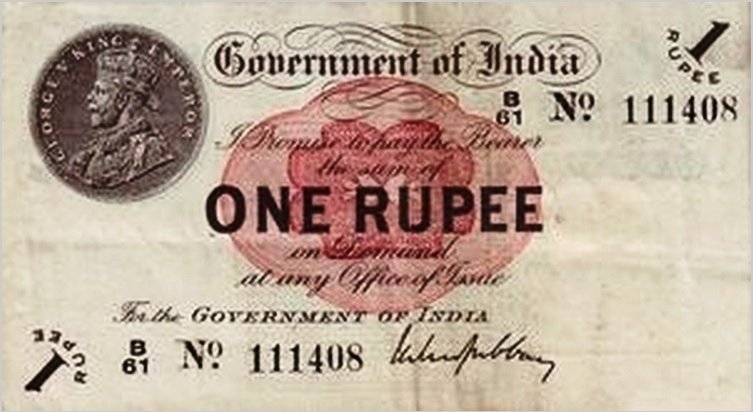
Until 1917 a rupee was a disc of silver. Then the First World War pushed up the price of silver until the metal in the coin was worth more than the coin, and the colonial government could no longer afford to strike it. On 30 November 1917 it issued a rupee on paper instead. The note was printed in England and carried a picture of the silver rupee it stood in for, with the head of King George V. Because it came from the government’s own finance department, it was signed by the finance secretary of the day. Three of them signed it over the years of that first issue: M.M.S. Gubbay, A.C. McWatters and H. Denning. The collector Girish Veera, who was interviewed by the Press Trust of India when the note turned a hundred, pointed out a habit that began then and never stopped. "Every Re 1 note," he said, "has a picture of the one rupee coin of that year." The paper rupee lasted eight years. On 1 January 1926 the government withdrew it. The Reserve Bank’s own history gives the reason in three words: cost benefit considerations.
The law that starts at two
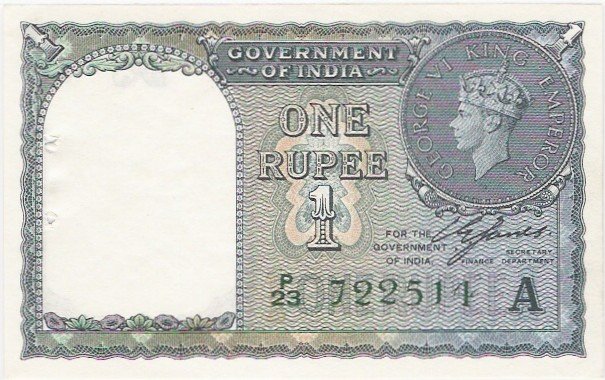
The Reserve Bank of India opened in 1935 and took over the job of issuing the country’s paper money. The Act that created it says which notes it may issue. Section 24 lists them: "two rupees, five rupees, ten rupees, twenty rupees" and so on up to ten thousand. The list begins at two. One rupee is not on it. The rupee itself, the unit everything else is counted in, stayed with the government, which went on minting it as a coin. That is why, when another war made metal scarce again, the Reserve Bank could not simply print a one-rupee banknote. In 1940, with the Second World War a year old, the government brought the paper rupee back itself, and gave it the legal standing of a rupee coin. This was the wartime India of rationing and shortage that would end in the Bengal famine. The new note was about half the size of the 1917 one and showed King George VI. So the arrangement was set. Every other note was a liability of the central bank, a promise signed by its Governor. The one-rupee note was government money, and a government official signed it.
After 1947
Independence changed the picture on the note and nothing else. In August 1949 the Government of India issued its first one-rupee note with the Lion Capital of Ashoka in place of the King. The signature was that of K.R.K. Menon, the finance secretary. Before that the currency presses had been busy printing notes for both India and the new state of Pakistan. In 1969, the year the banks were nationalised, the note carried Mahatma Gandhi’s portrait for the centenary of his birth. It is the only time a person has appeared on it. Otherwise each new finance secretary got a new print run with his name on it. Veera counted eighteen of them between Independence and 2017.
The promise never appeared, because there was nothing to promise. The sentence on a banknote is the Reserve Bank’s undertaking to make good the amount printed on it. A one-rupee note does not stand for a rupee held somewhere else. It is the rupee.
Rs 1.14
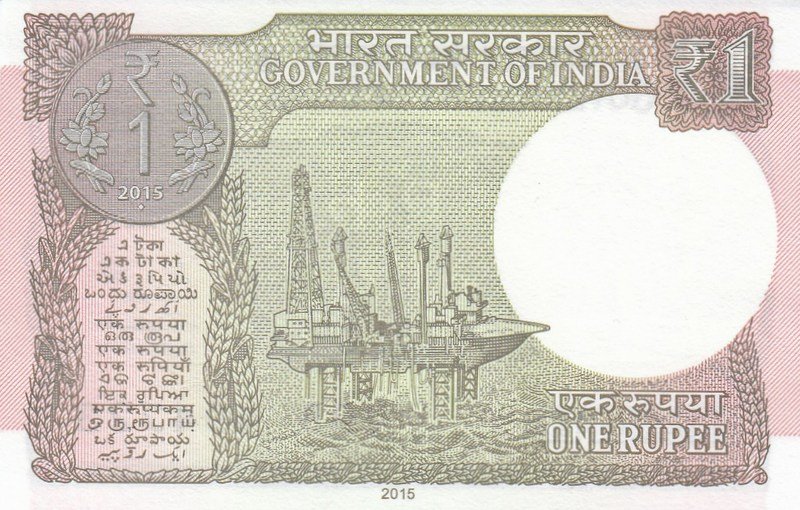
In 1994 the government stopped printing it. A paper note that passes through as many hands as a one-rupee note wears out in months, and a coin lasts for years. The two-rupee and five-rupee notes went the same way, and coins took over. Twenty years later it came back. A finance ministry notification of 16 December 2014 ordered fresh printing, and on 13 February 2015 the Reserve Bank announced that it would soon put the notes into circulation. The wording of that press release is careful. The notes would be "printed by the Government of India". They were legal tender "as provided in The Coinage Act 2011", which is the law for coins. The Bank was only the distributor. The new note was pink and green and measured 9.7 by 6.3 centimetres. It showed the 2015 rupee coin on the front and the oil rig Sagar Samrat on the back, and it was signed in Hindi and English by the Finance Secretary, Rajiv Mehrishi. The first ones were released in early March 2015 at the Shrinathji temple in Nathdwara, Rajasthan. The right-to-information activist Subhash Chandra Agrawal asked what each one cost to make. The government’s printing corporation replied that for 2014-15 the figure, provisional and unaudited, was Rs 1.14. Agrawal called the revival a "costly and undesired decision". The collector Veera, asked the same question two years later, said every wise government should keep the note going. By then about 160 million of the new ones had been printed. A hundred and some years on, the one-rupee note is still what it was on 30 November 1917: a coin that happens to be made of paper, with a coin’s picture on it so that nobody forgets.
Test your knowledge
Answer 5 questions about the story.
Who signs the one-rupee note in India?
The Finance Secretary of the Government of India. All other denominations are signed by the Governor of the Reserve Bank of India.
Why does the RBI not issue the one-rupee note?
Section 24 of the Reserve Bank of India Act lists the denominations of bank notes starting from two rupees. The one-rupee note is issued by the Government of India and is legal tender under the Coinage Act, 2011.
Why is there no “I promise to pay the bearer” on a one-rupee note?
That sentence is the Reserve Bank’s promise on its own banknotes. The one-rupee note is government currency with the legal standing of a coin, so it carries no promise clause.
When was the first one-rupee note issued?
On 30 November 1917, during the First World War, when the rising price of silver made the rupee coin too costly to mint. It was withdrawn in 1926 and brought back in 1940.
Is the one-rupee note still printed?
Printing stopped in 1994 and resumed after a government notification in December 2014. The new notes, signed by Finance Secretary Rajiv Mehrishi, were released in March 2015.
Sources and further reading
- Reserve Bank of India, press release 2014-2015/1722, "Issue of One Rupee currency notes", 13 February 2015: https://www.rbi.org.in/scripts/BS_PressReleaseDisplay.aspx?prid=33248
- The Reserve Bank of India Act, 1934, section 24 (Denominations of notes)
- Press Trust of India, "Birth and rebirth: Hundred years of Re 1 note", Business Standard, 30 November 2017: https://www.business-standard.com/amp/article/pti-stories/a-century-of-the-princely-re-1-coin-117112901237_1.html
- Anup Roy, "Note the journey: 100 years of one rupee note", Business Standard, 2 December 2017: https://www.business-standard.com/amp/article/current-affairs/note-the-journey-100-years-of-one-rupee-note-117120200062_1.html
- Gaurav Vivek Bhatnagar, report on RTI replies about the one-rupee note, The Wire, 20 March 2017: https://m.thewire.in/article/economy/one-rupee-note-issued-only-to-fulfil-desire-of-bureaucrats-to-have-their-signature-on-it-reveals-rti
- The Coinage Act, 2011