How Kamaladevi Chattopadhyay Preserved India’s Living Craft Knowledge
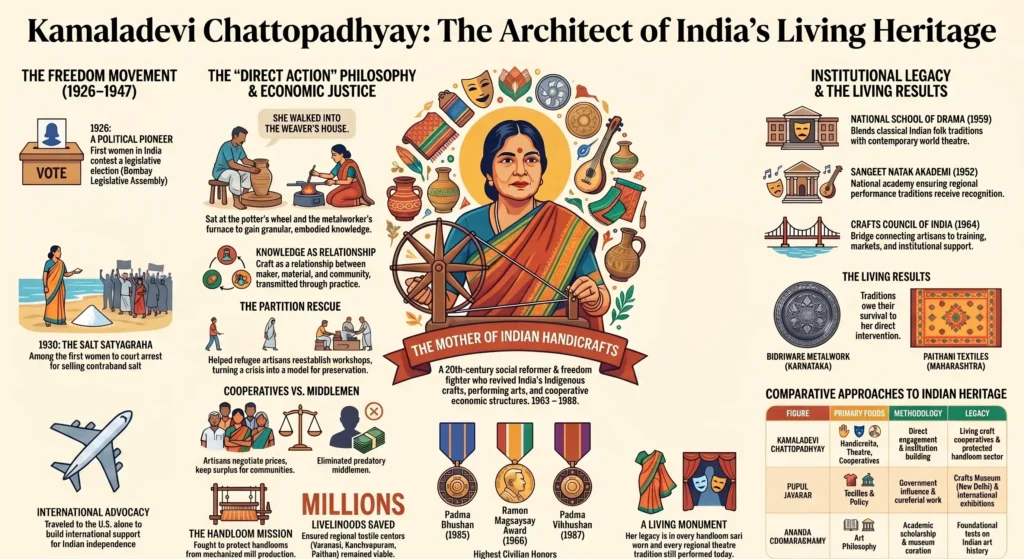
Kamaladevi Chattopadhyay understood something about Indian handicrafts that the newly independent government of 1947 did not immediately grasp: that the weavers and potters and metalworkers and embroiderers of India were not producing decorative objects for the tourist market but were carrying inside their hands and their bodies a form of knowledge that had taken centuries to accumulate and that would take perhaps one generation of neglect to lose forever. She spent the better part of five decades making herself personally inconvenient to every administrative body, political figure, and institutional structure that was prepared to let that knowledge disappear. The cultural preservation mission of Kamaladevi Chattopadhyay was not a hobby or a passion project. It was a sustained act of civilizational rescue.
How Pandita Ramabai Pioneered a Fearless Crusade for Women’s Education
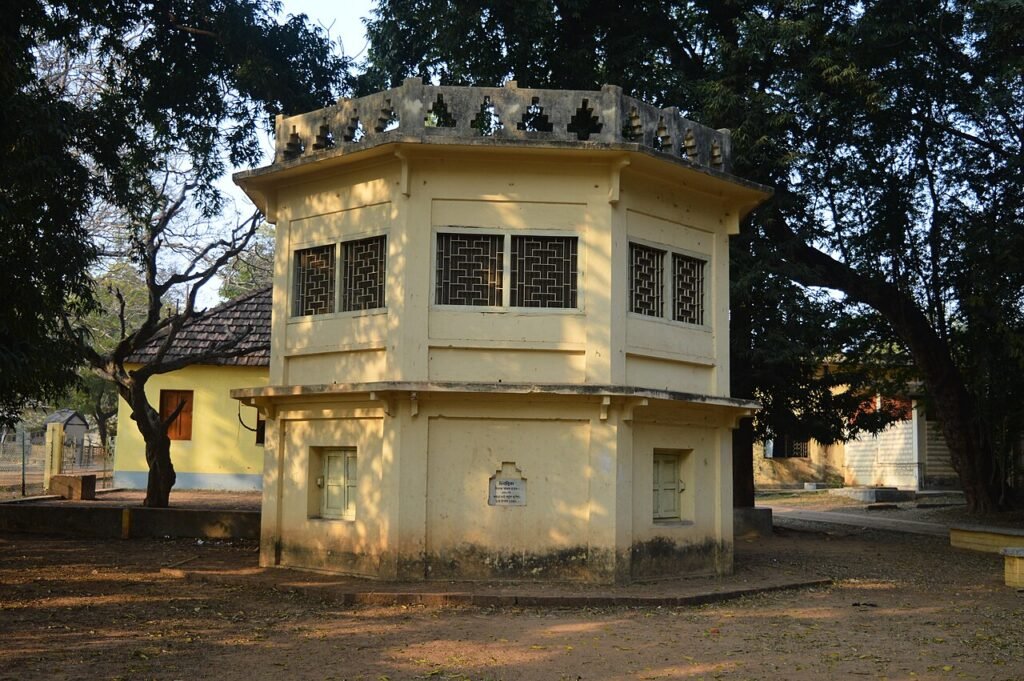
Related to article: The Woman Who Walked Into the Weaver’s House · Source: Wikimedia Commons · Bodhisattwa · CC BY-SA 4.0
The Method: Direct Engagement with the Makers
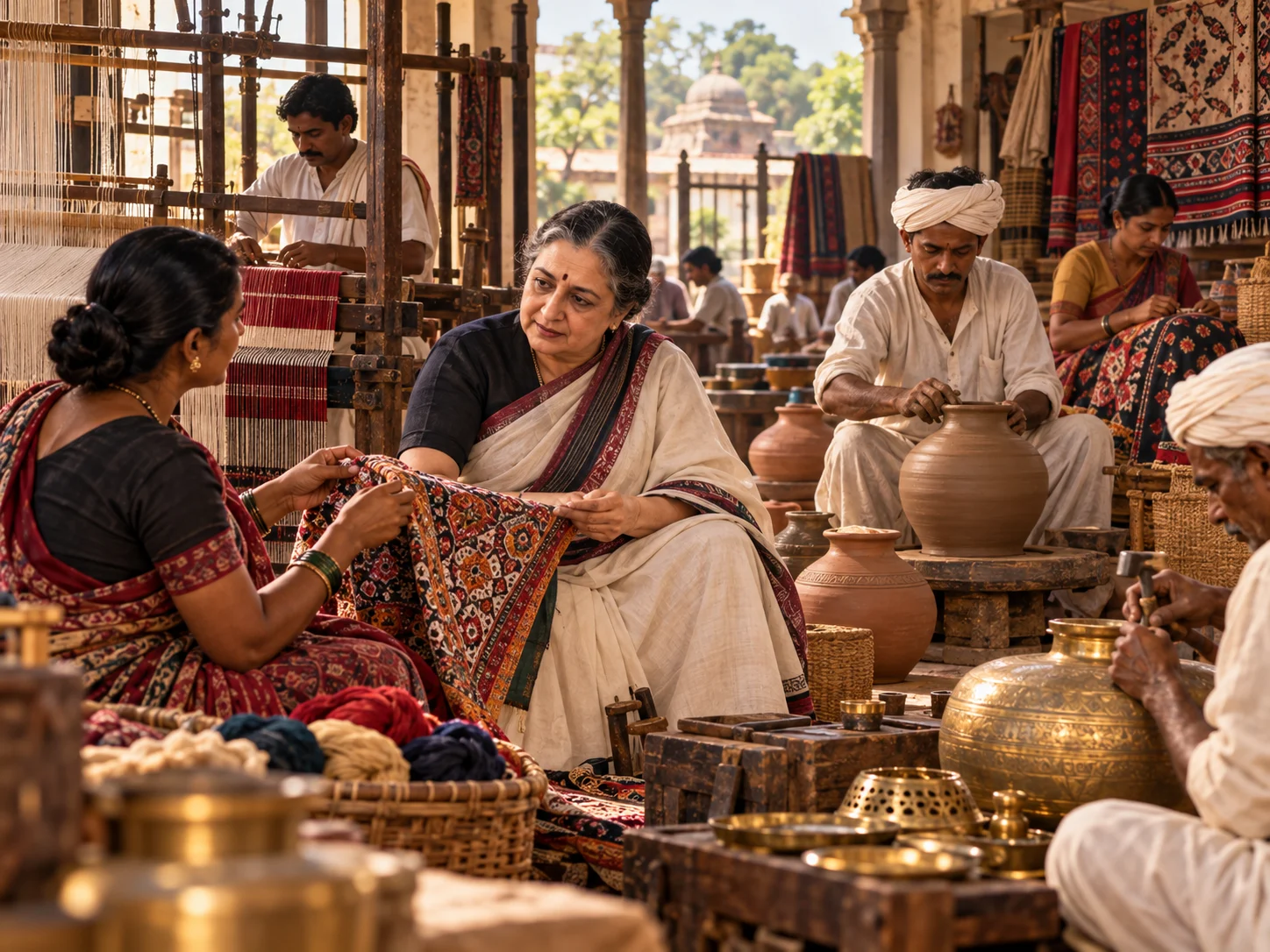
There is a particular kind of institutional reformer who operates from offices, reads reports, and makes policy recommendations that are implemented at a distance from the reality they are meant to address. Kamaladevi Chattopadhyay was not that kind of reformer. She walked into the weaver’s house. She sat at the potter’s wheel. She watched the metalworker at his furnace and the embroiderer at her frame and she came back with the specific, granular, embodied knowledge of what was actually happening in those rooms, that knowledge which no government report had ever adequately contained.
This quality of personal, direct engagement with the artisans whose lives she was trying to change was not simply a stylistic preference. It was a philosophical position. Kamaladevi believed that the knowledge embedded in Indian craft traditions was not primarily a matter of technique but of relationship, the relationship between the maker and the material, between the artisan’s community and its accumulated understanding of what the material could do, between the living practitioner and the generations of practitioners whose decisions and experiments and refinements had produced the tradition being practiced today.
You could not understand that relationship from a distance. You had to go and sit in the room where it was happening. And if you were Kamaladevi Chattopadhyay, that is what you did, across five decades, across hundreds of craft communities, in every region of a country whose geographic and cultural diversity made the task she had set herself one of the most logistically demanding acts of cultural preservation undertaken by a single individual in the twentieth century.
Related to article: The Woman Who Walked Into the Weaver’s House · Source: Wikimedia Commons · Bodhisattwa · CC BY-SA 4.0
Thakkar Bapa’s Tribal Upliftment Work in Remote India
A Childhood That Shaped the Visionary
Kamaladevi was born on April 3, 1903, in Mangalore, a coastal city in Karnataka that sat at the intersection of multiple cultural traditions, the Tulu culture of the Konkan coast, the Kannada literary tradition, the influence of the Arabian Sea trade routes, and the particular intellectual ferment of a family that took ideas seriously. Her father, Ananthaya Dharmadaya Krishnarao, was a government official of standing who died when Kamaladevi was seven. Her widowed mother, Girijabai, was a remarkable woman in her own right, educated, socially progressive, and connected to the circle of thinkers in Maharashtra and Karnataka engaged with the questions of social reform and national awakening that were reshaping Indian intellectual life at the turn of the century.
Girijabai took her daughter to the theatre, to craft exhibitions, and into the homes of artists and thinkers. She exposed her to the social reform tradition of the Karnataka region and ensured that she received the kind of education that was unusual for women of any background in early twentieth-century India. Kamaladevi studied at Bedford College in London and at the London School of Economics, returning to India with a command of the intellectual frameworks of Western political economy alongside a growing conviction that those frameworks alone were inadequate to the actual conditions of Indian life.
Related to article: The Woman Who Walked Into the Weaver’s House · Source: Wikimedia Commons · Bodhisattwa · CC BY-SA 4.0
Her first marriage, to Krishna Rao, ended with his early death. Her second marriage, to the poet, playwright, and actor Harindranath Chattopadhyay, whose own unconventional creative life was a natural complement to her increasingly unconventional public one, produced a partnership that was intellectually generative for both.
The Freedom Movement and the Formation of a Method
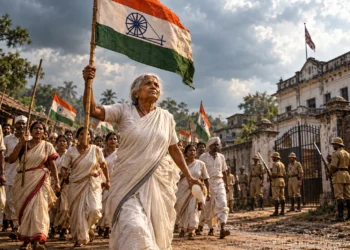
Before Kamaladevi became the person who saved India’s handicrafts, she was the person who was arrested for selling contraband salt on a Bombay beach during the Civil Disobedience Movement of 1930. She was one of the first women to court arrest during Gandhi’s satyagraha campaigns, and she did it with the same directness and physical presence that would later characterize her work among craft communities.
Her involvement in the freedom movement was not peripheral. She organized women’s participation in the Civil Disobedience Movement at a scale that drew national attention. She ran for election to the Bombay Legislative Assembly in 1926, becoming one of the first women in India to contest a legislative election, narrowly losing by a margin that was contested and widely believed to have involved irregularities. She traveled to the United States to build international support for Indian independence at a time when such travel required considerable logistical courage for an Indian woman acting largely on her own initiative.
Related to article: The Woman Who Walked Into the Weaver’s House · Source: Wikimedia Commons · Bodhisattwa · CC BY-SA 4.0
The freedom movement gave Kamaladevi something more important than political experience. It gave her a method. The method was direct action, personal presence, the refusal to allow the distance between policy and reality to remain comfortable, and the conviction that social change required the mobilization of communities rather than the administration of programs. These principles, learned in the context of anti-colonial politics, traveled intact into her work with artisan communities after independence.
The Partition Crisis and the First Test of Rescue
How Syed Ahmad Khan Changed Muslim Education in India
The circumstances that most immediately shaped Kamaladevi’s post-independence work were the circumstances of partition. When India and Pakistan separated in August 1947, the displacement of populations was accompanied by the displacement of craft traditions. Artisan communities whose workshops had been in Lahore, Rawalpindi, and other cities that became part of Pakistan found themselves refugees in a new country, their tools left behind, their traditional markets disrupted, their community networks severed.
Kamaladevi threw herself into this crisis with the full force of her organizational capacity. She worked with refugee artisan communities across North India, helping them to reestablish their workshops, to access materials and markets, and to begin the process of rebuilding the craft traditions that partition had so severely disrupted. This work was urgent, practical, and exhausting, and it gave her a ground-level understanding of what artisan communities actually needed from institutions and government that no amount of policy reading could have provided.
It also gave her the beginning of the organizational network that she would spend the next four decades expanding and systematizing. The contacts, the relationships, the understanding of what worked and what did not in the support of artisan livelihoods, all of this was built in the crucible of the partition crisis and carried forward into the longer, more sustained work of cultural preservation that became the defining project of her public life.
The Crafts Council and the Architecture of Rescue
The Crafts Council of India, which Kamaladevi helped to establish in 1964 and which she led for a significant portion of its formative years, was the institutional expression of everything she had learned about the relationship between artisan communities and the conditions they needed to survive and flourish. It was not conceived as a charity or a welfare organization. It was conceived as a bridge, connecting artisans to markets, to training, to the institutional support that would allow them to continue practicing their crafts at a level of economic viability that would make the transmission of those crafts to the next generation a realistic option rather than an act of economic self-sacrifice.
The distinction mattered enormously to Kamaladevi. She was not interested in preserving Indian crafts as museum objects, as beautiful specimens of a dead tradition maintained in glass cases for tourists to photograph. She was interested in preserving them as living practices, sustained by communities of working artisans who could earn a living from their skills and who would therefore have reason to teach those skills to their children.
This required attention to economics as well as aesthetics, to markets as well as techniques, to the organizational structures of artisan communities as well as the physical objects they produced. It required the development of cooperative models that gave artisans collective economic leverage they did not have as individual producers. It required the cultivation of urban and international markets for craft products at a time when the prestige economy of post-independence India was oriented toward industrial production and tended to view handicrafts as economically backward.
Kamaladevi fought all of these battles simultaneously, through the Crafts Council, through her relationships with government ministries, through her international connections, through her writings and her lectures, and through the sheer force of her personal presence in every room where decisions that affected artisan communities were being made.
The Handloom Mission and the Weavers of India
The Rationalist Awakening Sparked by Gopal Hari Deshmukh in Maharashtra
The handloom sector was the most urgent and the most economically complex of all the craft traditions Kamaladevi worked to preserve. India’s handloom weavers, who numbered in the millions and who produced textiles of extraordinary quality and variety, were under direct economic pressure from the expansion of the mill textile industry that colonial industrialization had established and that post-independence industrial policy was accelerating.
The argument being made by industrial modernizers, that mill production was cheaper and more efficient and that the handloom industry was an anachronistic remnant of a pre-industrial economy that should be allowed to phase out naturally, was economically coherent on its own terms. Kamaladevi’s counter-argument was that the terms themselves were inadequate. The economic calculus that placed mill textiles above handloom textiles because they were cheaper to produce was a calculus that did not account for the cultural knowledge embedded in handloom production, the design traditions, the regional specificity, the relationship between textile and identity that different communities across India had developed over centuries, or the sheer human cost of the extinction of a livelihood that supported millions of families.
She made this argument to government ministries, to planning commissions, to international organizations, and to anyone else with institutional power over the decisions that would determine whether India’s handloom traditions survived or not. She made it with the combination of economic literacy, cultural depth, and personal conviction that made her unusually difficult to dismiss, and she won enough of those arguments to ensure that the handloom sector received protective policy attention in the early decades of independence rather than being simply abandoned to the market forces that would have destroyed it.
The work she did to establish the All India Handicrafts Board, and her role in shaping the policies that supported handloom cooperatives across India, created economic structures within which weavers in Varanasi, Kancheepuram, Paithan, Pochampally, and dozens of other textile centers were able to continue their work. The specific regional textile traditions that today represent some of India’s most recognized cultural products—the Banarasi silk, the Kanjivaram silk, the Paithani, the Ikat weaves of Odisha and Andhra, the Bidriware metalwork from Karnataka, and the Phulkari embroideries—owe their survival in significant part to the institutional and policy work that Kamaladevi conducted during the critical decades of the 1950s and 1960s.
The Theatre and the Performing Arts
Kamaladevi’s cultural preservation mission was not limited to the visual and material arts. She was equally committed to the preservation and development of India’s performing arts traditions, and the institutions she helped to build in this domain were as significant as those she built for handicrafts.
The Sangeet Natak Akademi, India’s national academy for music, dance, and drama, was established in 1952 with Kamaladevi’s active involvement, and it became one of the primary institutional vehicles through which the regional performing arts traditions of India received national recognition and support. The documentation, preservation, and promotion of classical dance forms, regional theatre traditions, and folk performance practices that the Sangeet Natak Akademi undertook in its early decades was work that Kamaladevi helped to shape and that has had lasting consequences for which of India’s performing arts traditions survived the homogenizing pressures of the mid-twentieth century.
The National School of Drama, established in New Delhi in 1959, was another institution that Kamaladevi helped to bring into existence. It became the most significant training institution for theatre in India and played a central role in the development of modern Indian theatre as a self-conscious artistic practice drawing on both the rich traditions of Indian classical and folk performance and the possibilities opened by contemporary world theatre.
Her understanding of the performing arts was inseparable from her understanding of the material arts. Both represented forms of knowledge embedded in communities and bodies, transmitted through practice and apprenticeship, vulnerable to the disruptions of economic pressure and cultural dislocation, and irreplaceable once lost.
The Cooperative Vision and Economic Justice
Running through all of Kamaladevi’s work in handicrafts, handloom, and the performing arts was a consistent economic philosophy that she had developed through her engagement with both the Gandhian tradition of cottage industry and the broader tradition of cooperative economics. She believed that the survival of artisan communities required not just cultural recognition and market access but a fundamental restructuring of the economic relationships within which those communities operated.
The artisan who sold their work through middlemen received a fraction of the final market price, with the surplus captured by the traders and distributors who controlled access to urban and international markets. The cooperative model that Kamaladevi championed sought to eliminate or minimize this extraction by organizing artisans into collective structures that could negotiate directly with buyers, set prices that reflected the actual skill and labor embedded in the work, and reinvest surplus into the community of producers rather than allowing it to flow outward to intermediaries.
This was a vision of economic justice as well as cultural preservation, and it was a vision that required Kamaladevi to engage with questions of organizational structure, financial management, and market development that were far removed from the aesthetic appreciation of craft objects that a purely cultural approach might have centered. She engaged with those questions seriously and practically, building cooperatives that actually functioned rather than simply advocating for a cooperative model in the abstract.
The International Stage and the Global Argument
Kamaladevi’s work was not confined to India. She traveled extensively in Asia, Europe, and the Americas, carrying the argument for the value of indigenous craft traditions to international audiences and building the networks of institutional and individual support that helped to position Indian handicrafts in global markets.
Her receipt of the Ramon Magsaysay Award in 1966, the prize widely regarded as Asia’s Nobel, was a recognition of this international dimension of her work and of the broader significance of what she was doing for the preservation of Asian craft and cultural heritage beyond India’s borders.
She was a founding figure of the World Crafts Council, established in 1964, which became the primary international organization for the advocacy and support of craft traditions globally. Her role in building this organization placed the concerns of Indian artisans within a global conversation about the relationship between industrial modernization and the survival of traditional craft knowledge, a conversation that has grown considerably more urgent in the decades since her death.
What Was Actually Being Preserved
It is worth pausing to be precise about what Kamaladevi Chattopadhyay was actually working to preserve, because the answer is more complex than the phrase “Indian handicrafts” suggests.
She was preserving knowledge. Specifically, she was preserving the accumulated knowledge of how to work particular materials in particular ways that had been developed by particular communities over particular periods of time. A Banarasi weaver working in the silk brocade tradition was not simply making a textile. They were practicing a knowledge system that encoded decisions about thread count, dye chemistry, loom mechanics, pattern geometry, and design vocabulary that their community had been refining for centuries. That knowledge system existed nowhere except in the hands, eyes, and memories of the people who practiced it. It could not be digitized. It could not be adequately described in a manual. It could only be transmitted through the relationship between a practitioner and a learner, across time, through practice.
If the practitioner stopped practicing, the knowledge died. Not immediately, not visibly, but permanently. Once a generation passed without transmission, what was lost was gone in a way that no subsequent revival program could fully recover. Kamaladevi understood this with a clarity that gave her work its urgency and that distinguishes genuine cultural preservation from the documentation and archiving that is sometimes mistaken for it.
She was racing against a clock that no one else seemed to be able to hear clearly, and she ran that race for five decades without slowing down enough to give the clock time to win.
The Legacy That Lives in the Making
Kamaladevi Chattopadhyay died on October 29, 1988, in New Delhi, at the age of eighty-five. She had spent sixty years of her adult life in the service of a set of convictions about what India was, what its people had made over centuries, and what would be lost if the pressures of industrial modernization, cultural dislocation, and institutional indifference were allowed to run their course without resistance.
The institutions she built are still functioning. The Crafts Council of India continues to connect artisans with markets and institutional support. The Sangeet Natak Akademi continues to document and promote India’s performing arts traditions. The National School of Drama continues to train theatre practitioners. The cooperative structures she helped to establish in weaving, pottery, and other craft communities continue to provide economic frameworks within which artisans can operate with greater collective leverage than they would have as individual producers.
The craft traditions she worked to preserve are still alive, many of them carrying the marks of the specific interventions she made, the market connections she established, the policy protections she negotiated, the institutional support she mobilized. Every Kanjivaram silk saree purchased, every piece of Bidriware handled, every Phulkari embroidery admired, every performance of a regional theatre tradition attended, represents the continuation of a tradition that might not have survived without the work she did.
That is what a cultural preservation mission looks like when it succeeds. Not a monument. Not an archive. A living practice, still being practiced, still being transmitted, still making things that could not have been made any other way.
How Jyotiba Phule’s Satyashodhak Samaj Challenged Caste in Maharashtra
If you think you have remembered everything about this topic take this QUIZ
Results


#1. In which city was Kamaladevi Chattopadhyay born on April 3, 1903?
#2. Kamaladevi Chattopadhyay ran for election to which legislative body in 1926, becoming one of the first women in India to contest a legislative election?
#3. During the Civil Disobedience Movement of 1930, Kamaladevi Chattopadhyay was arrested for performing which act of satyagraha?
#4. Which national academy for music, dance, and drama was established in 1952 with the active involvement of Kamaladevi Chattopadhyay?
#5. Which training institution for theatre did Kamaladevi Chattopadhyay help bring into existence in New Delhi in 1959?
#6. In which year did Kamaladevi Chattopadhyay help establish the Crafts Council of India to connect artisans with markets and training?
#7. Which international award, widely regarded as Asia’s Nobel Prize, was conferred upon Kamaladevi Chattopadhyay in 1966?
#8. What is the title of the comprehensive survey of Indian craft traditions published by Kamaladevi Chattopadhyay in 1975?
Who was Kamaladevi Chattopadhyay and what is she remembered for?
Kamaladevi Chattopadhyay was a twentieth-century Indian social reformer, freedom fighter, and cultural visionary born on April 3, 1903, in Mangalore, Karnataka. She is remembered primarily for her lifelong mission to preserve and revive India’s indigenous craft traditions, handloom weaving sector, and performing arts, and for building the institutional infrastructure through which artisan communities across India received the economic and policy support necessary for their survival. She helped to establish the Crafts Council of India, the Sangeet Natak Akademi, and the National School of Drama, was a founding member of the World Crafts Council, and received the Ramon Magsaysay Award in 1966 for her contribution to Asian craft heritage.
Why was Kamaladevi Chattopadhyay’s work with artisan communities considered revolutionary?
Her work was considered revolutionary because it reframed the question of Indian handicrafts from a cultural and aesthetic question into an economic justice question, and because it challenged the dominant development ideology of the Nehru era, which associated progress with industrial modernization and tended to view traditional craft production as economically backward and destined for replacement.
How did Kamaladevi Chattopadhyay approach the preservation of specific craft traditions?
Her approach was consistently grounded in direct personal engagement with artisan communities rather than in the administration of programs from institutional distance. She traveled extensively across India, visiting workshops, talking with artisans, learning the specific economic and technical challenges facing different craft traditions, and returning with the granular knowledge of what each community needed.
What is the connection between Kamaladevi Chattopadhyay’s freedom movement work and her cultural preservation mission?
The connection is methodological as well as biographical. The principles that shaped her cultural preservation mission, direct personal engagement with communities rather than administration from institutional distance, the mobilization of collective action rather than individual patronage, the insistence on economic justice as a precondition for cultural survival, and the refusal to allow the distance between policy and lived reality to remain comfortable, were all principles she developed through her active participation in the freedom movement.
Sources & References
Kamaladevi Chattopadhyay’s life and freedom movement work — Born April 3, 1903 in Mangalore, died October 29, 1988 in New Delhi. She was one of the first women in India to contest a legislative election (Bombay Legislative Assembly 1926) and among the first women arrested during Gandhi’s Civil Disobedience Movement and salt satyagraha in 1930.
The Crafts Council of India and handloom preservation — Kamaladevi helped establish the Crafts Council of India in 1964 and worked to build the All India Handicrafts Board and cooperative structures that preserved regional textile traditions including Banarasi silk, Kanjivaram silk, Paithani, Ikat weaves, Bidriware, and Phulkari during the critical decades when the handloom sector faced extinction from mill textile competition.
Institutional contributions to India’s performing arts — She was instrumental in establishing the Sangeet Natak Akademi (1952) for music, dance, and drama, and the National School of Drama in New Delhi (1959), institutions that became the primary vehicles for preserving and developing India’s regional performing arts traditions.
Economic philosophy and cooperative models — Kamaladevi’s approach went beyond aesthetic preservation to develop cooperative economic models that allowed artisans to earn sustainable livelihoods, negotiate directly with buyers, and maintain collective leverage against middlemen who traditionally extracted most of the surplus from craft production.
International recognition and legacy — She received the Ramon Magsaysay Award in 1966 (Asia’s equivalent of the Nobel Prize), was a founding member of the World Crafts Council (1964), and published “Handicrafts of India” (1975) and “Indian Women’s Battle for Freedom” (1983). She was awarded the Padma Bhushan (1955) and Padma Vibhushan (1987), representing India’s recognition of her contributions to cultural preservation and living craft traditions.