Shillong, the 1990s to 2012: a Khasi father gave his firstborn his own surname. Twenty years later, to keep her inheritance, she had to give it back
Some time in the early 1990s, in Shillong, a contractor named Keith Pariat and his wife had their first child, a daughter. He gave her his surname.
In most of India that would not be worth mentioning. Among the Khasis of Meghalaya, one journalist later called it unspeakable.
In most of India, a father’s surname is not worth mentioning. Among the Khasis, it was a rebellion.
The mother’s name
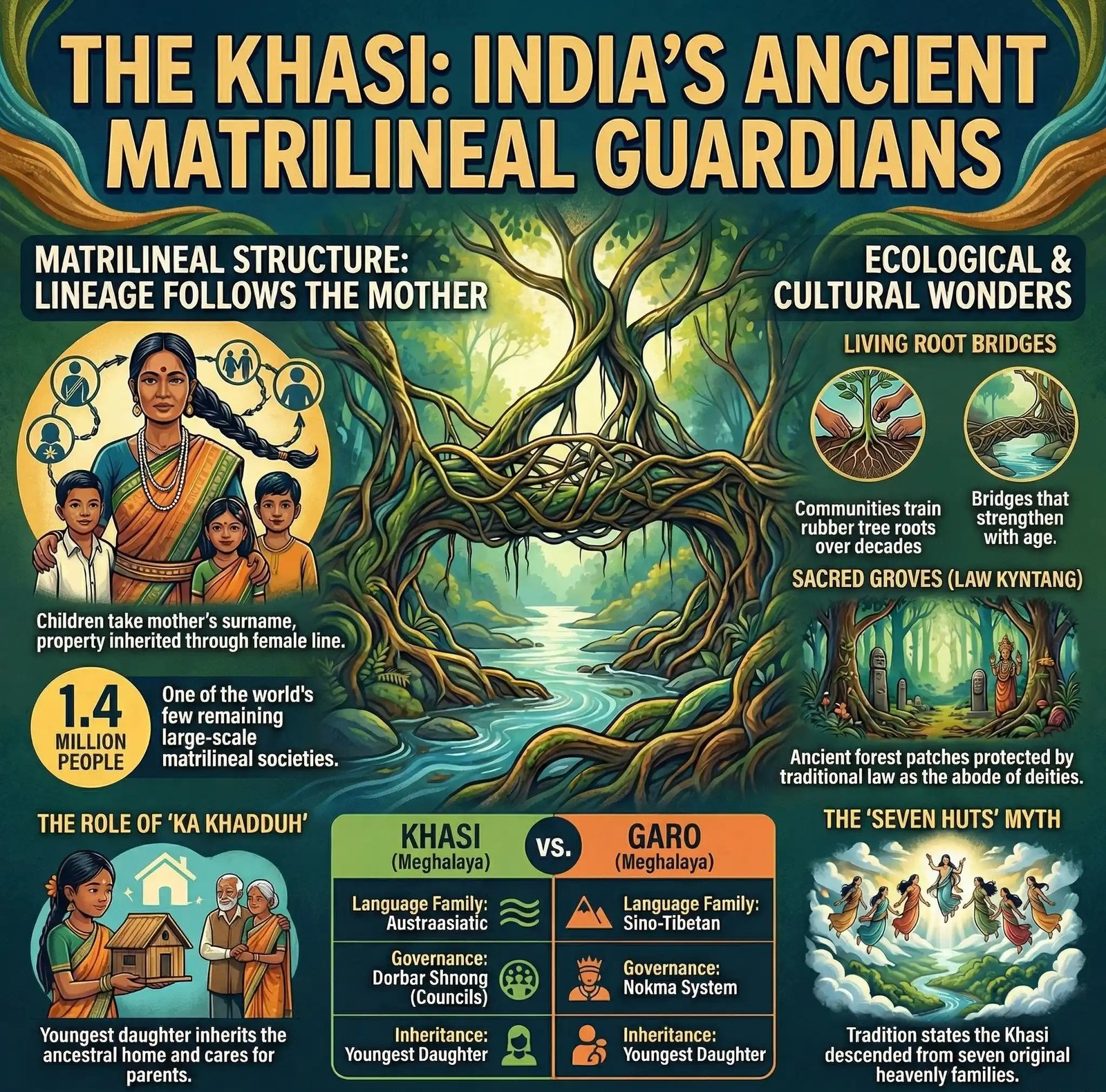
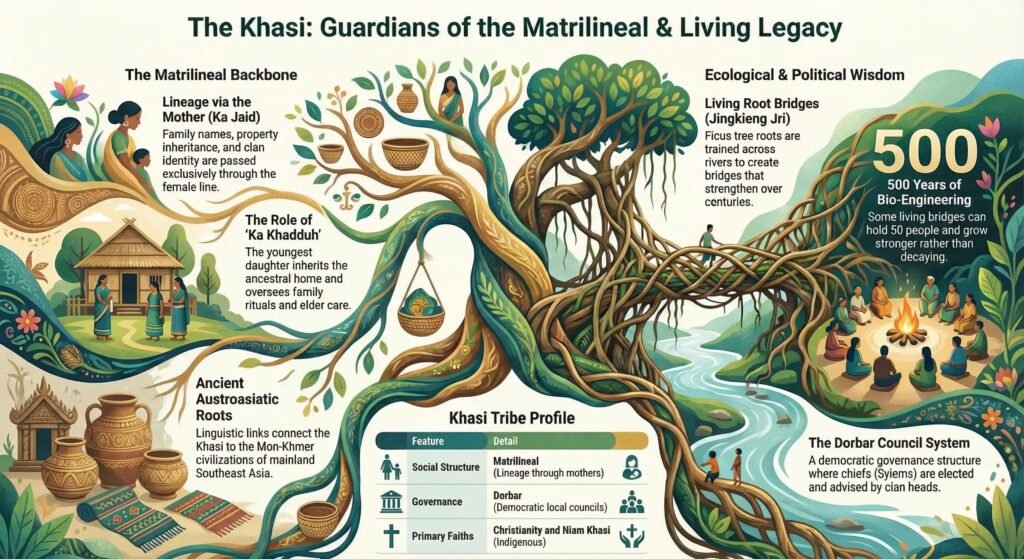
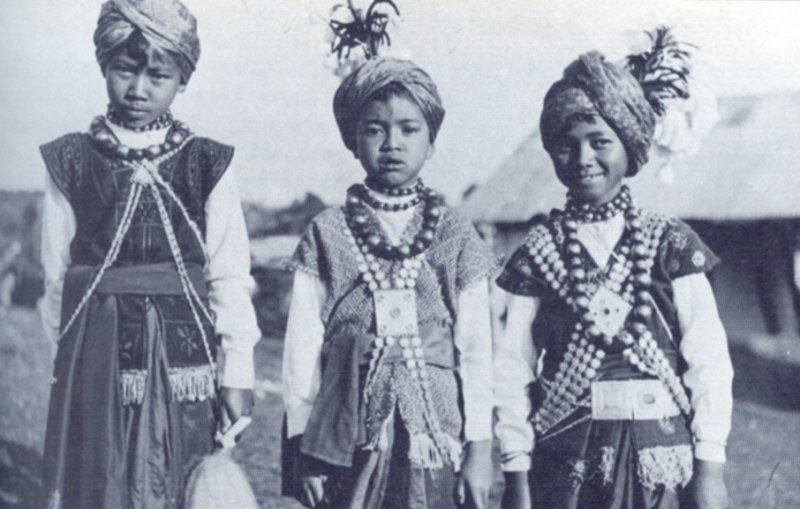
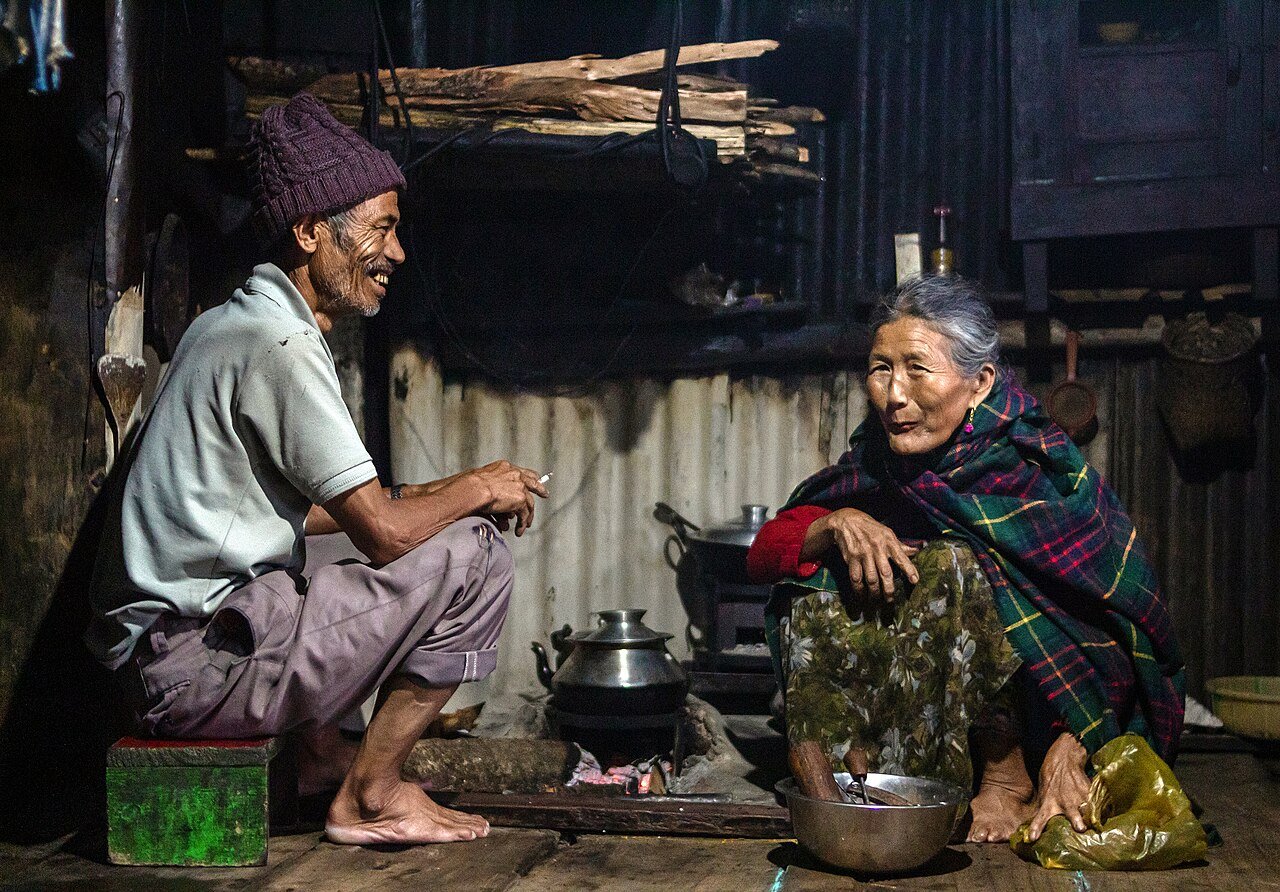
The Khasis are one of the few matrilineal societies left in the world. Descent runs through the mother. Children take her clan name, not their father’s. When a couple marry, it is traditionally the man who moves into his wife’s family home. The birth of a daughter is greeted with joy; a son, Pariat once said, is met in the maternity ward with something closer to ‘he’ll do.’
Ancestral property passes through the women of the family, and above all to the youngest daughter, the khadduh. Being the youngest, she is expected to hold the family home the longest, look after her ageing parents, and keep the family together. If a couple have no daughter at all, custom expects them to adopt one, because a son cannot hold the ancestral house.
In the old arrangement, the most important man in a child’s life was not the father but the maternal uncle, the mother’s brother, who guided his sister’s children and spoke for the clan.
Onam: Kerala’s Harvest Festival
Secrets from the Madhava of Sangamagrama History
A new hearth
Keith Pariat thought this had to change. On 14 April 1990, he and others founded a group in Shillong called Syngkhong Rympei Thymmai, which translates as ‘a new hearth.’ They chose the date deliberately: it was the birth anniversary of B.R. Ambedkar. The group called itself a men’s liberation movement, and its aim was to turn Khasi succession from matrilineal to patrilineal.
Their argument was that Khasi men had been left without a place. They did not own ancestral property, lived first with their mothers and then with their wives, had little say over their own children, and often could not get a bank loan because they had nothing to offer as collateral. Pariat blamed the system for young men drifting into drink and drugs.
The group met at Earle Holiday Home, an old lodge above Shillong’s bazaar where Pariat was a trustee, first built in 1920 as a sanatorium for British soldiers. By 2013 it claimed around 3,000 members, many of them, it said, too afraid to support it openly.
Giving his daughter his own name was Pariat practising what he preached.
The scholarship
His wife’s relatives did not like it. For twenty years, his daughter carried his name anyway.
Then, around 2012, she won a scholarship from the state’s governor. And at that moment the system caught up with her. To keep her rights to the ancestral property that came down through her mother’s family, she had to drop her father’s surname and take her mother’s clan name.
She did. The daughter he had named as a rebellion was brought back into her mother’s line, because that was where her inheritance lay.
“We are forced to practise such antiquated traditions,” Pariat said, twenty-two years after founding his group.
To keep her inheritance, his daughter had to give his name back.
The other side
It would be easy to read Pariat’s story as proof that Khasi women hold all the power. Many Khasis, women and men, say that is a misunderstanding.
Matrilineal is not the same as matriarchal. “The youngest daughter (Khadduh) is only the custodian, not owner, of ancestral property,” the Shillong Times editor Patricia Mukhim has pointed out. The sociologist Tiplut Nongbri has argued that although women hold property and carry the family line, they wield little real power. A survey led by the Shillong activist Hasina Kharbhih found women largely shut out of decision-making, inside and outside the home, and rarely elected to the councils that govern clans and villages. Politics, in Meghalaya, is still mostly run by men.
Other scholars see the Khasi system shifting on its own. Families are becoming nuclear, clans are losing their grip, and, as one sociologist in Shillong put it, the father is gradually taking over the role that once belonged to the maternal uncle.
Two names
Pariat’s own household shows how both things can be true at once. A father could choose to give his child his name, and a society could quietly insist, twenty years later, that the name that counted was her mother’s.
For most of the world, the question of whose name a child carries was settled long ago, and settled in the father’s favour. In the Khasi hills it is still an open argument, carried on at kitchen tables and in clan meetings, and, for one young woman in Shillong, on the paperwork for a scholarship.
Inspiring Chapters of the CV Raman Life Story
Colonial Architecture in India
If you think you have remembered everything about this topic take this QUIZ
Results


#1. In the Khasi matrilineal system, what is the specific term for the youngest daughter who inherits the family home and property?
#2. To which ancient linguistic group does the Khasi language belong, connecting them to peoples in Southeast Asia?
#3. What is the meaning of “Hynniew Trep,” the name the Khasi people use to refer to themselves?
#4. Who was the Khasi chief of Nongkhlaw who led a four-year guerrilla resistance against British colonial expansion in the 1820s?
#5. Which Welsh missionary is credited with creating the first written script for the Khasi language using the Roman alphabet in 1841?
#6. What is the name of the traditional Khasi village council that represents an early form of democratic local governance?
#7. What is the Khasi term for the sacred groves where cutting trees is strictly forbidden due to the belief that they are abodes of deities?
#8. The “Jingkieng Jri,” or living root bridges, are primarily made by training the roots of which specific tree?
What is the Khasi tribe known for?
The Khasi tribe is best known for being one of the world’s few remaining matrilineal societies, their ancient living root bridges in Meghalaya, and their sacred forest groves that have preserved biodiversity for centuries.
Where do the Khasi people originally come from?
Linguistic and anthropological evidence suggests the Khasi people migrated from Southeast Asia thousands of years ago, with their language linked to the Mon-Khmer group of mainland Southeast Asia.
What is the matrilineal system of the Khasi tribe?
In the Khasi matrilineal system, lineage, clan name, and property pass through the mother’s side. The youngest daughter inherits the family home, and children take their mother’s surname.
Who is U Tirot Sing and why is he important?
U Tirot Sing Syiem was a 19th-century Khasi chief who led a four-year armed resistance against British colonial expansion. He is celebrated as a freedom fighter and national hero in Meghalaya.
What religion do the Khasi people follow?
Most Khasi people today are Christian (predominantly Presbyterian), a result of Welsh missionary activity from the 1840s. However, many also practice elements of Niam Khasi, their indigenous animist faith.
Sources & References
Open Magazine, Lhendup G. Bhutia, “Men’s Rights in Meghalaya” (21 January 2013) — Keith Pariat, his daughter’s surname and scholarship, the founding of the SRT, its arguments, and the views of Tiplut Nongbri, Hasina Kharbhih and Iamon Syiem.
The Caravan, “Second Sex” (1 June 2012) — Patricia Mukhim on the khadduh as custodian, and the SRT’s founding.
China Daily / AFP, “Remote Indian tribe puts women in control” (8 March 2013) — Pariat on the welcome for daughters and the rule on adopting a girl.
Tiplut Nongbri, “Khasi Women and Matriliny: Transformations in Gender Relations,” Gender, Technology and Development 4(3) (2000) — women’s comparative property security under matriliny alongside continuing limits on political and social power.