The Battle of Walong 1962 mystery explores the heroic but forgotten defense of India's easternmost corner during the Sino-Indian war. It is the story of the only Indian counter-attack of that conflict, led by the 6 Kumaon and 4 Sikh regiments. Despite being vastly outnumbered and lacking basic winter supplies, these "sentinels of the east" fought for three weeks, proving that Indian courage remains undefeated even when the circumstances are dire.| Category | Details |
| Date of Battle | October 22 – November 16, 1962 |
| Location | Walong, Anjaw District, Arunachal Pradesh |
| Indian Units | 6 Kumaon, 4 Sikh, 3/3 Gorkha Rifles, 4 Dogra |
| Key Commander | Brigadier N.C. Rawlley |
| Terrain | High-altitude mountains (approx. 8,000–14,000 ft) |
| Outcome | Only Indian counter-attack of the 1962 war |
The Silent Echoes of the Eastern Gateway
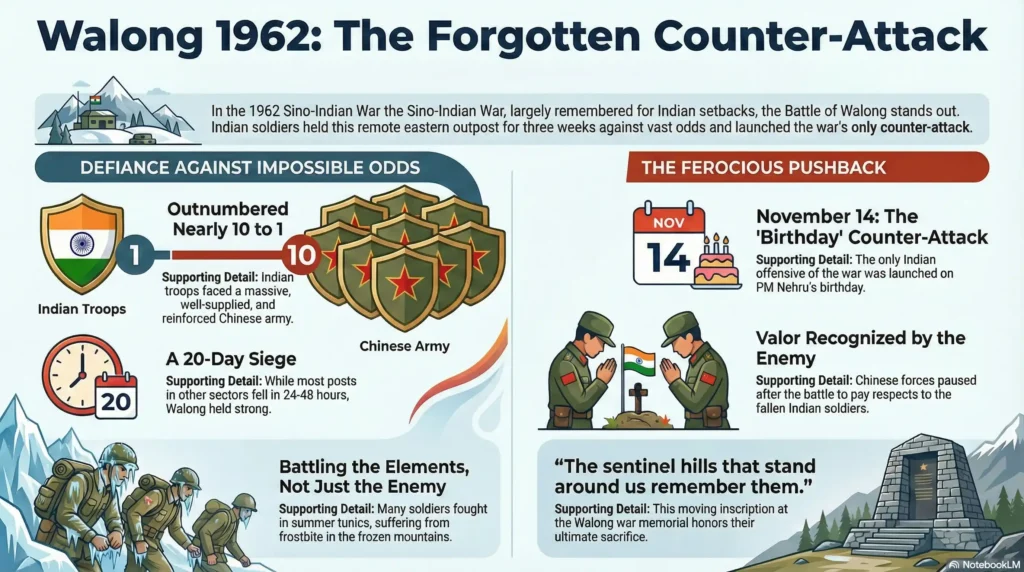
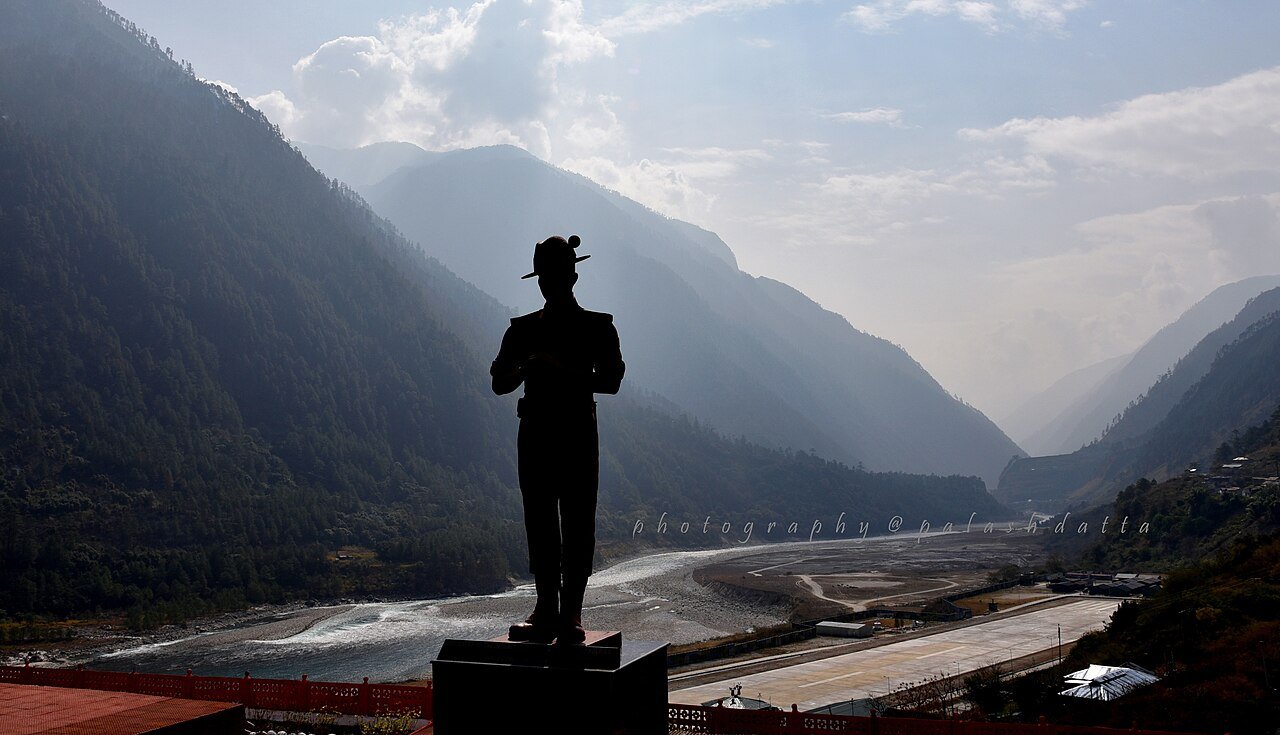
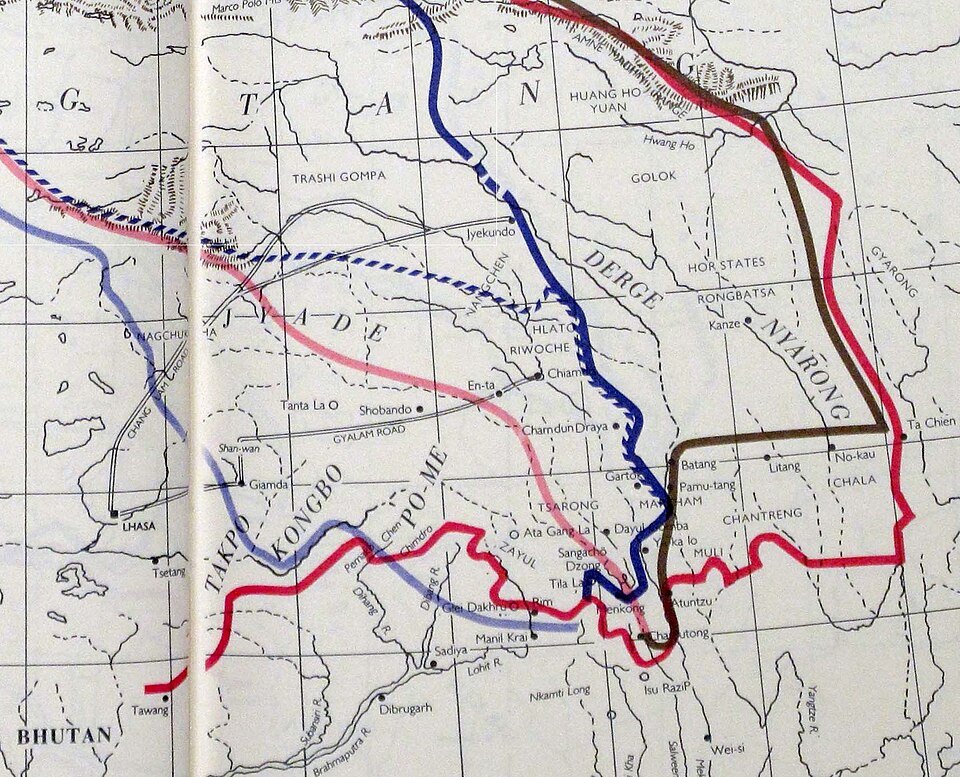
The Battle of Walong 1962 mystery begins in the mist-covered, jagged peaks of Arunachal Pradesh, where the Lohit River carves a path through the wilderness. In the autumn of 1962, this remote outpost became the stage for a military performance that defied the odds of physics and logistics. While the world often views the 1962 conflict as a series of defensive collapses, the soil of Walong tells a different story—one of a desperate, ferocious counter-attack that sent shockwaves through the advancing Chinese divisions.
For nearly three weeks, the men of the Indian Army held a line that should have crumbled in hours. They were short on ammunition, lacked winter clothing, and were outnumbered nearly ten to one. Yet, they didn’t just defend; they pushed back. The mystery lies in why this spectacular display of defiance was buried under the broader narrative of national defeat for decades. It is a story of human Relatability, where ordinary men from the plains of India found themselves in a frozen hell, choosing to fight for a patch of land they had only seen on a map.
The Roopkund Skeleton Lake Mystery: Why Were Greeks Dying in the Indian Himalayas?
The Only Counter-Attack: A Tactical Miracle
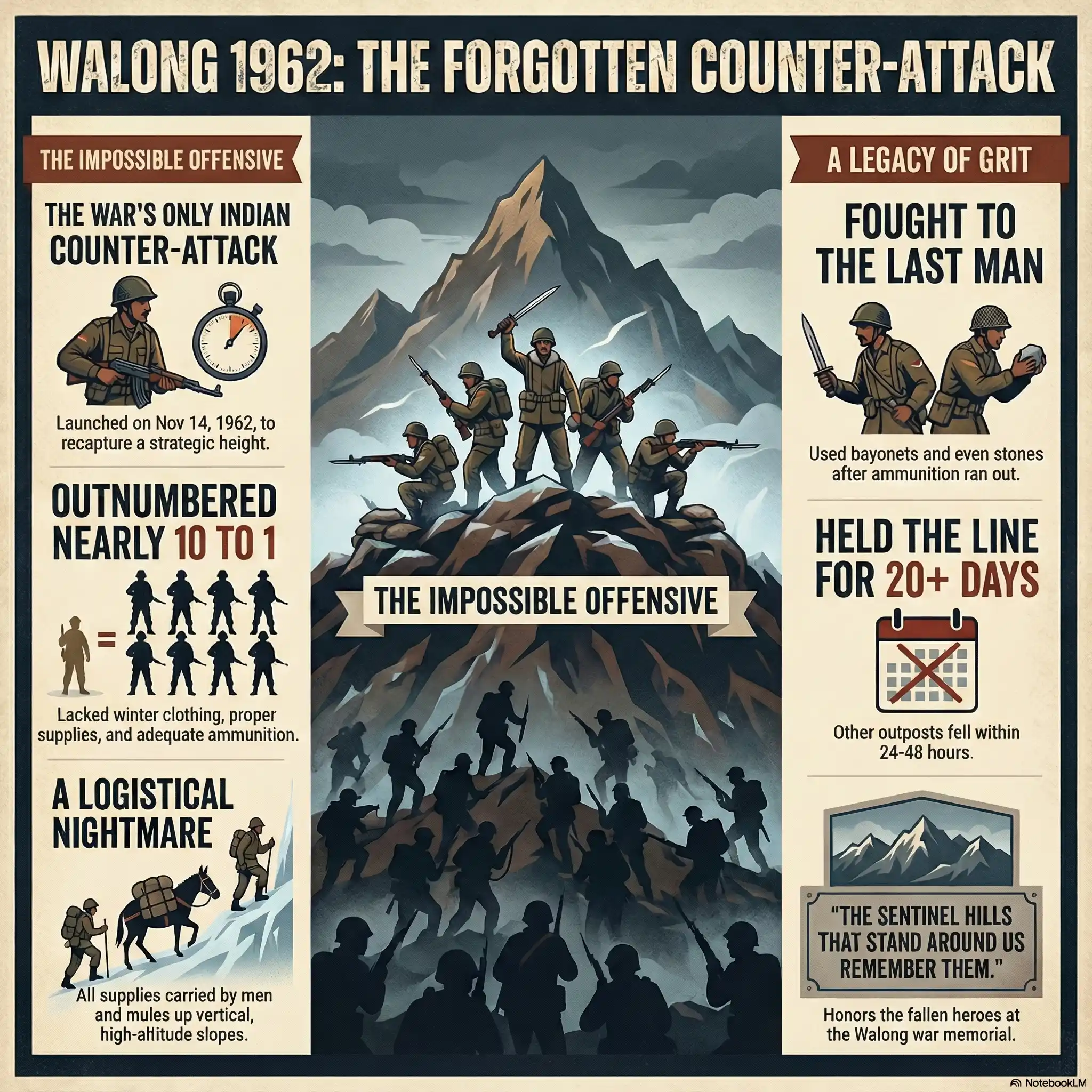
To understand the Battle of Walong 1962 mystery, one must appreciate the sheer audacity of Brigadier N.C. Rawlley and his men. In most sectors during the 1962 war, Indian forces were in a state of reactive defense. However, at Walong, the 6 Kumaon and 4 Sikh units engaged in Indian Army 1962 war stories that military historians still analyze with awe. On November 14, 1962—the birthday of Prime Minister Jawaharlal Nehru—the Indian troops launched a counter-offensive to recapture “Yellow Pimple,” a strategic height occupied by the enemy.
The soldiers climbed vertical slopes under heavy mortar fire, gasping for oxygen in the thin mountain air. There were no helicopters to drop supplies; every bullet and every morsel of food was carried on the backs of men and mules. When they reached the top, they engaged in brutal hand-to-hand combat. This was Kumaon Regiment bravery in its purest form. They took the objective, but the sheer weight of Chinese reinforcements eventually forced them back. The mystery isn’t that they lost the hill; the mystery is how they found the strength to charge up it in the first place.
Dr. A.P.J. Abdul Kalam: (1931-2015)
Fighting to the Last Man: The 4 Sikh and Gorkha Resolve
As the Chinese launched their massive final assault on November 16, the Walong sector witnessed some of the most intense Sikh Regiment 1962 battle moments ever recorded. The 4 Sikh regiment was tasked with holding the ridges at any cost. Sepoys and Junior Commissioned Officers stayed in their bunkers until the very end, using bayonets and even stones when their ammunition ran dry.
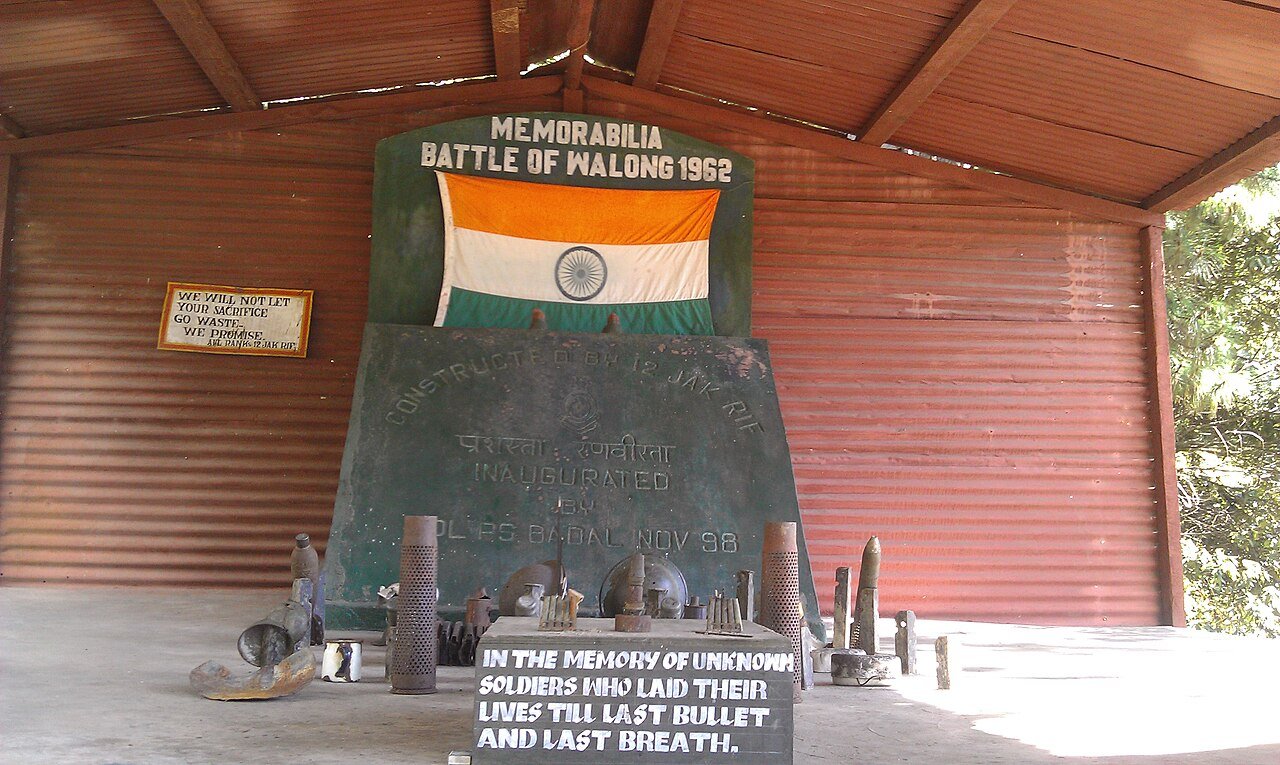
Survivors recall that the Chinese were so impressed by the Indian resistance that they paused after the battle to pay respects to the fallen Indian heroes. This emotional moment is a rare human experience in the middle of a brutal war. The Indian soldiers knew no help was coming. The nearest roadhead was days away. They were isolated, cold, and forgotten by the central command, yet their spirits remained unyielding. The Walong war memorial today stands as a testament to these souls, carrying the famous inscription: “The sentinel hills that stand around us remember them.”
The Logistical Nightmare and the Human Cost
One of the most relatable moments of this saga is the plight of the common soldier. Many had arrived from the warm plains of India just days before the battle, wearing summer tunics. The Battle of Walong 1962 mystery includes the fact that many soldiers suffered from frostbite and high-altitude sickness long before the first Chinese bullet was fired. They slept in open trenches, sharing blankets to keep from freezing to death.
Despite these conditions, the bonding between the Kumaonis, Sikhs, and Gorkhas created a formidable wall. This was not a war of technology; it was a war of nerves. The Chinese PLA used human wave tactics, throwing thousands of troops into the line of fire. The Indian response was precision and grit. Every Indian bullet had to count. This level of discipline under extreme duress is what makes these Indian Army 1962 war stories so inspirational for every “Curious Indian” today.
1971 Nagarwala Case: India’s Great Bank Heist Mystery
Quick Comparison: The Odds at Walong
| Feature | Indian Army | Chinese PLA |
| Troop Strength | Approx. 2,000–3,000 | Approx. 12,000–15,000 |
| Equipment | WWII Era Bolt-action Rifles | Automatic Rifles & Heavy Artillery |
| Supply Line | Airdrops & Mule paths | Well-developed Road Network |
| Tactical Stance | Counter-Offensive (Unique) | Human Wave Assaults |
| Casualties | High (fought to the last man) | Significantly high (due to ambush) |
Curious Indian: Fast Facts
- The “Birthday” Attack: The Indian counter-attack was launched on November 14, 1962, to mark PM Nehru’s birthday, showing the high morale despite the odds.
- The Inscription: The Walong war memorial bears an epitaph that is considered one of the most moving in military history.
- First Air-Lift: This battle saw some of the earliest and most dangerous sorties by Indian Air Force transport planes in high-altitude narrow valleys.
- A Global Recognition: International military observers later noted that at Walong, the Indian Army fought with a “tenacity that was lacking in other sectors.”
- The 20-Day Siege: While other outposts fell in 24-48 hours, Walong held out for over 20 days.
Conclusion
The Battle of Walong 1962 mystery is a reminder that victory is not always measured by territory held, but by the spirit with which the battle is fought. The fields of Walong may have been lost in 1962, but the legend of the Kumaon and Sikh bravery was won forever. As we look back through the Walong war memorial, we find more than just names; we find the bedrock of Indian resilience. It is time we stop calling Walong a “forgotten” battle and start celebrating it as the moment the Indian Army showed its true teeth.
The Purulia Arms Drop Mystery 1995: When the Sky Rained Guns
If you think you have remembered everything about this topic take this QUIZ
Results


#1. What distinguished the military action at Walong from other engagements during the 1962 Sino-Indian War, according to the provided text?
#2. Which specific tactical objective was the focus of the Indian counter-attack on 14 November 1962?
#3. The Indian counter-attack was deliberately timed to coincide with which significant date?
#4. Which two Indian Army regiments are primarily credited in the text with leading the counter-attack at Walong?
#5. Aside from enemy action, what was a major source of suffering for the Indian soldiers at Walong?
#6. According to the text, what was the remarkable duration of the Indian defence at Walong compared to other posts?
#7. What unusual sign of respect did the Chinese forces reportedly show after the battle, as per the survivors’ accounts?
#8. What is the poignant inscription found on the Walong war memorial?
Why is the Battle of Walong called the “forgotten” battle?
It is often overshadowed by the larger defeats in the Se-La and Bomdila sectors. However, it was the only place where India launched a successful, albeit short-lived, counter-attack.
What is the significance of the Walong war memorial?
Located in Arunachal Pradesh, the Walong war memorial honors the men who stayed back to allow their comrades to withdraw, ensuring the Lohit Valley didn’t fall easily.
Which Indian regiments participated in the Battle of Walong?
Primarily the 6 Kumaon, 4 Sikh, 4 Dogra, and 3/3 Gorkha Rifles. Their coordination is a highlight of Kumaon Regiment bravery.
Did the Indian Army win any part of the 1962 war?
While the war ended in a ceasefire and Indian retreat, the Battle of Walong is considered a “moral victory” because of the successful counter-attack on November 14.
How can tourists visit Walong today?
Walong is now accessible via road from Tezu in Arunachal Pradesh. It remains a place of pilgrimage for those interested in Indian Army 1962 war stories.