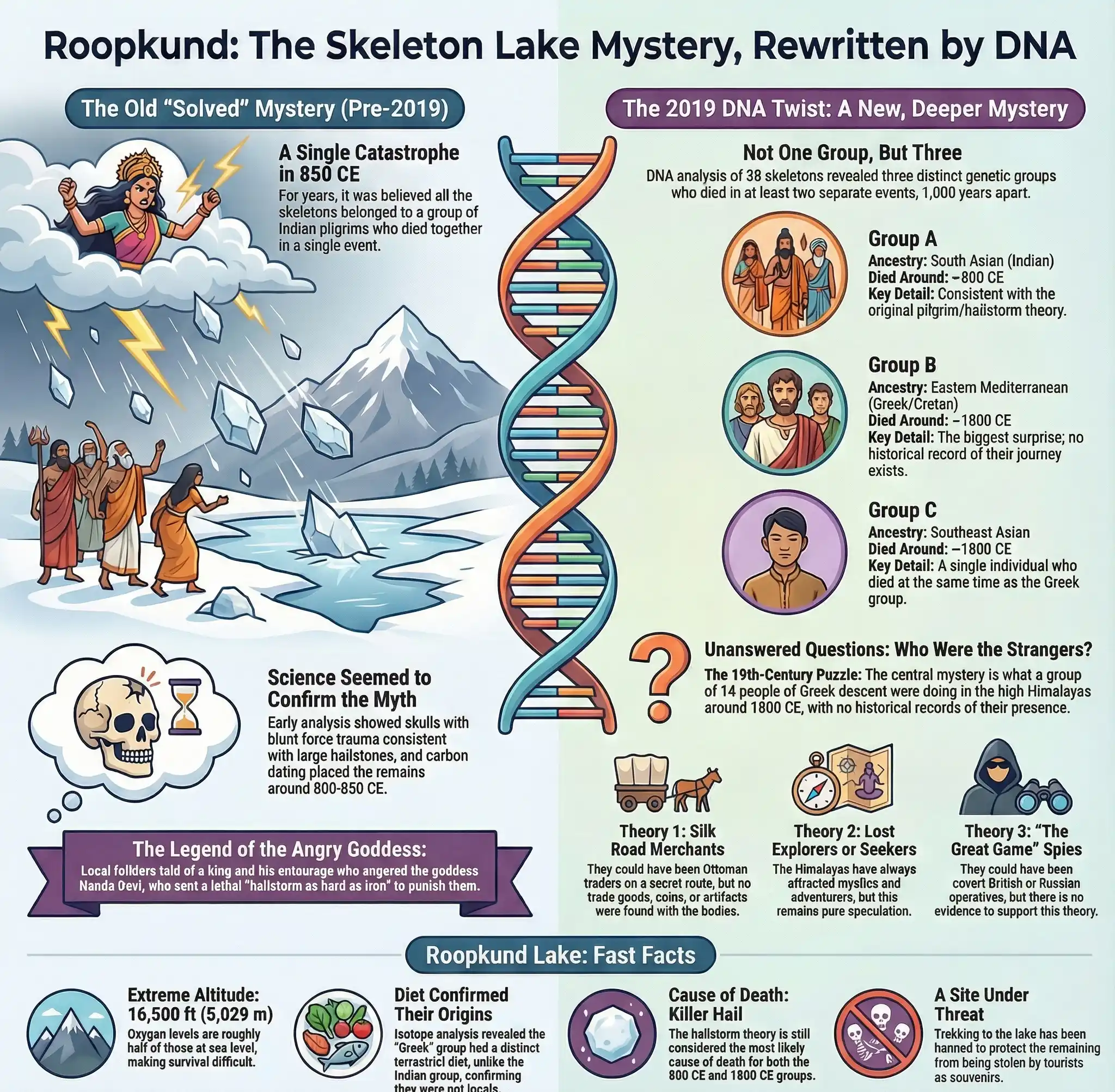
For decades, the skeletons at Roopkund Lake were believed to be Indian pilgrims killed by a 9th-century hailstorm. However, a 2019 DNA study shattered this theory, revealing that many remains actually belong to Mediterranean travelers who died there 1,000 years later. This discovery creates a baffling historical mystery: what were Greeks doing in the frozen Himalayas in 1800?| The Old Theory 📉 | The 2019 DNA Twist 🧬 |
| Who: A single group of Indian pilgrims. | Who: Two distinct groups: Indians & Mediterraneans (Greeks). |
| When: Died approx. 800 CE. | When: Separated by 1,000 years (800 CE & 1800 CE). |
| Cause: A freak hailstorm (blunt trauma). | Cause: Likely extreme weather, but for different events. |
For decades, the story of The Roopkund Skeleton Lake Mystery was considered “solved.”
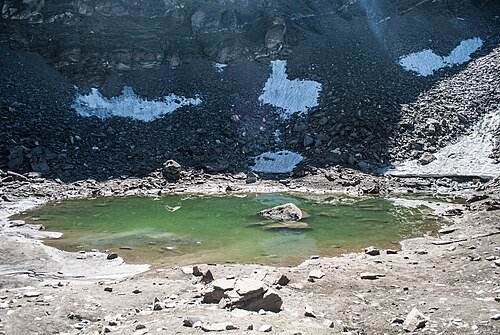
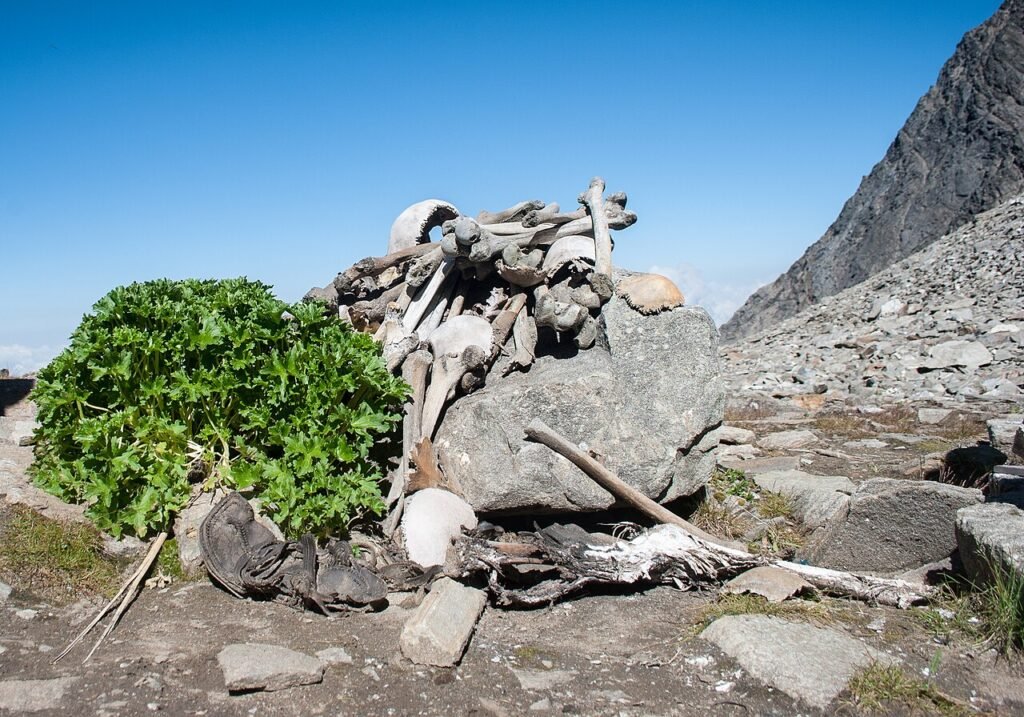
Located at a dizzying 16,500 feet in the Uttarakhand Himalayas, this frozen glacial lake is famous for one thing: it is full of human skeletons. Every summer, when the ice melts, hundreds of skulls and bones float to the surface.
In 1942, a British forest ranger stumbled upon them and feared they were a Japanese invasion force. Later, scientists concluded they were Indian pilgrims killed by a freak hailstorm in the 9th century. Case closed.
But in 2019, a massive DNA study published in Nature Communications shattered that theory. The study revealed that these people did not die together. In fact, a large group of them weren’t even Indian—they were Mediterranean, genetically closest to the people of modern-day Crete (Greece).
Welcome to the eighth chapter of Unsolved India, where we ask the impossible question: What was a group of Greeks doing in the Himalayas in 1800 AD?
The “Old” Mystery: The Wrath of Nanda Devi
To understand the shock of the new discovery, we must look at the legend we thought was true.
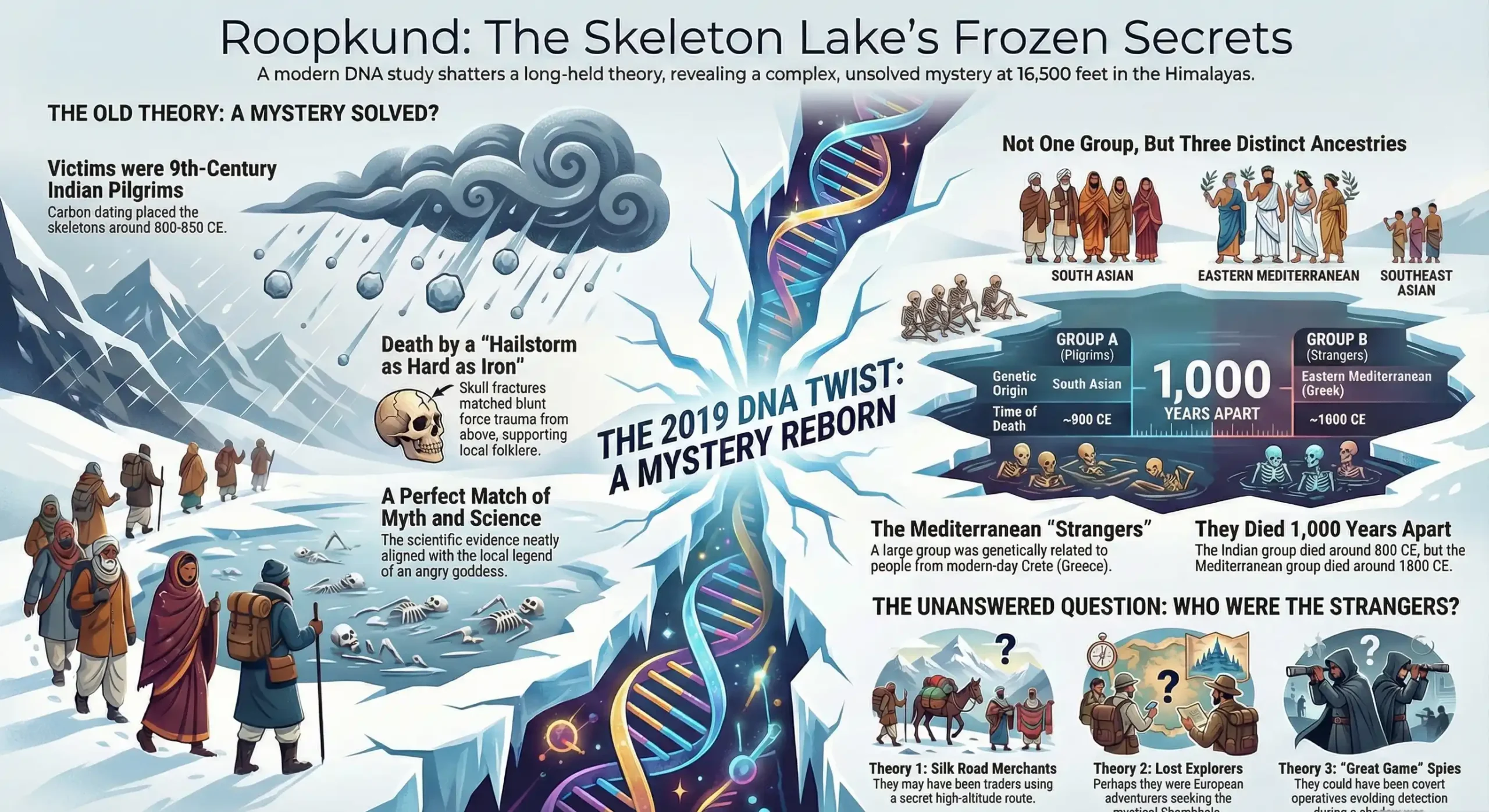
Local folklore tells the story of King Jasdhaval of Kanauj. Legend says he undertook a pilgrimage (Nanda Devi Raj Jat) with his pregnant wife, dancers, and musicians. However, they disrespected the goddess by dancing and playing music in the sacred silence. Enraged, Nanda Devi sent down a “hailstorm as hard as iron” that killed the entire group instantly.
For years, science supported this myth.
Skulls showed “blunt force trauma” consistent with cricket-ball-sized hailstones.
Carbon dating placed the skeletons around 800–850 CE
It was a perfect match: Myth meets Science. Until genetics entered the picture.
The 2019 DNA Twist: Two Groups, 1000 Years Apart
In 2019, an international team (including scientists from Harvard and India’s CCMB) analyzed the DNA of 38 skeletons. The results were baffling.
The skeletons didn’t belong to one group. They belonged to three distinct groups separated by 1,000 years.
Group A (The Pilgrims): These were South Asians. They died around 800 CE, consistent with the hailstorm theory.
Group B (The Mystery Strangers): These 14 individuals were not Indian. Their DNA matched people from the Eastern Mediterranean (Crete/Greece).
The Kicker: They didn’t die in 800 CE. They died around 1800 CE (19th Century).
Group C (The Loner): One individual had Southeast Asian ancestry, also dying around 1800 CE.
| Feature | The Old Belief (Pre-2019) | The New Reality (2019 DNA Study) |
| Who are they? | A single group of Indian pilgrims (King Jasdhaval & entourage). | Two distinct groups: South Asians and Mediterranean (Greek) travelers. |
| When did they die? | All at once in the 9th Century (approx. 800 CE). | Separated by 1,000 years. Indians died ~800 CE; Greeks died ~1800 CE. |
| Ancestry | Local / Indian. | Group A: South Asian. Group B: Eastern Mediterranean (Crete). |
| Cause of Death | A freak hailstorm (“Iron balls from the sky”). | Hailstorm likely for Group A. Cause for Group B is unknown, but likely hypothermia/weather. |
| Current Status | ✅ Solved (Tragic Accident). | ❓ Unsolved (Why were Greeks there in 1800?). |
The Unanswered Question: Who Were the Greeks?
The discovery of Group B has left historians scratching their heads. In 1800 CE, the British East India Company was already in power. If a group of Europeans (Greeks) had gone missing in the Himalayas, there should be records. Yet, there are none.
Theory 1: The Silk Road Merchants Some speculate they were merchants from the Ottoman Empire using a secret, high-altitude trade route to Tibet. However, no trade goods (silk, spices, coins) were found—only bodies.
Theory 2: The Lost Explorers Were they early European explorers or mercenaries looking for the mystical “Shambhala”? The Himalayas have always attracted seekers. Did they hire local porters (Group C) and get caught in a blizzard?
Theory 3: The “Great Game” Spies The 19th century was the era of the “Great Game,” a shadow war between the British and Russian empires. Could these “Greeks” have been spies or covert operatives moving through the mountains to avoid detection?
Conclusion: A Mystery Reborn
The Roopkund Lake mystery is no longer about how they died—the “hailstorm” theory likely still explains the cause of death for both groups (even 1,000 years apart, weather remains the deadliest killer there).
The mystery is why they were there. Why did a group of people from the Mediterranean islands travel 5,000 km to die in a frozen lake in India? And why did they die in the exact same spot where hundreds of Indian pilgrims had died a millennium earlier?
Roopkund keeps its secrets frozen under the ice.
Curious India: Fast Facts
The Altitude: 5,029 meters (16,500 ft). The oxygen levels here are roughly half of what they are at sea level.The Conservation Crisis: Tourists have been stealing bones as souvenirs for years. In 2018, trekking to the lake was banned to preserve the site.The Diet: Isotope analysis showed the “Greek” group ate a diet distinct from the Indian group, confirming they were not locals who had simply intermarried.
If you think you have rememberd everything about this topic take this QUIZ
Results


#1. What was the most significant revelation from the 2019 DNA study of the Roopkund Lake skeletons?
#2. The DNA analysis identified a group of 14 individuals who died around 1800 CE with ancestry from which specific region?
#3. According to the article, why is the presence of a European group at Roopkund in the 19th century so historically baffling?
#4. The long-held theory that science seemed to support for decades explained the skeletons as…
#5. What specific physical evidence on the skeletons led scientists to the ‘hailstorm theory’?
#6. What action was taken to address the conservation crisis caused by tourists at Roopkund Lake?
#7. The ‘Great Game’ is proposed as a theory to explain…
#8. How did isotope analysis of the skeletons’ diet contribute to the new understanding of the Roopkund mystery?
Are the skeletons still there?
Yes, hundreds of skeletons remain in and around the lake. However, the Uttarakhand government has banned trekking to the actual lake side to protect the remains from theft and degradation.
What is the hailstorm theory?
Scientists found fractures on the skulls and shoulders of the skeletons that matched injuries caused by large, round objects falling from above. This led to the conclusion that a sudden, violent hailstorm (with hailstones up to 7cm in diameter) killed them because there was no shelter.
Who were the “Greeks” found in the lake?
Genetic analysis identified 14 individuals with ancestry from the Eastern Mediterranean (specifically Crete). They died around 1800 CE. Unlike the Indian group, we have absolutely no historical record of who they were or why they were there.
Can I trek to Roopkund Lake?
As of recent regulations, trekking to the lake itself is restricted/banned to protect the ecosystem and the skeletal remains. Trekkers can usually go up to the meadows of Bedni Bugyal, but checking current forest department rules is mandatory.
This article is part of our exclusive series Unsolved India. Read the previous chapter: The Nagarwala Scandal.