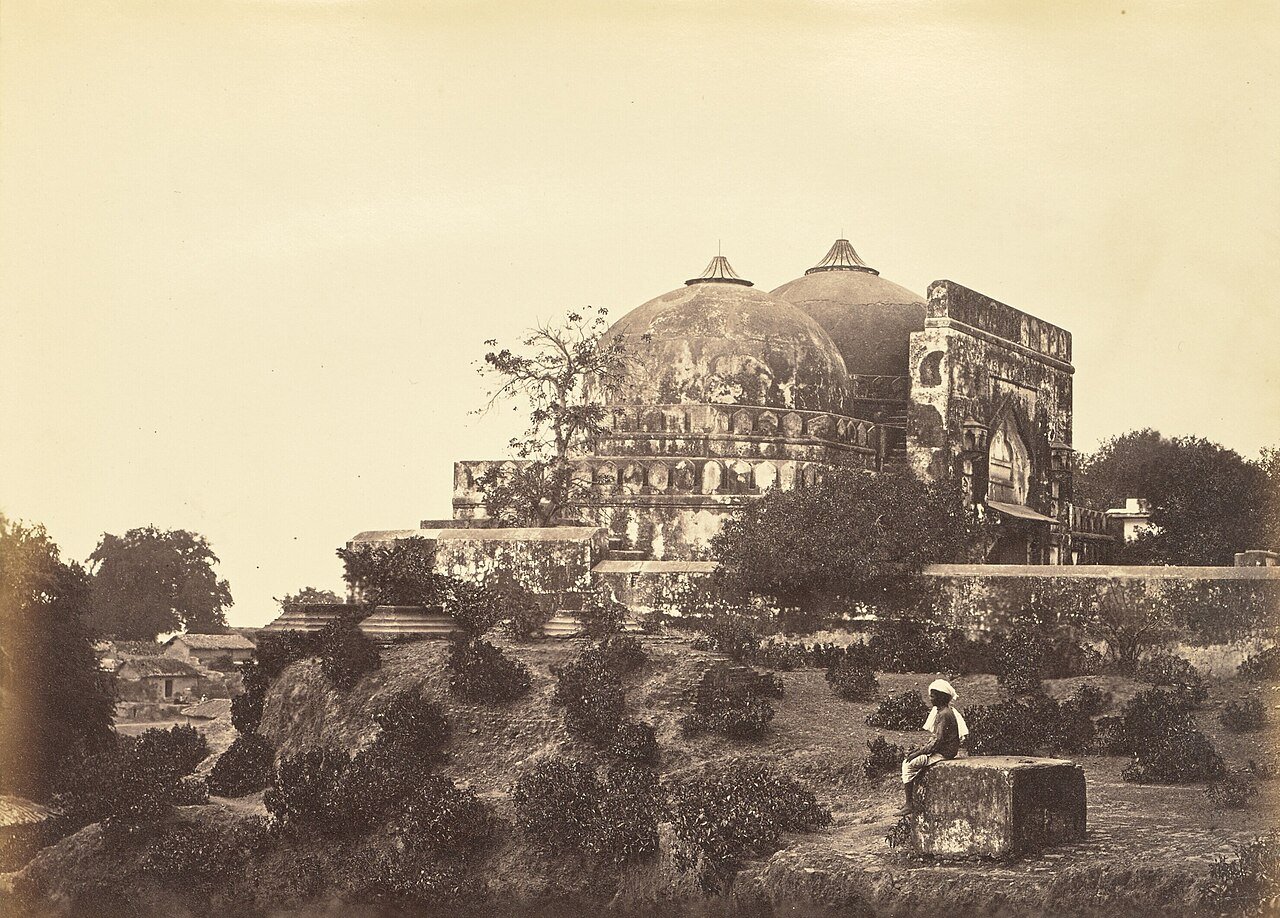
The Demolition of Babri Masjid 1992 was not just an event; it was a seismic shift in the cultural and political landscape of India. Located in Ayodhya, Uttar Pradesh, the mosque became the center of a centuries-old dispute, with Hindus claiming it stood on the birthplace of Lord Ram (Ram Janmabhoomi). Tensions boiled over on December 6, 1992, when a massive crowd of Kar Sevaks brought the structure down. This act triggered widespread communal riots, reshaped Indian politics, and led to a decades-long legal battle that finally concluded with the Supreme Court's historic verdict in 2019, paving the way for the Ram Mandir.| Feature | Details |
| Date of Demolition | December 6, 1992 |
| Location | Ayodhya, Uttar Pradesh |
| Structure Age | Built in 1528-29 (Mughal Era) |
| Key Political Event | Rath Yatra (1990) by L.K. Advani |
| Commission formed | Liberhan Commission (Submitted report after 17 years) |
| Final Verdict | November 9, 2019 (Supreme Court of India) |
| Outcome | Land awarded for Ram Temple; 5 acres given for Mosque |
The Roots of the Conflict
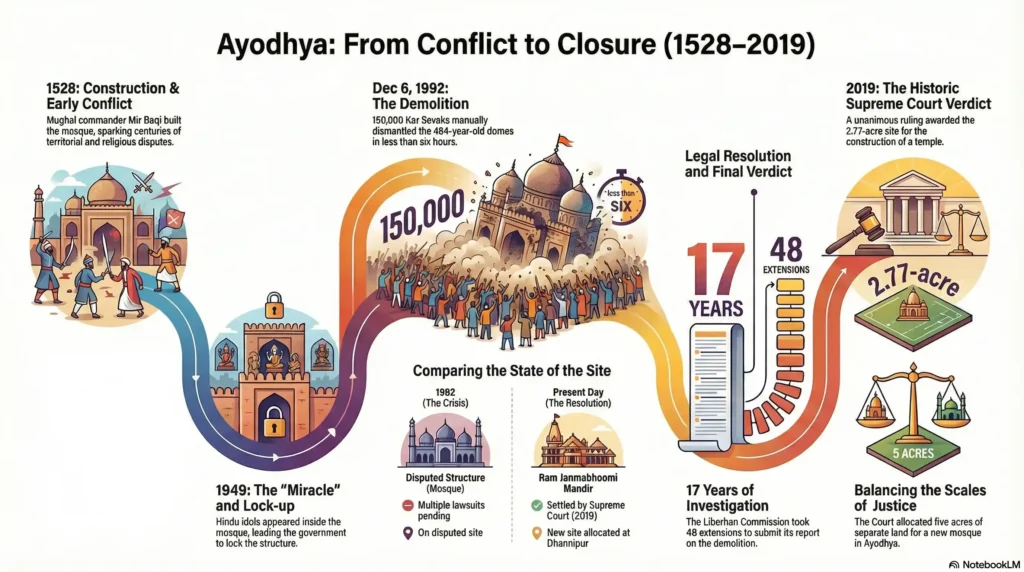
To understand the Demolition of Babri Masjid 1992, we must travel back in time. The mosque was commissioned in 1528 by Mir Baqi, a commander of the Mughal Emperor Babur. However, local tradition and later archaeological findings suggested that the site was the birthplace of Lord Ram, a central deity in Hinduism, and that a temple may have existed there prior to the mosque.
For centuries, the site was a flashpoint. The first recorded communal clashes occurred in 1853. The British administration, in a bid to keep the peace, erected a fence in 1859, allowing Muslims to pray inside the mosque and Hindus to worship at the outer courtyard. This uneasy truce lasted until India gained independence.
The Roopkund Skeleton Lake Mystery: Why Were Greeks Dying in the Indian Himalayas?
The “Miracle” of 1949 and the Locks
The dispute took a dramatic turn on the night of December 22, 1949. Idols of Ram Lalla (Infant Ram) mysteriously appeared inside the main dome of the mosque. While devotees called it a divine manifestation, the police report described it as an act of placement by activists. Fearing violence, the government locked the gates, barring both communities from the inner structure.
The site remained locked for nearly four decades—a “sleeping volcano.” It was awakened in 1986 when a district judge ordered the locks to be opened, allowing Hindu worshippers access. This decision, televised nationally, galvanized the Ram Janmabhoomi movement.
The Chariot of Fire: The Rath Yatra
By the late 1980s, the demand for a temple had moved from the fringes to the mainstream. The Bharatiya Janata Party (BJP), led by L.K. Advani, launched a Rath Yatra (Chariot Procession) in 1990. Traveling from Somnath in Gujarat to Ayodhya, the yatra mobilized millions. The atmosphere in the country was electric, charged with religious fervor and political ambition. Although Advani was arrested in Bihar before he could reach Ayodhya, the movement had gathered an unstoppable momentum.
1971 Nagarwala Case: India’s Great Bank Heist Mystery
December 6, 1992: The Day the Domes Fell
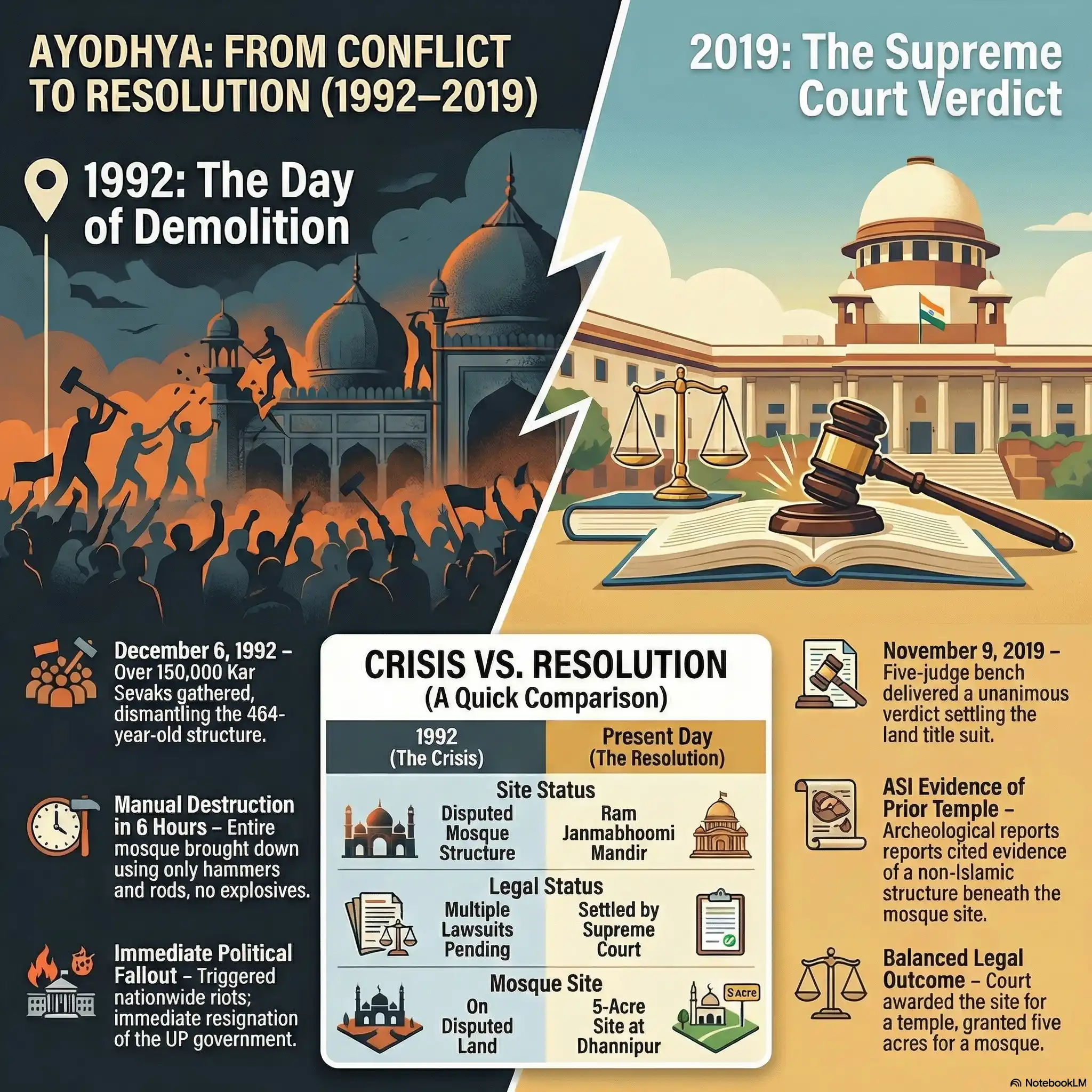
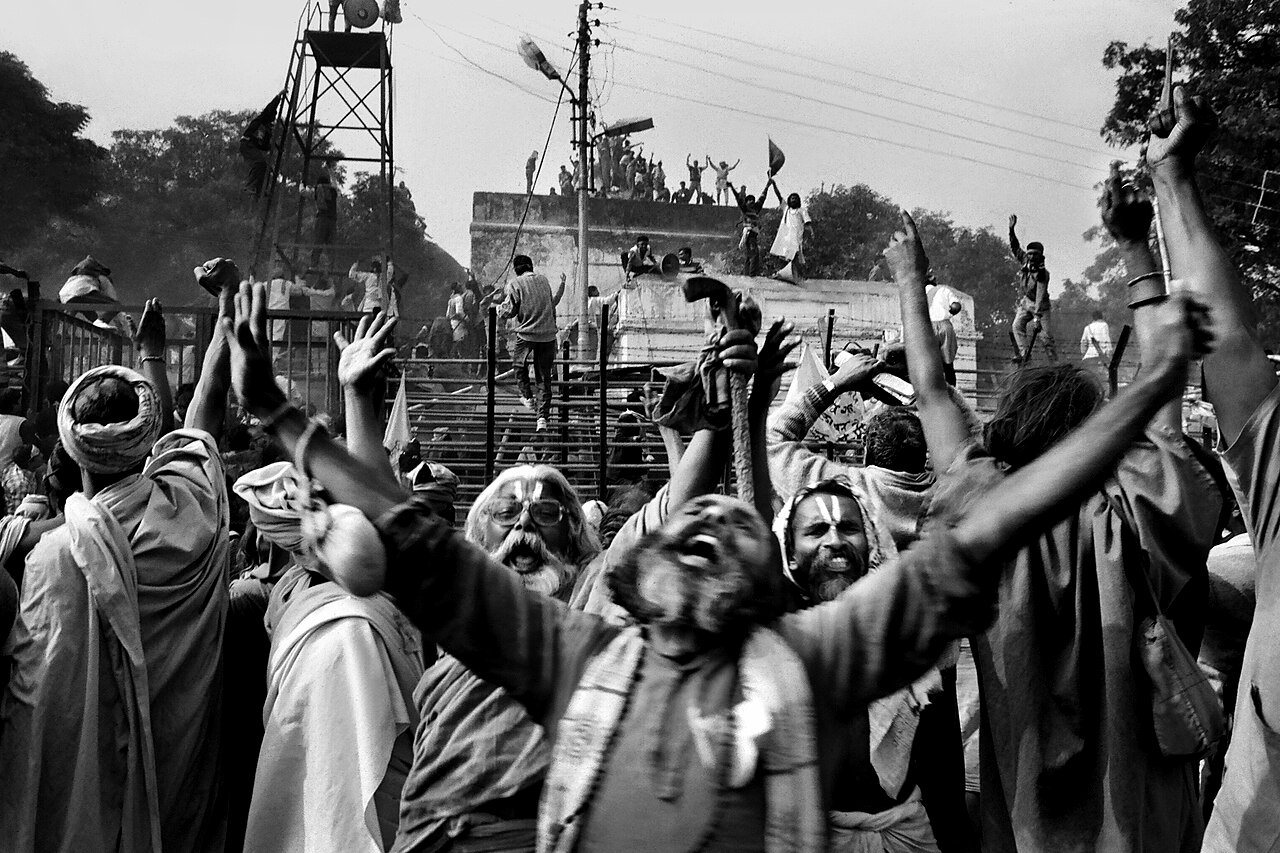
The morning of December 6 was meant to be a symbolic Kar Seva (voluntary service). Over 150,000 supporters, known as Kar Sevaks, had gathered in Ayodhya. Political leaders and religious heads addressed the massive crowd. Security forces were present but were vastly outnumbered and arguably passive.
Around noon, the situation spiraled out of control. A young man managed to slip past the cordon and climb the central dome, waving a saffron flag. This acted as a signal. The mob surged forward, breaking through barricades. Armed with hammers, pickaxes, and iron rods, they swarmed the 464-year-old structure.
By 5:00 PM, all three domes of the Babri Masjid had been reduced to rubble. The idols of Ram Lalla were retrieved and placed in a makeshift tent at the same spot. The state government, led by Kalyan Singh, resigned, and President’s Rule was imposed, but the damage was done. The event was televised globally, shocking the world and plunging India into chaos.
The Aftermath: Fire and Fury
The demolition triggered some of the worst communal riots in India since Partition. Cities like Mumbai, Surat, and Bhopal burned. The official death toll across the country crossed 2,000. The violence didn’t stop at borders; temples were attacked in Pakistan and Bangladesh in retaliation. The event also sowed the seeds for future acts of terror, including the 1993 Bombay Bomb blasts, which were framed as revenge for the demolition.
Dr. A.P.J. Abdul Kalam: (1931-2015)
The Long Road of Investivation
In the wake of the destruction, the government set up the Liberhan Commission to investigate the sequence of events and identify those responsible. It became the longest-running commission in India’s history, taking 17 years and 48 extensions to submit its report in 2009. It indicted several top leaders for their role in the demolition, though legal convictions remained elusive.
2019: The Supreme Court Speaks
For decades, the land title suit languished in the courts. In 2010, the Allahabad High Court attempted a compromise, dividing the land into three parts: one for the Hindu deity, one for the Sunni Waqf Board, and one for the Nirmohi Akhara. None of the parties accepted this “partition.”
Finally, on November 9, 2019, a five-judge bench of the Supreme Court of India delivered a unanimous verdict. It ruled that the entire 2.77 acres of disputed land belonged to the deity Ram Lalla. The court relied on Archaeological Survey of India (ASI) reports which stated there was evidence of a non-Islamic structure beneath the mosque. However, the court also termed the 1992 demolition as an “egregious violation of the rule of law.” To balance the scales of justice, it directed the government to provide 5 acres of prominent land in Ayodhya to the Sunni Waqf Board for the construction of a new mosque.
8 Defining Chapters in the Vikram Sarabhai Biography
Quick Comparison Table: 1992 vs. Today
| Factor | 1992 (The Crisis) | Present Day (The Resolution) |
| Status of Site | Disputed Structure (Mosque) | Ram Janmabhoomi Mandir (Inaugurated 2024) |
| Political Climate | Extreme instability, riots | Stable, focused on development |
| Legal Status | Multiple lawsuits pending | Settled by Supreme Court Verdict (2019) |
| Mosque Location | On disputed site | New site allocated at Dhannipur (5 acres) |
Curious Indian: Fast Facts
- The “Monkey” Incident: In 1949, when the idols were found, the constable on duty reported seeing a “golden light” and a monkey sitting inside the locked gates, which many interpreted as a sign of Hanuman protecting the site.
- The Delayed Report: The Liberhan Commission took 17 years to finish its report. By the time it was submitted, the political landscape of India had completely changed.
- No Explosives: The entire massive structure was brought down without explosives. It was dismantled manually using hammers, rods, and sheer manpower in less than 6 hours.
- The ‘Shilanyas’: In 1989, the Rajiv Gandhi government allowed a Shilanyas (foundation stone laying) ceremony near the disputed site, a move that many believe opened the floodgates for the movement.
Conclusion
The Demolition of Babri Masjid 1992 was a tragedy that tested the resilience of India’s secular fabric. It was a day of destruction that led to decades of division. However, the eventual resolution through the Supreme Court proved the strength of India’s democratic institutions. Today, as the grand Ram Temple stands in Ayodhya and plans for the new mosque take shape, the nation looks forward to moving beyond the shadows of the past, hoping that the sarayu river witnesses peace for centuries to come.
The Purulia Arms Drop Mystery 1995: When the Sky Rained Guns
If you think you have remembered everything about this topic take this QUIZ
Results


#1. In 1859, how did the British administration attempt to resolve the ongoing communal tensions at the site?
#2. What significant event occurred on the night of 22 December 1949 regarding the internal structure of the mosque?
#3. The Rath Yatra launched by L.K. Advani in 1990 began in which location?
#4. How did the method of the 1992 demolition surprise many global observers?
#5. Which judicial body delivered the 2010 verdict that suggested a three-way split of the disputed land?
#6. In its 2019 final verdict, how did the Supreme Court describe the 1992 demolition of the mosque?
#7. The Liberhan Commission is noted in Indian history for being the longest-running commission. How many years did it take to submit its report?
#8. Where did the Supreme Court direct the government to allocate 5 acres of land for the construction of a new mosque?
What happened on December 6, 1992?
A large crowd of Kar Sevaks demolished the 16th-century Babri Masjid in Ayodhya, claiming it was built on the birthplace of Lord Ram.
Who built the Babri Masjid?
It was built in 1528-29 by Mir Baqi, a commander of the first Mughal Emperor, Babur.
What was the Supreme Court verdict on the Babri Masjid?
In 2019, the Supreme Court handed the disputed land to a trust for building the Ram Temple and allocated 5 acres of separate land to the Sunni Waqf Board for a mosque.
Who was the Chief Minister of UP during the demolition?
Kalyan Singh (BJP) was the Chief Minister of Uttar Pradesh at the time. His government was dismissed immediately after the incident.
Did the ASI find a temple under the mosque?
The ASI report in 2003 stated there was evidence of a massive “non-Islamic” structure beneath the mosque, featuring pillars and artifacts resembling a Hindu temple.