The life of Sir C.V. Raman is a brilliant narrative of an Indian scientist who challenged the status quo of global physics with limited resources but an unlimited imagination. Driven by a deep-seated curiosity about the natural world—specifically why the sea appears blue—Raman conducted groundbreaking research that led to the discovery of the "Raman Effect." This discovery not only earned him the Nobel Prize in 1930 but also placed India firmly on the map of modern scientific excellence. His journey from a government accountant to a world-renowned physicist remains one of the most personal and inspirational stories in the history of science.| Feature | Details |
| Full Name | Sir Chandrasekhara Venkata Raman |
| Birth Date | November 7, 1888 |
| Key Discovery | The Raman Effect (Light Scattering) |
| Major Award | Nobel Prize in Physics (1930) |
| Legacy | National Science Day (February 28) |
The Mystery of the Deep Blue Sea
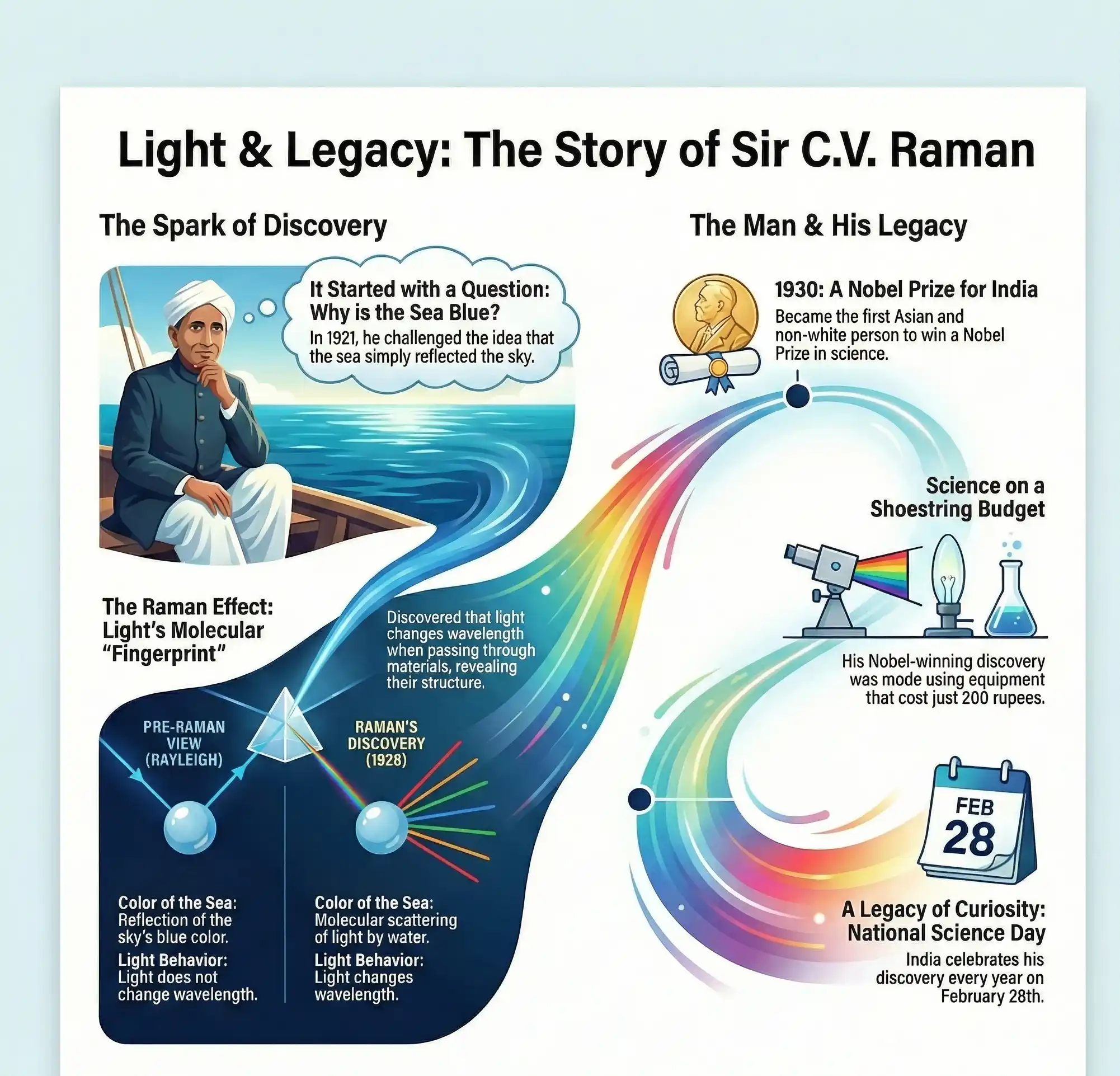
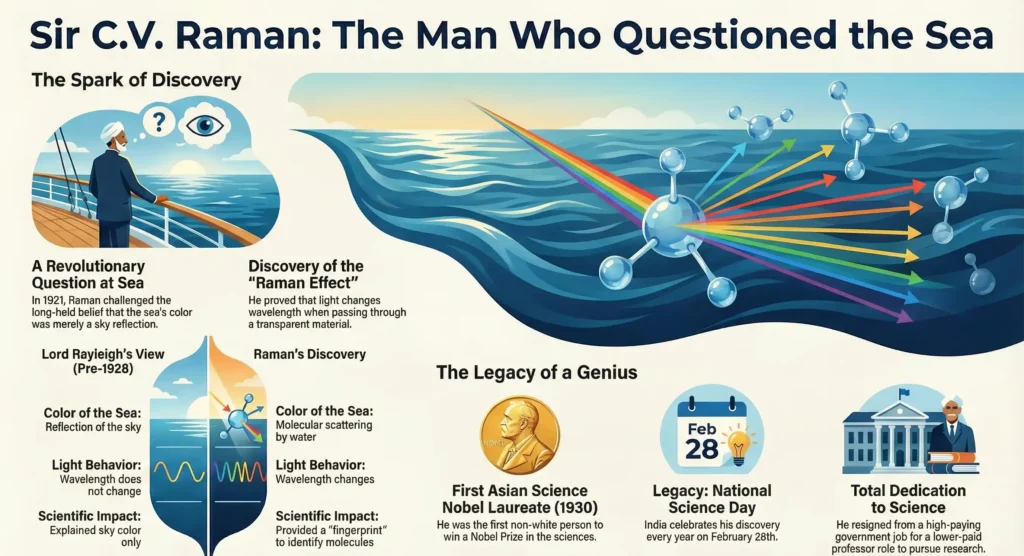
The CV Raman life story begins not in a laboratory, but on the deck of a ship. In 1921, while sailing home from a conference in London, a young man stood by the railing of the SS Narkunda, staring into the deep waters of the Mediterranean Sea. At the time, the scientific community, including the great Lord Rayleigh, believed that the sea was blue simply because it reflected the color of the sky. But for Raman, that explanation felt incomplete. It didn’t sit right with his intuition.
He pulled a small prism and a spectroscope from his pocket—tools he carried like a photographer carries a camera—and began to observe the water. He realized that the water itself was scattering light. This moment of wonder was the spark for the Raman Effect discovery, a breakthrough that would eventually prove that when light traverses a transparent material, some of the deflected light changes wavelength. This wasn’t just a win for India; it was a revolution for the world.
8 Defining Chapters in the Vikram Sarabhai Biography
A Prodigy in the Making
Long before he was a Nobel laureate, Raman was a child prodigy in Tiruchirappalli. Born into a family that valued education, his father was a lecturer in mathematics and physics. Imagine a young boy who matriculated at the age of 11 and finished his FA (today’s equivalent of intermediate) at 13. By the time he was 18, he had published his first scientific paper in the prestigious Philosophical Magazine.
However, the Indian scientist biography of that era often took a detour into civil service. Despite his brilliance in physics, Raman joined the Indian Finance Service as an Assistant Accountant General in Calcutta. But his heart remained in the lab. Every evening, after his grueling government job, he would rush to the Indian Association for the Cultivation of Science (IACS). There, in a small, poorly lit room, he conducted experiments late into the night. It was a period of intense struggle, but his passion for the Nobel Prize in Physics India would eventually witness was already brewing.
The 1930 Nobel Moment
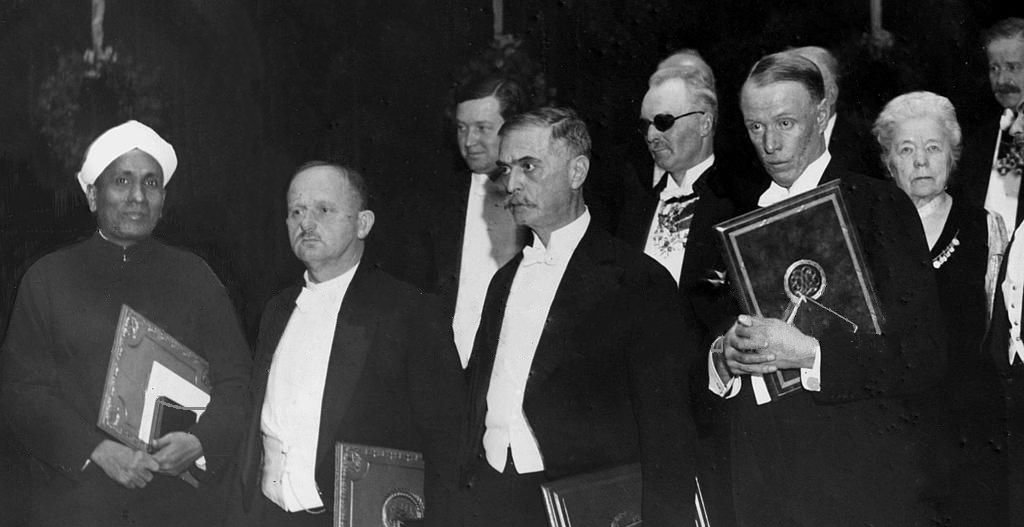
The year 1930 remains etched in gold for Indian science. Raman had been so confident in his discovery that he booked his tickets to Sweden months before the Nobel Prize winners were even announced. This level of self-belief is a core part of the CV Raman life story. When he finally stood in Stockholm, draped in his traditional turban and a black coat, he was the first Asian and first non-white person to receive a Nobel Prize in the sciences.
It is said that when the prize was announced, Raman wept. These weren’t just tears of personal joy, but tears of a man who had proved that Indian science could thrive even under colonial rule. He had used equipment that cost barely 200 rupees to uncover a truth that changed chemistry and physics forever.
The Human Side of the Genius
Raman was more than just a man of equations; he was a man of emotions and aesthetic sensibilities. He loved diamonds, flowers, and butterflies—not just for their beauty, but for the way they interacted with light. He once spent hours explaining the physics of a violin to a group of musicians. He believed that science was not a cold, distant subject but a vibrant part of human experience.
This Indian scientist biography is also filled with his love for his students. He treated the Raman Research Institute in Bangalore as his child, walking through the gardens and discussing the mysteries of the universe with anyone who was willing to listen. He was known for his sharp wit and occasional stubbornness, but it all came from a place of immense love for the truth.
1971 Nagarwala Case: India’s Great Bank Heist Mystery
Comparison: Traditional View vs. Raman’s Discovery
| Feature | Pre-Raman View (Rayleigh) | Raman’s Discovery (1928) |
| Color of the Sea | Reflection of the sky’s blue color. | Molecular scattering of light by water. |
| Light Behavior | Light does not change wavelength when scattered. | Light changes wavelength (inelastic scattering). |
| Scientific Impact | Explained sky color but failed on liquids. | Provided a “fingerprint” for identifying molecules. |
Why February 28th Matters
Every year, India celebrates National Science Day on February 28th. This date marks the day in 1928 when the Raman Effect was officially confirmed. Understanding the National Science Day history helps us realize that science is not about expensive equipment; it is about the “Curious Indian” spirit. Raman showed us that with a keen eye and a questioning mind, one can unlock the secrets of the universe from anywhere.
His legacy isn’t just in the textbooks; it’s in every Indian student who looks at the sky or the sea and asks, “Why?” He taught us that curiosity is the highest form of intelligence.
Dr. A.P.J. Abdul Kalam: (1931-2015)
Curious Indian: Fast Facts
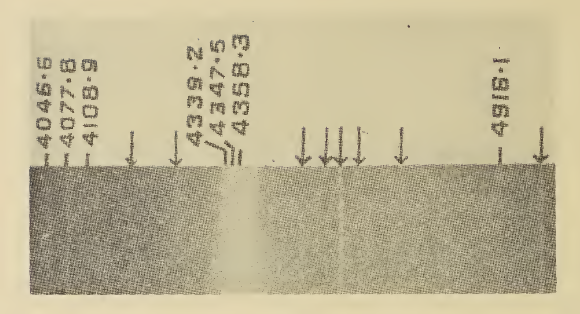
- Musical Interest: Raman was obsessed with the acoustics of Indian drums like the Tabla and Mridangam, proving they had unique harmonic overtones.
- The Turban: He famously wore his turban throughout his life, including the Nobel ceremony, as a mark of his Indian identity.
- Total Dedication: He resigned from a high-paying government job to take a professor’s role that paid half as much, just so he could do research.
- A Bharat Ratna: He was among the first recipients of India’s highest civilian award in 1954.
Conclusion
The CV Raman life story is a bridge between the old world of classical physics and the new world of molecular discovery. It reminds us that greatness doesn’t require a silver spoon; it requires a golden vision. Raman’s journey from the ghats of the Mediterranean to the podium in Stockholm is a narrative of resilience that continues to inspire millions. As we look at the blue sea today, we don’t just see water; we see the curiosity of a man who dared to ask “why” and changed our understanding of light forever.
The Roopkund Skeleton Lake Mystery: Why Were Greeks Dying in the Indian Himalayas?
If you think you have remembered everything about this topic take this QUIZ
Results


#1. What inspired C.V. Raman to investigate the color of the sea, eventually leading to his groundbreaking discovery?
#2. What is the ‘Raman Effect’ officially defined as in the field of physics?
#3. How did Raman manage to conduct scientific research while working as an Assistant Accountant General in Calcutta?
#4. Which of the following describes Raman’s level of confidence regarding his work for the 1930 Nobel Prize?
#5. What significant ‘first’ did C.V. Raman achieve in 1930?
#6. Besides light and physics, Raman had a deep interest in the acoustics of which Indian instruments?
#7. Why is National Science Day celebrated in India on February 28th?
#8. According to the comparison table, what was the primary difference between Raman’s discovery and the traditional view held by Lord Rayleigh?
What is the Raman Effect in simple terms?
The Raman Effect happens when light hits a molecule and bounces off. Most of the light bounces back with the same energy, but a tiny fraction changes its energy (and color). This change tells scientists exactly what kind of molecule they are looking at.
Why did CV Raman win the Nobel Prize?
He won the Nobel Prize in Physics in 1930 for his work on the scattering of light and the discovery of the effect named after him (The Raman Effect).
When is National Science Day celebrated in India?
It is celebrated on February 28th every year to commemorate the discovery of the Raman Effect in 1928.
Was CV Raman the first Indian to win a Nobel Prize?
He was the first Indian (and Asian) to win a Nobel Prize in Science. Rabindranath Tagore was the first Indian to win a Nobel Prize (in Literature).
Where can I visit the Raman Research Institute?
The Raman Research Institute is located in Bengaluru, Karnataka, which Raman founded to continue his research in his later years.