How Jyotiba Phule Built the Satyashodhak Samaj to Challenge Caste in Maharashtra
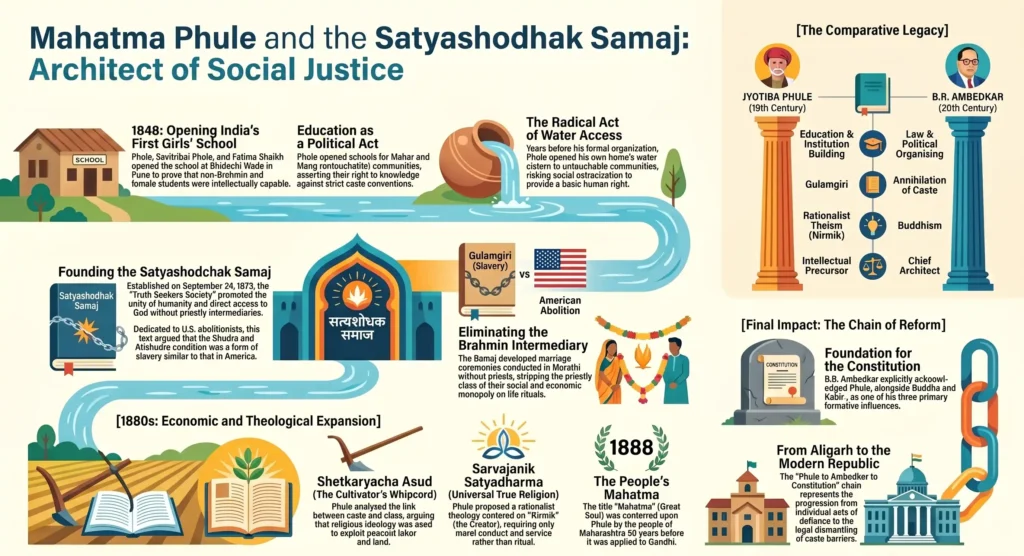
Jyotiba Phule founded the Satyashodhak Samaj in Pune on September 24, 1873, not as a gesture or a philosophical exercise but as a functioning organization designed to do a specific, difficult, and necessary thing: to dismantle the caste barriers that had organized Maharashtrian society for centuries around the principle that some human beings were born inherently superior to others and that this supposed superiority gave them the right to deny the others education, economic opportunity, social dignity, and access to the divine. He had been working toward this for twenty-five years already, since the day in 1848 when he opened India’s first girls school with his wife Savitribai and began the project of proving, through practice rather than argument alone, that the people the caste system said were unteachable were in fact more than capable of learning everything. The Satyashodhak Samaj was the institutional form of that proof, scaled up and systematized.
How Pandita Ramabai Pioneered a Fearless Crusade for Women’s Education
Related to article: The Boy Who Read Too Much · Source: Wikimedia Commons · DesiBoy101 · CC BY 4.0
The Wedding Procession and the Reading That Followed
There is an account of a moment in Jyotiba Phule’s early life that his biographers have returned to repeatedly because it contains, in compressed form, the whole logic of everything that followed. He was a young man from a Mali family in Pune, attending a government school, when a friend’s wedding procession led to an incident with the Brahmin community present. Phule was made to understand, publicly and humiliatingly, that his caste position placed him beneath the social regard of those around him regardless of his intelligence, his learning, or his personal qualities.
He left the procession. He went home. He read. He read Thomas Paine’s Rights of Man and he read about the American anti-slavery movement and he read whatever else he could find that addressed the fundamental question the incident at the wedding procession had crystallized for him: whether the social hierarchy that had just humiliated him had any legitimate basis in reason, in justice, or in any honest reading of human nature.
His conclusion, reached through reading and through the evidence of his own experience and observation, was that it did not. The caste system was not a divine dispensation. It was not a natural order. It was a human construction maintained by a specific class of people for the specific purpose of preserving their own privilege, and its maintenance required the systematic denial of education, economic opportunity, and social dignity to everyone below them in the hierarchy they had invented.
Related to article: The Boy Who Read Too Much · Source: Wikimedia Commons · DesiBoy101 · CC BY-SA 4.0
Having reached this conclusion, Phule did not simply sit with it. He spent the rest of his life acting on it.
The Pune of Brahminical Authority
The Rationalist Awakening Sparked by Gopal Hari Deshmukh in Maharashtra
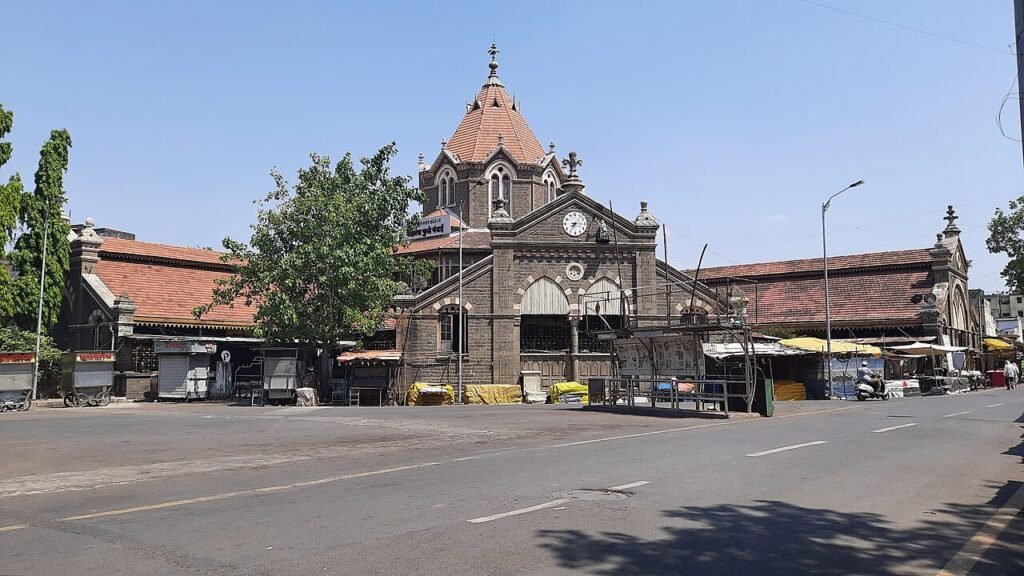
To understand what Phule was arguing against, it helps to understand the specific character of Brahminical authority in the Pune of the mid-nineteenth century. Pune was not simply a city in Maharashtra. It was the former capital of the Maratha Peshwa rulers, under whose administration Brahmin authority had reached one of its highest points of concentrated social and political power in Indian history. The Peshwa regime had been a Brahmin-administered state, and the cultural and social legacy of that administration persisted in Pune long after the British had replaced the Peshwas in 1818.
Related to article: The Boy Who Read Too Much · Source: Wikimedia Commons · Saarang Rajguru (सारंग राजगुरू) · CC BY-SA 4.0
The Brahmin community of Pune in the mid-nineteenth century was not monolithic. It included reformers like Gopal Hari Deshmukh, whose Shatapatre had introduced rationalist critique of caste hierarchy to the Marathi reading public in 1848. But it also included a deeply conservative establishment that exercised social, religious, and economic authority over the non-Brahmin communities of the region through the control of religious ritual, the priesthood, educational institutions, and the formal ideological justification for the caste hierarchy that the Shudra and Atishudra communities lived under.
Phule was the son of a Mali family that sold flowers and vegetables. His family had some connection to the colonial administration that had allowed his father to achieve a degree of modest stability, and this stability had made it possible for the young Jyotiba to attend the Scottish Mission School in Pune, where he had encountered the Western education that gave him the intellectual tools he would use to dismantle the system that had structured his family’s subordination for generations.
The education he received at the Scottish Mission School, with its exposure to Western rationalism, to the history of reform movements in other societies, and to the writing of figures like Thomas Paine, was the intellectual formation that made Phule the particular kind of anti-caste thinker he became. He was not working from within the tradition he was attacking, as Deshmukh was. He was attacking it from the outside, from the position of someone who had been excluded from the tradition’s benefits and who had found, in a different intellectual tradition, the tools to demonstrate that the exclusion was unjustifiable.
Related to article: The Boy Who Read Too Much · Source: Wikimedia Commons · Vijaydesai · CC0
Twenty-Five Years of Practice Before Organization
The founding of the Satyashodhak Samaj in 1873 was not the beginning of Jyotiba Phule’s work. It was the organizational culmination of twenty-five years of activism that had already transformed the educational landscape of Maharashtra in ways that no previous reformer had achieved.
The opening of India’s first girls school at Bhidechi Wada in Pune on January 1, 1848, together with Savitribai Phule and Fatima Sheikh, was the first and most consequential of these interventions. The school was not simply an educational institution. It was an argument made in practice, demonstrated every day by the presence of students who had been told they were unteachable, that the caste system’s claims about the intellectual and spiritual incapacity of non-Brahmin and female human beings were false. The school’s existence was itself a refutation of the ideology that had made its creation necessary.
Phule went on to open schools for the children of Mahar and Mang communities, the communities classified as untouchable in Maharashtra, at a time when their access to any form of education was actively prevented by caste convention and in some cases by explicit social enforcement. These schools were not simply charitable interventions. They were political acts, each one an assertion that the human beings who attended them had the same right to knowledge as any Brahmin child.
Decades later, the Vaikom Satyagraha of 1924 challenged another form of caste-based exclusion, this time on public roads in Kerala.
In 1851, Phule and Savitribai opened a school for untouchable children, one of the first such schools in western India. They opened their home’s water cistern to untouchable community members at a time when access to water was controlled along caste lines with a rigidity that killed people. Each of these acts carried social and economic risk, and each was a demonstration of the principle that would eventually be systematized in the Satyashodhak Samaj.
Gulamgiri: The Intellectual Foundation
Thakkar Bapa’s Tribal Upliftment Work in Remote India
In 1873, the same year he founded the Satyashodhak Samaj, Phule published Gulamgiri, translated as Slavery, a work dedicated to the abolitionists of the United States who had fought to end Black slavery. The book argued explicitly that the condition of the Shudra and Atishudra communities of India under the Brahminical caste system was a form of slavery comparable in its essential structure, if different in its specific mechanisms, to the chattel slavery that had been abolished in America.
The dedication to the American abolitionists was not rhetorical. Phule had read seriously about the American anti-slavery movement and had drawn from that reading the conclusion that the intellectual and organizational strategies used by abolitionists in a different context had direct relevance to the condition he was addressing in Maharashtra.
The book argued against the religious justification of caste hierarchy by challenging the authority of the texts on which that justification rested. Phule questioned the divine origin of the Vedas and the Manusmriti, arguing that they were human compositions that served the interests of their composers rather than divine revelations that expressed a universal moral order. He presented an alternative history of caste, rooted in conquest and the imposition of social hierarchy by force, that demystified the system and exposed its human and political origins.
This was rationalism applied to caste in a manner more direct and more radical than anything Deshmukh’s Shatapatre had attempted. Deshmukh had challenged specific social customs on grounds of reason and human welfare. Phule challenged the entire ideological foundation of the caste system by attacking the religious texts and the theological claims on which it rested.
The Satyashodhak Samaj: Organization and Practice
The Satyashodhak Samaj, founded on September 24, 1873, in Pune, was built on three foundational principles that defined both its organizational structure and its ideological character. The first was the unity of humanity before the divine, the conviction that every human being had direct access to god and required no Brahmin intermediary to mediate that access. The second was the rejection of the scriptural authority of the texts that justified caste hierarchy, particularly the Vedas and the Manusmriti. The third was the practical commitment to the education and social upliftment of Shudra and Atishudra communities as the most urgent social task of the era.
The Samaj’s membership was explicitly open to people of all castes, including Brahmin reformers who accepted its principles, but its primary constituency and its primary concern were the non-Brahmin communities of Maharashtra whose subordination the caste system maintained. It charged no membership fees that would have excluded the poor, organized community meetings and discussions that were accessible to people without formal education, and developed alternative social forms that allowed community members to live by the Samaj’s principles in the actual texture of daily life.
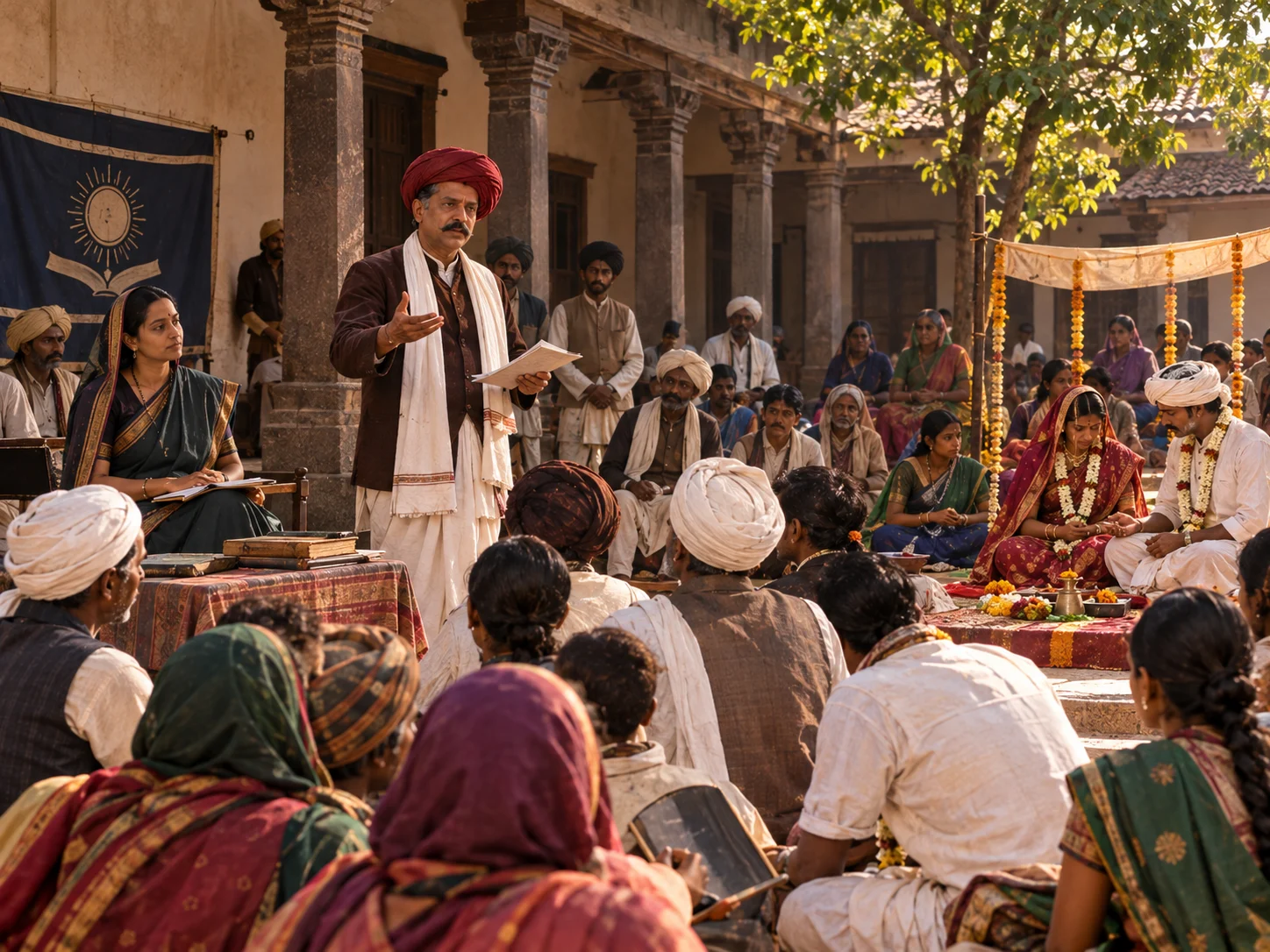
The most practically consequential of these alternative social forms was the development of marriage ceremonies that did not require a Brahmin priest. In the caste society of Maharashtra, the Brahmin priest’s role in life-cycle rituals was not simply religious but economic and social, giving the priestly class a structural presence in the most intimate moments of every family’s life and a corresponding flow of fees, gifts, and social authority. The Satyashodhak marriage ceremony, conducted without a Brahmin priest, in the spoken Marathi of the participants rather than in Sanskrit, and open to couples across caste lines, was a direct attack on this structural presence.
Savitribai Phule, whose own contribution to the Samaj’s work was as substantial as her husband’s, conducted Satyashodhak marriage ceremonies and was central to organizing the women’s dimension of the Samaj’s activities. Her presence in the organization was not as an appendage to Jyotiba’s leadership but as a co-architect of the Samaj’s vision and its practical implementation.
The Samaj’s journal, Deenbandhu, founded in 1877, became one of the most important Marathi-language publications addressing the condition of non-Brahmin communities in Maharashtra, providing a platform for the intellectual life of the movement and connecting the Samaj’s network across the region.
Sarvajanik Satyadharma: Theology as Resistance
Phule understood that the dismantling of caste hierarchy required not only the critique of the religious ideology that justified it but the construction of an alternative theology that could address the genuine religious needs of the communities he was working with without reinscribing the hierarchies he was fighting. He spent decades developing this alternative theology and articulated its fullest form in the Sarvajanik Satyadharma Pustak, the Book of the Universal True Religion, published posthumously in 1891.
The theology Phule developed was rationalist and universalist. It posited a single creative god, Nirmik, who had created all human beings equally and who required no priestly intermediaries, no ritual performances, no caste distinctions, and no elaborate textual learning to be approached. Direct prayer, moral conduct, and service to fellow human beings were the forms of worship this god required. The elaborate machinery of Brahminical ritual was not simply unnecessary but was in Phule’s understanding a form of fraud perpetrated on the communities who paid for it.
This theological alternative was not simply a negative critique. It provided communities whose traditional forms of religious life had been organized around Brahmin mediation with a positive alternative that addressed the genuine need for a relationship with the divine while removing the hierarchical structure that had made that relationship an instrument of oppression.
Shetkaryacha Asud: Caste and Economics
In 1883, Phule published Shetkaryacha Asud, translated as The Cultivator’s Whipcord or The Farmers’ Lash, which addressed the economic condition of the peasant communities of Maharashtra, the Shudra farming families whose relationship to the land and to the colonial economic system had created a structure of poverty and exploitation that the caste system both reflected and reinforced.
The book was a detailed analysis of the specific economic mechanisms through which the peasant communities of Maharashtra were being impoverished, including the land revenue system, the moneylending practices that converted agricultural debt into permanent dispossession, and the way in which the educated classes profited from the peasant’s labor while contributing to the institutional structures that kept the peasant poor.
It was also an argument about the relationship between caste and class, one of the earliest sustained treatments of this relationship in Indian social thought. Phule was not simply arguing that caste was unjust in moral terms. He was arguing that it was the ideological superstructure of an economic system of exploitation, that the religious justification of caste served the material interests of the exploiting class, and that the liberation of the Shudra and Atishudra communities therefore required both the dismantling of the ideological justification and the reform of the economic structures it served.
This economic analysis gave the Satyashodhak Samaj’s work a dimension that purely cultural or religious reform did not have, connecting the question of caste to the question of land, credit, and the material conditions of life for the majority of Maharashtra’s population.
The Title and the Ambedkar Connection
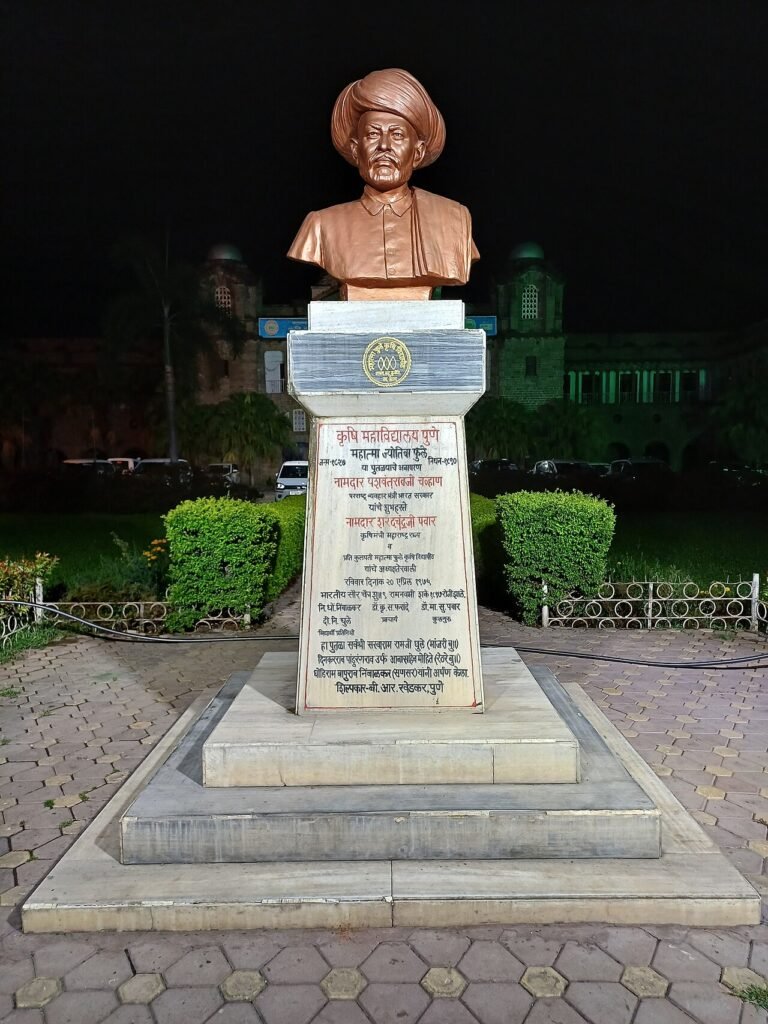
In 1888, the people of Maharashtra conferred on Jyotiba Phule the title of Mahatma, the great soul, more than thirty years before the same title would be applied to Mohandas Gandhi. The conferral was an act of popular recognition for a man whose work over four decades had transformed the educational, social, and intellectual landscape of Maharashtra in ways that the communities he had served recognized even when the dominant historical narrative was slow to acknowledge them.
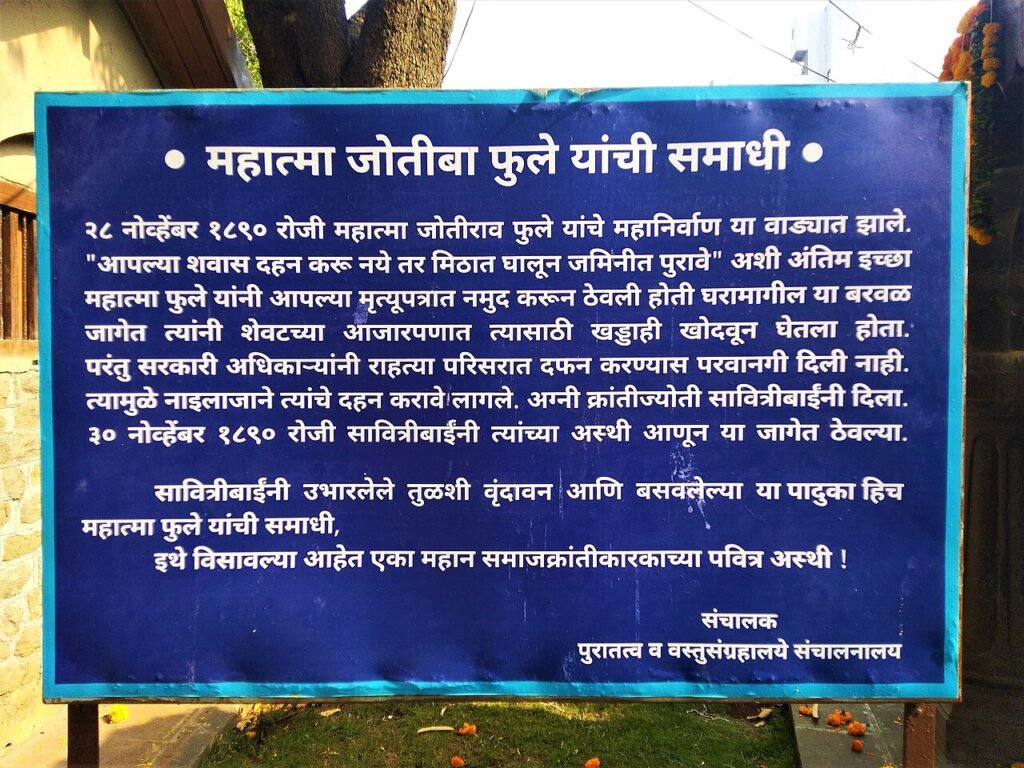
He died on November 28, 1890, in Pune, having spent his final years in declining health but continuing to write, to organize, and to direct the Satyashodhak Samaj through Savitribai and the network of activists who had built their commitment to the movement across the preceding decades.
The Samaj continued after his death, with Savitribai assuming a central leadership role until her own death in 1897. The movement’s influence extended well beyond Maharashtra, shaping the development of anti-caste thought across the subcontinent and providing the intellectual and organizational precedents that B.R. Ambedkar drew on explicitly when developing his own far more comprehensive and constitutionally ambitious attack on the caste system in the following century.
Ambedkar acknowledged the Phule tradition as foundational to his own thinking, placing Jyotiba Phule alongside the Buddha and Kabir as the three figures who had most shaped his understanding of what caste was, what it did to human beings, and what would be required to dismantle it. This acknowledgment from the man who designed the constitutional framework of independent India is perhaps the most precise available measure of what the Satyashodhak Samaj actually accomplished.
The Unfinished Work
Phule had built an organization designed to dismantle caste barriers. He did not live to see those barriers fall. But he built the intellectual and organizational foundations on which the people who would eventually inscribe their demolition into the constitution of an independent nation did their work, and that is a form of achievement that outlasts any individual lifetime.
He built the Satyashodhak Samaj because he had spent twenty-five years demonstrating through practice that the caste system’s claims about human beings were false, and he had concluded that demonstration alone was not sufficient. The schools he had opened proved that the people the system said were unteachable could learn. The water cistern he had opened proved that the social barriers the system maintained were human constructions rather than natural facts. The marriages conducted without priests proved that the ritual authority the Brahmin class claimed was neither necessary nor legitimate.
These individual demonstrations needed to be organized into something more durable, something that could continue beyond the energy and commitment of specific individuals, something that could build the kind of institutional presence and intellectual tradition that would survive the inevitable opposition and make the argument cumulatively across decades.
The Satyashodhak Samaj was that something. It was not perfect. It did not survive in its original form. It did not dismantle the caste system within Phule’s lifetime or within the following century. The barriers he spent his life fighting are still standing, diminished and contested but not destroyed, in the society that claims his legacy.
But what he built mattered. The intellectual tradition he created, the organizational forms he pioneered, the theological alternative he articulated, and the explicit connection between caste ideology and economic exploitation that he drew with unprecedented clarity, all of these became the foundation on which Ambedkar built, and Ambedkar built the constitutional architecture of a modern democracy committed, however imperfectly in practice, to the equality of every human being regardless of caste.
How Syed Ahmad Khan Changed Muslim Education in India
If you think you have remembered everything about this topic take this QUIZ
Results


#1. In which year was the Satyashodhak Samaj founded by Jyotiba Phule?
#2. Jyotiba Phule belonged to which of the following communities?
#3. Which Western intellectual’s book “Rights of Man” did Phule read after the humiliating wedding procession incident?
#4. India’s first girls school was opened by Phule, Savitribai, and Fatima Sheikh at which location in Pune?
#5. To whom did Jyotiba Phule dedicate his 1873 book “Gulamgiri” (Slavery)?
#6. What name did Phule give to the single creative god in his alternative theology, as articulated in the “Sarvajanik Satyadharma Pustak”?
#7. Which 1883 book by Phule provided a detailed analysis of the economic mechanisms and exploitation faced by peasant communities?
#8. In which year did the people of Maharashtra confer the title of “Mahatma” upon Jyotiba Phule?
Who was Jyotiba Phule and why did he found the Satyashodhak Samaj?
Jyotiba Phule was a nineteenth-century Maharashtrian social reformer from the Mali community who founded the Satyashodhak Samaj in 1873 as the organizational culmination of twenty-five years of anti-caste activism. He founded it because individual acts of reform, including opening schools for girls and lower-caste children, were insufficient without an institution capable of sustaining the movement across time and extending its reach across Maharashtra. The Samaj provided the organizational structure, the theological alternative, and the social forms that allowed communities to live by anti-caste principles in the actual texture of daily life.u003cbru003e
What were the core principles of the Satyashodhak Samaj?
The Samaj operated on three foundational principles. The first was the direct, unmediated access of every human being to the divine, without the requirement of Brahmin priestly intermediaries. The second was the rejection of the scriptural authority of texts including the Vedas and the Manusmriti that provided the religious justification for caste hierarchy. The third was the practical commitment to the education, economic upliftment, and social dignity of Shudra and Atishudra communities as the most urgent social task of the era. These principles were expressed through Satyashodhak marriage ceremonies, community gatherings, schools, and the theological alternative Phule developed in his writings.
What was Gulamgiri and why was it significant?
Gulamgiri, published in 1873, was a foundational text of anti-caste thought that argued the condition of Shudra and Atishudra communities under the Brahminical caste system was structurally comparable to the chattel slavery abolished in America. Dedicated to American abolitionists, it challenged the religious justification of caste by attacking the divine authority of the texts on which that justification rested and presented an alternative history of caste rooted in conquest and the imposition of social hierarchy by force. It was the most systematic and radical attack on the ideological foundations of caste hierarchy in Marathi literature up to that point.u003cbru003e
How did the Satyashodhak Samaj challenge Brahmin priestly authority in practice?
The most direct practical challenge to Brahmin priestly authority was the development of marriage ceremonies conducted without Brahmin priests, in spoken Marathi rather than Sanskrit, and open to couples across caste lines. This attacked the economic and social foundation of priestly authority at the most intimate level of family life. The Samaj also developed community gatherings that brought people of different castes together without the hierarchical seating and participation arrangements that caste convention required, and it produced theological literature that gave communities a direct, non-mediated relationship with the divine that required no priestly involvement.
How does Phule’s legacy connect to Ambedkar and the Indian constitution?
B.R. Ambedkar explicitly acknowledged Phule alongside the Buddha and Kabir as one of the three most formative influences on his understanding of caste. The intellectual and organizational precedents that Phule established through the Satyashodhak Samaj, the systematic critique of caste ideology, the development of alternative social forms, the connection between caste and economic exploitation, and the organizational mobilization of non-Brahmin communities, provided the foundation on which Ambedkar’s far more comprehensive constitutional and political project was built. Ambedkar’s design of the constitutional provisions against caste discrimination and untouchability drew on a tradition of anti-caste thought and organization to which Phule’s work was foundational.
Sources & References
Jyotiba Phule’s life and Mali identity — Born April 11, 1827 in Pune; died November 28, 1890 in Pune. From Mali (Shudra/OBC) community that sold flowers and vegetables. Attended Scottish Mission School where he encountered Western rationalism, Thomas Paine, and anti-slavery thought. Married to Savitribai Phule, social reformer and India’s first female teacher who served as co-architect of the Satyashodhak Samaj.
India’s first girls school and early activism — Opened India’s first girls school at Bhidechi Wada on January 1, 1848 with Savitribai and Fatima Sheikh, followed by schools for Mahar and Mang (untouchable) communities. In 1851 opened school for untouchable children; opened home’s water cistern to untouchable community members at time when caste controlled water access. Each act demonstrated anti-caste principles before Samaj’s founding.
Gulamgiri and theoretical framework — Published Gulamgiri (Slavery) in 1873, dedicated to American abolitionists, arguing caste-based oppression was structurally comparable to chattel slavery. Challenged divine authority of Vedas and Manusmriti as human compositions serving exploiter interests, presented alternative history of caste rooted in conquest and forced hierarchy.
The Satyashodhak Samaj and alternative social forms — Founded September 24, 1873 with three principles: direct divine access without Brahmin intermediaries, rejection of Hindu scriptural authority, upliftment of Shudra and Atishudra communities. Developed priest-free Marathi-language marriage ceremonies attacking Brahmin economic authority. Deenbandhu journal (1877) provided intellectual platform connecting movement across region.
Constitutional legacy and Ambedkar connection — Developed Sarvajanik Satyadharma Pustak (Book of Universal True Religion, posthumous 1891) with rationalist theology centered on Nirmik, the creator. Published Shetkaryacha Asud (1883) analyzing peasant impoverishment and linking caste to economic exploitation. B.R. Ambedkar acknowledged Phule alongside Buddha and Kabir as three most formative influences, placing Satyashodhak Samaj as intellectual foundation for constitutional provisions against caste. Conferred title of Mahatma in 1888.