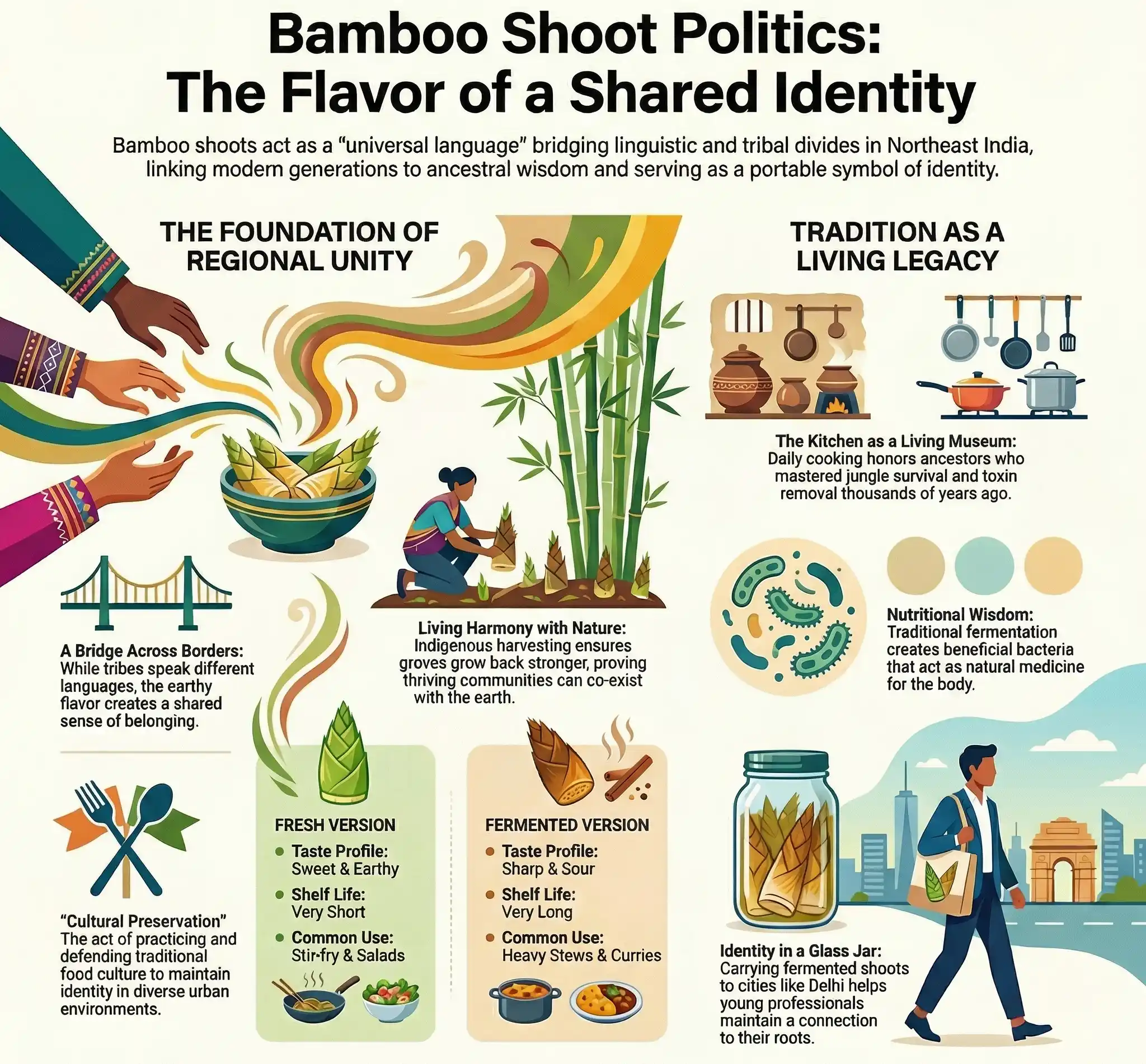
Bamboo shoot politics is a beautiful reflection of how food creates unbreakable bonds among the people of Northeast India. Despite belonging to many different tribes with unique languages and customs, the shared love for fresh and fermented bamboo acts as a common language. This ingredient represents a deep connection to the earth and the rich forests of the region. As young people move to bustling cities, carrying jars of this traditional food helps them hold onto their identity. It is a powerful story of cultural pride, survival, and the simple joy of sharing a meaningful meal with neighbors and friends.
| Category | Details |
| Core Ingredient | Fresh or Fermented Bamboo Plant |
| Primary Region | Northeast India |
| Harvest Season | Heavy Monsoon Months |
| Cultural Meaning | Unity and Regional Identity |
| Key Preparation | Boiling or Natural Fermentation |
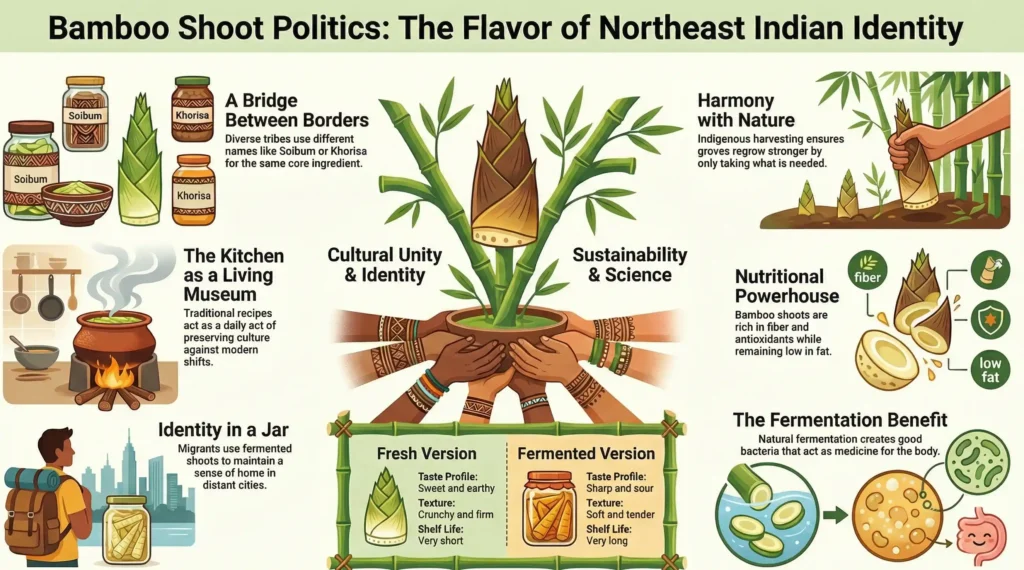
The bustling markets of Northeast India tell a vivid story through smell and sight during the heavy monsoon rains. Large piles of freshly harvested green shoots sit alongside tightly packed glass jars of fermented food. For anyone from this region, this sight brings an immediate feeling of comfort and joy. This deep emotional connection to a simple plant is the very foundation of bamboo shoot politics. It is a silent agreement that food is much more than just fuel for the body. It is a shared memory that ties millions of people together across hills and valleys. When people from different states sit down to eat, they might speak entirely different languages and wear different clothes. However, the tangy and earthy flavor of this beloved ingredient speaks a universal language of home, peace, and belonging. It is a magical experience to see how a single plant can erase borders and make everyone feel like they are part of one massive family.
The kitchen as a living museum
Every time a family prepares a meal using this special ingredient, they are honoring a history that goes back thousands of years. The ancestors of the modern tribes had to learn how to survive in dense, unpredictable jungles. They figured out exactly which wild plants were safe to eat and how to remove any natural toxins by boiling them carefully in fresh river water. These old recipes have been passed down from grandmothers to mothers and then to young children. To cook this food today is to keep those brave ancestors alive in memory. The kitchen truly becomes a living museum where the past is celebrated every single day. This daily act of cooking traditional meals is a gentle but powerful form of preserving local culture against the loud rush of the modern world.
Stories told around the fire
While the food cooks, families gather around the fire and tell stories of the old days. The grandmothers explain how to slice the plant perfectly so it stays crunchy. They talk about the best times to go into the forest and how to spot the healthiest plants. These stories are just as important as the food itself. They teach the younger generation about patience, respect for nature, and the importance of family.
A flavor that bridges borders
Northeast India is incredibly diverse, home to numerous distinct tribes and communities. With such rich diversity, it is completely natural for people to have different views on land, society, and governance. Yet, the dining table has a magical ability to erase these differences instantly. A family in Manipur might prepare their traditional version called Soibum, while a household in Assam enjoys a dish named Khorisa, and friends in Nagaland cook meat with Bastenga. The local names are different, but the core ingredient remains exactly the same everywhere you go.
Different names for the same love
This shared culinary love acts as a very strong bridge between communities that might otherwise remain separate. It reminds everyone that beneath the surface, they share the exact same roots and the same deep respect for the green forest. When festivals arrive, sharing these dishes is a way of saying welcome. It is a gesture of pure friendship that no political speech can match.
Deep roots in the green forest
To truly understand this unique food culture, you must look at the vast forests that cover the beautiful hills of the region. The people have relied on these giant green grasses for nearly everything in their daily lives. They build their homes with the sturdy stems, weave beautiful baskets to carry their crops, and eat the tender young parts that push through the wet soil. Organizations that study sustainable forest foods often praise how these indigenous communities harvest their food. They only take what they clearly need, ensuring the grove can grow back even stronger the next year. This is a beautiful lesson in living in perfect harmony with nature. It shows the whole world that it is entirely possible to feed a hungry community without destroying the precious earth.
Taking the taste to the big city
As young students and ambitious professionals leave their home states to find work in massive cities like Delhi or Mumbai, they always make sure to pack a piece of home. A jar of fermented food is usually tucked safely inside their luggage. However, bringing these deep traditions to a completely new city can sometimes be quite difficult. The strong, pungent smell of fermentation is very unfamiliar to people living outside the region. Sometimes, city neighbors might complain about the unusual cooking smells coming from the apartment.
Finding home in a small glass jar
When these young people kindly explain their food and stand up for their right to cook it, they are practicing modern bamboo shoot politics. They are asking for space, understanding, and respect for their unique identity in a very diverse country. Groups that protect Northeast India cultural heritage constantly highlight how these small moments build a more tolerant and understanding society. Opening that jar after a long, hard day of work instantly transports them back to the green hills of their childhood.
The science behind the tradition
The ancient tribes did not have modern laboratories or fancy equipment, but they possessed incredible wisdom about human health and nutrition. They knew exactly how to process the tough plant fibers to make them delicious, tender, and completely safe to eat. Today, modern researchers studying bamboo shoot nutrition agree completely with those old methods. The food is packed with healthy fiber, which keeps the stomach happy and strong all day long. It has almost no fat and is filled with important vitamins. Furthermore, the traditional method of fermenting the food creates good bacteria that act as natural medicine for the body. Groups focused on traditional food preservation are working hard to document these old techniques so they are never lost to time.
A legacy for the next generation
The modern world is changing rapidly, with bright fast food chains appearing in almost every town. Despite this major shift, the traditional foods of the Northeast are definitely not fading away. In fact, they are finding exciting new life. Young, creative chefs are blending the ancient tangy flavors with brand new recipes. They are adding the ingredient to modern dishes to create fusion meals that strongly appeal to the younger generation. This proves that the culture is alive and very capable of adapting. The intangible cultural heritage of the region remains highly secure because the people refuse to let go of the flavors that define them. Sharing a simple meal continues to be the ultimate celebration of life, unity, and resilience.
Quick Comparison Table
| Aspect | Fresh Version | Fermented Version |
| Taste Profile | Sweet and earthy | Sharp and sour |
| Texture | Crunchy and firm | Soft and tender |
| Shelf Life | Very short | Very long |
| Common Use | Stir fry and salads | Heavy stews and curries |
Curious Indian: Fast Facts
- This tall plant is technically a type of wild grass and is recognized as one of the fastest growing plants on the entire planet.
- There are hundreds of species around the world, but only a select few are sweet enough to be safely harvested for human consumption.
- The natural fermentation process allows the food to be stored safely at room temperature for several months without going bad.
- Consuming this food provides a massive boost of natural antioxidants which help the human body fight off common seasonal illnesses.
- In many local folk tales, the rapid growth of the green shoots deeply represents fertility, strength, and exciting new beginnings for the entire community.
Conclusion
The deep love for this simple forest ingredient proves beyond doubt that food has the remarkable power to shape an entire society. From the misty green hills of the Northeast to the crowded apartment kitchens in big cities, this unique flavor continues to bring people together in harmony. It starts wonderful conversations, builds strong bridges of understanding, and serves as a very proud badge of identity for millions of people. The beautiful story of how one single plant unites so many different tribes is a brilliant reminder that our traditions are always worth protecting. As long as the forests continue to grow and families gather warmly around the cooking fire, the rich heritage of the region will stay vibrant, loud, and incredibly strong.
If you think you have remembered everything about this topic take this QUIZ
What exactly does this political food term mean?
It is a thoughtful phrase used to describe how a shared love for a traditional ingredient unites the many different tribes and communities across the northeastern states.
Is it safe to eat the plant raw straight from the forest?
No, it contains natural elements that can be harmful, so it must always be boiled thoroughly or fermented properly before it is eaten.
Why does the fermented version have such a very strong smell?
The unique smell comes from healthy bacteria breaking down the natural sugars during the long preservation process, which is completely natural and safe.
Can people outside the region learn to cook with it?
Absolutely, many friendly chefs encourage trying it in very small amounts to get used to the tangy flavor before adding it to larger curries or stews.
Where can someone buy this ingredient if they live in a big city?
Many specialty grocery stores and online markets now sell both the fresh and packaged versions to cater to people wanting to try amazing regional recipes.