Dr. Mylswamy Annadurai (born 1958) is a highly decorated Indian aerospace scientist, widely celebrated as the "Moon Man of India." Born in the remote village of Kothavadi in Tamil Nadu, he received his early education in a Tamil-medium government school before earning multiple engineering degrees. Joining the Indian Space Research Organisation (ISRO) in 1982, his early career involved crucial work on the INSAT series of communication satellites. However, his name became etched in global history when he served as the Project Director for Chandrayaan-1 (2008), India's first lunar mission, which famously discovered water molecules on the Moon. He subsequently played a pivotal leadership role in the globally acclaimed Mars Orbiter Mission (Mangalyaan) and served as the Program Director for Chandrayaan-2. He is a Padma Shri awardee and a passionate advocate for STEM education among rural youth.| Feature | Details |
| Name | Dr. Mylswamy Annadurai |
| Birth Date | July 2, 1958 |
| Birthplace | Kothavadi, near Pollachi, Tamil Nadu |
| Profession | Aerospace Engineer, Scientist |
| Known As | “Moon Man of India” |
| Key Role | Project Director, Chandrayaan-1 |
| Major Missions | INSAT, Chandrayaan-1, Mangalyaan (MOM), Chandrayaan-2 |
| Alma Mater | Govt. College of Tech (Coimbatore), PSG College, Anna University |
| Civilian Honor | Padma Shri (2016) |
Roots in a Small Village
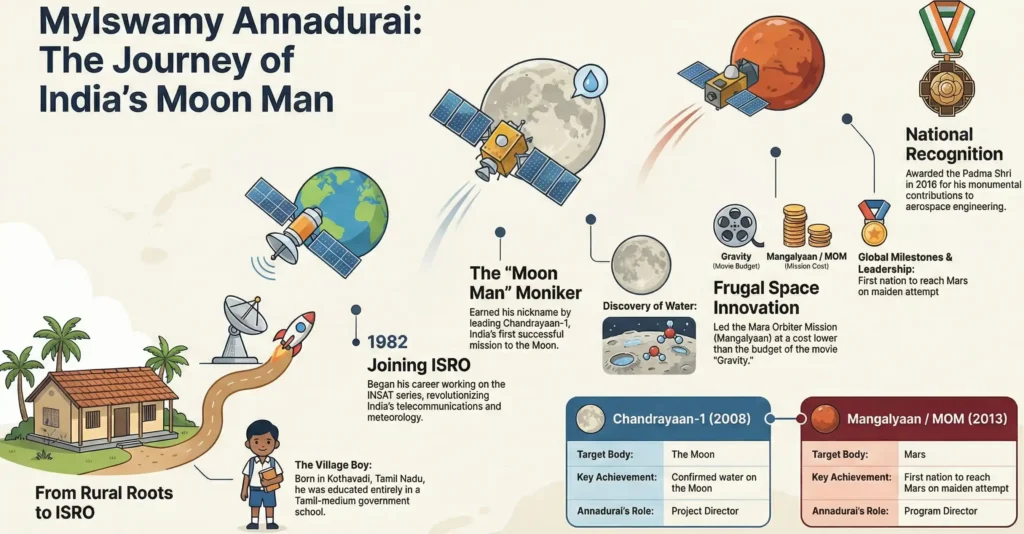
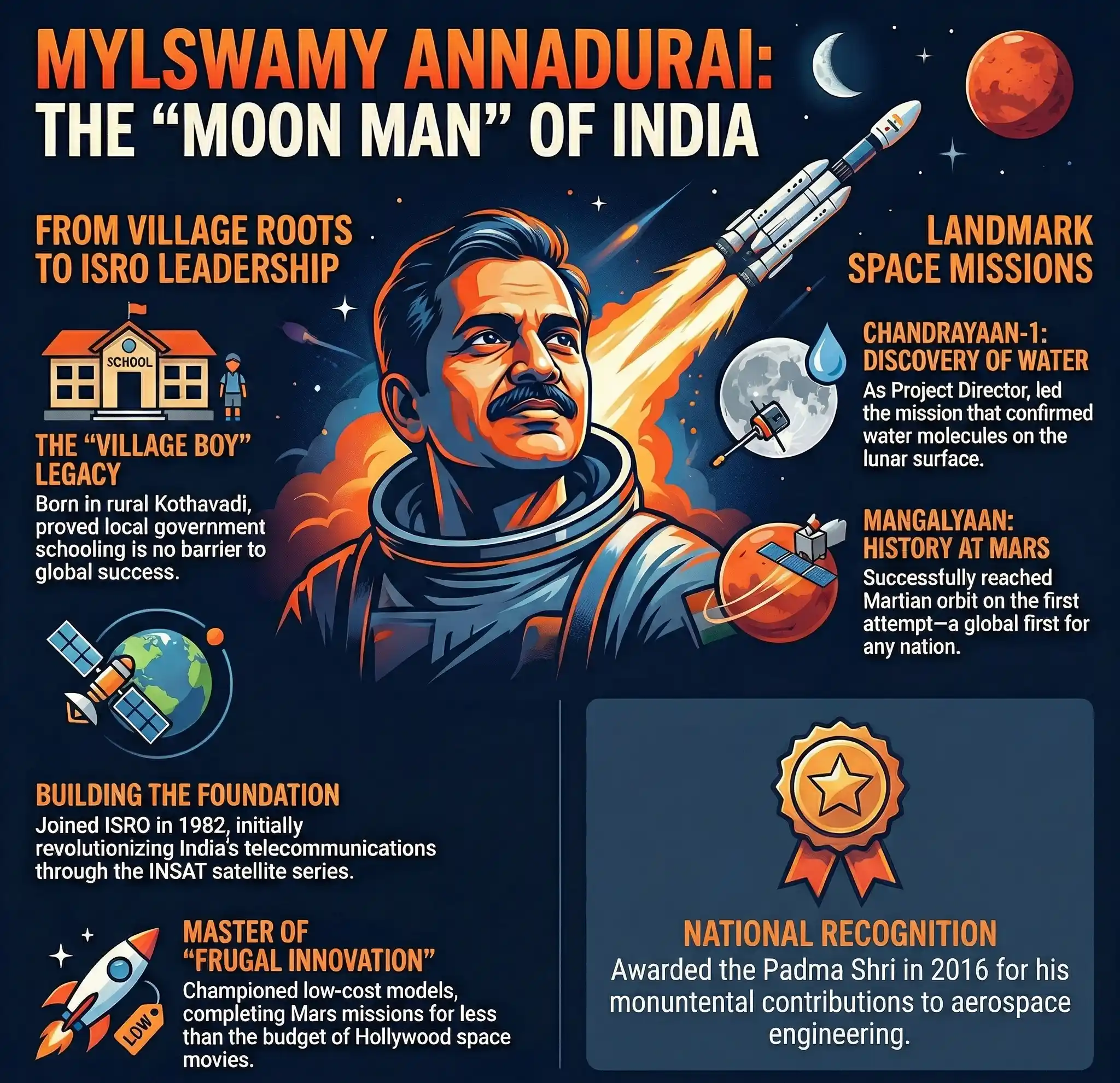
The story of this legendary Indian scientist begins far away from the polished laboratories of modern space agencies. Born on July 2, 1958, in the quiet village of Kothavadi, Tamil Nadu, Mylswamy was raised in a modest household. His father was a local school teacher, and it was within his father’s humble classroom that the earliest seeds of scientific curiosity were sown.
Growing up in a rural setting, young Mylswamy did not have access to high-tech gadgets, telescopes, or advanced libraries. He attended local government schools, studying entirely in the Tamil medium. Today, he frequently highlights this part of his life to inspire students, proving that the medium of instruction or the prestige of an early school does not define one’s potential; a sharp, inquisitive mind can break any barrier. He went on to secure an engineering degree from the Government College of Technology, Coimbatore, followed by a Master’s from PSG College of Technology, and eventually a Doctorate from Anna University, building a formidable foundation in electronics and control systems.
Stepping into ISRO
Mylswamy Annadurai officially joined the Indian Space Research Organisation (ISRO) in 1982. During this era, India’s space program was still in its developmental phase, finding its footing among global superpowers. For a young, brilliant engineer, it was the perfect environment for unbridled innovation.
In his early years, Annadurai worked extensively on the INSAT (Indian National Satellite System) series. These projects were not just scientific exercises; they revolutionized telecommunications, broadcasting, and meteorology across the Indian subcontinent. Annadurai proved himself to be a meticulous problem solver. His mentors quickly noticed his uncanny ability to manage complex, multi-layered systems and lead highly stressed teams with a calm, composed demeanor. These foundational years prepared him for the ultimate test: deep space exploration.
Reaching for the Stars: The Major Missions
Dr. Annadurai’s most significant scientific achievements pushed India from a developing space nation into a formidable global space superpower.
- Chandrayaan-1 (India’s First Lunar Mission): As the Project Director of Chandrayaan-1, launched in 2008, Annadurai led the team that put India firmly on the lunar map. The mission was a monumental game-changer. Using the Moon Impact Probe (MIP), the mission famously discovered concrete evidence of water molecules on the lunar surface. This single finding shocked the global scientific community, effectively rewriting humanity’s understanding of the moon’s geology and opening doors for future lunar colonization.
- Mangalyaan (Mars Orbiter Mission – MOM): Following his lunar success, he played a pivotal role in India’s first interplanetary mission. Launched in 2013, the Mars Orbiter Mission made India the first nation in the world to successfully reach Martian orbit on its very first attempt. Furthermore, Annadurai’s expertise in satellite configuration was crucial to India’s “frugal innovation”—the mission was completed at a fraction of the cost of NASA’s Mars missions, famously costing less than the budget of the Hollywood space movie Gravity.
- Chandrayaan-2: He continued his leadership as the Program Director for Chandrayaan-2. Under his guidance, ISRO pushed for maximum indigenization, developing complex rover and lander technologies at home and significantly reducing India’s dependence on foreign space agencies.
Manjul Bhargava: (1974- Present)
The Weight of Expectations and Leadership
The path to the stars is fraught with immense pressure. One of the most defining challenges in Annadurai’s career was the intense environment surrounding Chandrayaan-1. The mission had a highly restrictive, tight window for launch, and the entire world was watching with skepticism.
During ground testing, there were moments of severe technical failures that could have demoralized the team and derailed the mission. Annadurai recalls spending sleepless nights in the lab, fueled by endless cups of tea and a profound sense of national duty. He often reiterates that “failures are the pillars of success.” In rocket science, a single mathematical error can cost billions of rupees and years of labor. His unique ability to maintain morale and focus among hundreds of anxious scientists during these critical moments defined his legacy. He transitioned from being merely a brilliant, tech-focused engineer to a truly people-focused leader.
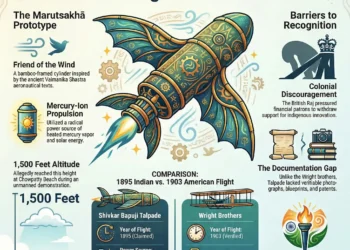
Shivkar Bapuji Talpade: (1864- 1916)
Quick Comparison Table: Annadurai’s Landmark Missions
| Feature | Chandrayaan-1 (2008) | Mangalyaan / MOM (2013) |
| Target Celestial Body | The Moon | Mars |
| Annadurai’s Role | Project Director | Program Director |
| Key Scientific Discovery | Confirmed water molecules on the Moon | Studied Martian morphology and atmosphere |
| Global Milestone | Put India into the elite lunar exploration club | First Asian nation to reach Mars orbit; First globally on maiden attempt |
| Mission Nature | Lunar Orbiter and Impactor | Interplanetary Orbiter |
Curious Indian: Fast Facts
- The “Moon Man” Moniker: Because of his unprecedented success in leading the Chandrayaan-1 mission, the Indian media and scientific community affectionately dubbed him the “Moon Man of India.”
- Padma Shri Awardee: In recognition of his monumental contributions to science and engineering, the Government of India awarded him the Padma Shri, the fourth-highest civilian award, in 2016.
- The Power of Frugality: Annadurai is a massive champion of India’s “low-cost, high-impact” model of space exploration. He proved that deep space science does not require exorbitant budgets, but rather highly efficient systems and optimized mission trajectories.
- Prolific Author: He has authored several books, including “Kaikkullae Nila” (Moon in the Palm), written in his native Tamil to inspire young regional students about space science.
Conclusion
Dr. Mylswamy Annadurai’s life is a beautiful, soaring narrative of a village boy who dared to look up and stay endlessly curious. From the dusty, unpaved tracks of Kothavadi to the highly classified mission control rooms of ISRO, his journey reminds the world that the sky is never the limit—it is just the starting line. By democratizing the dream of space exploration and proving that language and wealth are no barriers to scientific genius, the “Moon Man” continues to guide the trajectory of India’s youth toward the unknown cosmos.
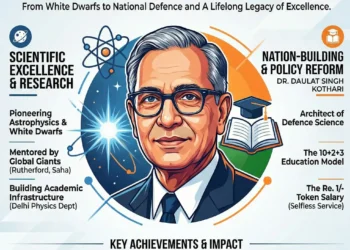
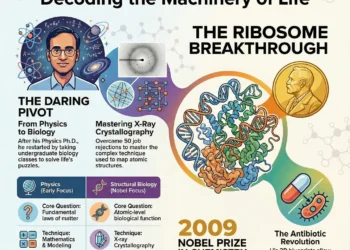
Venkatraman Ramakrishnan: (1952- Present)
If you think you have remembered everything about this topic take this QUIZ
Results


#1. What popular nickname was given to Dr. Mylswamy Annadurai by the Indian media and scientific community?
#2. In which year did Dr. Annadurai officially join the Indian Space Research Organisation (ISRO)?
#3. During his early career at ISRO, Dr. Annadurai worked extensively on which series of communication satellites?
#4. What groundbreaking discovery was made by the Chandrayaan-1 mission under his leadership as Project Director?
#5. Which 2013 mission made India the first nation in the world to successfully reach its target orbit on the very first attempt?
#6. What is the title of the book authored by Dr. Annadurai in Tamil to inspire young regional students about space science?
#7. In recognition of his monumental contributions to science and engineering, which civilian honor was awarded to him in 2016?
#8. What was a defining characteristic of the Mangalyaan mission that Dr. Annadurai championed?
Why is Mylswamy Annadurai called the “Moon Man of India”?
He earned this title because he was the Project Director for Chandrayaan-1, India’s highly successful first mission to the moon, which placed the country among the elite space-faring nations.
What was the biggest discovery of the Chandrayaan-1 mission?
Under Annadurai’s leadership, the Chandrayaan-1 mission provided the first concrete, widespread evidence of water molecules on the lunar surface.
Did Mylswamy Annadurai study in an English-medium school?
No, he studied entirely in the Tamil medium in local government schools during his childhood, proving that regional language education is not a barrier to reaching the pinnacle of global science.
What was his role in the Mars Orbiter Mission (Mangalyaan)?
He served as a key Program Director for the Mars Orbiter Mission, utilizing his expertise in satellite configuration to help India reach Mars on its first attempt at a remarkably low cost.
What prestigious civilian award has he received?
Dr. Annadurai was awarded the Padma Shri by the Government of India in 2016 for his exceptional contributions to science and technology.