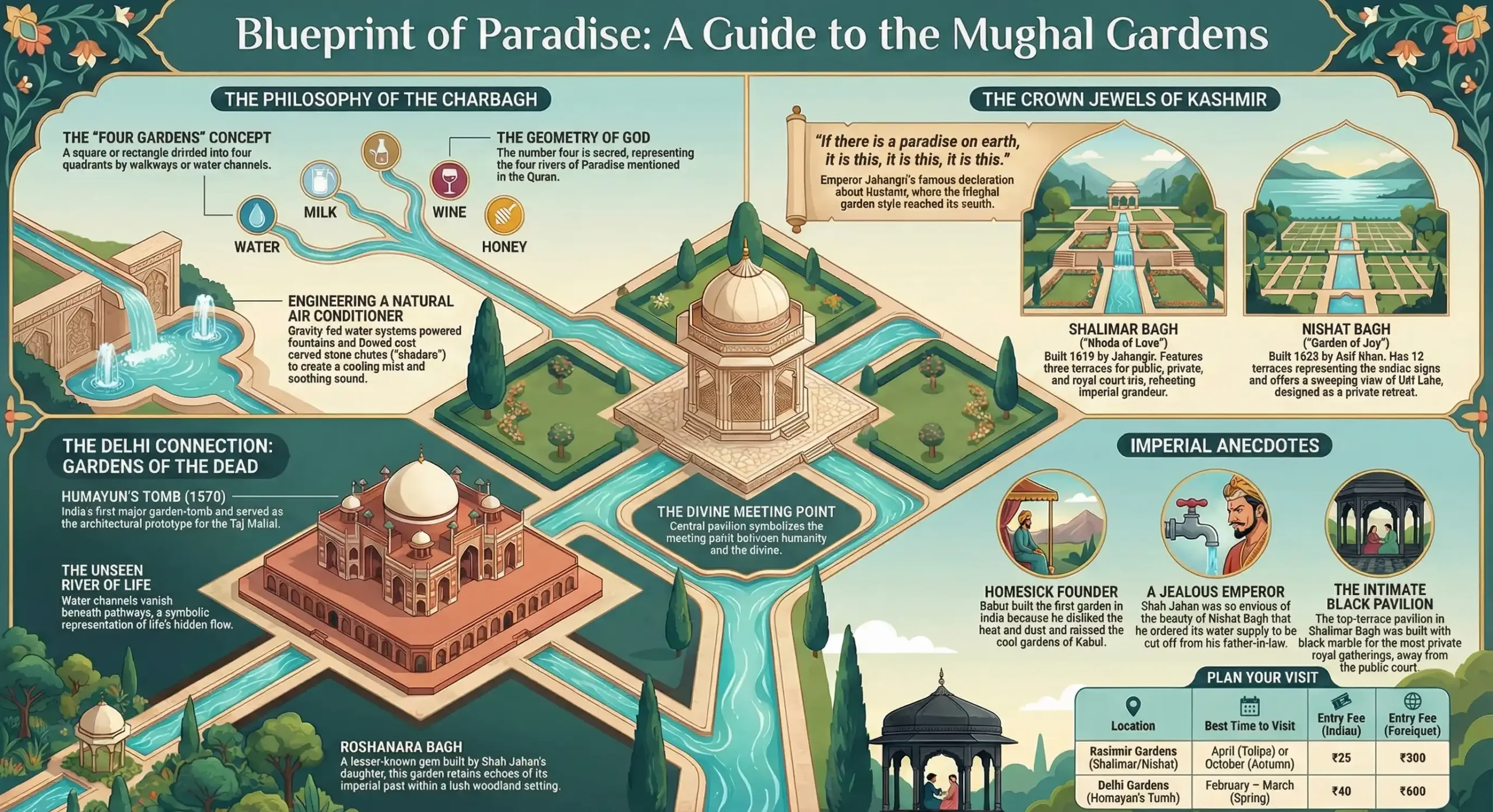
The Mughal Gardens of India are not just parks; they are theological arguments written in grass and water. Introduced by the first Mughal Emperor Babur, who pined for the cool streams of Kabul, these gardens were designed to replicate the Jannat (Islamic Paradise) on Earth. Defined by their strict Charbagh (four-part) layout, flowing water channels (nahr), and fruit-bearing trees, they represent the perfect harmony between human order and wild nature. From the terraced slopes of Kashmir to the plains of Delhi, these gardens remain the finest examples of landscape architecture in South Asian history.| Feature | Details |
| Core Layout | Charbagh (Four-part garden divided by water channels) |
| Key Elements | Running water, fountains, terraced levels, symmetry |
| Symbolism | Representation of the “Four Rivers of Paradise” (Honey, Wine, Milk, Water) |
| Famous Sites | Shalimar Bagh (Srinagar), Nishat Bagh (Srinagar), Humayun’s Tomb (Delhi) |
| Origins | Imported from Persian traditions by Emperor Babur (16th Century) |
While the Mughals are famous for their forts and the Taj Mahal, their true passion lay outdoors. For the Mughals, a building was incomplete without a garden. But these weren’t just patches of green; they were sophisticated engineering marvels designed to cool the air, please the senses, and symbolize divine power.
1. The Philosophy: What is a Charbagh?
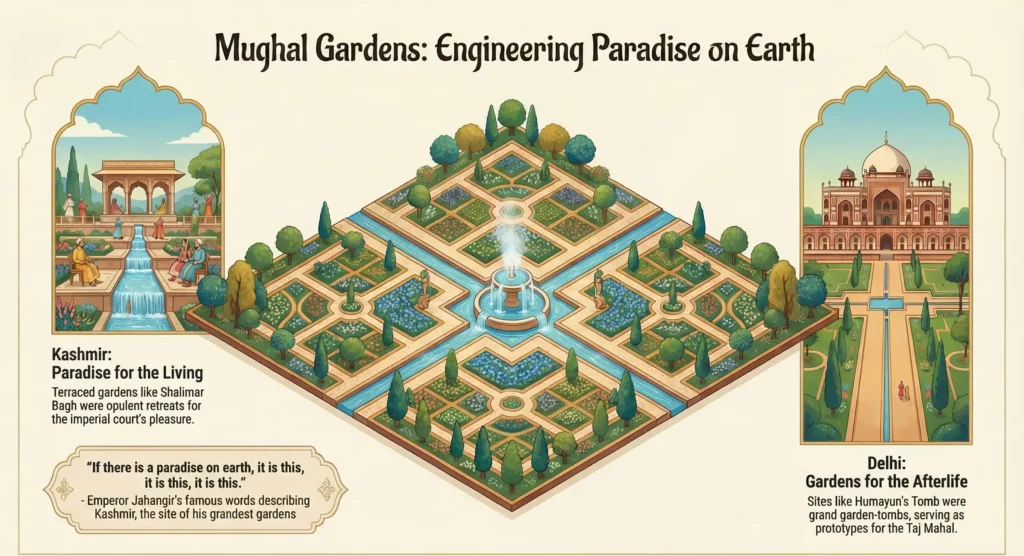
The heart of every Mughal garden is the Charbagh style (literally “Four Gardens”).
- The Geometry of God: The garden is a square or rectangle, divided perfectly into four smaller quadrants by walkways or flowing water. This number “four” is sacred, representing the four rivers of Paradise mentioned in the Quran: water, milk, wine, and honey.
- Life and Death: The intersection of these channels often features a central tomb (as in the Taj Mahal or Humayun’s Tomb) or a pavilion, symbolizing man’s meeting point with the divine.
- Engineering Coolness: In the scorching heat of the Indian plains, the Mughals used gravity-fed water systems to create fountains and chutes (chadars). The water flowing over carved stone slabs created a cooling mist and a soothing sound, turning the garden into a natural air conditioner.
2. The Crown Jewels: Kashmir’s Gardens
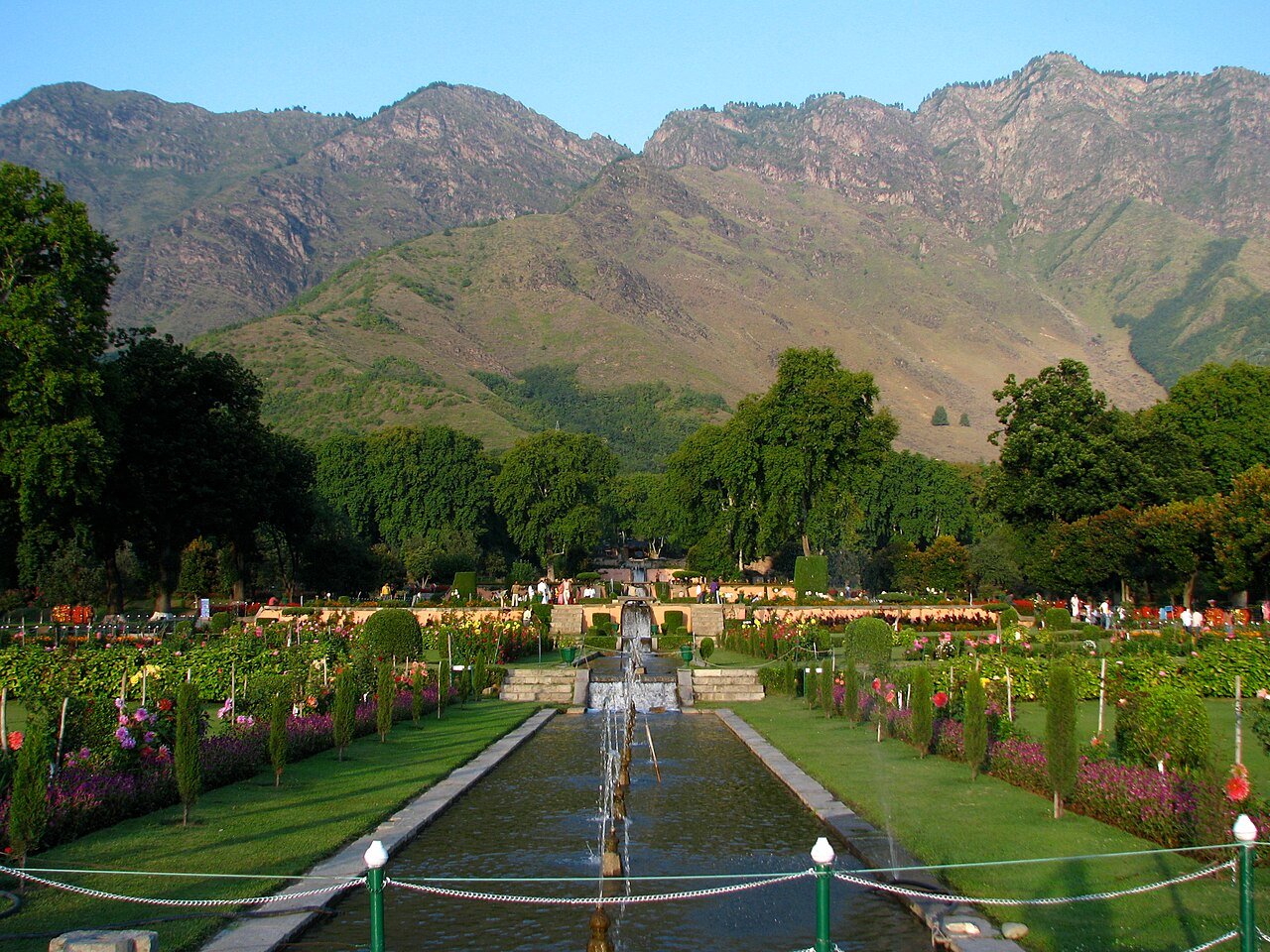
Emperor Jahangir famously said of Kashmir: “If there is a paradise on earth, it is this, it is this, it is this.” It is here, against the backdrop of the Zabarwan Mountains and Dal Lake, that the garden style reached its zenith.
A. Shalimar Bagh (“Abode of Love”)
Built by Jahangir in 1619 for his wife Nur Jahan, this is the grandest of all Mughal gardens in Srinagar.
- Layout: It spans three descending terraces, representing the public audience hall (Diwan-i-Aam), the private court (Diwan-i-Khas), and the royal zenana.
- Highlight: The Black Pavilion (built by Shah Jahan) on the top terrace is surrounded by fountains and 150-year-old Chinar trees.
B. Nishat Bagh (“Garden of Joy”)
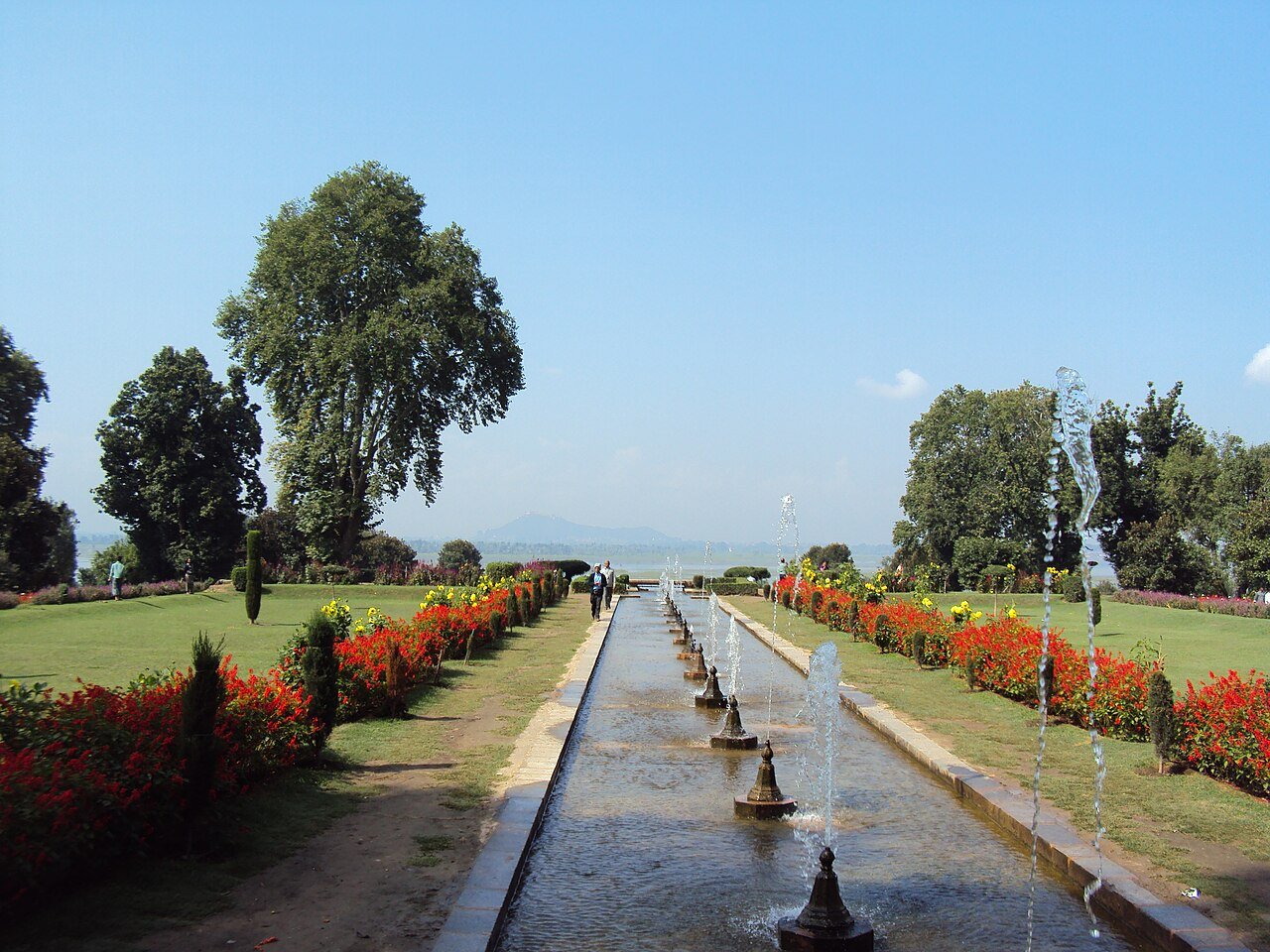
Located just a few kilometers away, this garden was built by Asif Khan (Nur Jahan’s brother) in 1633.
- View: Unlike Shalimar, Nishat offers a direct, sweeping view of Dal Lake. It has 12 terraces, representing the 12 signs of the Zodiac.
- Vibe: While Shalimar was for imperial court grandeur, Nishat was a private retreat for pleasure and beauty.
| Feature | Shalimar Bagh | Nishat Bagh | Humayun’s Tomb Garden |
| Location | Srinagar, Kashmir | Srinagar, Kashmir | New Delhi |
| Meaning | “Abode of Love” | “Garden of Joy” | Garden of the Emperor’s Tomb |
| Built By | Emperor Jahangir (1619) | Asif Khan (1633) | Empress Bega Begum (1570) |
| Layout | 3 Terraces (Public, Private, Zenana) | 12 Terraces (Zodiac Signs) | Geometric 4-Square Charbagh |
| Key Highlight | The Black Pavilion & Chinar Trees | Panoramic views of Dal Lake | Prototype for the Taj Mahal |
| Primary Vibe | Imperial, Grand, Royal | Relaxed, Scenic, Open | Spiritual, Symmetrical, Historic |
3. The Delhi Connection: Gardens of the Dead
In the plains, the gardens served a different purpose: they were the setting for the afterlife.
- Humayun’s Tomb: This was the first major garden-tomb in India (1570). Its massive Charbagh layout is so precise that it served as the prototype for the Taj Mahal. The water channels here vanish beneath the pathways, symbolizing the “unseen” river of life.
- Roshanara Bagh: A lesser-known gem in North Delhi, built by Shah Jahan’s daughter Roshanara. Today it is a lush woodland, but it retains the echoes of its imperial past.


4. Curious Indian Fast Facts (Anecdotes)
- The Petty Emperor: Legend has it that Emperor Shah Jahan was so jealous of the beauty of Nishat Bagh (owned by his father-in-law, Asif Khan) that he ordered the water supply to be cut off. The garden dried up for a while until a loyal servant risked his life to restore the flow.
- Babur’s Complaint: The founder of the Mughal Empire, Babur, famously disliked India’s heat, dust, and “lack of running water.” He built the first Mughal garden, Ram Bagh in Agra, simply because he was homesick for the cool gardens of Kabul.
- The “Black” Pavilion: In Shalimar Bagh, the pavilion on the top terrace was built using black marble. It was designed to host the most intimate royal gatherings, far away from the prying eyes of the public court below.
5. Practical Travel Guide
Best Time to Visit:
- Kashmir Gardens: April (Tulip Season) or October (Autumn) when the Chinar leaves turn fiery red.
- Delhi Gardens: February to March (Spring) is ideal before the heat sets in.
Entry Fees (Approx):
- Shalimar/Nishat Bagh: ₹25 (Indians), ₹300 (Foreigners).
- Humayun’s Tomb: ₹40 (Indians), ₹600 (Foreigners).
6. Conclusion: A Mirror to the Soul
The Mughal Gardens were never just about aesthetics; they were an attempt to impose order on a chaotic world. By taming water and aligning trees in perfect geometric harmony, the Mughals created a sanctuary that appealed to both the poet and the mathematician. Today, as you walk under the shade of a Chinar tree in Shalimar or trace the water channels of Humayun’s Tomb, you are walking through a living blueprint of the Mughal vision of perfection.
To see a completely different ancient vision—one that celebrated the wild energy of the human form—explore our guide to the Khajuraho Temples and their Erotic Art.
If you think you have rememberd everything about this topic take this QUIZ
Results


#1. What core concept from the Quran is represented by the geometric division of a Charbagh garden into four quadrants by water channels?
#2. Which Mughal garden was designed with twelve terraces, specifically to symbolize the signs of the Zodiac?
#3. What was the primary practical function of the ‘chadars’ or carved stone chutes in Mughal gardens?
#4. According to the source material, Humayun’s Tomb is architecturally significant because it established the prototype for which later, more famous structure?
#5. What was the personal motivation behind Emperor Babur building the first Mughal garden in India?
#6. What distinguishes the three descending terraces of Shalimar Bagh?
#7. According to the provided anecdote, what was the outcome of Shah Jahan’s jealousy towards Nishat Bagh?
#8. The Black Pavilion in Shalimar Bagh, located on the top terrace, was intended for what purpose?
FAQ:
What is the main feature of a Mughal Garden?
he Charbagh layout, which divides the garden into four quadrants using water channels or walkways, symbolizing the four rivers of Paradise.
Who introduced Mughal Gardens to India?
Emperor Babur, the first Mughal emperor, introduced the concept in the early 16th century because he missed the gardens of Central Asia.
Which is the largest Mughal Garden in Kashmir?
Shalimar Bagh in Srinagar is the most prominent and grandest of the surviving imperial gardens.
Are Mughal Gardens open to the public?
Yes, most historic gardens like Shalimar Bagh, Nishat Bagh, and the gardens surrounding Humayun’s Tomb are open to tourists daily.