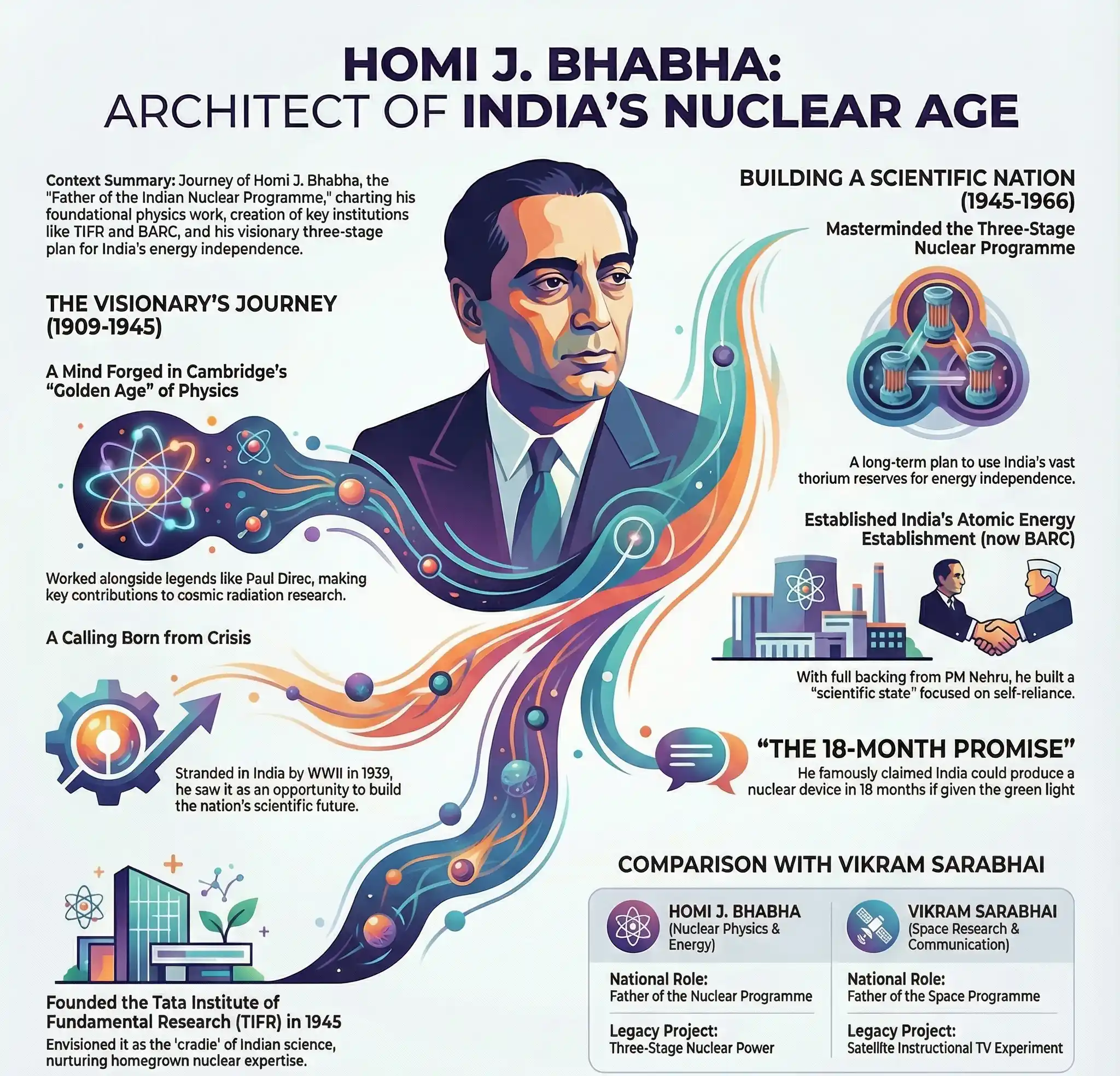
Homi Jehangir Bhabha was the visionary architect of India's nuclear energy and fundamental research landscape. From his elite education at Cambridge to his pioneering work in cosmic radiation, Bhabha's intellect was matched only by his administrative genius. He founded TIFR and BARC, establishing a three-stage plan to make India energy-independent using thorium. His life, characterized by a love for both science and the arts, ended abruptly in a mysterious 1966 plane crash on Mont Blanc, leaving behind a legacy that continues to define India’s status as a global scientific power.| Attribute | Details |
| Full Name | Homi Jehangir Bhabha |
| Born | October 30, 1909 (Bombay, British India) |
| Died | January 24, 1966 (Mont Blanc, France) |
| Title | Father of the Indian Nuclear Programme |
| Institutions Founded | TIFR, Atomic Energy Establishment (now BARC) |
| Field | Quantum Mechanics, Cosmic Radiation |
| Key Contribution | Three-stage Nuclear Power Programme |
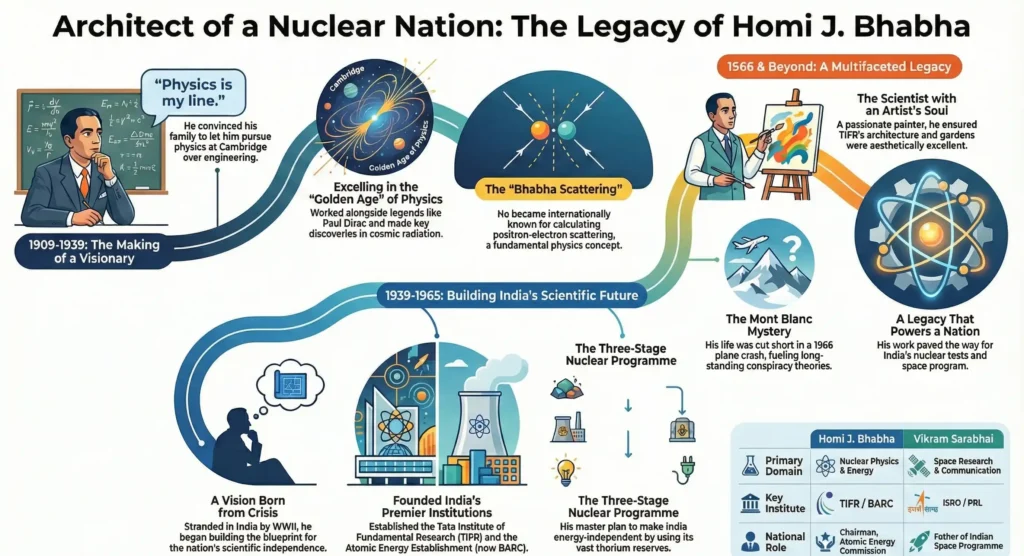
Homi Jehangir Bhabha was not just a scientist; he was a Renaissance man who lived at the intersection of art, music, and the most advanced physics of the 20th century. In any detailed Homi Jehangir Bhabha biography, one cannot help but notice the sheer aura of confidence he carried. Born into a wealthy and influential Parsi family in Bombay, Bhabha was related to the powerful Tata family, but his destiny was not in steel or hotels—it was written in the stars and the hidden energy of the atom. He was a nuclear science pioneer who saw a sovereign India not just as a free nation, but as a technologically superior one.
8 Defining Chapters in the Vikram Sarabhai Biography
The Prodigy Who Refused to Build Engines
Young Homi’s path was initially set by his family’s expectations. His father, a well-known lawyer, and his uncle, Sir Dorabji Tata, wanted him to become a mechanical engineer so he could lead the Tata industrial empire. Homi dutifully went to Cambridge, but his heart was elsewhere. In a famous letter to his father, he wrote, “I seriously say that business or a job as an engineer is not the thing for me. Physics is my line.”
He didn’t just study physics; he excelled at it during the “Golden Age” of the field. While at Cambridge, he worked alongside legends like Paul Dirac and Niels Bohr. It was during this time that he made a significant mark on cosmic radiation research, identifying the “Bhabha Scattering” process. This wasn’t just academic success; it was the birth of an intellectual giant who would eventually bring the secrets of the universe back home to India.
A Vision Born Under a War-Torn Sky
In 1939, Bhabha was on a brief holiday in India when World War II broke out. The global chaos prevented him from returning to Cambridge. Most would see this as a setback, but Bhabha saw it as a calling. He joined the Indian Institute of Science in Bangalore, working under the great C.V. Raman. It was here, in a small office with limited equipment, that he began sketching the blueprint for India’s scientific future.
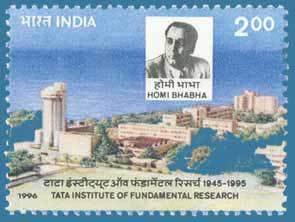
He realized that if India were to be truly independent, it needed to harness nuclear energy. He didn’t wait for the government to act; he wrote a visionary letter to the Sir Dorabji Tata Trust, proposing the creation of a fundamental research institute. This led to the founding of the Tata Institute of Fundamental Research (TIFR) in 1945. Bhabha’s vision was unique: he believed that when the time came for India to use nuclear power for electricity, the country shouldn’t have to look abroad for experts. He was building the “cradle” of Indian science.
The Three-Stage Nuclear Dream
The core of the Homi Jehangir Bhabha biography is his ingenious “Three-Stage Nuclear Power Programme.” Bhabha knew that India had limited uranium but vast reserves of thorium, particularly in the sands of Kerala. He designed a long-term strategy to eventually use thorium as a fuel source—a plan that remains the cornerstone of India’s energy policy today.
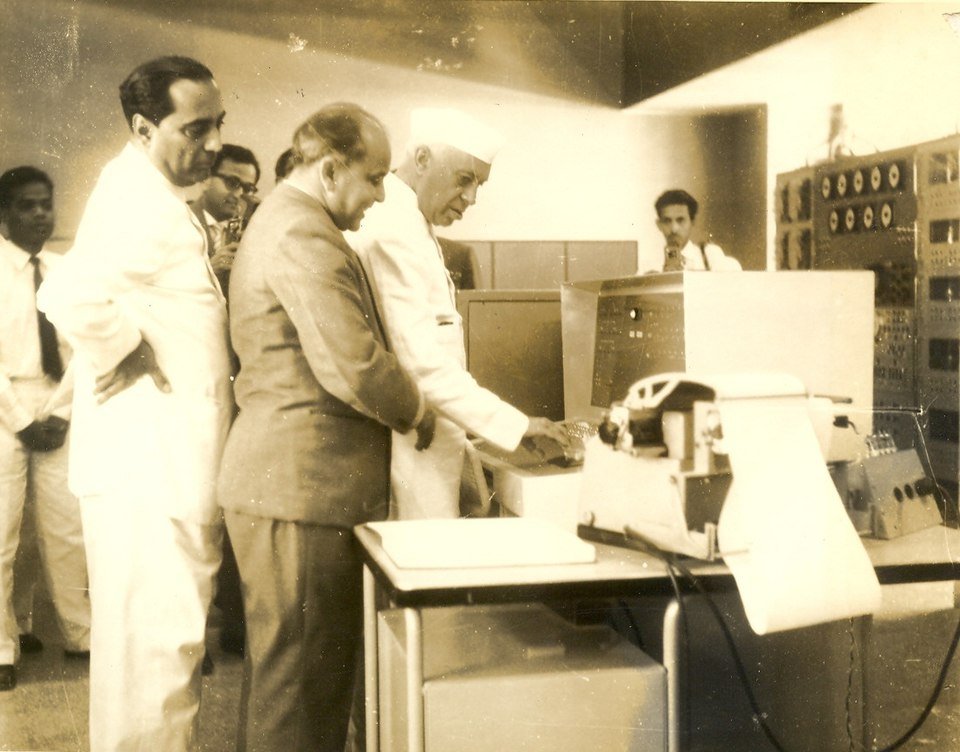
His relationship with Prime Minister Jawaharlal Nehru was pivotal. They were two visionaries who shared a dream of a modern, scientific India. Nehru gave Bhabha “carte blanche” and direct access, bypassing the usual red tape. This led to the creation of the Atomic Energy Establishment at Trombay (now the Bhabha Atomic Research Centre or BARC). Bhabha was effectively building a “scientific state” within the state, focused on self-reliance and national pride.
The Scientist with an Artist’s Soul
Beyond the reactors and equations, Bhabha was a passionate painter and a connoisseur of Western classical music. He personally designed the gardens and the architecture of the TIFR building, ensuring it was a place of beauty. He believed that a scientist’s mind flourished best in an environment of aesthetic excellence.
Visitors to his office were often surprised to find him sketching or listening to Beethoven. This was the Indian physicist Homi Jehangir Bhabha—a man who could discuss the “meson” particle in the morning and the brushwork of a contemporary Indian artist in the evening. He was responsible for acquiring a massive collection of modern Indian art for TIFR, which remains one of the most important collections in the country today.
The Mystery of the Final Flight
The most haunting chapter of the Homi Jehangir Bhabha biography is his sudden and tragic death. On January 24, 1966, Air India Flight 101, “Kanchenjunga,” was on its way to Geneva. Bhabha was on board, heading to an international meeting. As the plane flew over the Alps, it crashed into Mont Blanc, killing everyone on board.
The official report blamed a pilot error regarding the aircraft’s position, but the timing of the crash has fueled decades of conspiracy theories. Only days earlier, Lal Bahadur Shastri had died in Tashkent. India was on the verge of its first nuclear test, a feat Bhabha had claimed India could achieve in just 18 months. Was it a tragic accident, or was it a calculated move to stall India’s nuclear progress? While we may never know the absolute truth, the Bhabha death conspiracy remains one of the greatest “what-ifs” in Indian history.
A Legacy That Powers a Nation
Homi Bhabha left the stage early, at the age of 56, but the foundations he laid were unshakable. He didn’t just build buildings; he built a culture of excellence. His proteges, like Vikram Sarabhai and Raja Ramanna, went on to lead India into the space age and successfully conduct the Pokhran nuclear tests.
Today, every time an Indian satellite reaches orbit or a nuclear reactor provides clean energy to a village, Homi Bhabha’s dream lives on. He was the man who taught India to stop looking at the ground in humility and start looking at the atoms and the stars with confidence. He remains the quintessential “Curious Indian” who transformed curiosity into national strength.
Dr. A.P.J. Abdul Kalam: (1931-2015)
Comparative Snapshot: Bhabha vs. Sarabhai
| Feature | Homi J. Bhabha | Vikram Sarabhai |
| Primary Domain | Nuclear Physics & Energy | Space Research & Communication |
| Key Institute | TIFR / BARC | ISRO / PRL |
| Scientific Focus | Cosmic Rays / Nucleon-Nucleon Scattering | Cosmic Rays / Solar Physics |
| National Role | Chairman, Atomic Energy Commission | Father of Indian Space Programme |
| Legacy Project | Three-Stage Nuclear Power | Satellite Instructional Television Experiment (SITE) |
Curious Indian: Fast Facts
- Bhabha Scattering: He is internationally famous for calculating the probability of positron-electron scattering, a fundamental concept in particle physics.
- The “Nuclear” Letter: In 1944, three years before independence, he predicted that India would need nuclear energy for electricity, not just weapons.
- Art Patron: He was an accomplished painter and was a founding member of the Bombay Progressive Artists’ Group.
- The 18-Month Promise: He famously claimed that Indian scientists could produce a nuclear device in just 18 months if given the green light.
- Mont Blanc Mystery: Pieces of his diplomatic bag from the 1966 crash were recovered as recently as 2012, reigniting interest in the incident.
Conclusion
The Homi Jehangir Bhabha biography is a story of a man who lived ahead of his time. He was a scientist who understood that true power comes from knowledge and self-reliance. While his life ended in a mountain mist in France, his spirit is embedded in the steel and concrete of India’s nuclear reactors. He remains an eternal inspiration for anyone who believes that India can, and should, lead the world in innovation.
The Purulia Arms Drop Mystery 1995: When the Sky Rained Guns
If you think you have remembered everything about this topic take this QUIZ
Results


#1. What was the ‘Bhabha Scattering’ process that Homi Bhabha identified during his time at Cambridge?
#2. Why did Bhabha decide to stay in India in 1939 despite having a successful career in Cambridge?
#3. What unique resource did Bhabha plan to use as the ultimate fuel source in his Three-Stage Nuclear Power Programme?
#4. Bhabha founded TIFR in 1945. What was his primary philosophy behind creating such an institute before India even had a nuclear program?
#5. Which tragic event ended Homi Bhabha’s life in 1966?
#6. Aside from his scientific achievements, Bhabha was known as a ‘Renaissance Man’. What does this refer to in his biography?
#7. How did Bhabha’s relationship with Prime Minister Jawaharlal Nehru impact Indian science?
#8. What did Bhabha famously claim India could achieve within 18 months if given the green light?
Why is Homi Bhabha called the Father of the Indian Nuclear Programme?
He is called the Father of the Indian Nuclear Programme because he envisioned, founded, and led the initial institutions (TIFR and BARC) and developed the strategic three-stage plan for India’s nuclear energy independence.
What was the cause of Homi Bhabha’s death?
Official records state he died in the crash of Air India Flight 101 on Mont Blanc due to a pilot communication error. However, several conspiracy theories suggest sabotage due to his role in India’s growing nuclear capabilities.
What is Bhabha Scattering?
Bhabha Scattering is a term in quantum electrodynamics referring to the electron-positron scattering process, which Homi Bhabha was the first to calculate and describe in 1935.
Was Homi Bhabha related to the Tatas?
Yes, his paternal aunt, Meherbai Tata, was married to Sir Dorabji Tata, the son of the Tata Group founder Jamsetji Tata.
What is the Bhabha Atomic Research Centre (BARC)?
Originally called the Atomic Energy Establishment, Trombay (AEET), it was renamed in Bhabha’s honor after his death. It is India’s premier multi-disciplinary nuclear research centre.