Introduction
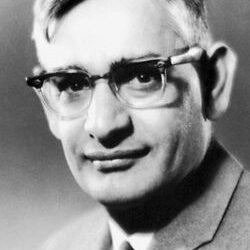
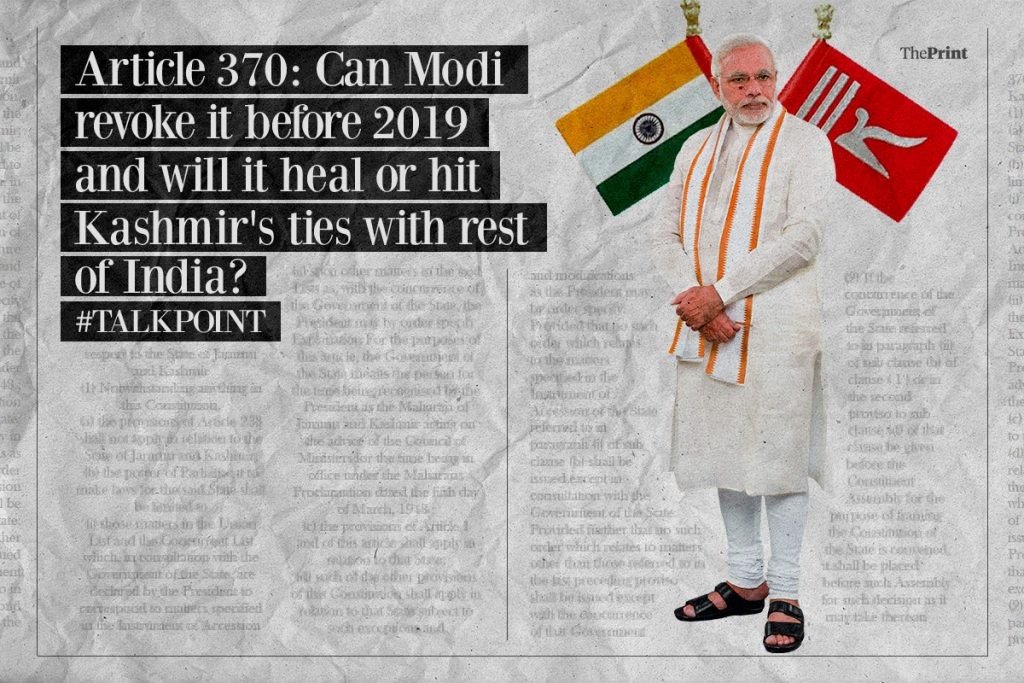
The revocation of Article 370 on August 5, 2019, represented a seismic shift in India’s constitutional framework, ending the special autonomous status granted to Jammu and Kashmir since 1949. This provision, drafted as a temporary measure by N. Gopalaswami Ayyangar, limited the Indian Parliament’s legislative powers over the state to defense, foreign affairs, and communications, while allowing Jammu and Kashmir its own constitution, flag, and laws on residency, property, and fundamental rights. Over seven decades, Article 370 fueled debates on national integration versus regional autonomy, with proponents viewing it as essential for Kashmir’s accession and critics arguing it bred separatism, corruption, and underdevelopment. The Bharatiya Janata Party (BJP), fulfilling a long-standing manifesto promise from 2009, 2014, and 2019 elections, executed the abrogation under Prime Minister Narendra Modi, bifurcating the state into two Union Territories: Jammu and Kashmir (with a legislature) and Ladakh (without).
Historical Context of Article 370
Article 370 emerged from the 1947 partition chaos, when Maharaja Hari Singh acceded to India amid a Pakistani tribal invasion, signing the Instrument of Accession that ceded control only on specified matters. Sheikh Abdullah, leader of the National Conference, negotiated the article to preserve Kashmiri identity while integrating with India, promising a plebiscite that never materialized after Pakistan’s non-withdrawal from occupied territories. The 1954 Presidential Order extended further Indian Constitution provisions, but subsequent dilutions via over 40 orders eroded autonomy, leading to accusations of gradual centralization.
By the 21st century, Article 370 symbolized stalled integration. Militancy surged in the 1990s, fueled by Pakistan-backed groups like Lashkar-e-Taiba, killing thousands and displacing Kashmiri Pandits in 1990. Governments from Indira Gandhi’s 1975 accord with Sheikh Abdullah to the 2015 PDP-BJP alliance grappled with it, but full abrogation eluded them. The BJP’s 2019 mandate, post-Pulwama attack and Balakot airstrike, provided political impetus, framing it as essential for security and equality.
The Abrogation Process
The process unfolded meticulously on August 5, 2019. With Jammu and Kashmir under President’s Rule since June (after the BJP withdrew from the PDP coalition), Home Minister Amit Shah introduced a resolution in the Rajya Sabha recommending Article 370’s abrogation. President Ram Nath Kovind issued Constitution Order (CO) 272, amending Article 367 to replace “Constituent Assembly” with “Legislative Assembly” for Article 370 interpretations. Under President’s Rule, this effectively meant Parliament, which passed the resolution with a two-thirds majority.
CO 273 followed on August 6, declaring all Article 370 clauses (except 1) inoperative, applying the entire Indian Constitution to the region. The Jammu and Kashmir Reorganisation Act, 2019, received Presidential assent on August 9, effective October 31, splitting the state: Jammu and Kashmir retained a legislative assembly but as a Union Territory, while Ladakh became centrally administered. This bypassed the defunct 1957 Constituent Assembly’s concurrence, a clause the Supreme Court later upheld as not binding post-dissolution.
Government’s Rationale and Arguments
The Modi government justified abrogation on integration, security, and development grounds. Article 370 allegedly shielded separatists, militants, and corrupt dynasties (National Conference and PDP), preventing laws like Right to Information, anti-corruption measures, and women’s inheritance rights from applying uniformly. It blocked investments, leaving Kashmir’s economy reliant on subsidies amid high unemployment (18-20% youth) and poor infrastructure.
Post-abrogation, proponents cited declining terrorism (from 417 incidents in 2018 to 229 in 2023), tourism surge (2.11 crore visitors in 2023 vs. 0.88 crore in 2018), and property rights extension to women, Dalits, and non-residents. GDP growth hit 8% in 2022-23, surpassing national averages, with GSDP rising from ₹1.27 lakh crore (2018-19) to ₹2.38 lakh crore (2023-24). Schemes like PM Awas Yojana and Ujjwala extended fully, fostering “Sabka Saath, Sabka Vikas.”
Immediate Aftermath and Security Measures
Preempting unrest, the government imposed a security lockdown: internet shutdown (longest globally at 552 days), landline curbs, assembly suspension, and detention of over 4,000 leaders including Omar Abdullah and Mehbooba Mufti under PSA. Over 5 lakh troops reinforced, schools closed, and pilgrims evacuated. Protests erupted in Kashmir Valley, with stone-pelting and clashes killing dozens, but violence tapered by 2020.
Pakistan suspended bilateral ties, downgraded diplomacy, and sought UN intervention, branding it “illegal.” India countered with dossiers on Pakistan’s terror links, suspending LoC trade and terminating Indus Waters Treaty provisions. Internationally, the US, EU, and UAE urged dialogue but recognized it as India’s internal matter.
Legal Challenges and Supreme Court Verdict
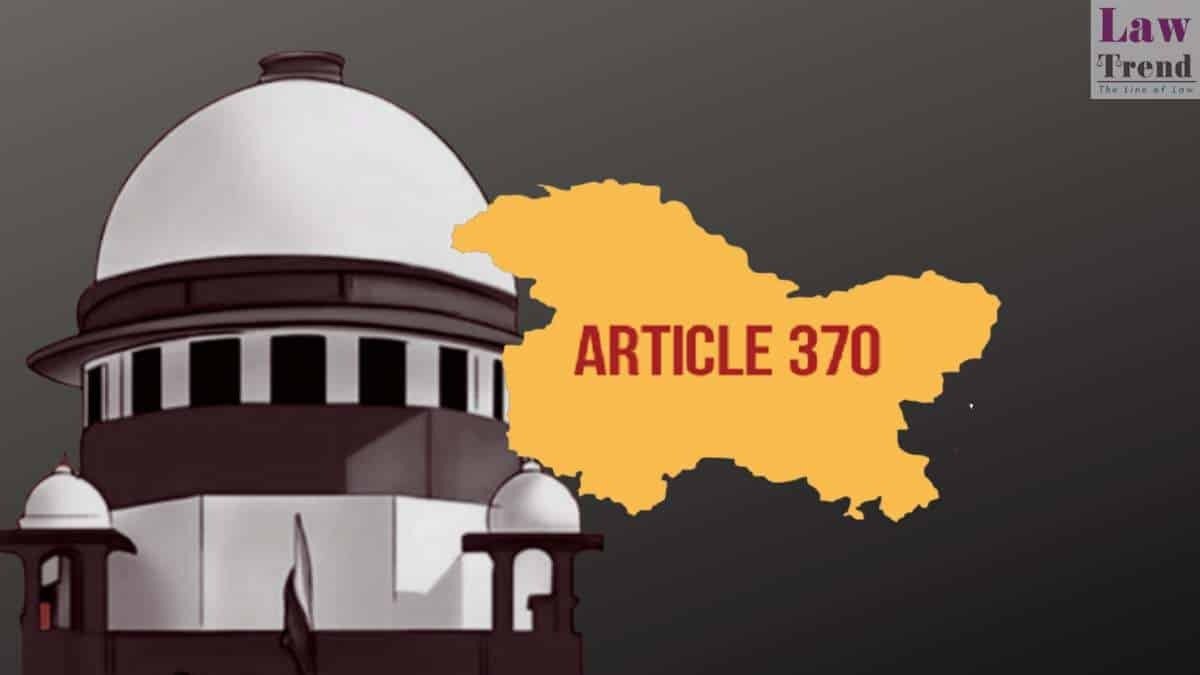
Petitions flooded the Supreme Court, challenging procedural validity, federalism breach, and Article 370’s permanence. In Shah Faesal v. Union of India (2019) and Manohar Lal Sharma v. Union (2019), a five-judge bench heard arguments from 2020-2023. On December 11, 2023, it unanimously upheld abrogation: Article 370 was temporary; President’s powers under 370(3) unconstrained post-Constituent Assembly; reorganization constitutional, though restoring statehood “as soon as practicable.”
The verdict affirmed Parliament’s supremacy during President’s Rule and rejected “basic structure” doctrine violations, but flagged prolonged Article 356 use and ordered minority rights protection.
Impacts and Developments Post-Abrogation
Economic and Social: Land laws reformed, enabling outsider purchases (over 1 lakh domicile certificates issued to non-Kashmiris by 2024). Investments topped ₹1.13 lakh crore via 28,000 projects; horticulture, handicrafts boomed. Elections resumed: District Development Councils (2020), Jammu & Kashmir Assembly (2024, NC-Congress alliance win with BJP strong in Jammu).
Security: Encounters reduced (1,200 terrorists neutralized 2019-2024); infiltration down 70%. Yet, targeted killings persisted, prompting Operation All Out.
Criticisms: Human rights groups alleged arbitrary detentions, media curbs, and demographic fears (“flooding” outsiders). Valley alienation lingers, with low voter turnout in some booths (3-10% initially). Women’s safety improved via central laws, but internet restores (2G to broadband phased) faced delays.
Legacy and Ongoing Debates
Five years on, abrogation symbolizes BJP’s Hindutva-nationalist vision, boosting electoral fortunes (2024 Lok Sabha gains). It integrated Kashmir legally but deepened polarization: Valley resents lost autonomy, Jammu/Ladakh celebrates equality. Statehood restoration, promised by 2024, awaits amid Delimitation Commission (adding 6-9 seats to Jammu). Geopolitically, China contested Ladakh changes, sparking 2020 Galwan clash.
Debates persist on true integration—development metrics shine, but emotional reconciliation lags. As India eyes Viksit Bharat @2047, Kashmir tests federal inclusivity.