Introduction
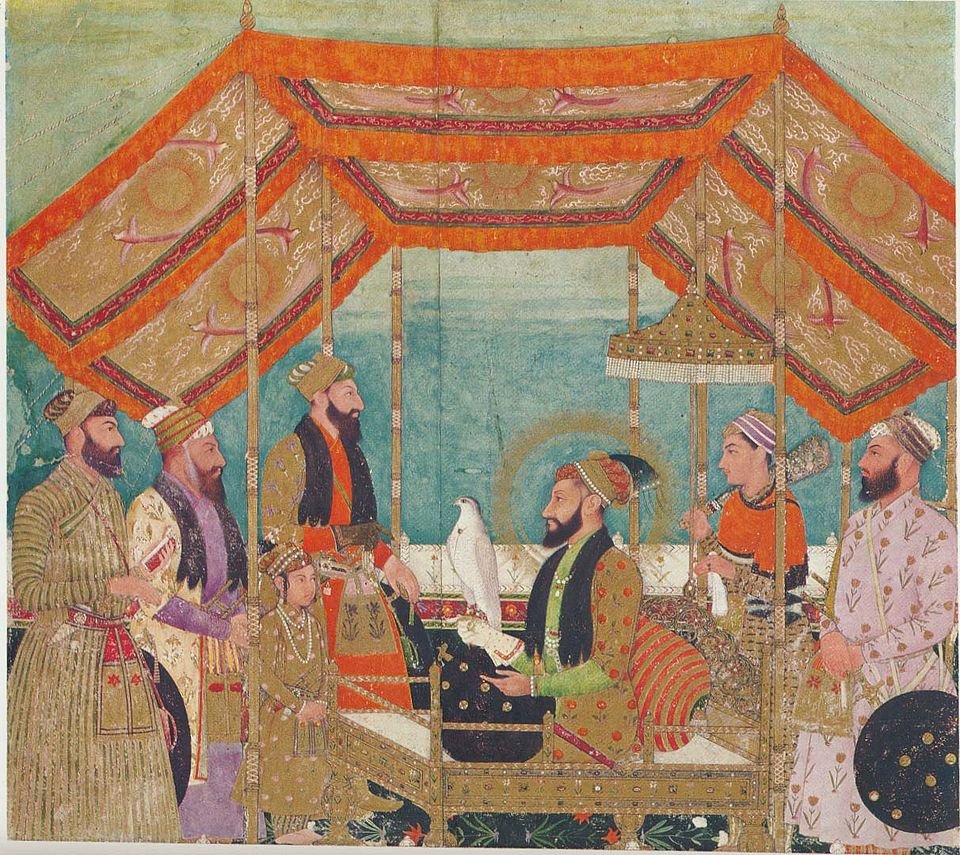
Aurangzeb’s reign (1658–1707) marks both the territorial zenith and the beginning of the irreversible decline of the Mughal Empire. As the last of the great Mughal emperors, Aurangzeb is remembered as a ruler whose drive for expansion, administrative rigour, and religious orthodoxy fundamentally reconfigured the political and social landscape of early modern India. His nearly five-decade rule saw remarkable territorial gains, colossal military campaigns, and the enforced centralization of imperial authority, but also relentless internal dissent, strained fiscal systems, and persistent religious unrest. The era of Aurangzeb presents a complex tapestry—one that intertwines ambition, faith, reform, and enduring controversy.
Ascension and Centralization
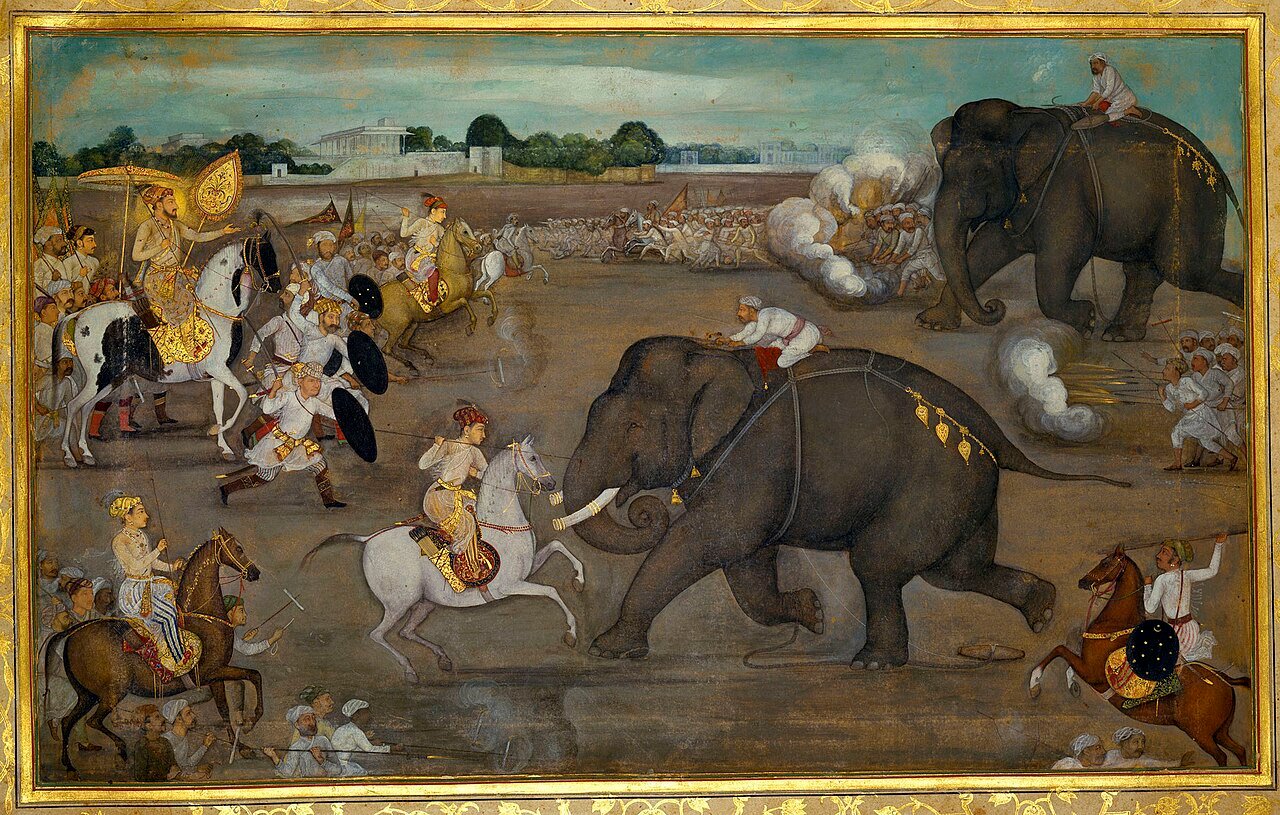
Aurangzeb, the third son of Shah Jahan, claimed the throne after a bloody war of succession against his brothers Dara Shikoh, Shuja, and Murad Baksh. His rise was marked by ruthlessness, decisiveness, and deep personal piety. Determined to establish an orthodox Sunni empire, he quickly moved to tighten central authority. He curbed the autonomy of subahdars (provincial governors) and zamindars, restrained the financial independence of mansabdars (nobles), and centralized appointments, thus increasing imperial control over the vast Mughal bureaucracy.
Administrative reforms under Aurangzeb included new revenue assessments, stricter land surveys, and further standardization of taxation to boost imperial finances. Policies like Daag (horse branding) and Chehra (troop identification) were strictly enforced to minimize fraud in the military apparatus. These layers of bureaucracy and oversight—while increasing state efficiency in the near term—often engendered resentment among local nobles and rural elites, exposing fissures in the Mughal administrative edifice.
Religious Policies and Social Impact
Aurangzeb’s reign is most debated for its return to religious orthodoxy and the reversal of the relatively inclusive policies of his predecessors. Driven by personal conviction in Sunni Islam, he reinstituted the jizya tax on non-Muslims in 1679, banned the construction of new temples (though permitted repair of old ones initially), and suppressed public celebrations of Hindu festivals. The muhtasibs (censors of public morals) were empowered throughout the realm to enforce Sharia law and ensure conformity in public order.
Measures included the destruction of several prominent temples during periods of rebellion by regional powers in Rajasthan and southern India. While earlier in his reign Aurangzeb had shown restraint—ordering that long-standing places of worship be preserved—he shifted to a more punitive stance as internal opposition increased. The execution of the Sikh Guru Tegh Bahadur for refusing to convert further inflamed communal tensions, contributing to the subsequent militarization of the Sikh community.
Although recent research highlights that Hindu nobles continued to be promoted to high ranks, Aurangzeb’s sectarian initiatives alienated many of the empire’s core communities—Rajputs, Marathas, and Jats—who became centers of rebellion and resistance. His policies also marked a sharp reduction in royal patronage of the arts and music, symbolizing his personal asceticism but curtailing the Mughal court’s syncretic cultural life.
Military Expansion and Decline
The Deccan Campaigns
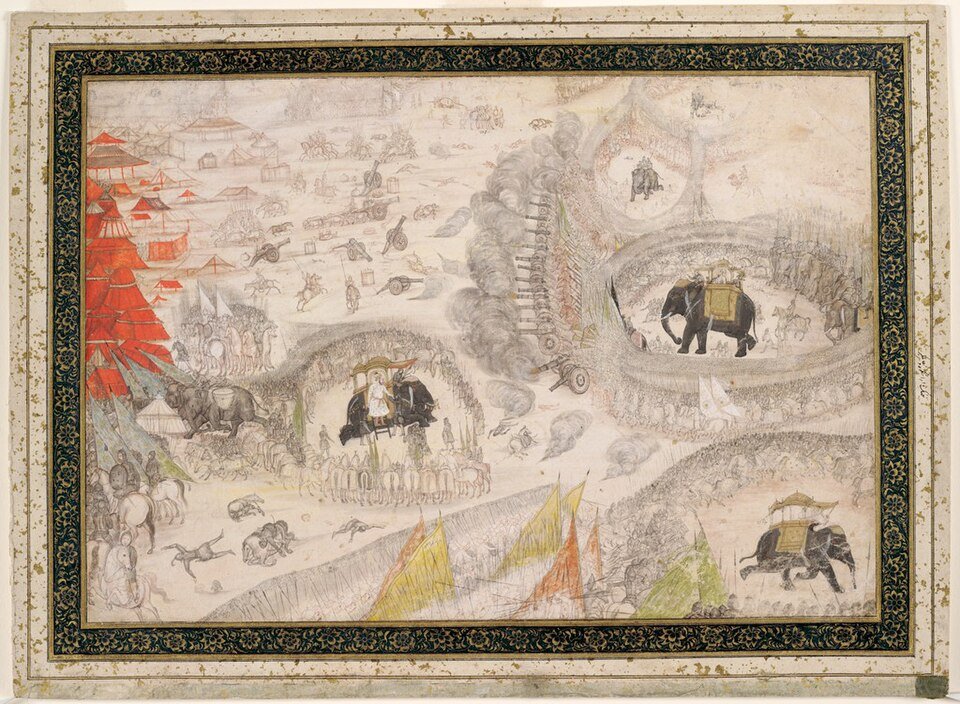
Aurangzeb’s greatest ambition was the complete subjugation of the Deccan region. He personally led campaigns against the Adilshahi and Qutbshahi dynasties of Bijapur and Golconda, finally annexing both kingdoms by 1687 after protracted sieges. This extended the Mughal Empire to its maximum territorial breadth.
However, the conquest of southern India came at a terrible cost. The campaign against the Marathas, launched after the execution of Sambhaji (Shivaji’s son), degenerated into a protracted guerrilla war that defied imperial authority. What was envisioned as a triumphant Mughal consolidation instead bled the empire’s treasury, overstretched its logistics, and fuelled relentless Maratha counteroffensives led by Rajaram, Tarabai, and other legendary figures.
Rebellions and Regional Resistance
Aurangzeb’s military expansion triggered waves of resistance across the empire. The Rajputs, once loyal allies, revolted after the death of their patrons and the perceived betrayal of political agreements. The Jats, Satnamis, Sikhs, and Afghans launched repeated uprisings, forcing the emperor into personally led campaigns—each putting further strain on imperial resources and undermining central control.
Most significantly, the Maratha War of Independence became the proverbial “ulcer” of the Mughal state. Despite victories, the Mughals could neither extinguish Maratha resurgence nor stabilize the newly conquered territories. The drawn-out Deccan conflicts distracted the empire from addressing northern revolts and further exposed its administrative overreach.
Administrative and Economic Features
Aurangzeb’s efforts at centralization were evident not only in the tightening of provincial control but also in economic reforms. He recalibrated the land revenue system, aiming to reduce local evasion and corruption, and sought more equitable taxation. Yet, continuous warfare, massive military expenditures, and the demands of a bloated administrative machine drove up costs, depleted the treasury, and led to widespread peasant distress.
To sustain the war efforts, he resorted to debasing the currency and extracting increasingly harsh land revenue assessments. These economic pressures trickled down to villages and towns, increasing local discontent and encouraging elite-led revolts.
Art, Architecture, and Cultural Shift
Aurangzeb’s outlook was distinctly austere compared to his predecessors. He curtailed state patronage of painting and music, but did sponsor noteworthy architectural works—such as the Badshahi Mosque in Lahore and the Moti Masjid at Delhi’s Red Fort. Yet, the frenetic building activity of earlier Mughal rulers gave way to imperial discipline and a focus on military and administrative priorities.
Legacy and Historical Assessment
Aurangzeb’s reign left an indelible, yet deeply contested, legacy. On one hand, he was a brilliant administrator and military strategist, extending the Mughal Empire to its greatest geographic reach. On the other, his rigid policies, costly ambitions, and lack of conciliation radically weakened the bonds that held the empire together.
His policies alienated large sections of his subjects and converted potentially manageable opposition into determined resistance. The resultant internal fragmentation meant that after Aurangzeb’s death in 1707, the Mughal Empire—though still vast—became a shadow of its former unity, ripe for disintegration under regional warlords and emerging European trading companies.
Conclusion
Aurangzeb’s four-decade reign stands as a drama of ambition, faith, and contradiction. His success in uniting nearly all of continental India under one crown was ultimately undermined by the very methods—centralization, orthodoxy, and martial compulsion—that achieved it. The relentless campaigns in the Deccan, the alienation of allies, and the strict religious policies exhausted the treasury and divided the people. After Aurangzeb’s passing, India entered a period of political fragmentation and the slow eclipse of Mughal authority—a pivotal era whose lessons on power, pluralism, and compromise continue to resonate.