


Introduction
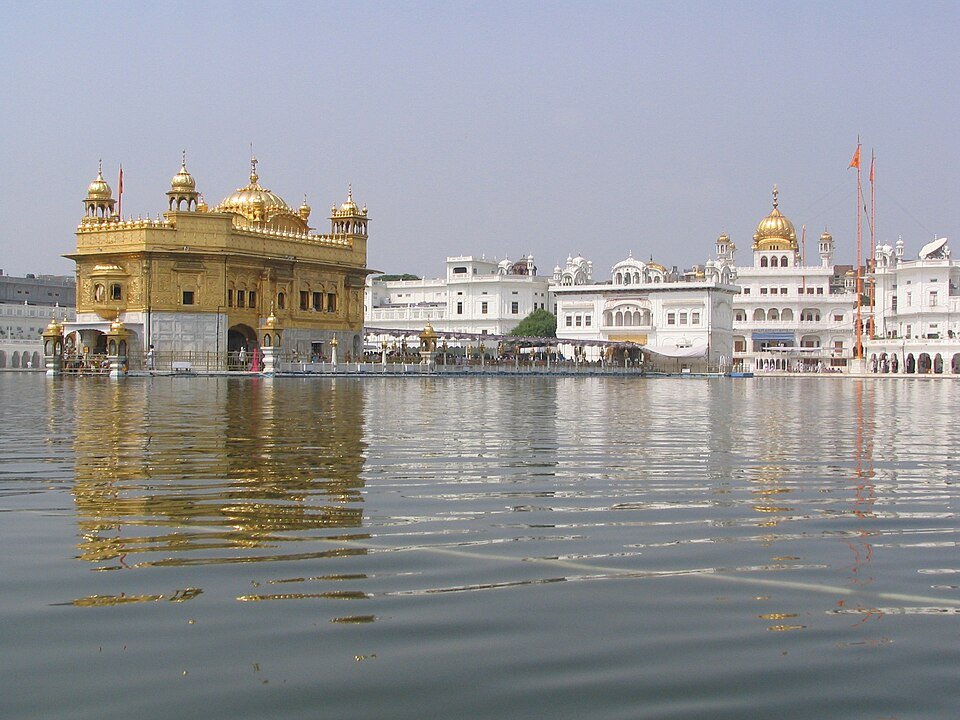
Operation Blue Star, launched June 1-10, 1984, represented Prime Minister Indira Gandhi’s authorization of a full-scale Indian Army assault on the Golden Temple (Harmandir Sahib) complex in Amritsar, Punjab, to dislodge Jarnail Singh Bhindranwale and his armed followers who had transformed the Akal Takht and surrounding structures into a fortified militant stronghold demanding Khalistan, a sovereign Sikh nation. Bhindranwale, elevated as Damdami Taksal head in 1977, amassed 200-500 fighters equipped with AK-47s, rocket-propelled grenades, machine guns, and ammunition stockpiled with Pakistan’s ISI assistance, turning down negotiations tied to the Anandpur Sahib Resolution’s pleas for Punjab autonomy, Chandigarh’s full transfer to Punjab, river water rights, and constitutional decentralization labeled secessionist by the center. Official government figures reported 493 militants and civilians plus 83 soldiers killed, with 249 troops injured and 1,592 apprehended; Sikh sources and independent estimates range from 2,000-5,000 pilgrims dead during Guru Arjan Dev Martyrdom anniversary crowds, including women and children caught in crossfire amid tank shelling that gutted the Akal Takht. This cataclysmic event, compounded by Gandhi’s assassination on October 31, 1984, by Sikh bodyguards Beant Singh and Satwant Singh in explicit revenge, ignited anti-Sikh pogroms claiming 2,800-3,000 lives in Delhi alone, fracturing national unity and prolonging Punjab militancy into the 1990s.
Roots of Sikh Grievances and Khalistan Aspirations
Sikh identity, forged through Guru Nanak Dev’s 15th-century foundations, Guru Arjan Dev’s 1605 Harmandir Sahib construction (gold-plated by Maharaja Ranjit Singh), and Guru Tegh Bahadur’s 1675 martyrdom against Mughal forced conversions, evolved amid relentless 17th-18th century clashes with Mughals and Ahmad Shah Abdali’s Durrani invasions, culminating in Ranjit Singh’s expansive Sikh Empire (1799-1849) uniting misls with Lahore as capital. British annexation post-Anglo-Sikh Wars (1845-49) integrated Punjab Province, but 1947 Partition lacerated historic Punjab, displacing 2.5 million Sikhs/Punjabis from West Punjab amid massacres, with Lahore—the cultural heart—lost to Pakistan.
Post-independence, Shiromani Gurdwara Parbandhak Committee (SGPC) and Akali Dal (1920 political wing) agitated for Punjabi Suba; the 1956 States Reorganization Commission dismissed Sikh-majority state demands as fringe, prioritizing linguistic viability and rejecting irrigation disputes over Bhakra Nangal Dam waters favoring non-Punjabi speakers. Linguistic pressures mounted: post-1966 Punjab-Haryana bifurcation (yielding Punjabi-speaking, 60% Sikh Punjab with Chandigarh joint capital), Hindi imposition alienated Punjabi speakers. Anandpur Sahib Resolution (1973), ratified by Akali Dal, enumerated seven core demands: Chandigarh’s unconditional Punjab transfer; Punjabi-speaking border areas from Haryana; decentralization curbing center’s overreach; land reforms; industrialization beyond Green Revolution wheat monoculture; All-India Gurudwara legislation; protections for out-of-state Sikhs; army recruitment quota relaxations beyond Sikh Regiment exclusivity—Indira Gandhi dismissed it as “secessionist document” akin to secession.
Diaspora amplification surged: UK/Canada/US-based Sikhs, led by Jagjit Singh Chohan, proclaimed Khalistan in 1971 New York Times ads, minted currencies, launched donation drives fueling arms flows. Akali Dal disavowed full independence, prioritizing autonomy, but radicals envisioned “Land of the Pure” reclaiming historic Punjab expanse.
Bhindranwale’s Radicalization and Escalating Violence
Emergency-era (1975-77) Congress suppression galvanized Akalis; post-1977 Janata interlude, Punjab Akali government irked Delhi. Congress strategists—CM Giani Zail Singh and Sanjay Gandhi—promoted Bhindranwale, a fiery Damdami Taksal preacher (religious seminary near Amritsar), to fragment Sikh votes: funded SGPC elections, supplied logistics/arms against moderate Akalis. Bhindranwale, dubbed “Sant-Soldier,” spearheaded 1978 Nirankari clash (13 dead)—Nirankaris rejected Guru Granth Sahib as eternal 11th Guru, positing living human gurus—elevating his profile.
Violence intensified: 1980 Nirankari leader Baba Gurbachan Singh assassination pinned on Bhindranwale; 1981 Punjab Kesari editor Lala Jagat Narain gunned down en route for urging Hindus declare Hindi mother tongue in census, undermining Punjabi primacy; October 1983 bus massacre (6 Hindus selectively shot) signaled Hindu targeting. April 1983 DIG A.S. Atwal, crackdown overseer, slain on Golden Temple stairs—police paralyzed, body untended 2 hours inside complex. February 1984 police outpost raid: 6 officers abducted, 1 killed, arms retained post-negotiation. Bhindranwale seized Akal Takht (December 15, 1983), AK-47-armed convoys dumping truckloads unchecked; by mid-1984, militants dominated 100+ villages, 410 deaths/1,180 injured statewide January-May.
1982 Dharam Yudh Morcha allied Akalis-Bhindranwale reviving Anandpur; Haryana’s Asian Games frisking (November 1982) humiliated Sikhs, including retired officers. President’s Rule (October 1983) under Darbara Singh CM failed containment; Bhindranwale’s 2-day 1981 arrest/release skyrocketed aura (“jail advanced my mission 20 years”).
Operation Blue Star: Siege and Bloody Assault
Gandhi rejected Anandpur concessions; RAW’s Operation Sundown (abduct Bhindranwale) aborted. June 2 curfew sealed Amritsar (100km cordon, power/water cut); 100,000 troops (9th Infantry Division Lt. Gen. K. Sundarji, Western Command Lt. Gen. Kuldip Singh Brar, NSG prep) mobilized, intel botched pilgrim surge (Guru Arjan Martyrdom June 3-16).
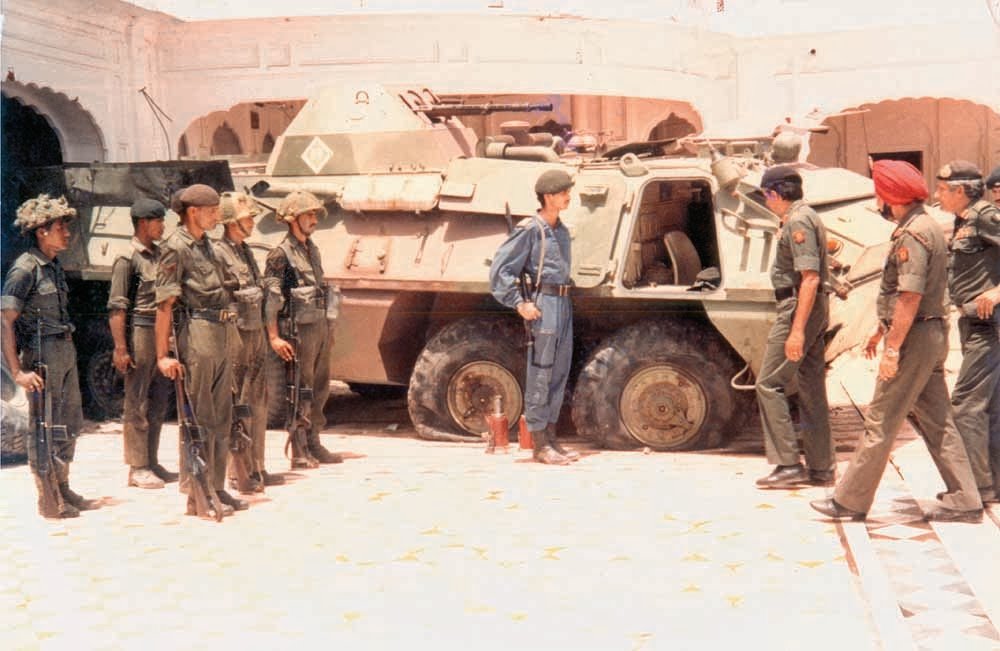
June 1: Snipers targeted Bhindranwale atop Langer; 7-hour firefight killed 11 militants, riddled Parikarma/marble. June 3: Milk vendors shot curfew violations; paramilitaries probed Akal Takht alleys/roofs, repelled. June 4: Tanks positioned clock-tower entrance; 1st Para commandos stormed steps, neutralized machine guns, reached Parikarma amid grenades. June 5: CS gas faltered; Vijayanta tanks breached walls; Akal Takht stormed—Bhindranwale, Amrik Singh, 80-200 militants slain inside; 250 surrendered (35 women/5 children dead among them), denied water/food/medical till June 6 evening, many youths executed.
June 6-8: Cleanup flushed snipers; rubble re-stormed, bodies everywhere; library incinerated (rare manuscripts lost). Casualties: Army 83 dead/249 wounded (some claim 700+); militants/civilians 493 official, 3,000-5,000 Sikh tallies; 42-74 gurdwaras statewide stormed (e.g., 257 dead Dukhniwaran Sahib). Akal Takht shelled irreparably, Harmandir pockmarked; 22 child “terrorists” (2-16 years) detained per White Paper.
Assassination of Indira Gandhi
Blue Star backlash: SGPC barred army worship; 5,000 Sikhs deserted (2,333 court-martialed). Gandhi defended June 6 broadcast; President Zail Singh initiated repairs.
October 31, 9:20 AM Safdarjung Road: Beant Singh (longtime guard) fired 5 .38 revolver shots; Satwant Singh (recent recruit) unleashed 25-30 Sten bursts post-Gandhi fall; TATA driver Kehar Singh aided. Beant killed resisting; Satwant arrested, executed 1989 with Kehar. Motive: “Blue Star desecration revenge”; All India Radio confirmed Sikh guards by 11 AM, Gandhi declared dead 2:20 PM AIIMS; Rajiv sworn PM.
Riots, Militancy, and Suppression
Assassination unleashed October 31-November 3 carnage: Delhi Congress mobs (Sajjan Kumar/Jagdish Tytler implicated) torched gurdwaras, lynched 2,800-3,100 Sikhs (40,000 fled), raped/looted; nationwide 3,500 dead, 20,000 properties razed—Nanavati Commission later convicted.
Punjab insurgency raged: Babbar Khalsa (ISI-trained) bombed Air India 182 (June 1985, 329 dead), assassinated Gen. A.S. Vaidya (1986). Operation Black Thunder (May 1986/88, KPS Gill/NSG) cleared temple bloodlessly via media access. Woodrose/Ryan (1984-92): Army/police neutralized 25,000 militants, but 10,000+ disappearances/fake encounters (Amnesty: 2,500 custodial deaths); President’s Rule till 1992 elections. Beant Singh CM (1992-95) assassinated; peace consolidated 1995 via surrenders/deportations.

Enduring Legacy
Blue Star/Gandhi slaying scarred psyche: Khalistan waned domestically (Punjab GDP frontrunner), persists diaspora (2023 Amritpal echoes); drug epidemics/Pak proxies linger. Critiques spotlight Congress’s Bhindranwale nurture, intel lapses, minority alienation, KGB hype of threats—yet underscored military cohesion, federal strains. Rebuilt Akal Takht embodies Sikh fortitude; commemorations debate autonomy versus unity.